Martin Austermuhle
One of D.C.’s most controversial and fought-over development projects is being rebranded.
The developers now building on the McMillan Sand Filtration Site just north of Bloomingdale have indicated that they’re going to call the planned residential and retail components of the 25-acre plot the “Reservoir District,” a nod to the nearby McMillan Reservoir.
The news of the name-to-be was first reported by the Washington Business Journal and UrbanTurf, both of which spotted the new moniker in updated design submissions by developer EYA for 146 townhomes that will be built at the site. (When it’s done, there’s also supposed to be a full-service supermarket, park, community center, and office buildings for the nearby Washington Hospital Center.)
Rebranding is nothing new for development projects; many existing D.C. neighborhoods or areas have names that were completely invented by developers or prospectors, and the city’s recent history shows continued examples of attempts to create new names for old places. There’s NoMa (historically known as Swampoodle), National Landing (RIP Crystal City), Federal Triangle was long ago referred to as Murder Bay, North End Shaw (just part of Shaw?), the Capitol Riverfront (mostly Navy Yard), and many more. And the efforts are ongoing: let us introduce you to SoNYa, a small chunk of NoMa just south of New York Avenue NE.
The new names are placemaking tools, but also mechanisms to craft an identity that’s separate from what would be a troubled past. (Hell’s Bottom sounds cool, but let’s be fair: Would you move your family there?) And when it comes to McMillan, it’s no surprise that developers want little to do with a name that for at least a decade had been linked to drawn-out fights over historic preservation, plenty of lawsuits, and arguments over how D.C. disposes of public land. The city finally closed on the sale of the site last year, but not before protesters symbolically chained themselves to heavy equipment to try and stop construction.
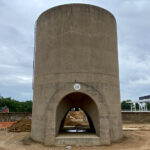
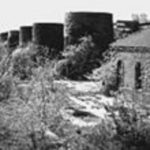
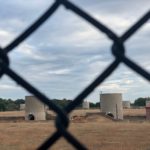
Of course, opponents of the development have long noted that McMillan is historic. It was built to filter and purify the city’s water in the 19th century, and Frederick Law Olmsted, Jr. later designed a park that concealed much of the industrial portions of the site while integrating the large sand silos that are still visible today. The park was eventually closed during World War II, and the whole water filtration plant was decommissioned in 1986 and later sold to the D.C. government. Opponents of developing on the site long argued that it should just be converted back into a park.
But one person who is excited about the development to come is Mayor Muriel Bowser, who on Wednesday said she was happy to see progress on the long-stalled project.
“I’ve driven down North Capitol Street my entire life. My mother would frequently say, ‘When are they going to do something with that place? She was talking about the McMillan reservoir. We’re starting to see the work happen,” she said. “The park that we promised, the recreation center is happening, and now we can convince retailers that it’s ready for a grocer. We’re very excited to re-engage and facilitate that process.”
Obviously, there’s no certainty the name “Reservoir District” will stick. Anyone remember the SoMo debacle? (That was an attempt to rebrand the southern end of Adams Morgan.) And while some folks insist North Bethesda is a place, there’s many who will never not refer to it as White Flint — or just Rockville. But by the time all the construction is done at McMillan, it’s of course possible that maybe the “Reservoir District” will have caught on.
Just don’t even try with SoRe — South of Reservoir.