 Jenny Gathright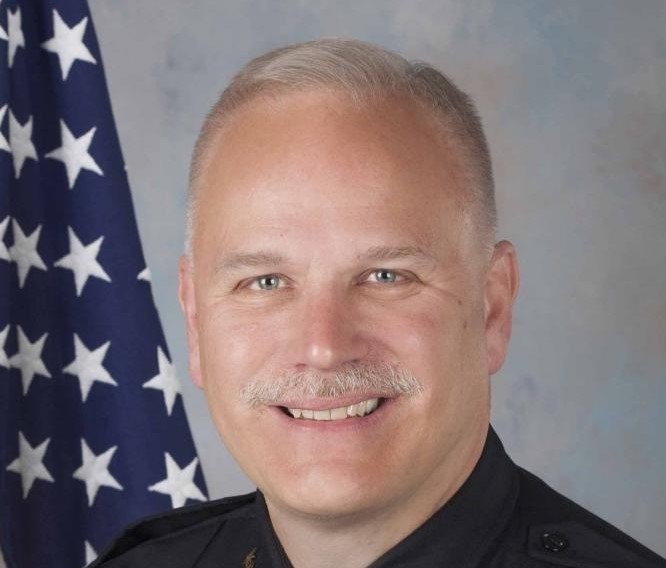
Chris Magnus is the city’s new Deputy Auditor for Public Safety. He’s the first to occupy the job, which was recommended by the city’s police reform commission in 2021 and ultimately created by police reform legislation the D.C. Council passed last year. But Magnus admits he’s never actually completed an audit.
“Probably the closest thing has been my role in working with the civil rights section of the Justice Department to come in and be part of pattern and practice investigations in different cities like Ferguson and Baltimore and the like,” Magnus says. “This will be new.”
Magnus has more experience on the other side of the audit process. He spent more than 40 years in law enforcement — many of them as a police chief. He was credited with leading significant change as police chief in Richmond, California: crime went down, officers’ use of deadly force decreased, and police-community trust improved – transforming the city, according to one glowing USA Today profile, “into a place where residents collect their beat cops’ cell numbers and dance with them at street festivals.”
After Richmond, Magnus went to Tucson, where he led a department that – similar to others (including D.C.’s) – faced recruitment challenges and rising homicides. Magnus next moved to D.C. for a role in the Biden administration, spending much of 2022 at the helm of the U.S. Customs and Border Protection before he was publicly fired amid clashes with other administration officials over priorities.
In his new job as D.C.’s Deputy Auditor of Public Safety, he’ll remain in D.C., where he lives in the 16th Street Heights neighborhood with his husband. But his focus will be local. And instead of leading a law enforcement agency, he’ll be on the outside looking in, scrutinizing D.C.’s major public safety agencies – like its police and corrections departments.
Magnus is charged with looking into the practices of the Metropolitan Police Department, Housing Authority Police Department, various D.C.-licensed security companies (or special police), as well as the Department of Corrections. Law mandates that the auditor periodically investigates practices at these agencies, including all serious police uses of force.
Magnus started the job this week, and he sat down with DCist/WAMU to discuss how he’ll approach it. The conversation has been condensed and lightly edited for clarity.
DCist/WAMU: Why this job, why this place, and why now?
Chris Magnus: First of all, I live here and we care about public safety. I always have, wherever I’ve lived. And I’ve worked in public safety, in policing, for the last 43 years. I’ve been someone who’s always tried to improve that profession, make reforms, look at how things can be done better. But this seemed like a really good opportunity to do that. I care about getting to know the community. I’ve always been one who likes to talk to the public and be engaged with them, and I think this is a good opportunity to try to make things better from a public safety standpoint.
Going way back to the beginning of your career, why did you want to be a police officer in the first place? What drew you to the job?
Well, I did 911 [dispatching] for a couple of years to help pay for college. And I really got to appreciate, first of all, what a tough job it is to be a 911 call taker and dispatcher. But I became interested first in EMS. I was a paramedic for a number of years, but I was drawn to policing because I was actually a huge skeptic of the police. I did not come from a policing background. I did not have police officers who were friends. I really wasn’t so sure that police were to be trusted.
I had been involved in political activism as a young person. And yet, through my work as a dispatcher, that’s when I got to know some of the police officers. And I did some ride-alongs and got to see some of the challenges of the job and decided, all right, maybe this is something completely out of my wheelhouse, but I’m going to go through the process. I went to an academy, which was a crazy experience, especially 40 years ago, let me tell you. But then I said, “I’m going to do the job as long as I feel like I can make a difference in a positive way and I don’t get bored.” And I certainly never have gotten bored. And I’ve always tried to make a positive difference. So it’s been a really interesting career coming up through the ranks in Lansing [Michigan] and then being a chief in several different cities.
What is your plan for the first few months? How are you going to get started?
First of all, my focus is going to be to get a team hired around me. [And] it’s going to be to expand my knowledge of local government and the community. I’ve always been one to get out into the community, and that would be my intention here: to listen and get a better sense of what people’s concerns are, particularly around policing. I’ve done work, even just recently, with the Policing Project out of NYU, and I was fairly aware of best practices in policing even before that work. But I think we have an opportunity here to look and see how MPD stacks up in terms of some of those best practices and do a little evaluation of things. I think we’re going to see there’s already a lot of areas where MPD is well ahead of the curve, but there are always areas that can be improved. And I think an audit is a good way. I’ve been on the receiving end of audits and they can really help you become better.
Morale is relatively low at MPD right now. Police officers tell me that they feel unsupported by the public and by some people in D.C. government, on the D.C. Council. I wonder how that, if at all, will affect the way that you approach the job, which adds additional scrutiny to the department and their work?
Scrutiny doesn’t equate with lack of support. That’s not a given. In fact, scrutiny can highlight needs and concerns that I think in many cases officers would feel pretty strongly about themselves. Ideally the data and the best practices point to maybe doing something differently that not only benefits the public, but that can benefit the members of the department as well. My experience is that most police officers want to do their job as professionally as possible. They want to earn the respect of the public by having the resources they need and the training and the supervision and the support to do the job the right way. And I think audits that are thoughtfully done that include feedback from the public — and if it involves the police department, certainly from members of that agency — can make a difference that can ultimately improve morale.
What does good policing look like to you? What is the goal of policing? I know that’s a big question but I imagine it’s one you’ve thought a lot about.
It’s a huge question, but I think it really comes down to how you best serve the public in terms of what the public identifies as its priorities, instead of the police deciding what the priorities are and the public just living with that or having to accept that.
A good police department is one that is engaged with the community at all levels and in all ways. That doesn’t just mean the police chief getting out there or the top brass showing up at various neighborhood meetings. It means creating an agency where officers have direct responsibility and engagement in neighborhoods on an ongoing basis: They’re assigned to areas consistently, they understand that part of their job is not just to listen, but to partner with residents, to focus on the priorities that they have.
A good department is also one that doesn’t just rely on strategies and tactics that kind of feel good, [like] “It’s the way we’ve always done it, this must be what works.” A good department is one that is continually looking to improve, to look at evidence-based policing, data-driven strategies and feedback from community, because community needs are continually changing. A good department is open to change at all levels – a change in how people are hired, change in how they’re trained, a willingness to look at the tools officers should be using to make a city more safe. I can remember for many years when I was an officer and even as a supervisor, the primary tool to solve problems was to make an arrest. We know now that, sure, you may still need to make arrests in certain circumstances, but there are a lot of other tools officers have to have to be effective and to do good policing. So there are a lot of components of a good department. I’ve already seen that I think MPD is an example of a good police agency in many, many ways. But a good agency is also one that opens itself up to scrutiny and supports that.
For much of your career, you’ve been charged with making change from the inside of police departments. I’m curious how those experiences will inform your approach, now that you’re on the outside of a department looking in, making inquiries and investigating and making recommendations?
I hope they help. Being on the receiving end … I appreciated it when those doing the audits were fair in terms of getting feedback and perspective from us within the agency about things that we were doing and why we were doing them. But I was grateful as a chief when an audit [gave us] feedback that wasn’t always all that positive about some of the things we were doing, because there were there were circumstances where we needed help from outside of the agency to make things better … sometimes you actually need a problem to come to light so you can get the attention it deserves from the community, from the media, from your legislative body, whatever that might be.
You need things to be put out there. And I think that’s helpful, whether we’re talking about a corrections facility, whether we’re talking about a police department, sometimes to make things better, you need to have the data, the evidence. It needs to come out there in a form that people see as trustworthy, that doesn’t come from a position of bias, but that points out a situation that needs more attention.
I want to ask about the Department of Corrections and the D.C. Jail. People have been complaining about the same problems at that place for decades — poor medical care, poor treatment from staff, and unsafe conditions. How do you think your oversight can make a difference there?
Correctional facilities are very challenging environments. Just the very limited experience I had rebuilding a city jail and running that for two years [in Lansing] gave me — on a much, much smaller scale than what we’re talking about here in D.C. – exposure to the many challenges that come with a jail, ranging from facilities to staff and training and supervision and accountability. This is an area I want to learn more about and will make decisions as time goes on.
I want to add — whatever we decide or is going to be as a result of discussions that I have with our auditor, Kathy Patterson, and also with others in the community. I think looking at a correctional facility is a very, very challenging and complex process, no matter what component you’re examining. And so I would want to do that right, and I would want to make sure we’re taking the time and gathering the right kinds of data around some of the most important issues, but not just delve into something without a little more background and understanding.
You mentioned wanting to get more information before you dive in. But is there a specific audit you already know you will do?
Well, legislatively, there is a mandate that this office look at the issue of white nationalism within the police department. That is obviously a very important issue, but it is also one that has to be approached very thoughtfully, especially if you’re going to get value out of any sort of audit. That’s something we are going to pursue, but I want to be very thoughtful about how we look at that, how we would gather information. It’s not like, “Okay, raise your hand if you are [a white nationalist] now or have ever been.” It doesn’t work like that. This is something I would want to look at and plan out very carefully. That’s one of the things. And as I mentioned, another area is just looking at how [MPD] is doing in relation to best practices in a number of other areas, things we know are best practices in policing.
How will you define success?
Being able to reach findings that the community sees as credible but also actionable… a solid product that people see as fair and something that’s worth pursuing and really looking at, but also taking action around.
I think part of success will be my ability [to work] with the auditor, Kathy Patterson, to have conversations with councilmembers or others who have the capacity to make changes that are needed. In some cases that might be the police chief, in some cases that might be the director of the [Department of] Corrections. But success is identifying problems in a credible way, and then helping to promote action to address those problems.