Jacob Fenston
We’ve seen the photos from the West Coast for years — orange, smoky skies, everywhere from San Diego to Seattle. Now it’s happening here in the eastern U.S. as well, and scientists say this is probably not a one-off: bad air days are likely to become more common here due to climate change.
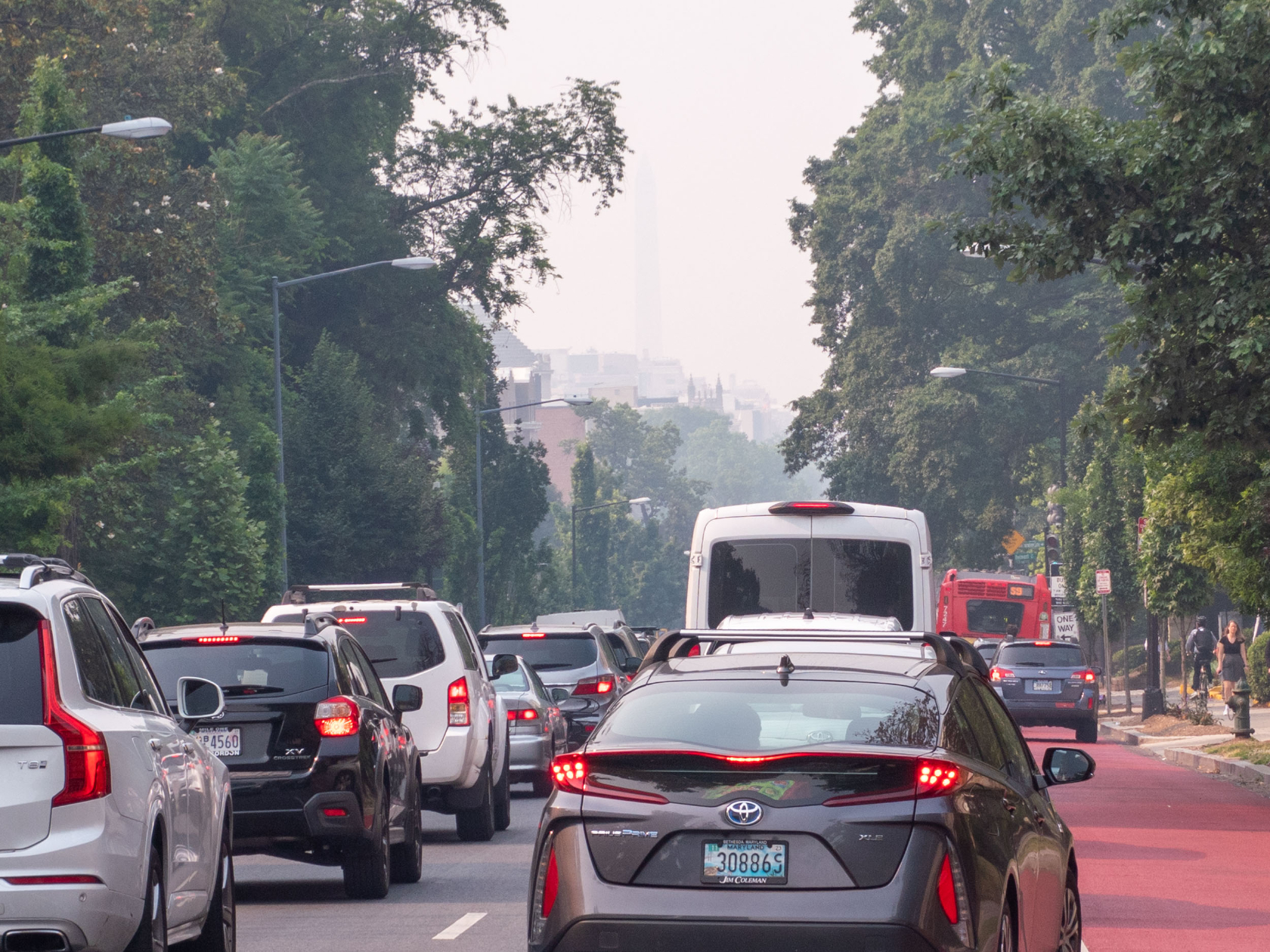
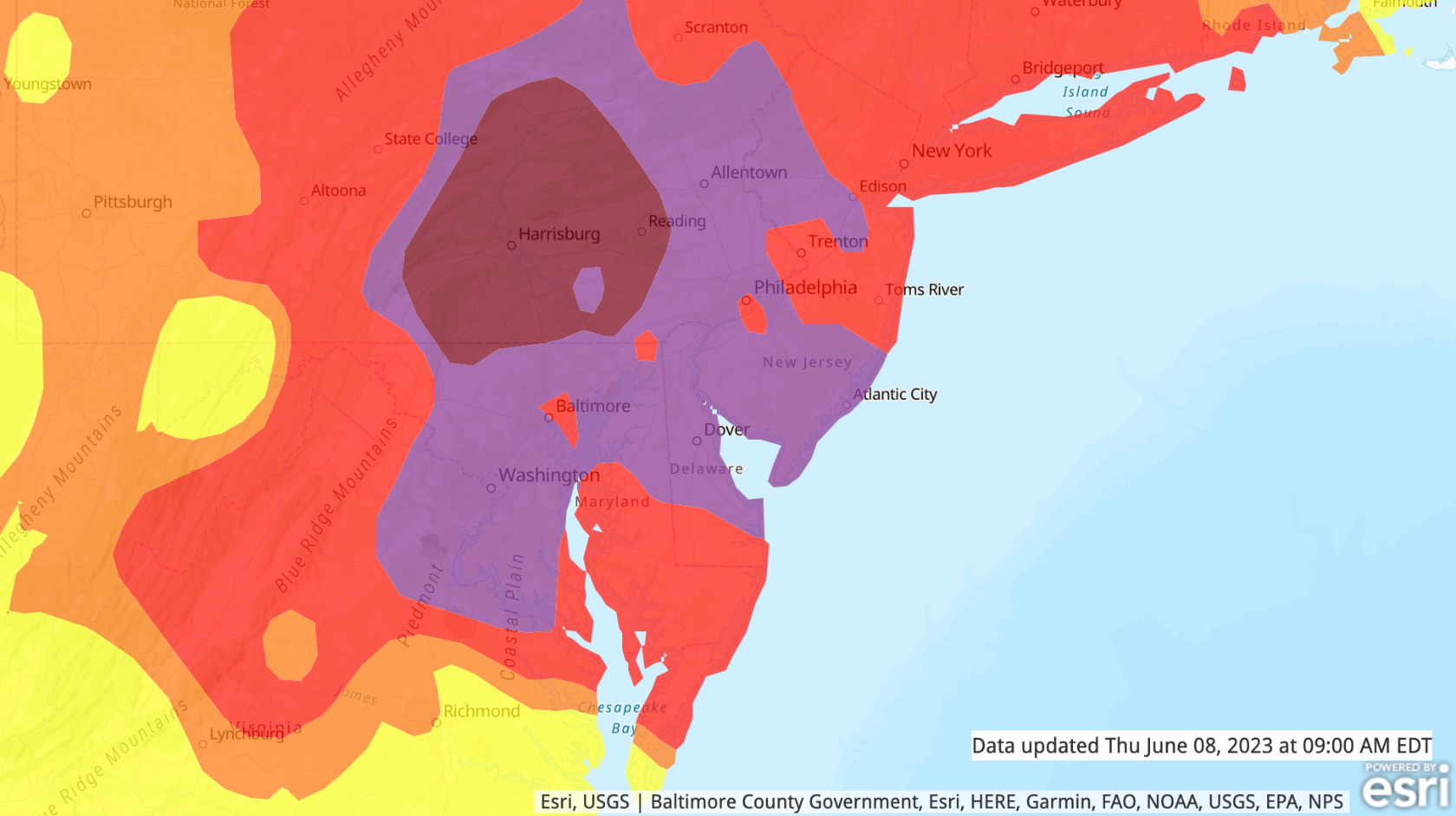
In the D.C. region the air quality index bumped into the “hazardous” zone on Thursday morning as a thick mass of smoke traveled south. With the Air Quality Index above 300, officials say everyone should avoid all outdoor activity outdoors, and even limit activity indoors.
It is the first time the District ever has recorded a code purple or worse for fine particulate matter, the main pollutant in wildfire smoke.
On the East Coast, climate risks such as flooding, extreme heat, and more powerful hurricanes tend to be of greater concern, but wildfires and smoke are also a likely to increase here as the planet warms.
“People don’t realize that in the East there used to be a lot more fire here, but we’ve done a good job of kind of eradicating it in the landscape,” says Mark Cochrane, a professor at the University of Maryland Center for Environmental Science who studies wildfires and climate change. “It doesn’t mean that it doesn’t burn, it’s just the conditions are such that it hasn’t been likely to burn.”
Cochrane says wildfire risk comes to down to “fire weather” — something residents in the western U.S. are very familiar with. It’s when conditions, including heat, lack of rain, and wind, combine, raising the risk a fire will start. Once a wildfire gets going, these conditions make it burn hotter and spread faster.
“With climate changing, we are having more and more times when we have the conditions for extensive or extreme fire behavior,” Cochrane says.
The smoky conditions in the D.C. area are mostly due to fires in Quebec, which is experiencing dry weather, record heat, and an 0ff-the-charts fire season. It’s a bad fire season throughout Canada: 10 times more acres have burned so far this year, compared to a typical year. It’s usually the western provinces that are the hardest hit, but right now there are more fires in the east — in Quebec this year, nearly 500 times more acres have burned than in a typical year.
“Canada is warming faster than many regions,” says Cochrane. “The further north you go, the more it warms.”
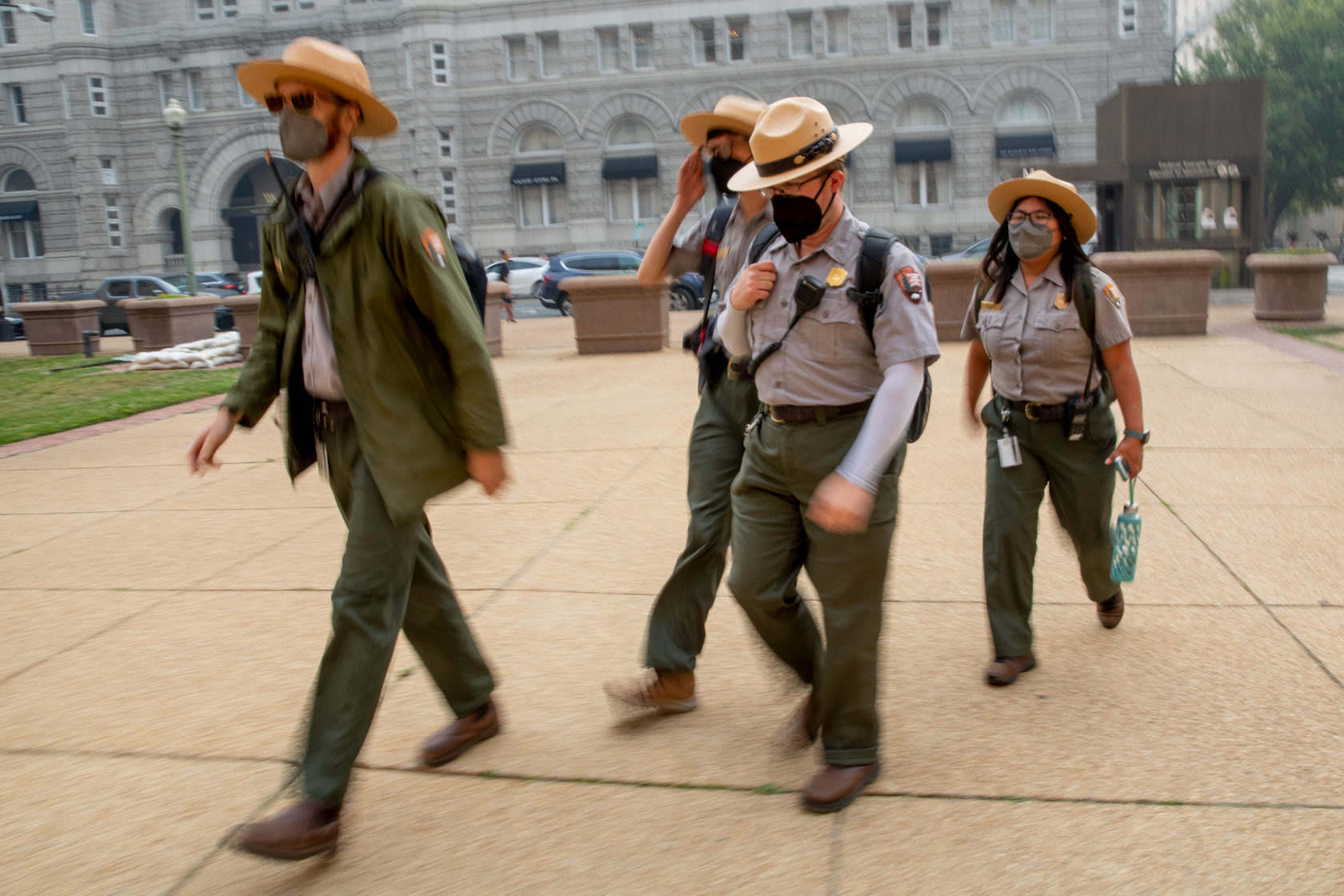
The eastern U.S. is not likely to experience the same devastating scale of wildfire as the West, due to our generally wetter weather and the different composition of our forests.
“Luckily for us, the types of forest that we have through most of the region, these broadleaves, don’t tend to burn in the same way,” Cochrane says. “But under the right conditions they can be very intense and spread.”
When fires do start in the eastern U.S., they can put more people at risk: there are more people living in forested areas, compared to the West, and there are more people living in closely clustered cities who could be exposed to wildfire smoke.
In fact, this week’s unhealthy air on the East Coast is already one of the worst wildfire pollution events in recent U.S. history, in terms of the number of people impacted. The Northeast is the most densely populated region in the country by far, and much of the area has been blanketed with thick, hazardous smoke.
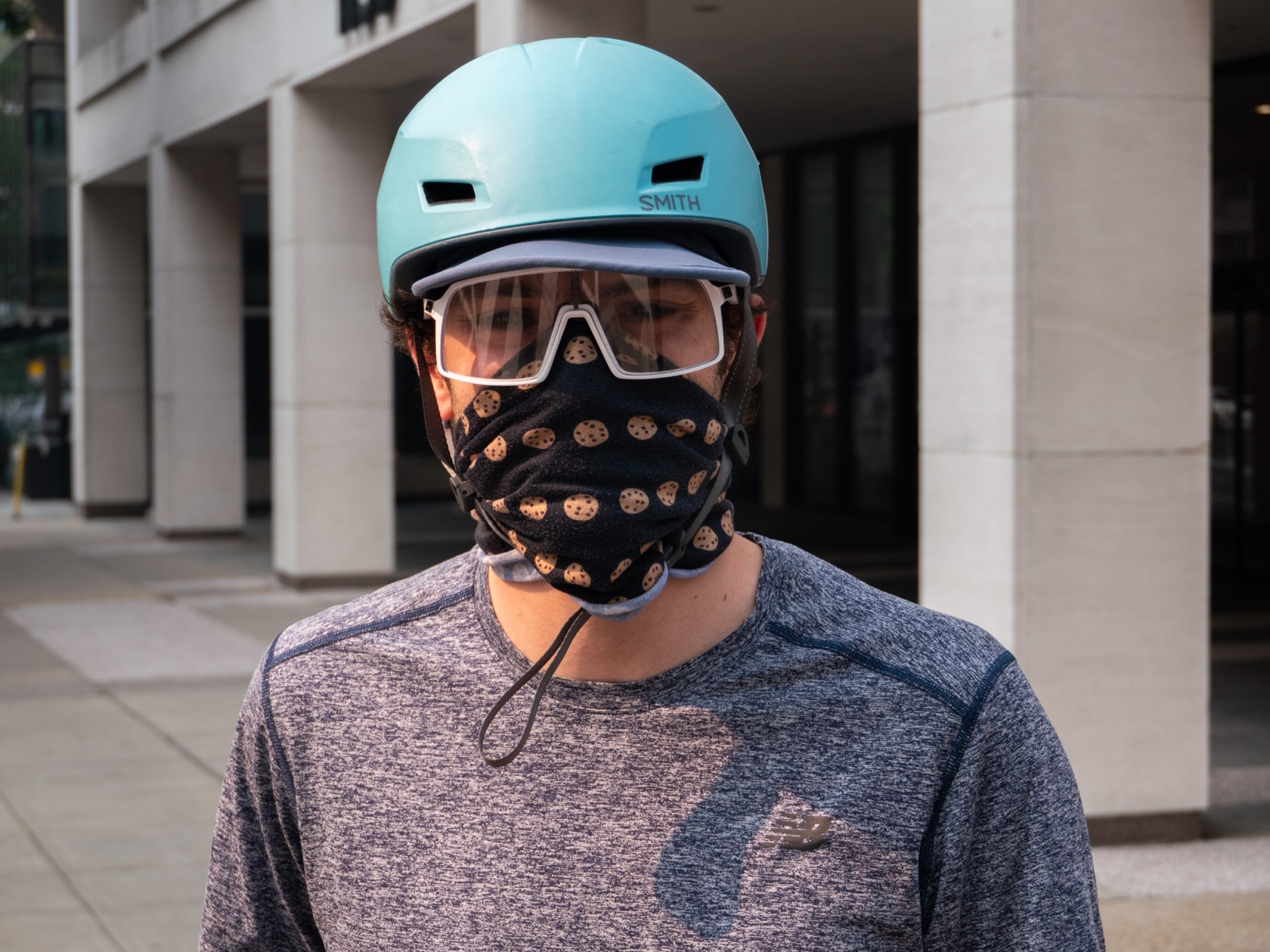
“It definitely is palpable,” says Joseph Guidi, a Columbia Heights resident who was biking through code red air on the way to a physical therapy appointment on Wednesday. He was wearing a face mask and goggles. “I just figured it was kind of a safety measure that was necessary.”
Guidi has lived in D.C. for eight years, and says he has never experienced air like this.
“It’s clearly a climate change thing. That’s why we have to all do our parts, right? You gotta ride a bike to places rather than owning a car, walk when you can, public transportation, all that stuff,” he says.
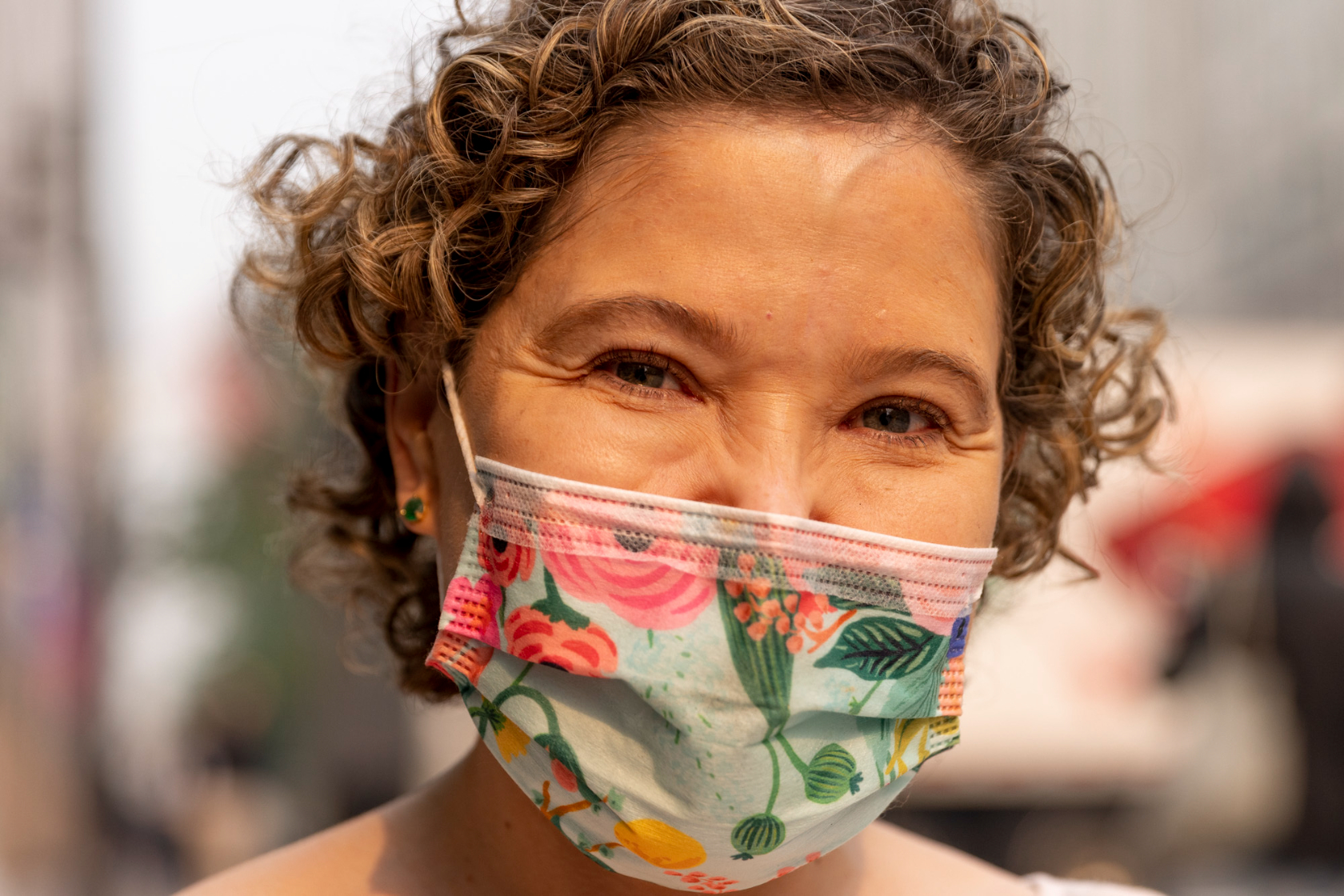
On Thursday, more people who were out and about were wearing masks.
“It’s much worse today than it was yesterday,” says Donna Jones, who was wearing a mask near Metro Center on Thursday morning. “It’s really surprising and scary. You look at the sun, and it doesn’t even look like the sun. As long as these fires are raging and blowing these winds down, we’ll mask up.”
Sunil Kumar, principal environmental engineer with the Metropolitan Washington Council of Governments, says this level of air pollution is unheard of in recent decades in the region.
“I’ve been monitoring air quality in this area for 20-plus years,” Kumar says. “We haven’t seen this kind of fires.”
In any given year, D.C.’s worst air pollution almost always comes on Fourth of July, when fireworks fill the air with smoke. This week was the first time in two decades that the District experienced a code red day (or worse) for particle pollution outside of the Independence Day holiday.
The U.S. Environmental Protection Agency has established air quality indexes for five different pollutants. In the District, ground-level ozone is often the biggest concern — it’s created through a chemical reaction when pollution from cars and power plants mix with sunlight. Fine particulate matter, or PM 2.5, is made up of tiny bits of dust, smoke, and other material.
In recent years, air quality has been improving dramatically in the D.C. region — and nationally — due to policies limiting emissions from vehicles and power plants, and promoting clean energy. In the D.C. region, there was a 96% drop in unhealthy air days between 1997 and 2022. In the West, progress on air quality has slowed down, or even reversed, due to increased pollution from wildfires.
“The consensus at this point is that there are these fires or were unusual in the past and are becoming more frequent now because of climate change conditions,” says Arnaud Trouvé a professor at the department of fire protection engineering at the University of Maryland.
But Trouvé says climate change isn’t the only factor. Another big one is forest management — for decades we’ve be suppressing wildfires, ever since the U.S. Forest Service created Smokey The Bear in 1944. This leads to dead trees and leaves building up on the forest floor.
“We have been seeing over the past few decades accumulation of surface fuels that were not there a hundred years ago. This accumulation makes now fires much more intense,” Trouvé says.
The solution Trouvé says, is to intentionally bring fire back to the landscape using prescribed burns.
“If you look at indigenous people, very often that’s the way they were managing the landscape. There were lots of fires occurring prior to the colonization of the Americas, and the ecological viewpoint is that this was a good thing, all these fires were healthy for the landscape,” Trouvé says.
In the D.C. area, smoky skies are likely to stick around at least through Friday. Possible storms Friday afternoon could help clear the air going into the weekend. In response, numerous events have been canceled, the National Zoo has closed, and schools are keeping kids indoors.
Tyrone Turner contributed to this story.