 Jordan Pascale
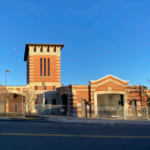
Metro has won a $104 million federal grant to pay for 100 new electric buses and convert its Cinder Bed Road garage in Lorton, Virginia to an electric charging facility.
The Bipartisan Infrastructure Law passed in 2021, funded this year’s $1.7 billion Federal Transit Administration Low or No Emission Vehicle Program.
“Today’s announcement means more clean buses, less pollution, more jobs in manufacturing and maintenance, and better commutes for families across the country,” Transportation Secretary Pete Buttigieg said in a statement.
Electric buses emit zero emissions at the tail pipe, and are quieter than diesel buses, but have some drawbacks like a more limited range than a diesel bus and batteries sometimes struggle in the cold.
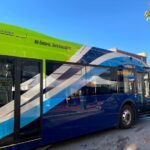
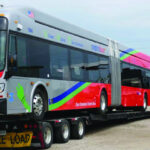
Metro is hoping to convert all nine of its garages and its entire 1,600-vehicle fleet to zero-emission buses by 2042. WMATA’s first electric 60-foot bus arrived earlier this month and could be on the road by the end of summer. Metro has ordered a dozen test pilot buses as its first major foray into electric technology.
“This (grant) is a testament to the importance of the federal government and regional partners joining together to support the transition to zero-emission buses that will help create a healthier, better environment,” Metro General Manager Randy Clarke said in a statement. “It is this type of cooperation that will help us transition to a fully zero-emission fleet three years earlier than our initial goal.”
The grant includes money to develop a workforce training program for drivers, mechanics, and first responders to ensure safe and efficient operations of the fleet.
Fairfax County will also use part of the converted Cinder Bed Road facility to house its future all-electric Bus Rapid Transit buses that will run from Fort Belvoir to Huntington Metrorail Station by 2030.
Alexandria got $24 million to buy 13 battery-electric buses and more charging infrastructure. The city wants to convert its fleet to zero tailpipe emissions by 2037.
“The City is committed to reducing its environmental impact and improving air quality. The purchase of zero-emission buses is a major step forward in achieving these goals,” DASH General Manager Josh Baker said in a statement. “The new buses will help reduce greenhouse gas emissions and improve air quality for all residents of Alexandria.”
The University of Maryland in College Park won $40 million to buy 35 battery electric buses for campus and charging equipment.
Loudoun County Transit got $13 million for 37 compressed natural gas buses.