Colleen Grablick
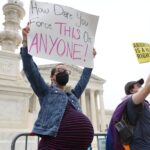
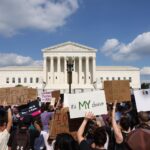
One year after the Supreme Court overturned Roe v. Wade, ending nearly five decades of constitutionally protected abortion rights, the landscape of abortion access in the D.C. region remains precarious, with patients and providers alike bracing for an uncertain future.
As East Coast states like Florida, West Virginia, and North Carolina passed legislation restricting – or altogether banning – access to abortion care, lawmakers in Maryland have acted in opposition, expanding who can provide abortions. A stronghold for reproductive care before the Dobbs decision, D.C. has also worked to expand access, increasingly serving as a destination for out-of-state travelers whose local options for abortion care have cut been cut off.
In Virginia, now the southernmost state without a post-Roe ban, the future of abortion access remains a contentious debate — and one expected to heat up in this fall’s off-off year election where abortion is expected to be a top line issue.
Dueling lawsuits filed last year — one attempting to restrict access to mifepristone, the medication abortion pill, and another attempting to protect it – are still working through the lower courts after the Supreme Court issued a stay earlier this spring. The outcomes are likely to impact all three jurisdictions.
The unique interconnectedness of this politically divided region, D.C.’s lack of statehood, and the interstate collateral of abortion law without federal protections means that changes to laws in one jurisdiction will undoubtedly impact access even in protected areas.
Here’s where things stand, post-Roe in the D.C. region:
Virginia
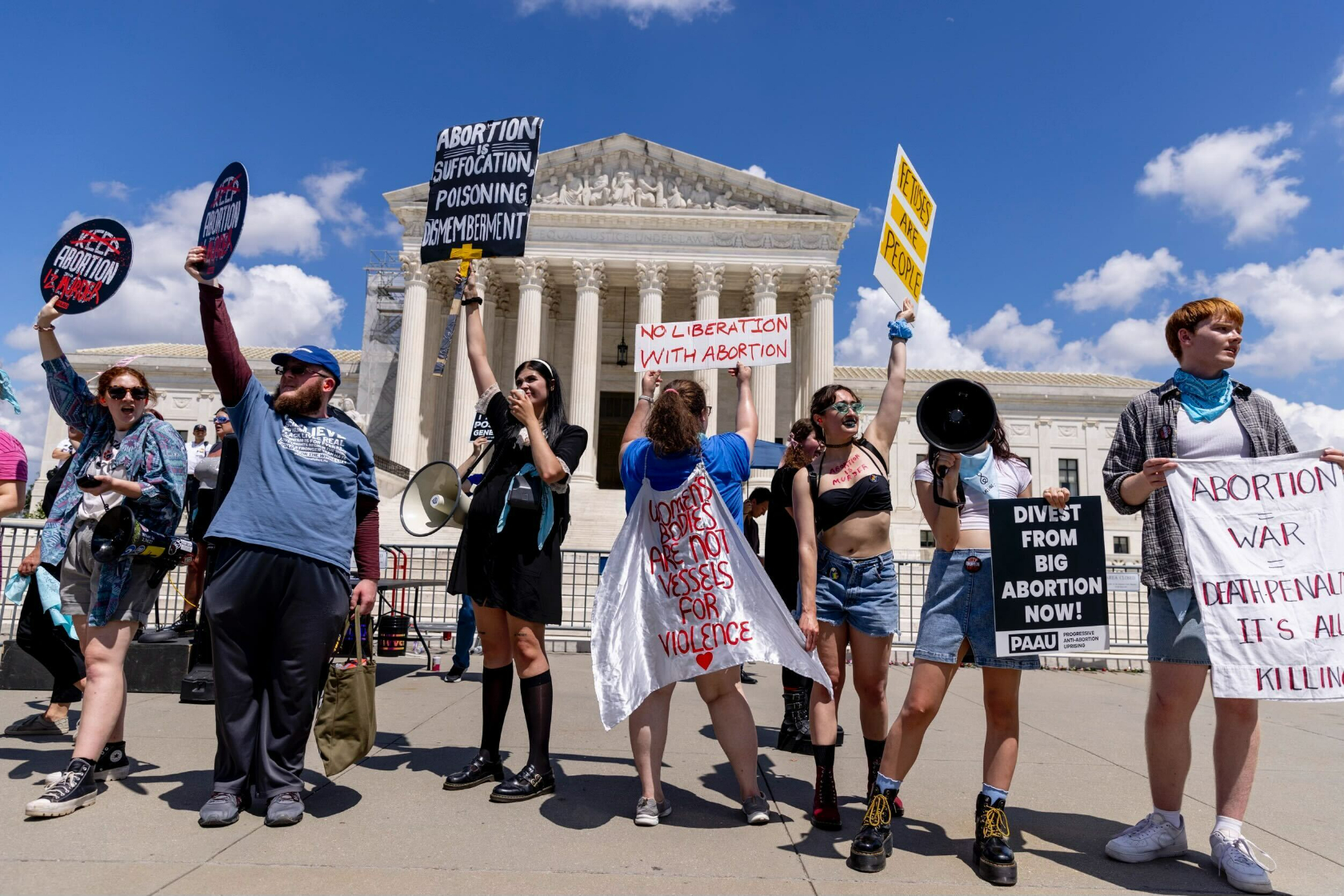
Abortion is currently legal in Virginia within the first and second trimesters, a fact that isolates it from almost all of its neighbors. This fall’s election, however, could open an avenue for a GOP-backed ban if Republicans take control of the General Assembly.
Shortly after Roe fell last year, Republican Gov. Glenn Youngkin announced his intent to introduce a 15-week abortion ban. This came after another attempt of Youngkin’s to restrict abortion access when he tried and failed to add an amendment to the state’s two-year budget bill last year that would’ve prevented state funds from paying for abortions in cases of fetal anomalies. (Low-income patients on Medicaid can only use public dollars for abortion procedures in certain situations, like if a patient’s life is at serious risk, if the pregnancy is a result of rape or incest and the patient has reported the incident, or if the fetus has a “documented incapacitating abnormality.”)
In January, the narrowly Democratically-controlled state senate defeated Youngkin’s proposed ban, which was introduced by Republican Sen. Steve Newman. It would have banned abortions at 15 weeks, with exceptions for rape, incest, or the physical well-being of the patient. But with an upcoming general election where all 140 General Assembly seats are on the ballot, Republicans have a renewed chance to push an abortion bill through the General Assembly should they win control of both houses. Gov. Glenn Youngkin has pledged to push for a 15-week ban should the GOP take the full General Assembly this fall.
“As we look toward November, the stakes for Virginians in this year’s elections are crystal clear: our Senate majority has been the one thing standing between Virginians and the Republicans’ extreme agenda,” said Senate Democratic Caucus Chair Mamie Locke in a statement, immediately following the primary election.
Virginia Democrats see abortion as their election-winning issue this year and are framing Republican attempts to restrict access as an out-of-touch position that doesn’t reflect the majority of Virginians. A January 2023 poll from Christopher Newport University’s Wason Center found that more than 70% of Virginians surveyed supported either maintaining the current abortion law or further removing restrictions.
Abortion already proved itself to be a winning issue for some Democrats in last week’s primary. Incumbent Sen. Joe Morrissey, a conservative, pro-life Democrat, lost to Del. Lashrecse Aird in the Richmond area. Morrissey maintained a murky position on abortion, stating his personal objection to the procedure and saying once that he was keeping an “open mind” to restrictions. Aird’s campaign centered heavily on her commitment to protecting abortion rights.
Mike Scheinberg, the director of operations at Falls Church Healthcare Center in Northern Virginia, said that as the fate of abortion access remains in flux, providers have to stay prepared to pivot with strategies in place, should lawmakers attempt to restrict access.
“We can’t just stop and say, ‘okay we need to regroup,’” Scheinberg told DCist/WAMU in an interview. “We need to keep on providing services. It’s all about the planning, it’s all about trying to figure out what’s going to happen next.”
Providers in Virginia (and across the nation) faced a similar period of uncertainty earlier this year, when a federal judge in Texas issued a nationwide injunction on the FDA’s approval of mifepristone, a medication abortion pill that’s been widely used since it was first approved in 2002. The U.S. federal government ultimately appealed that ruling, and the Supreme Court issued a stay, meaning access remains unchanged, for now, as the case plays out in the lower courts.
Medication abortions account for more than half of all abortions in the U.S., according to the Guttmacher Institute, and are often logistically and financially easier than procedure abortions. Scheinberg said that while the country waited for the various appeals to be made and stays issued, Falls Church Healthcare Clinic made tons of photocopies of new guidelines assuming that some level of FDA approval was successfully scaled back.
“I had everything ready to roll, because we had patients that next Saturday, and on Friday we were waiting to find out – do we need to change those guidelines?” he said. “Fortunately we were able to continue business as usual, but we have to keep watching because we can’t be surprised by this.”
Unlike other states, Virginia did not move to stockpile mifepristone or misoprostol, the second pill used in the two-pill medication abortion regimen. When used together, they have a 98% efficacy rate. In the case that mifepristone was banned or its usage restricted, providers would rely on misoprostol alone, which can be more painful for a patient but still shows an efficacy rate of 95%. As things stand currently, Virginians can still access both medications and also get them delivered by mail.
Maryland
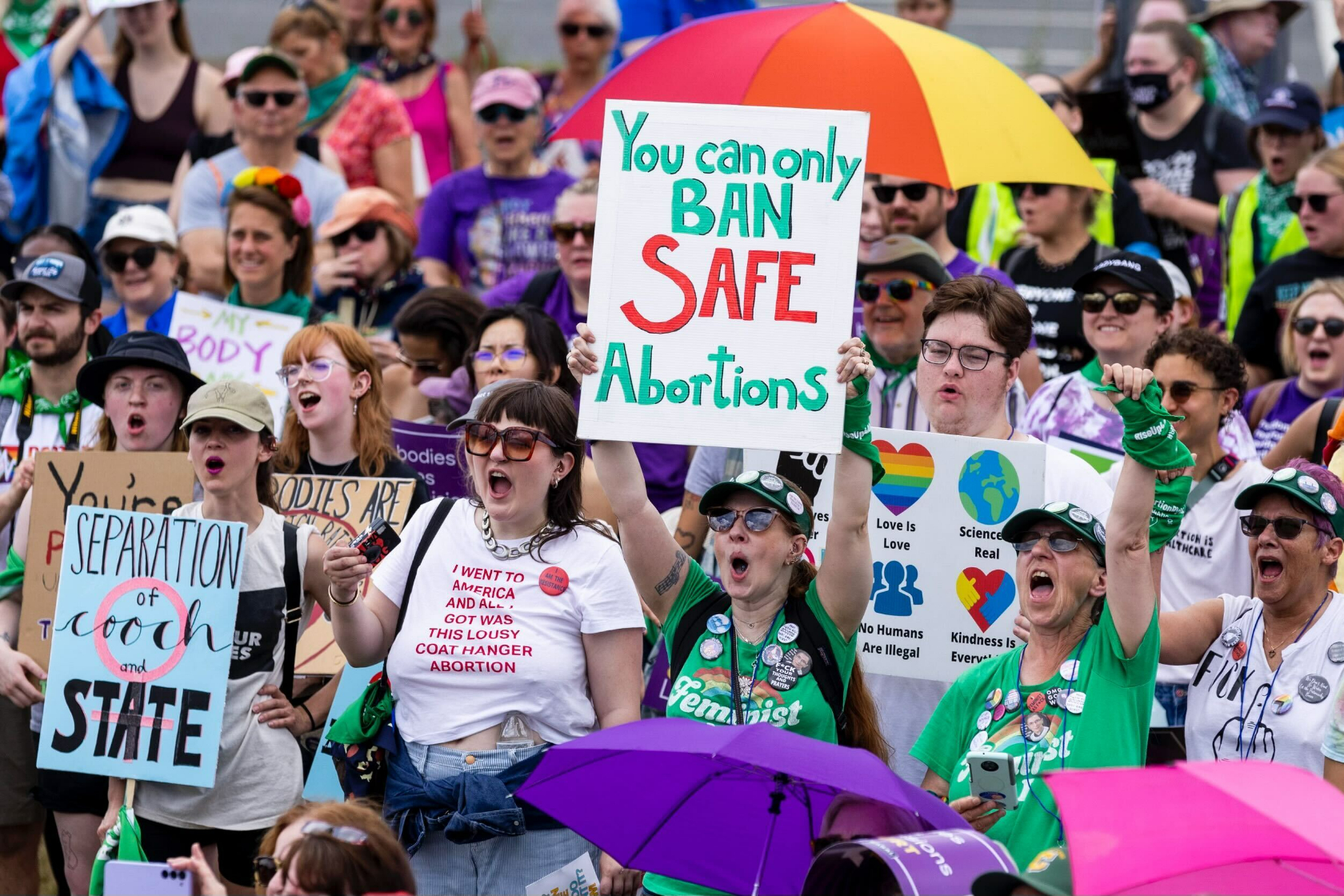
In Maryland, abortion is legal up until a fetus is “viable,” meaning it could survive outside of the uterus. (This typically occurs between 24-26 weeks, but there is no fixed definition.) Marylanders can also access medication abortion by mail.
Before the Dobbs decision came down, the General Assembly passed legislation expanding who could provide abortions, bolstering the network of available providers in the state. The law removed a restriction that prevented nurse practitioners, nurse midwives, and physician assistants from providing abortions, and set aside $3 million for a program that would train these newly-eligible providers. Former Republican Gov. Larry Hogan, however, refused to release that money in 2022. When Democratic Gov. Wes Moore assumed office, doing so was among his first moves as governor.
More protections came during the 2023 General Assembly session. With Democrats controlling both chambers and the governor’s mansion, lawmakers passed a shield law, essentially protecting out-of-state patients and providers from legal retribution if they travel to Maryland from a state with an abortion ban. In another move, lawmakers voted to put an abortion referendum on the 2024 ballot, letting voters decide whether to enshrine abortion rights into the state’s constitution. That measure is likely to pass — a poll from the Washington Post and the University of Maryland last fall found that 78% of Maryland voters supported such an amendment.
The state has long been a destination for out-of-state residents seeking abortions, a status that has only elevated since Roe’s fall.
In September of last year, Jim Justice, the Republican governor of neighboring West Virginia, signed a total abortion ban into law, effective immediately, making Maryland the closest state for abortion care.
The Women’s Health Clinic of West Virginia, the state’s only provider, was forced to close its doors. The director of that clinic, Katie Quiñonez is opening a new location, now just over the state line in Cumberland, Maryland, hoping to fill the gap caused by the total ban.
“We know, logically, that when abortion is banned in a single state, the consequences of that abortion ban do not stay within those states’ borders,” Quiñonez told DCist/WAMU. “We know that the people who can, and who have the privilege and the resources to, will travel outside of their state to access abortion care in the nearest state where it is legal to do so.”
The forthcoming center, Women’s Health Clinic of Maryland, is slated to open by the end of July and will offer a host of services, including procedural and medication abortion, birth control and contraception, STI testing, and gender-affirming hormone therapy.
But while Maryland’s statewide laws protect abortion rights, access is limited and uneven throughout the state. Western Maryland is an “abortion desert.” The closest options for care in Cumberland are either Pittsburgh, Pennsylvania, Hagerstown, or Frederick, all of which require a long drive. Additionally, the Frederick clinic only offers medication abortion, while the Hagerstown location operates on a limited schedule, and only performs first-trimester abortions.
“Our communities have always needed more abortion providers, that’s the reality,” Quiñonez said. “Our communities deserve more access to health care, not less.”
Meanwhile, in Montgomery County, local lawmakers moved to support the county’s providers after Roe, creating a grant program for organizations that provide abortions, refer patients to abortion services, or offer wraparound services to individuals seeking abortions.
D.C.
D.C. lawmakers, like those in Maryland, acted to protect the many out-of-state travelers they anticipated would flock to the D.C. area in a post-Roe landscape. Councilmembers passed one bill (which went into effect this past February) protecting anyone in D.C. who seeks or self-manages an abortion from any penalties. A different bill from Ward 1 Councilmember Brianne Nadeau allows any D.C. resident that’s sued for providing abortion access to someone from a state with abortion bounty laws to sue in return.
However, because D.C. is not a state, Congress approves D.C.’s laws and budget and thus has control over how the city funds abortion. For decades, lawmakers on Capitol Hill have maintained a budget rider that prevents the city from subsidizing the costs of abortions for low-income people, and the recent federal spending bill draft released by House Republicans upholds that ban.
Without any public dollars available to help poor people seeking abortions, those residents may turn to abortion funds for financial assistance. The D.C. Abortion Fund helps people pay for any stage of the process, including the medication and procedure itself, as well as lodging or travel. Jade Hurley, communications manager at DCAF, said that since Roe has fallen, both the number of callers has increased, and the average ask has gone up by hundreds of dollars.
“No one should have to pay for abortion care, but just the cost of getting the procedure is becoming pretty astronomical,” Hurley said.
The higher pledge amounts could also be influenced by the increase of patients from states like Florida, Georgia, and Texas coming to D.C. for an abortion — longer travels cost more. Hurley said DCAF had a huge pump in “rage” donations after the Dobbs leak last May. Things have stabilized slightly in the past few months but she says DCAF’s mission remains to build a community of love and support around abortion, making sure they’re reaching the people who need their assistance most. The organization has reshaped its intake and data collection system to identify holes in populations they need to reach. They’re preparing to handle a further increase in out-of-state requests if North Carolina’s ban comes to fruition.
“When abortion is banned somewhere, it’s going to impact it everywhere.”