 Aja Drain
Thousands across the D.C.area have lost Medicaid coverage in recent months, as pandemic protections that allowed people to stay enrolled without reapplying came to a close. Known as “Medicaid unwinding,” states are resuming annual Medicaid eligibility reviews, meaning many thousands more may lose their insurance over the next year.
Each month – depending on when they initially enrolled – a new crop of people will be prompted to renew their Medicaid or potentially lose coverage. In the coming months, patients, providers, and state agencies alike are faced with the massive undertaking of getting people who have lost coverage re-enrolled, and hopefully catching many more before they lose it in the first place.
“Everyone who has Medicaid across the country needs to undergo a redetermination, which currently is around 90 million people,” says Basim Khan, physician and CEO of Neighborhood Health in Northern Virginia. “Many of these people haven’t gone through a redetermination process before.”
Medicaid is a hybrid state and federal program providing health insurance to low-income residents. Eligibility varies depending on your status — whether you’re an adult, a child, pregnant, over/under 65 years old, blind, disabled, are part of a family, and more. Over 280,000 D.C. residents, 1.9 million Virginia residents, and 1.6 million Maryland residents were enrolled in the program in October of 2022, according to KFF Health News. Typically, recipients have to renew their status every year, a process that involves submitting eligibility paperwork to prove their residence, citizenship, income status, and more.
During the COVID-19 emergency, the federal government paused this process, keeping everyone insured indefinitely. But now, with the COVID state of emergency ended, localities including D.C., Maryland, and Virginia are resuming manual renewals, a process that will leave thousands without any health insurance at all — including many that don’t even know it.
While some people will lose their Medicaid because of an increase in income or another life change making them no longer eligible, for many others, it will just be because they didn’t fill out the right paperwork.
Thousands disenrolled in D.C., Maryland and Virginia
Some state Medicaid agencies, including those in D.C., Maryland, and Virginia, can use information they already have accessible to automatically renew applicants. Maryland, for example, uses Supplemental Nutrition Assistance Program (SNAP) files. But if state agencies don’t have information for automatic enrollment, they send enrollees notices and requests for information ahead of their renewal date.
So far, across D.C., Maryland, and Virginia, between 15-30% of potentially eligible Medicaid patients are disenrolled. Maryland has disenrolled a total of 34,675 as of June 9, and 24,643 of those are because the individual didn’t submit their application on time or fully complete the renewal process.
Virginia has 53,353 “closed accounts,” but it doesn’t specify the reason they were closed. In D.C., as of June 21about, 3,000 people are disenrolled, with less than 100 due to ineligibility and about 2,900 individuals due to “procedural termination,” or forms that weren’t finished or sent. Just over a third of them are children.
“We know, based on looking at other states that are publicly reporting their data, that [D.C.’s] procedural termination rate is high. And we believe this is due in part by the fact that we in the District have the highest eligibility levels in the nation,” DC Department of Healthcare Finance Medicaid Director Melissa Byrd said in a bi-weekly Medicaid renewal community meeting. That means most folks who submit for renewal will be deemed eligible, Byrd added. “Most of the folks losing coverage are for people who don’t respond.”
Providers and agencies ramp up outreach
Local agencies across the D.C. region have implemented outreach strategies to connect with residents in need. Emails, phone calls, fliers, bi-weekly informational webinars, training for local Medicaid providers and case managers, and updating information on government websites. But many patients still face barriers.
“It’s a lot of people to reach who often may have changes in their living situation, have changes in their address, in their cell phone, in their family structure. There can be a variety of changes that can change our ability to reach them and can potentially change their eligibility,” says Annice Cody, CEO and President of Holy Cross Network, which provides care in Maryland. “So it’s not that there’s a one size fits all answer for everybody that we can just automatically reach everybody and say, ‘Do these three steps and you’re done,’ it is really that individual attention that everyone needs.”
Many people have busy, complex lives making it difficult to make time or get connected to help with the redetermination process, Cody adds. Neighborhood Health provides services for many immigrants, so language is a common barrier to be mindful of, Khan says.
“The issue that we deal with a lot is literacy,” Khan says. “So even if it is in a certain language, oftentimes patients may not be able to read, or they may be able to read, but not necessarily at the level it takes to complete the form, and then oftentimes collecting the additional information can be a challenge as well.”
The burden of proof is heavily on the patient. Forms and additional documentation vary by state, but D.C.’s application is typically about 60 pages long, but only select portions are necessary for Medicaid renewals. Patients have to fill out all of their household information, immigrant status, income and tax information, and more. And if they’re deemed ineligible and believe that decision was a mistake, they have to submit another form or appeal in person, by mail, or over the phone.
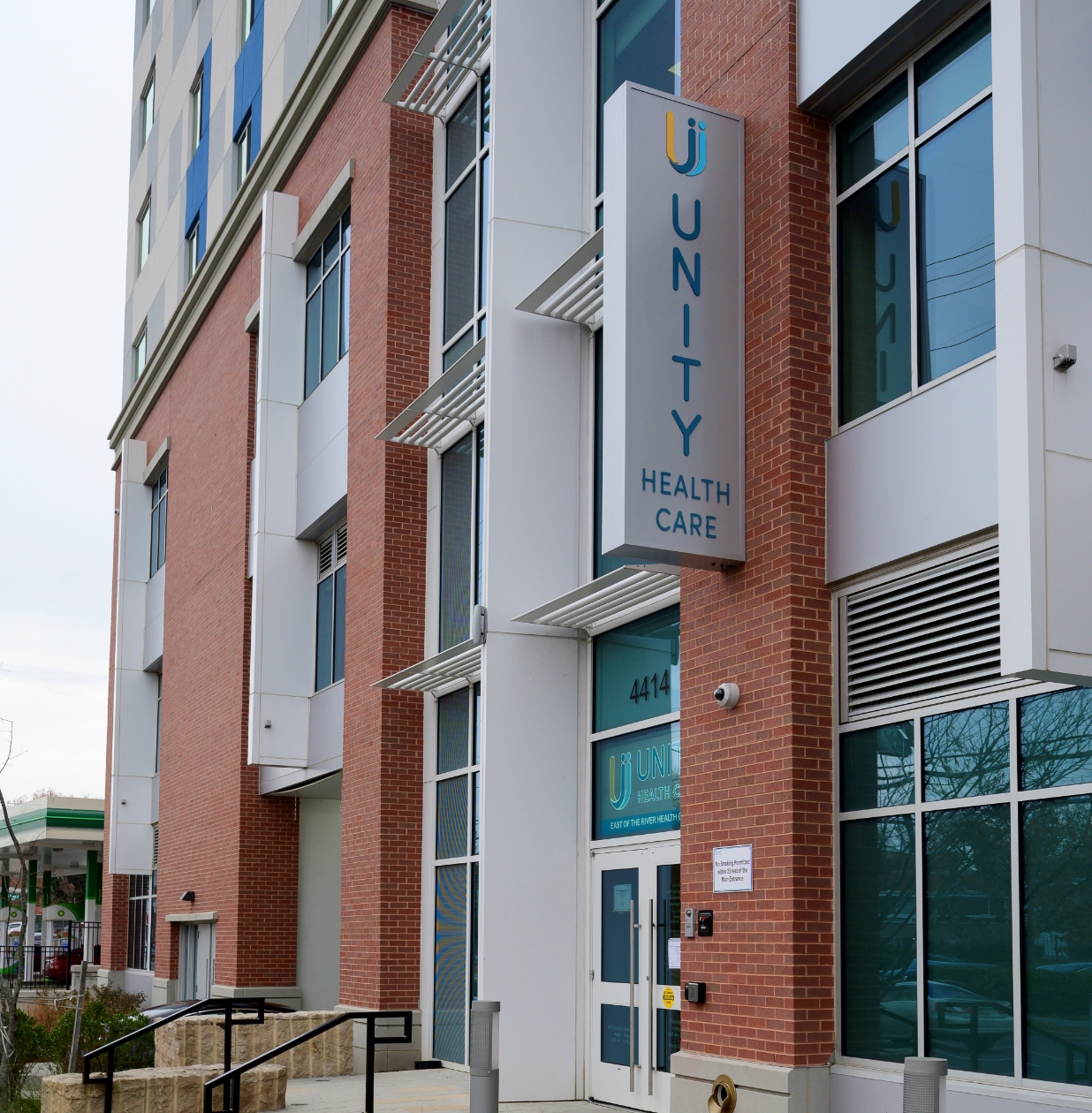
“We know many of our patients have barriers to accessing computers or have limited knowledge of using them,” Unity Health’s Chief Operating Officer Tracy Harrison told WAMU/DCist. “To help them, we are making team members and laptops available so patients can re-enroll with both technological and physical support from our team.”
For ineligible Medicaid patients, they may be directed to alternative coverage options, like D.C.’s HealthCare Alliance program. To qualify, patients have to provide proof of state residence, income, and assets information, a Social Security card or Alien Number if they have a green card. Patients also have to have a face-to-face interview every six months for continued eligibility.
Grace period may apply after lapse
In the D.C. region, uncovered Medicaid patients may still be able to seek care while they’re trying to re-enroll. Each state has its own version of a grace period or retroactive period. In D.C., a 90-day grace period allows patients to have extra time to submit renewal materials after they’ve missed their deadline, and if they’re found eligible medical expenses incurred in that period will be covered retroactively, according to a spokesperson from the Department of Health Care Finance.
But after 90 days, they have to submit a completely new and much longer Medicaid application to re-enroll. Maryland has a 120-day reconsideration period which allows eligible patients to renew and have their coverage reinstated to the day it was disenrolled.
Khan says that in Virginia, disenrolled patients can also get retroactive coverage for medical expenses they incur within 90 days after their Medicaid expires, but that gap in coverage can still be discouraging. Patients may not be able to make certain appointments without insurance, or they may receive an unexpected bill in the mail because they didn’t have coverage during a certain period, according to Khan.
Even with the grace period, the time when patients are waiting to hear back on their application can create gaps. In D.C., the process is supposed to take 45 days (90 days if the agency has to determine if the applicant is disabled), a spokesperson for DC Healthcare Finance said at a Q+A session about Medicaid renewal on June 21. But with higher volumes, it could take longer.
“Even if the coverage was going to come later or it was going to be retroactive, all of those things can be a disincentive for people to seek care,” Khan says. “They might have to pay a large out-of-pocket expense for a medicine or not be able to pick up a medicine, or their care can be interrupted.”
Gaps in coverage lead to gaps in care
Even short-term gaps in coverage can have significant consequences and exacerbate existing disparities in care. The majority of non-elderly (under 65) Medicaid enrollees are people of color in D.C., Maryland, and Virginia, according to data from KFF Health News. Gaps can put residents at risk for incurring medical debt, which falls hardest on D.C.’s Black residents, who are three times more likely than white residents to have medical debt.
Although annual renewal was always required with Medicaid, the changes in coverage brought on by the pandemic reprieve can be confusing to patients, Khan says. Even under normal circumstances with established programs supporting them, it can still be hard for them to get the medicine and care they need, he adds.
“I see patients so many times come to me saying, ‘I did not start taking this medicine because it wasn’t covered,’ or ‘I went to the pharmacy, and it wasn’t covered. This is really critical. So I paid a large amount out of pocket, and I had to borrow from someone else to be able to pay for this medicine,’” Khan says. “Those types of stories happen all the time, even under regular circumstances. So you can imagine a situation where someone has lost their Medicaid coverage.”
Khan anticipates plenty of disruptions of care throughout this redetermination/renewal process and emphasizes the importance of Neighborhood Health’s efforts to ensure consistent coverage for all patients. Other health care providers point out that there are care consequences for lapses in any kind of insurance coverage, from Medicaid to commercial insurance.
“During the pandemic, when no one was being removed from the rolls, that was good for people,” says Cody, Holy Cross’ CEO. “More people had insurance because each year when people have to reenroll, there are things that happen for a variety of reasons, and people who are eligible one day become ineligible the next day.”
That is disadvantageous for patients, communities at-large, and also providers — who want to know who their payer source is, Cody adds. So health care providers and social services across the region are making efforts to inform and support patients to overcome application barriers and avoid the consequences of lapsed coverage.
Every state is handling Medicaid redetermination differently, so patients should check resources in Maryland, Virginia, and D.C. for specific information and support. Health care providers and state agencies alike also advise affected patients to keep an eye on their mail, update their addresses, look out for applications, and for extra assistance, connect with social services.
“We know that applications submitted with assistance from the social services team have had lower rates of rejection, and our ongoing partnership with the Ombudsman Office has supported improved processing time for applications,” Harrison, of Unity Health tells WAMU/DCist.
And even for patients not impacted by Medicaid directly, Cody says insurance coverage for all can help to alleviate an already stressed, short-staffed health care system.
“We are all better off if more people are insured,” says Cody. “If more people are able to get the care that they need in a timely manner, that doesn’t lead to delays, which often lead to exacerbation.”