Colleen Grablick
The National Museum of African American History and Culture has acquired the iconic Ebony Test Kitchen — a half-century-old relic of Black culinary power, where the magazine’s editors prepared, tested, and photographed recipes against the kitchen’s swirling, psychedelic backdrop.
The museum announced its acquisition of the 26-by-13-foot kitchen last month, but it won’t be available for the public to view just yet. The kitchen will undergo some conservation work before it’ll be on display, as a part of a museum initiative to highlight the role foodways — the study of tracing the intersections between food and culture — played in Black history.
“The Ebony Test Kitchen is a living, breathing testament to the power of Black excellence and innovation in the culinary world,” said Kevin Young, the Andrew W. Mellon Director of the National Museum of African American History and Culture in the museum’s announcement. “The kitchen was a place where recipes were reimagined, flavors were explored and stories were shared—a place that celebrates Black history and culture in a way that was not only inspiring but delicious.”
The owner of Ebony magazine, John H. Johnson of Johnson Publishing Company, first constructed the kitchen in 1972 on the 10th floor of his 11-story building in Chicago. The space, which consists of both a kitchen and a dining area, had all the state-0f-the-art culinary trappings and technological advancements that made it a symbol of modernity for its time: a refrigerator with an ice and water dispenser, stove-top grills, a trash compactor, and a hidden toaster.
In the kitchen, food editors like Charlotte Lyons and Charla Draper experimented with dishes and recipes. They continued the legendary “A Date with a Dish” column, started by Ebony’s first food editor Freda DeKnight. For the “Your Favorite Recipe” column, readers would submit home recipes for Draper and other Ebony staff to test, and then vote on. Together with the kitchen’s eye-catching design, the test kitchen became a symbol of Black creativity and culinary excellence.

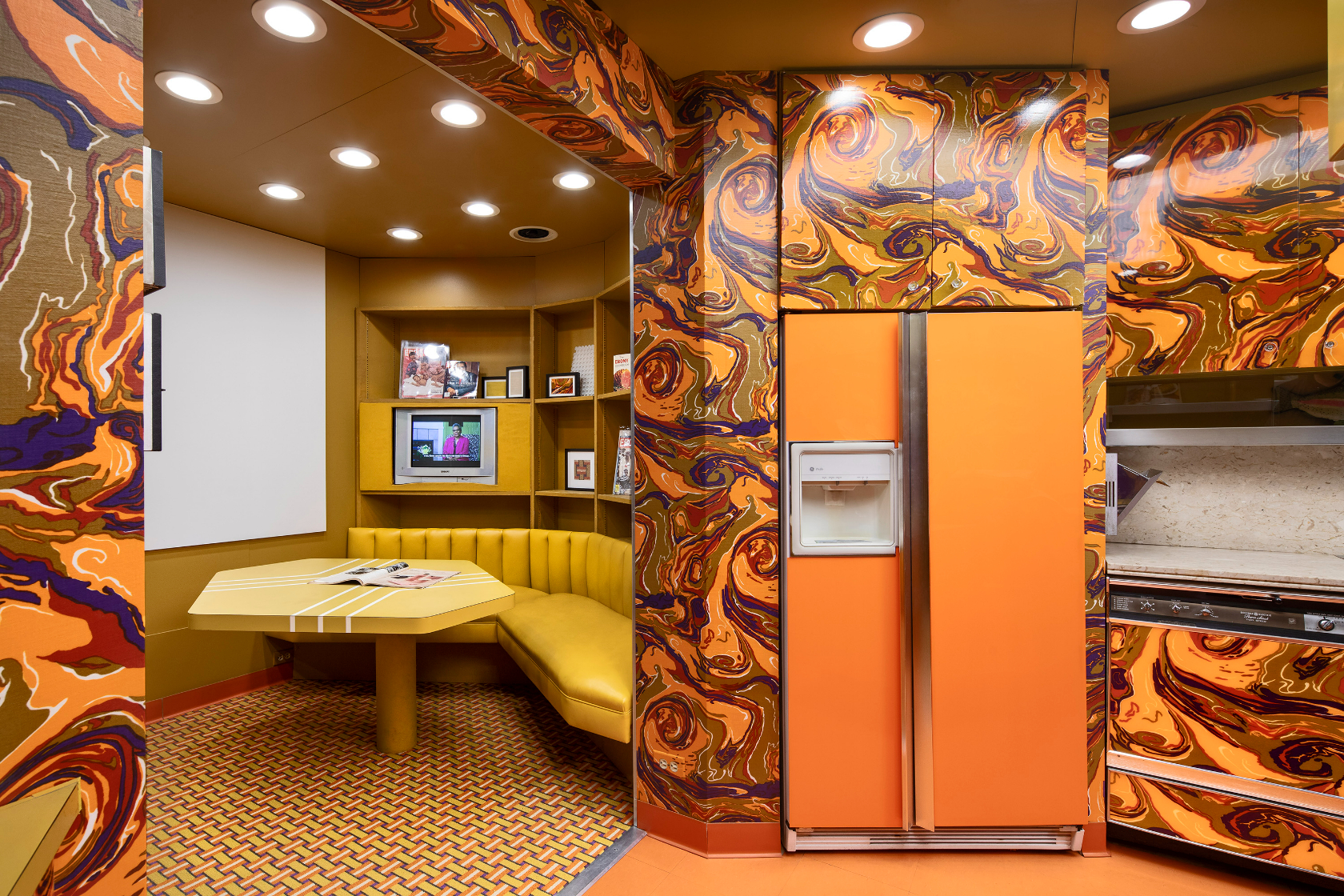
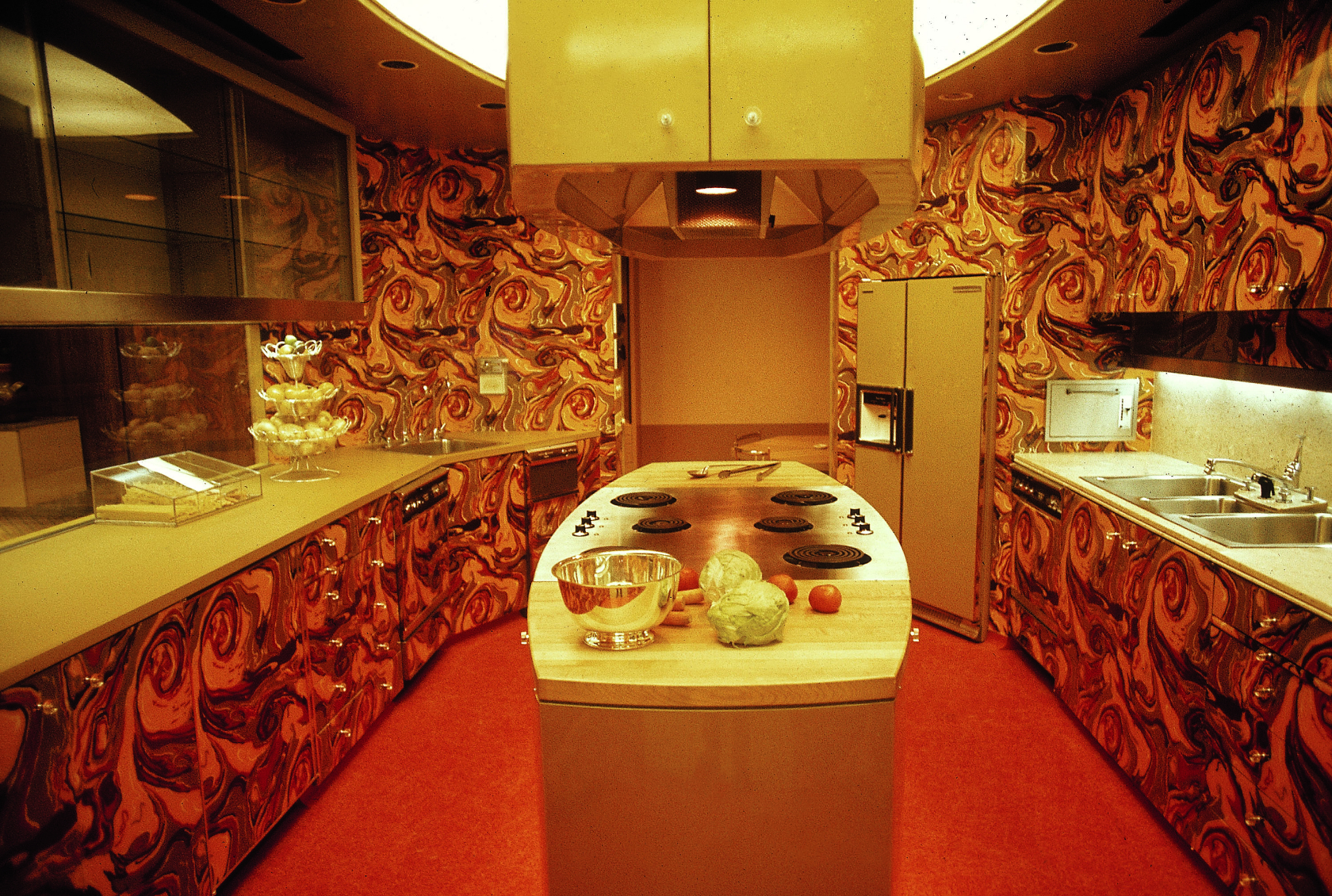
When Johnson Publishing Company sold the building to Columbia College in 2010, the space was almost lost to time. Columbia College’s plans to convert the building into a library and student center never materialized, and eventually the college sold it to a developer in 2017. Landmarks Illinois, a historic preservation nonprofit, stepped in to save the kitchen, buying it for $1 in 2018. Volunteers helped deconstruct the kitchen and remove it from the former Johnson Publishing building, and the Museum of Food and Drink acquired its materials in 2019.
After MOFAD rebuilt and restored the kitchen, it became one of the centerpieces of “African/American: Making the Nation’s Table,” an exhibit at the Africa Center in Harlem. The kitchen was on display from February through Juneteenth, 2022.
According to the NMAAHC, the acquisition was made possible through a donation by Landmarks Illinois and MOFAD. It comes a year after the Fold, Mellon, and McArthur Foundations announced a transfer of the Ebony and Jet photo archives to Getty and NMAAHC.
“With the inclusion of the Ebony Test Kitchen, NMAAHC will be able to share a more comprehensive history of the Johnson Publishing Co., its publications, and its broader role in telling the stories of African American life in the 20th century,” reads the museum’s statement.
As visitors wait for the kitchen to be reassembled, you can explore the museum’s online exhibit of the space.