Colleen Grablick
Multiple volunteers at the Humane Rescue Alliance, the region’s largest animal rescue service provider, allege that understaffing at the agency’s D.C. shelters has led to unacceptable living conditions for a ballooning population of homeless dogs.
For the past several weeks, dogs at HRA’s two D.C. shelters have been living almost entirely in their kennels or crates, according to ten volunteers who have firsthand knowledge of the conditions. Between HRA’s two locations, volunteers assist with duties like walks, behavioral training, and adoption or foster case management.
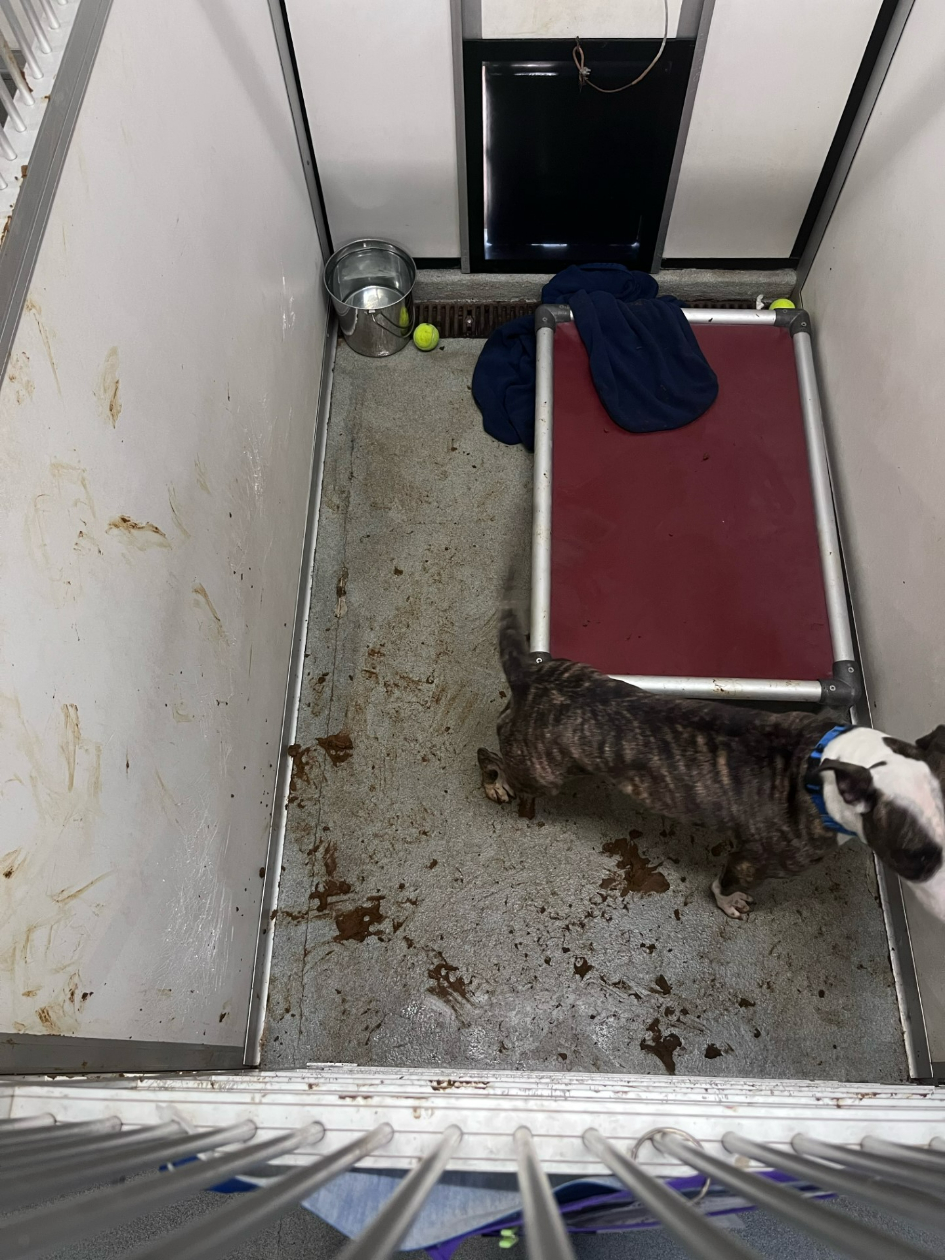
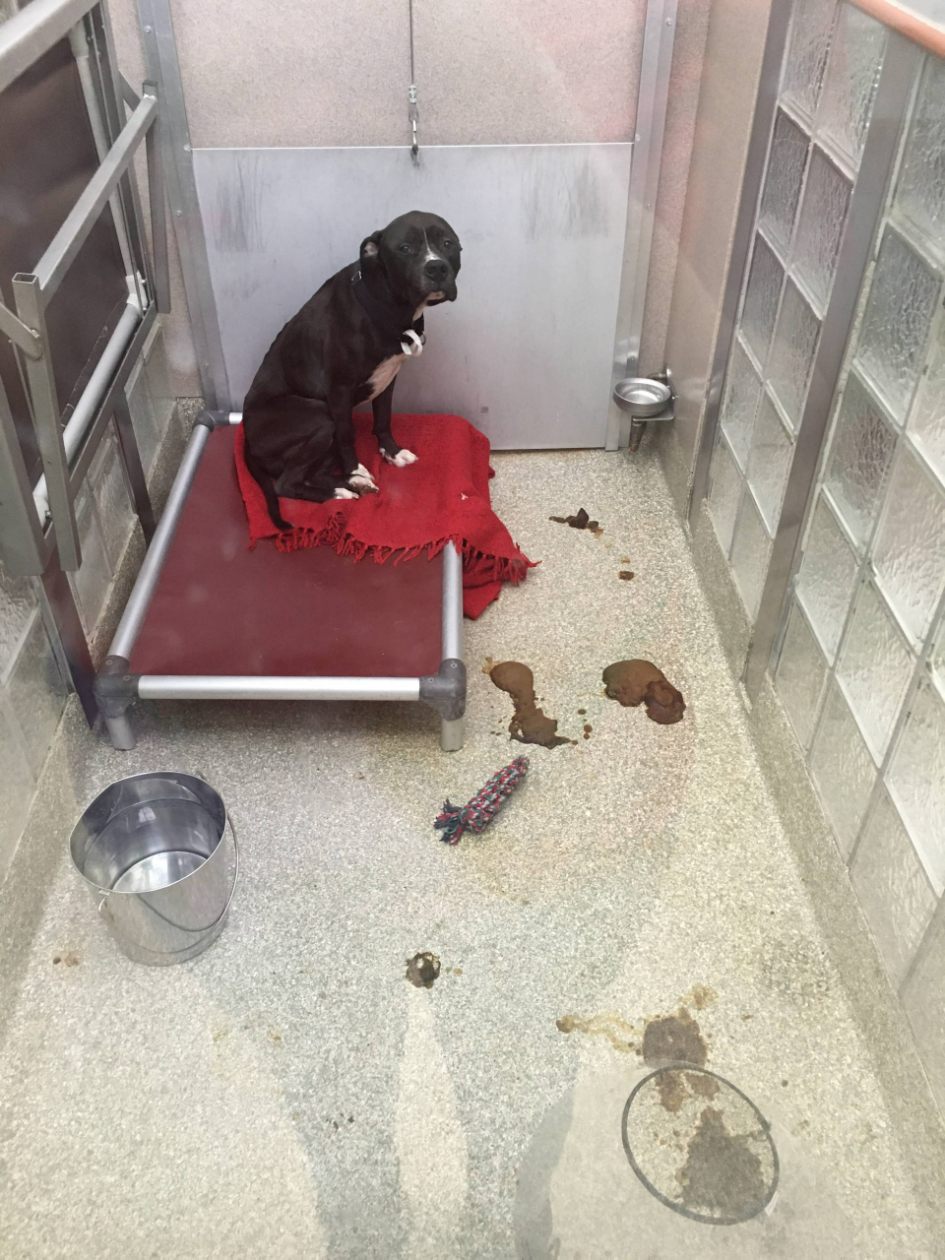
At the New York Avenue shelter location, volunteers say some dogs have spent multiple consecutive days inside their kennels without being let outside. At the agency’s Oglethorpe location, volunteers reported dogs only being let out once or twice a day for around five minutes at a time. As a result, the dogs have been living in days-old feces and urine, volunteers say, sometimes without adequate access to water.
“I think the most important takeaway is that what [volunteers] are asking for is just the humane treatment of the animals that are in HRA care,” Shauna Payyappilly, an HRA volunteer told DCist/WAMU in an interview.
A spokesperson for the Humane Rescue Alliance, however, broadly denies that the agency is understaffed, and rejects allegations that dogs are going days without a break from their kennel or crate. The spokesperson maintains that dogs are provided mental and physical enrichment three times a day, and that kennels are cleaned regularly. In the midst of a nationwide increase in homeless animals and a lack of adopters, HRA admits it’s in a dire situation – but asserts that the animals continue to receive quality care.
“Our priority is and always has been the well-being of the animals in our care,” an HRA spokesperson wrote in an email to DCist/WAMU.
Through a contract with the city, HRA functions as D.C.’s sole animal services and control body for lost, abandoned, or feral animals. Additionally, it’s an open-access shelter, meaning that any resident can drop off an animal, 24/7. (In other counties, these services are provided through a governmental body.)
The latest available contract listed through D.C.’s Office of Contracting and Procurement shows the agency received $4.5 million from the city in 2021 (it’s also funded philanthropically). Led by president and CEO Lisa LaFontaine, HRA operates two shelters: one at Oglethorpe Street NW and a second on New York Avenue NW. In 2019, HRA merged with St. Hubert’s Animal Welfare Center, a New Jersey animal services provider that runs a large transport program for homeless animals across the U.S.
Like many shelters across the country, HRA is experiencing an increase in homeless animals – particularly homeless dogs. Over the past six months, HRA’s intake has increased by 40%, according to an HRA spokesperson. Frequently every kennel at both locations is occupied, and HRA has to store overflow dogs in crates, the spokesperson says.
Ten volunteers who spoke with DCist/WAMU allege that staffing at the shelter has declined since the pandemic, leaving fewer people to care for an unmanageable number of animals. Several volunteers declined to be identified for this story fearing that they would no longer be allowed to volunteer at HRA, thus leaving the dogs with even fewer caretakers.
“HRA has really become so reliant on volunteers and not actually getting paid labor” Payyappilly said.
Volunteers have tried to mitigate the situation as much as possible, but say they often leave a shift knowing not every dog was let out of its kennel and walked.
“The very fact that there isn’t a system in place to ensure that the dogs are taken out in regular intervals is really problematic,” Payyappilly said. “ Not only is it a health issue – they completely deteriorate mentally, and they’re immediately euthanized because they’re deteriorating. That is the pattern that we’ve seen consistently.”
In addition to the poor living conditions, volunteers allege that over the past several months, they have observed an increase in inconsistent or rushed euthanasia decisions. They say some dogs have been euthanized too quickly after arriving at the shelter, or for correctable behavior that should have been worked on in behavior training.
A spokesperson for HRA denied that the shelter euthanizes animals for space, and says every decision about euthanasia is the result of a careful and agonizing decision making process.
“We are really progressive when it comes to life-saving,” the spokesperson said. “We’re just going through what most shelters are going through in the country, and I would say we’re well-resourced enough that it’s not nearly as excruciating.”
The spokesperson added that the current overcrowding conditions in HRA’s D.C. shelters mirror an increase in animal intake at shelters nationwide, a trend that began after the pandemic adoption boom petered out. The exact cause of the current increase is hard to determine — the spokesperson attributed the problem, in part, to people no longer being able to afford to care for their animals, as well as an uptick in stray litters. Of the dogs currently coming into the shelter, about half are surrendered by their owners and half are strays, the spokesperson said.
To handle the increase in the animal population, HRA has ramped up its staffing this year to meet the need of the shelters, according to the spokesperson. Animal care staff – employees assigned to the day-to-day maintenance of dogs like feeding and cleaning – tend to turn over quickly, but HRA says they have a fully staffed care crew. (There are currently several unfilled positions on HRA’s website, including animal care staff positions. The pay rate is listed at $17.75, slightly above minimum wage.)
HRA’s goal is to ensure that each dog gets 30 minutes of animal care staff time per day for feeding, cleaning, and basic enrichment, in addition to extra care from volunteers. As of last week, the New York Avenue shelter location employed four care staff employees and four seasonal employees per day to manage 67 animals; at the Oglethorpe location, nine staff members work per day throughout the day to manage 93 animals. This is beyond what’s required to meet the 30-minute care requirement, the spokesperson said, adding that they’ve also hired a third-party cleaning company to come seven days a week.
But according to Katie Lee, a volunteer since 2018, the current staffing numbers represent a decline from pre-pandemic times, and simply aren’t enough to keep up with the number of dogs who need care. Based on her knowledge and conversations with staff, she says the facility used to schedule a total of 12-14 animal care staff per shift to care for between 70-80 dogs. Now, when she arrives at the New York Avenue shelter, there are only about four animal care staff to feed, let out, and medicate that same number of animals. At the Oglethorpe location, volunteers say that sometimes there is only one staff member in the evening alongside volunteers, working to get more than 60 dogs walked and let out for the bathroom before the animals are put to bed for the night at 7 p.m.
The nonprofit maintains several different types of paid employees, like behavioral training staff and animal care staff, but the organization relies heavily on a network of volunteers to help with various operations at both locations. Through an online portal, volunteers may sign up for a shift at whatever location they choose; some come once a week on Saturday mornings, while others might after work on weekdays. According to Lee, more than 15 of the 20 case managers at HRA are volunteers.
“I would say that the volunteers are starting to be the primary caretakers for a lot of the dogs in terms of enrichment and outside kennel time,” Lee said. In addition to hands-on work with dogs, like taking them on walks and letting them out of their kennels, she previously also volunteered as a case manager, helping dogs find fosters and adopters.
“If we go to New York Avenue tomorrow morning, the kennels would be filthy, and it would be the volunteers that are running around trying to clean kennels and take dogs out,” Payyapilly added.
Volunteers who spoke with DCist/WAMU said they have seen third-party cleaning staff during their volunteer shifts, but infrequently. Payyappilly said in her 1.5 years volunteering, she’s only seen the cleaning staff on one weekend. Regardless of the staff’s presence, she says the condition of the kennels is insufficient for a shelter that is the city’s primary animal rescue.
“If HRA found this somewhere out in the community, it would be a neglect case,” said one long-time volunteer, who asked not to be named because they want to continue volunteering with the organization “Like, [HRA] would be talking about it in the media, they would be fundraising around it.”
HRA denies that dogs are living for days in filth, or going extended periods of time without a break from their crate or kennel. According to a spokesperson, every dog gets two walks per day at least, and each kennel is deep-cleaned first thing in the morning. Given the current staffing level, each dog receives 30 minutes of care from animal staff a day, excluding whatever time they spend with volunteers, the spokesperson said.
Volunteers, though, report unsanitary and dangerous conditions that have not improved. Over the past several weeks, when volunteers showed up for their shifts at either location, they noticed dogs sitting in what appeared to be kennels full of days-old feces smeared across the floor and walls. Water bowls would be turned over and empty or filled with urine. Some even noticed pills set inside kennels that a dog hadn’t eaten, meaning they missed their medications.
DCist/WAMU confirmed volunteers’ reports through dozens of images of kenneled dogs at Oglethorpe and New York Avenue.
“It’s absolutely disgusting,” Payyappilly said.
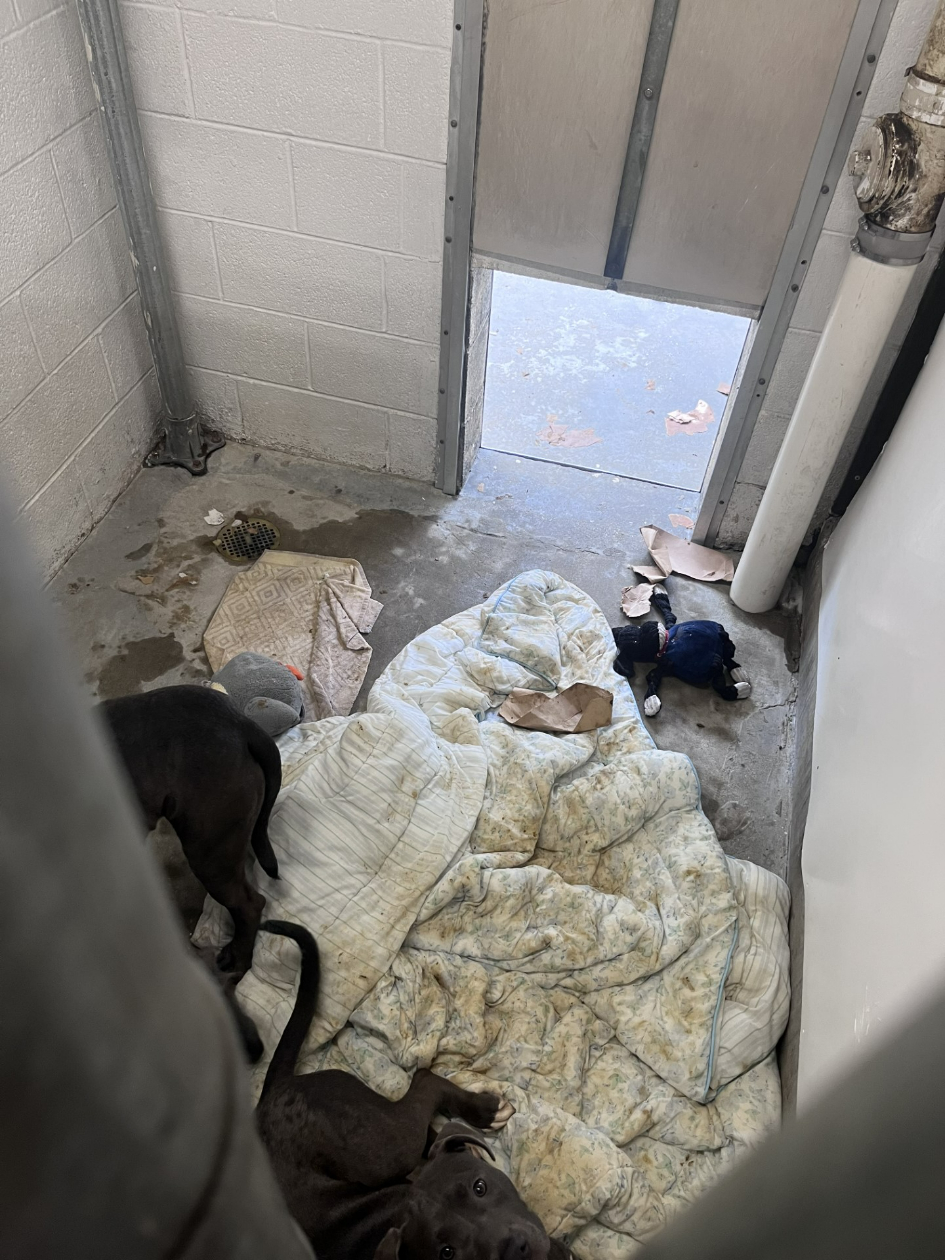
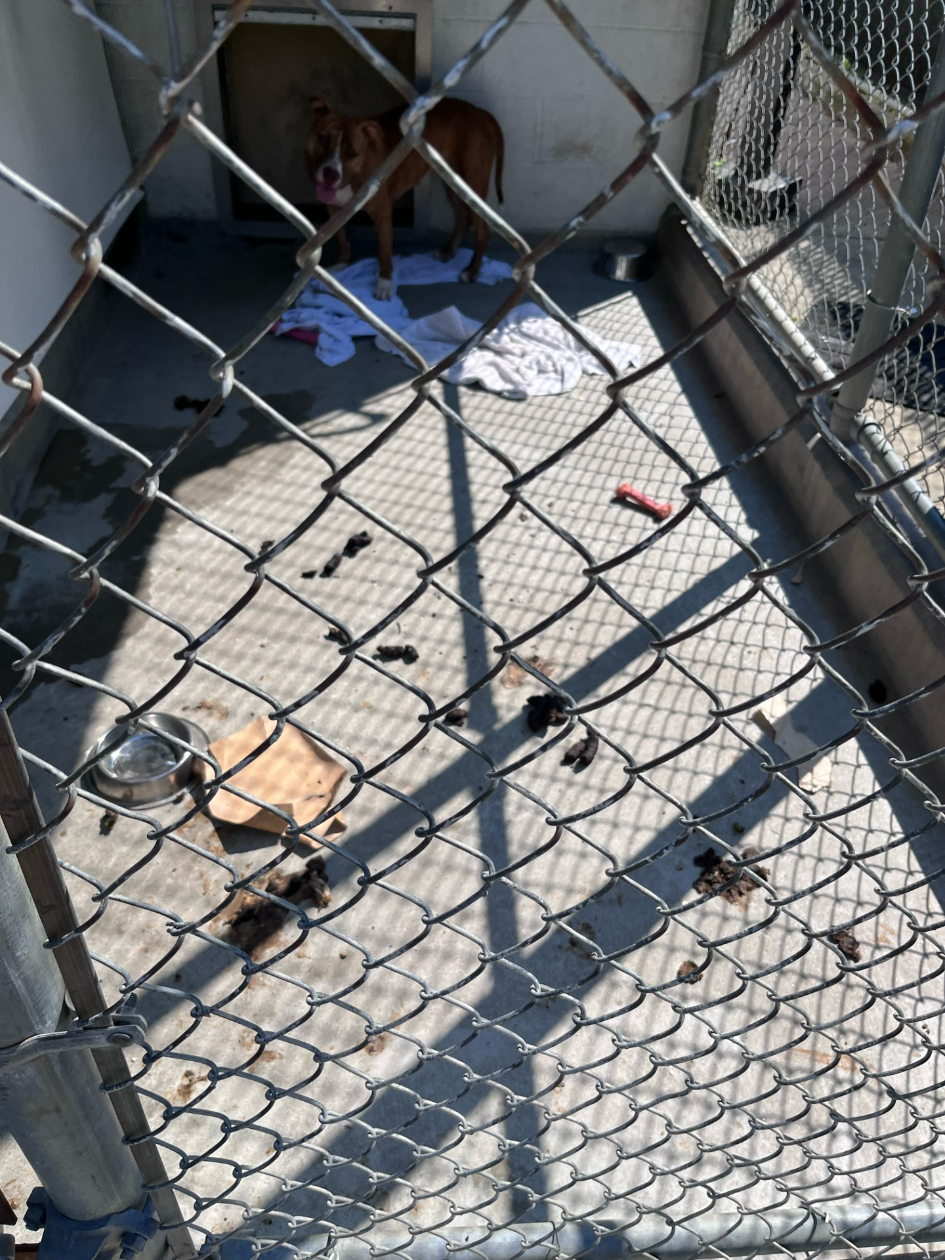
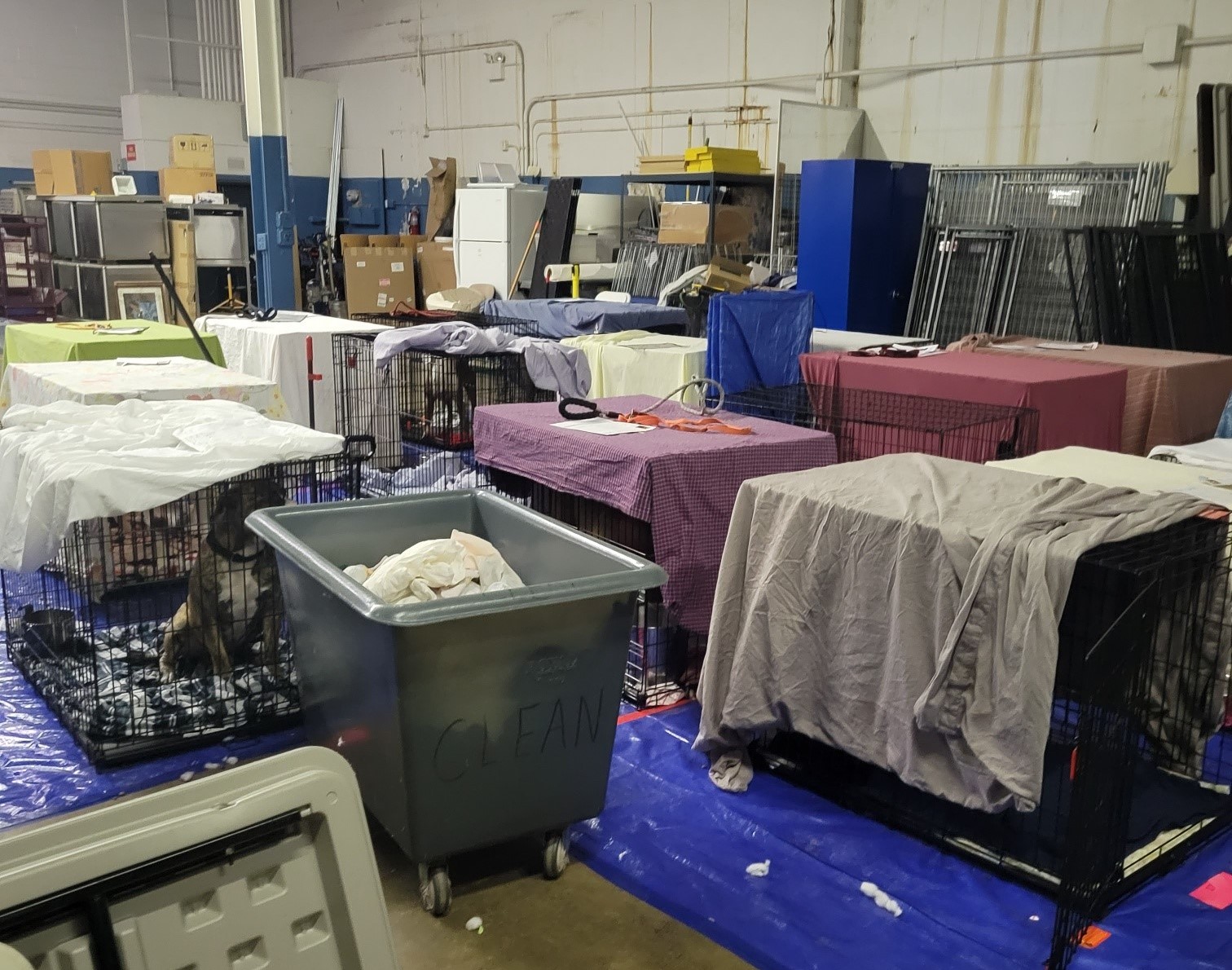
Starting in June, multiple volunteers reported that due to overcrowding in the kennels at Oglethrope, HRA began housing between 20-25 dogs in crates in a windowless warehouse that sits next to the main building on HRA’s Oglethorpe campus. Many of the dogs in the warehouse are sick with an upper respiratory infection, according to volunteers, yet the crates are placed within feet of each other. While HRA’s own crating policy for adopters and fosters states that dogs shouldn’t be kept in a crate for more than 14 hours a day, and for no more than four hours at a time, volunteers say the dogs have been essentially living in the crates for days, only getting a break about once a day.
“It is heartbreaking – some of the dogs can’t turn around in their crates, some of them have no linens in them. The ones that have a washcloth or a hand towel, it’s usually soaked in urine. It’s covered in feces, they don’t have water. It is impossible to take them outside on hot days because they’re surrounded by the parking lot,” the volunteer of multiple years told DCist/WAMU.
An HRA spokesperson said the dogs were first warehoused due to a crowding issue, and as a result of many dogs being kept in the same place, respiratory infections and dog flus are an unavoidable occurrence. Currently, both locations are experiencing a K9 flu outbreak.
“We’re often over capacity, which means that we’ve had dogs living in crates, which is heartbreaking,” the spokesperson said. “And so one of the big problems that happens is that disease spreads the more animals you have.”
But Lee, other volunteers, and a former employee told DCist/WAMU that the current situation marks a degradation in services at HRA. According to Lee, prior to the pandemic, even during times when populations of dogs increased, the conditions did not plummet to the current state.
“It used to be, when I started…a much better-organized location,” Lee said of the New York Avenue shelter. “Dog kennels were clean, dogs were fed. Dogs were taken out regularly, they received behavioral treatment. Today, dogs do not leave their kennels. Maybe they get out once a week. These kennels are disease-ridden, they often live in their own filth.”
Niki Cochran, a former employee of HRA for two years between 2014-2015, also alleges that the organization has not, in recent years, put enough money toward social programming. She first worked as an animal control officer, before going on to manage the shelter’s community cat program – a system that controls the feral and stray cat colonies in the city. She left the agency at the end of 2015, due to frustrations with management, and now manages a community cat rescue in Maryland.
“When I started, they were very progressive, other shelters looked up to them. They would be attending these conferences, and most of the speakers at these conferences were HRA employees, like that’s how progressive and knowledgeable they were at the time, and I enjoyed it,” she said.
Because she still works with cat colonies and occasionally gets calls in D.C., she learned recently that HRA’s community cat program seemed to be offering fewer services than before; when community members called with feral or stray cat needs, they were often hearing conflicting instructions from the desk staff at HRA about what the agency could do, Cochran said. She reached out to HRA with her concerns in early August and was told that HRA had de-emphasized the community cat program, due to grant funding drying up, she says. She also mentioned her concerns about other programs shrinking, like medical care programs for low-income owners that would host free vaccine and spaying and neutering clinics, and training sessions in Southeast D.C.
“It was all designed to make sure that animals are happier, healthier, and staying in their homes – preventing them from needing to ever get returned to the shelter for behavior issues, for having too many puppies,” Cochran said. “These were awesome, progressive programs… and all of that has been cut back.”
According to HRA’s website, the organization halted its spay/neuter services because of the k9 influenza outbreak. The Oglethorpe location also no longer functions as a full-service public clinic; HRA now runs a Pet Support Program, which financially supports owners who indicate they need assistance to avoid surrendering their pets.
Ultimately, a spokesperson says, social services programming simply can’t keep enough animals in homes to offset the impact the surge has had on the shelter.
The deteriorating conditions have also coincided with a concerning increase in euthanasia incidents, according to volunteers. While the term “no-kill” is generally avoided and controversial in animal rescue services, HRA has frequently reported a live-release rate (the percentage of animals that survive or are successfully placed in homes) of 90% or above. According to the Animal Humane Society, in a shelter that aims to be “no-kill” or “low-kill,” euthanasia is only to be done as a last resort, if medical treatment does not improve the animal’s quality of life, or if behavioral reviews deem an animal unfit for adoption — it is never done merely for space. In a high-kill shelter, by contrast, there is typically a deadline by which an animal must be rehomed before it’s euthanized.
But over the past few months, volunteers say they’ve noticed an increase in seemingly rushed or inconsistent euthanasia decisions – dogs being put down for what volunteers view as correctable behaviors and behaviors that are predictable responses to living in kennels and crates for extended periods of time. Lee said that from 2017 to 2020, dogs at risk of euthanasia would undergo rounds of behavioral training and evaluation with volunteers and staff that sometimes lasted weeks. But over the past nine months, volunteers have learned of dogs being put down without a single biting incident, and without an adequate behavioral review.
“There have been dogs who have been euthanized for no bite incident, just for giving a behavioral manager a hard stare or growling,” Lee said.
A spokesperson said that euthanization is a last resort, and a decision that must be approved by at least two of HRA’s behavioral experts.
“If a dog is struggling, we have a rigorous decision-making process to determine what interventions are needed,” the spokesperson said. “Most dogs who are struggling see improvements as a result of these interventions and we’re able to find them an adoptive home. For a very small number of dogs, our team must make extremely tough choices for the health and safety of community members and their pets.”
Per HRA’s 2022 numbers, reviewed by DCist/WAMU, the agency boasted a 92.5% live-release rate last year. (In 2021, this statistic was 94.7%). From July 2022 to July 2023, HRA euthanized 244 dogs for behavioral reasons, about 6% of their total intake. This is an increase from the previous two years, the spokesperson said, because the organization served far fewer animals in 2020 and 2021.
Nieh, a veteran volunteer, told DCist/WAMU in a statement that they understand euthanasia occurs at facilities, but that they’d like clearer explanations from HRA.
“We all understand shelter death is a major part of the shelter operations,” Nieh said. “However, it is the inconsistency of these decisions that make it really hard for everyone (including some HRA staff) to process.”
According to volunteers, they have brought their concerns about the living conditions at both shelters, as well as their concerns about euthanasia practices to director-level management at HRA, both via emails and during a meeting in late July between volunteers and HRA volunteers, but have not seen improved conditions, even upon their most recent visit over the weekend of Aug. 12.
“I think this was a really well-intentioned group of volunteers and they’re suffering, as everybody who lives through this is,” the spokesperson said. “You spend your free time or your career to prevent animal suffering and you see more of it in times like this, and it’s excruciating, so I do know that everybody involved in these conversations means really well.”
Through their conversations with HRA management, volunteers say they have learned that the shelter is allegedly hiring seasonal staff, to fill the gaps temporarily. But they say that isn’t enough.
“This is just not the type of thing I would imagine in some place like D.C., where there is a lot of money, there are a lot of resources,” Payyappilly said. “There’s no way this should be happening.”
HRA has publicized the overcrowding problem on social media and has waived adoption fees at various points to encourage people to adopt. On Saturday, Aug. 26, HRA will be hosting “clear the shelter” adoption events at both shelter locations.
They’ve also been transparent about the current canine flu impacting the shelters, and the agency’s urgent need for adoptors.
One long-time volunteer, who spoke on the condition of anonymity because her employment prevents her from talking to the press, said that it’s not uncommon to see dogs in other shelters living in horrid conditions; overpopulated shelters with too few adopters is a problem nationwide. But she said that HRA has not been transparent with the public about the severity of the situation – one that upper-level management may not be completely in touch with on the ground.
“The people who work there, by and large, I believe are there because they love animals; nobody goes into that industry to get rich,” they said. “But the management, the very senior management, I think are unfortunately pretty detached from what’s happening on a day-to-day basis in the shelter. If you were to look at [HRA’s] social media, you would think that every dog is just living a great life in there. It’s just not true.”
This article has been updated to remove a reference to dogs being euthanized within a day of arriving at the shelter.