 Sarah Y. Kim
Higher faregates that Metro installed at several stations have reduced fare evasion by more than 70%, according to data Metro released Tuesday.
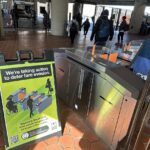
Metro first installed the new faregates in July at the Fort Totten station on the Green Line, with the intention of preventing riders from jumping over or pushing through. The agency went on to install the gates at Pentagon City, Bethesda, Vienna, Mt. Vernon Square, and Addison Road in August.
Anecdotally, some riders were still jumping the new gates (one person was arrested by the Metro Transit Police Department for “unlawful entry” at Fort Totten the first day the gates were up). But overall, at the stations where the higher gates were installed, fare evasion decreased by at least 71% — with the biggest change being Mount Vernon Square, where it went down 84%, according to the data Metro released.

The new faregates were just installed at Congress Heights Tuesday and Metro is planning to retrofit the gates at all remaining stations. The process is expected to take about 15 months and cost between $35 million and $40 million to install the higher gates at all 97 stations. Further work will include installing higher fencing and emergency gates at stations, WMATA said in a press release.
The new gates are 55 inches high, have an L-shaped door panel designed to reduce gaps, and are made of polycarbonate, a material 200 times stronger than glass. Most of the current gates, which Metro just finished installing last year and replaced gates from the ’90s, are 28 inches tall.
Installing new gates to reduce fare evasion became a priority when Randy Clarke took over as Metro’s general manager and chief executive officer in 2022. Before then, Metro board officials decided against installing the new gates, in part due to concerns that they would resemble the gates in New York subway stations and evoke cages.
“After testing multiple prototypes and getting feedback from customers, the new faregate design is having its intended effect — reducing fare evasion,” Clarke said in a statement. “It is critical for Metro to collect as much fare revenue as possible and keep the system safe so we have a transit system worthy of this great region.”
Metro estimated that fare evasion cost the agency approximately $40 million in 2022. Reducing that cost has become more urgent for the agency this year due to a historic $750 million deficit and as ridership continues to lag behind pre-pandemic levels.
Last year, the Metro Transit Police Department also began issuing fare evasion tickets ($50 in D.C., and $100 in Maryland and Virginia). Transit police officers made 185 arrests and issued 2,384 citations related to fare evasion between November, when the enforcement began, and July 20, according to data from MTPD.
Most of the arrests were outside the District. In D.C., fare evasion is not a crime but a civil offense, although riders can still be arrested for “unlawful entry” if they refuse to leave when ordered.