Héctor Alejandro Arzate
This story was republished by El Tiempo Latino. Puedes leer este artículo en español aquí.
About once a month, Fatima Lazaro makes her way to a healthcare clinic not too far from her home in Prince George’s County. She signs in at the front desk then walks into a back room where she checks her own blood pressure. After jotting it down in a journal, she sits and waits for a nurse practitioner to call her name.
Lazaro is about 32 weeks pregnant with a baby girl. She says she hasn’t landed on a name yet, though she and her boyfriend are leaning towards either Sophia or Paloma, which means dove in Spanish.

“But we’re still completely undecided. I’ve heard a lot of parents have names in mind. And when it comes down to the moment, [then] it’s completely different,” says Lazaro, who was born in Mexico.
This will be Lazaro’s first time giving birth, and she’s opted to join a support group for pregnant women. However, because she’s a recipient of the Deferred Action for Childhood Arrivals (known as DACA), she wasn’t eligible for federally funded health insurance aside from emergency Medicaid. That made her a little more worried about taking care of her child, she says, in addition to the costs.
But this past July, Maryland enacted the Healthy Babies Equity Act. It’s a law that allows all pregnant people with an income of up to 250 percent of the federal poverty level – regardless of their immigration status – to become eligible for free health care coverage as soon as they know they’re pregnant. Once it took effect, Lazaro says staff at the clinic, CCI Health Services, helped her apply.

“I knew that CCI was a program that helped many moms, many immigrants. And so I knew they would be able to help me out as well. I applied and I’m just waiting for the card basically,” says Lazaro.
Once accepted for coverage, expecting mothers like Lazaro can receive both prenatal and postnatal care up to four months after giving birth. She also has access to dental and mental health care, as well as lab work, and prescription drug services without copays.
“So now that’s a big, big, big relief to be able to take care – even better – of myself and the baby,” she continues.
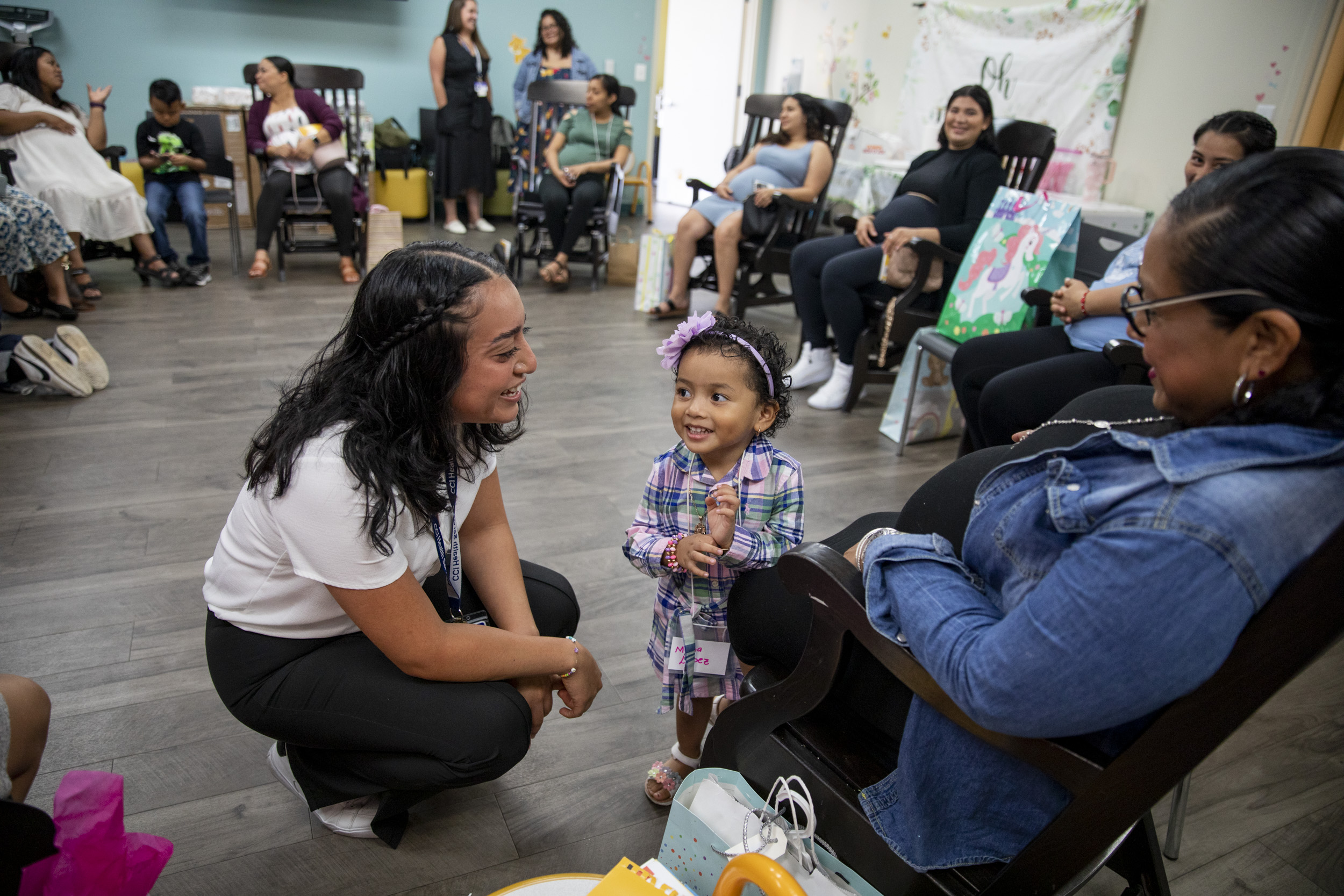
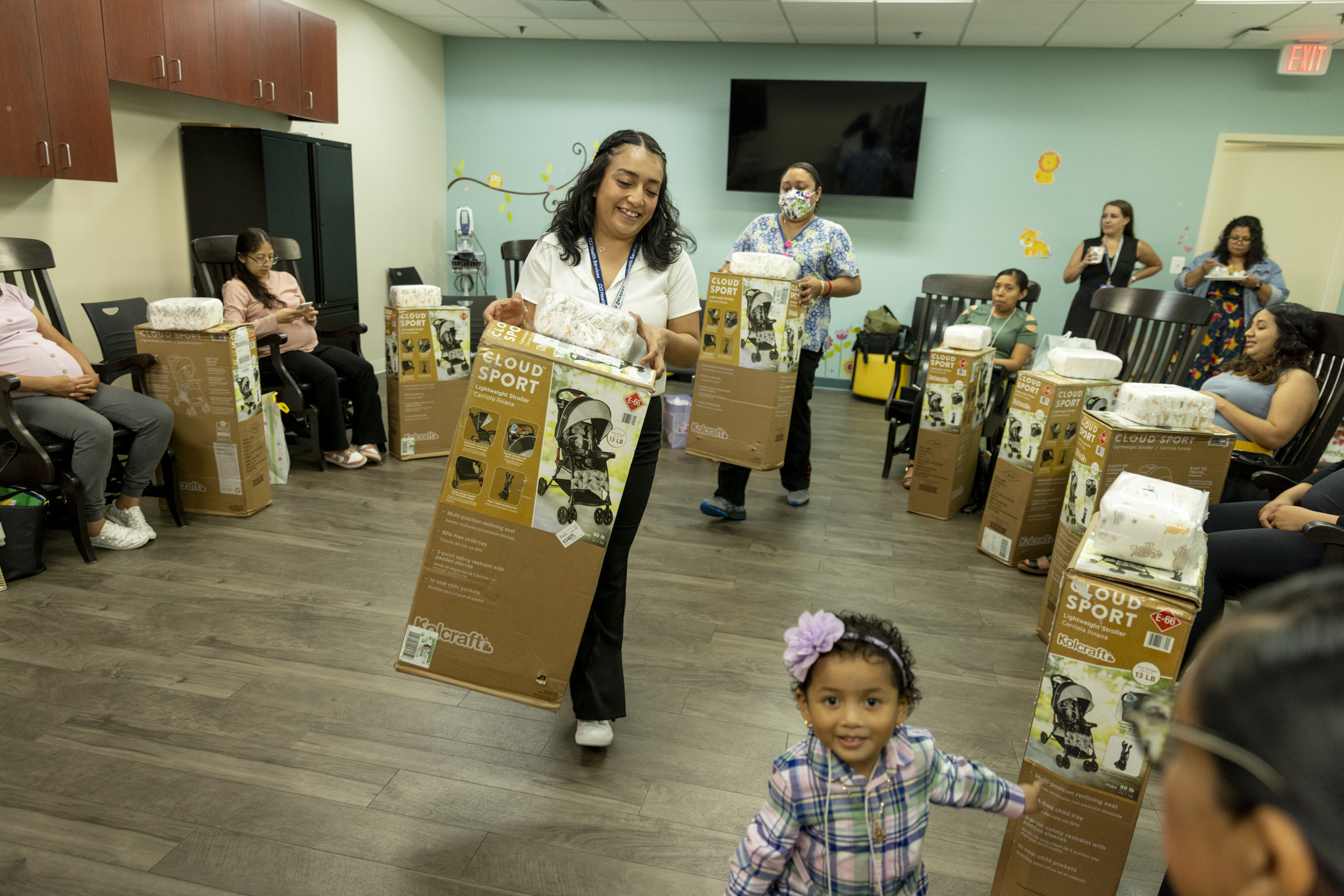
Lidia Rodriguez says she’s been coming to CCI for about 5 years – since she was pregnant with her previous child – and was in a program that offers prenatal care as well as educational sessions on everything from labor, nutrition, breastfeeding, and postpartum depression. The program also provides participants with free baby necessities like diapers and strollers. The cost ranges from $2000 to $2500, according to staff at CCI, but patients can enroll with insurance or by setting up a payment plan.
Rodriguez says she appreciates the attention that staff has for her and her baby’s health. But the change in eligibility for healthcare coverage has been a huge benefit to her and her family.
“It’s very good because it helps us a lot, because having a baby is quite expensive,” says Rodriguez, who was born in Guatemala.
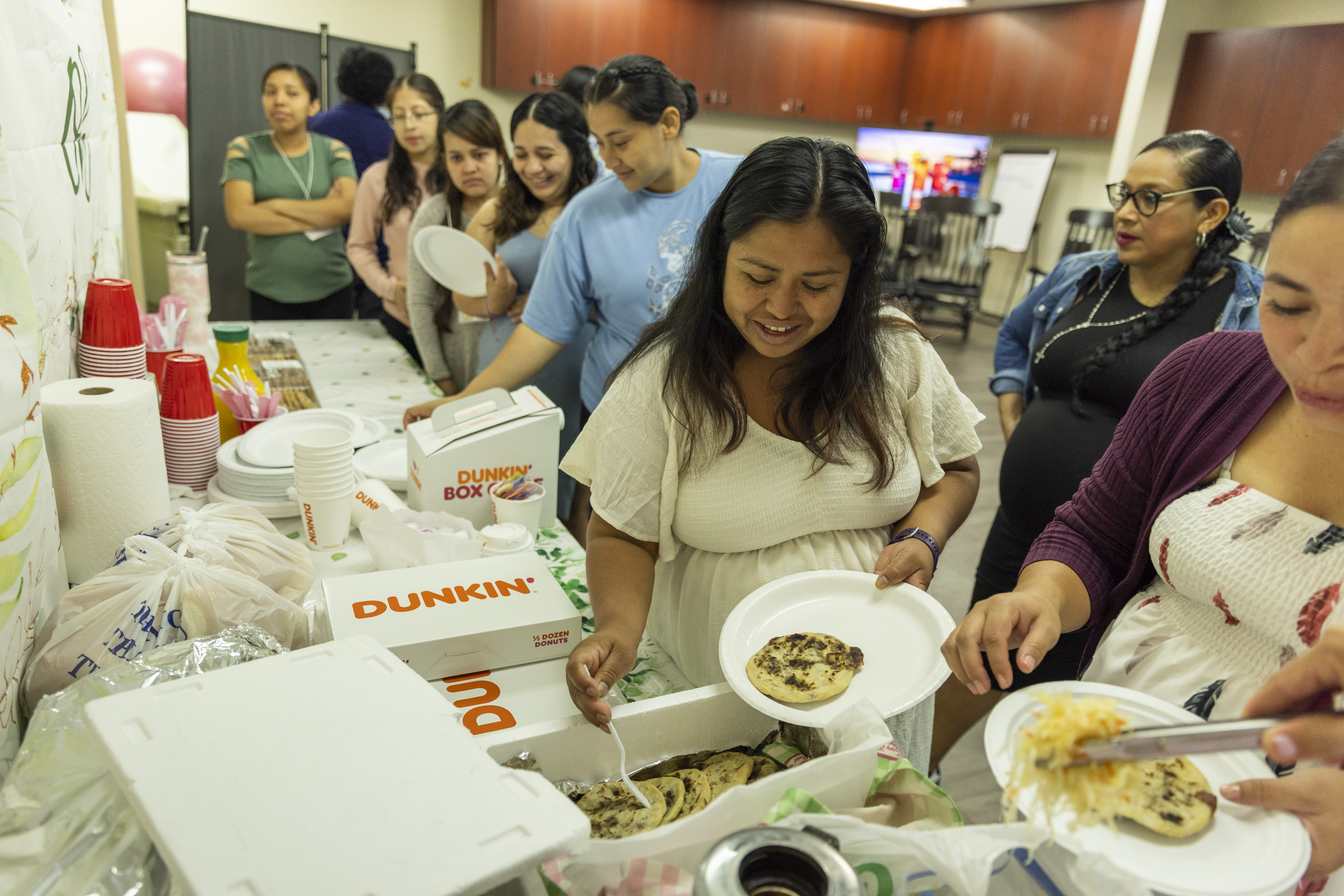
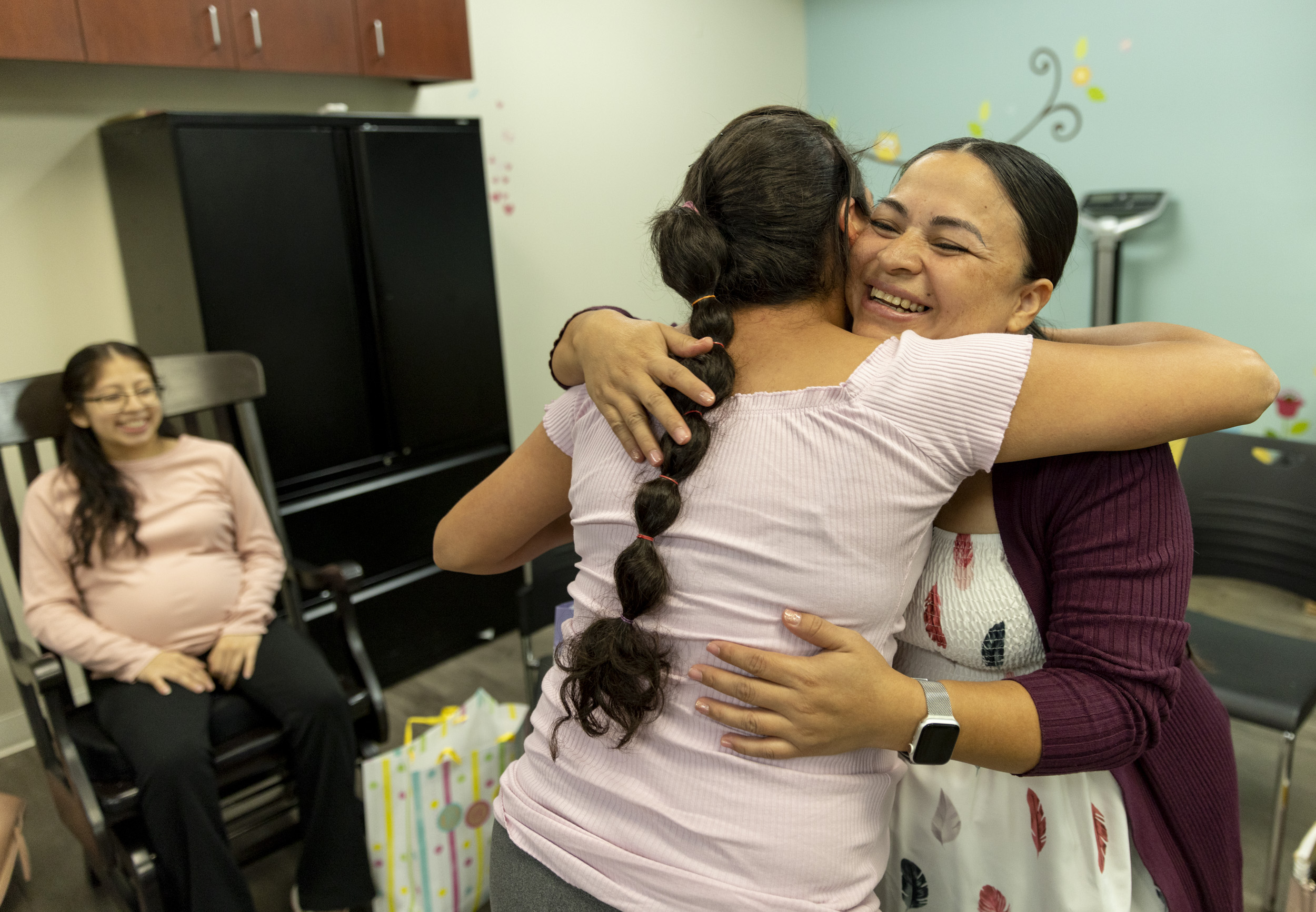
In addition to meeting with healthcare professionals during these sessions, Lazaro and Rodriguez, also now enrolled, practice breathing exercises, have open conversations about their anxiety, and get to build genuine bonds with the rest of the group. This month, they hosted a baby shower and gift exchange for everyone.
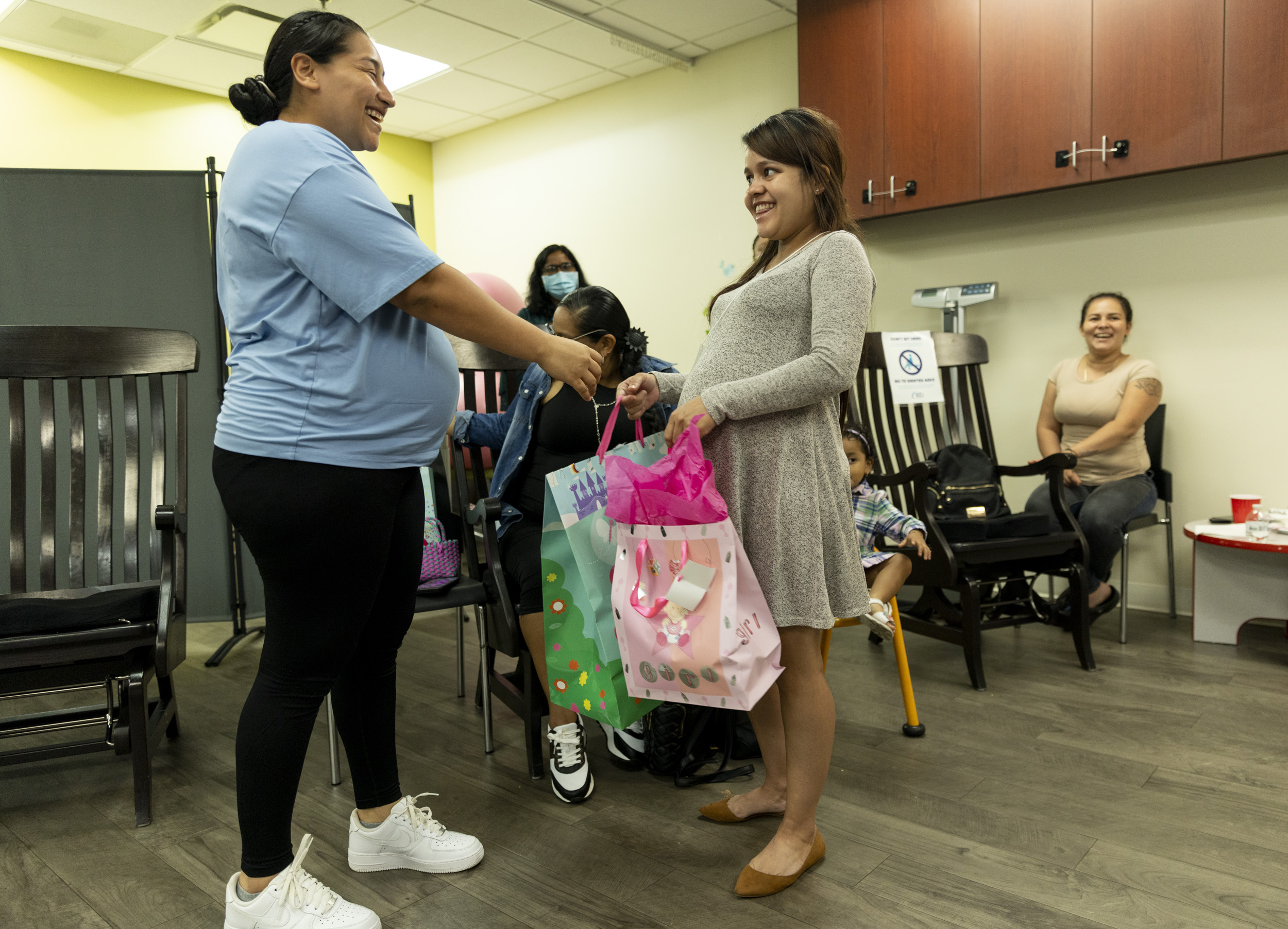
“They actually build a friendship – some groups even make their own WhatsApp group,” says Sherlyn Hernandez, who facilitates as the maternal and child health programs coordinator for CCI Health Services.
Although this group was initially a bit shy, says Hernandez, they are much more comfortable now that they don’t have to worry about paying for the prenatal package. Along with saving on diapers and other prenatal gifts, Hernandez says the mothers don’t even have to worry about driving to the clinic because they have access to transportation services if needed.
“Out of the ten, seven are fully insured and three of them are waiting for their insurance to arrive. So we have a fully insured group now compared to what we didn’t have, which is really good because now they don’t have to worry about anything,” says Hernandez.
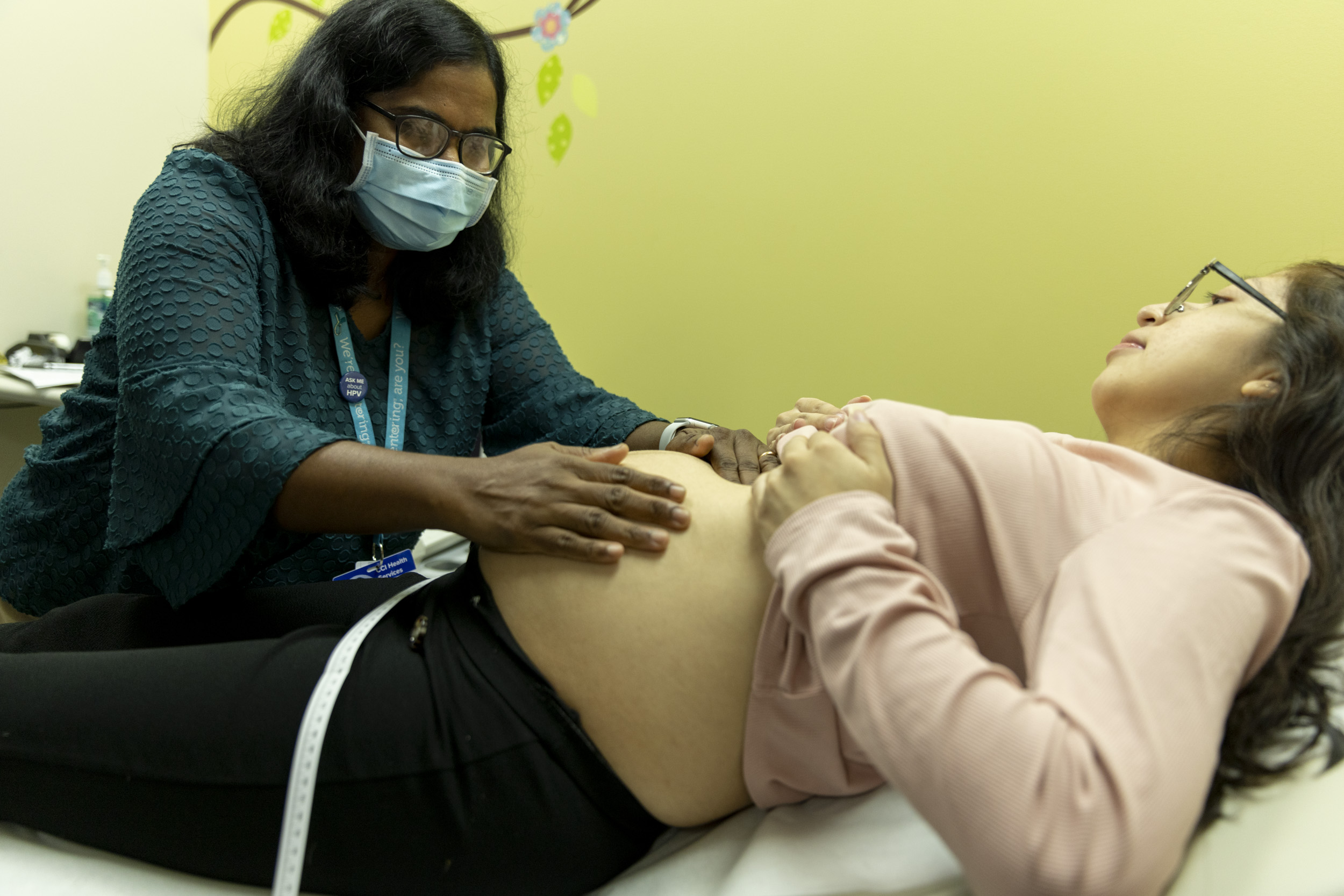
Nurse practitioner Leena Daniel says the change in law to provide comprehensive care for patients at the clinic has been very beneficial. She says it’s that much easier to schedule ultrasounds or to follow up with maternal fetal medicine for high risk patients.
“It’s so great to see that patients are getting more and more benefits to have accessible health care,” says Daniel.
In the roughly two months since coverage went live for pregnant immigrants in Maryland, the state has seen sizable enrollment. Although it has not yet reached the initial estimate of 6,000 eligible people in its first year, there are already over 3,700 participants according to Ryan Moran, a deputy health secretary and the healthcare financing and Medicaid director for Maryland.
“We are seeing an extraordinarily positive impact,” says Moran. “And specifically that positive impact is shown in terms of individuals, participants, enrolling as part of Healthy Babies coverage.”
According to Delegate Joseline Peña-Melnyk, who was a lead sponsor for the bill (HB 1080 – which passed in 2022 but was delayed by a year for implementation), top enrollment numbers for the new coverage are coming from Montgomery County, followed by Prince George’s County, then Baltimore City, each of which has a large population of immigrant communities.
With expanded access to healthcare coverage, Peña-Melnyk says that the state can better address health disparities and maternal mortality rates, particularly among Black and brown women. But she says it’s also important, because without healthcare many undocumented people often have no other option but to give birth in an emergency room. Peña-Melnyk says that’s not just a bad deal for moms and their babies, but it cost Maryland hospitals between $120 and $150 million dollars last year alone.
“I’m hoping that we get every woman, undocumented immigrant that qualifies to apply so that they can have access to care. So they can have a healthy pregnancy and a healthy baby. Because in the end, we will all pay for it if they do not,” says Peña-Melnyk, who is also the current chair for the Maryland Health and Government Operations Committee.
Leidi Garcia, the senior manager for the department of health and social services at CASA (a Maryland-based advocacy group that fought for the bill’s passage), says it’s crucial to continue raising awareness of the program – a sentiment that both Moran and Peña-Melnyk similarly echoed.
“It’s on us and the entire community of providers and community clinics and social workers, school teachers, that we share this information: that no matter their immigration status right now, they should have access to the program,” says Garcia.
For Lazaro, who is due to give birth in a matter of weeks, the access to free healthcare has been what she calls a blessing. Without it, she says she wouldn’t be able to do a lot of things – like listen to her baby’s healthy heartbeat during her recent visit to the clinic.
“I did always have different goals in mind but now I have her included for everything, and hearing her heartbeat just makes me feel like I have to go that much harder for her,” she says.