Elliot C. Williams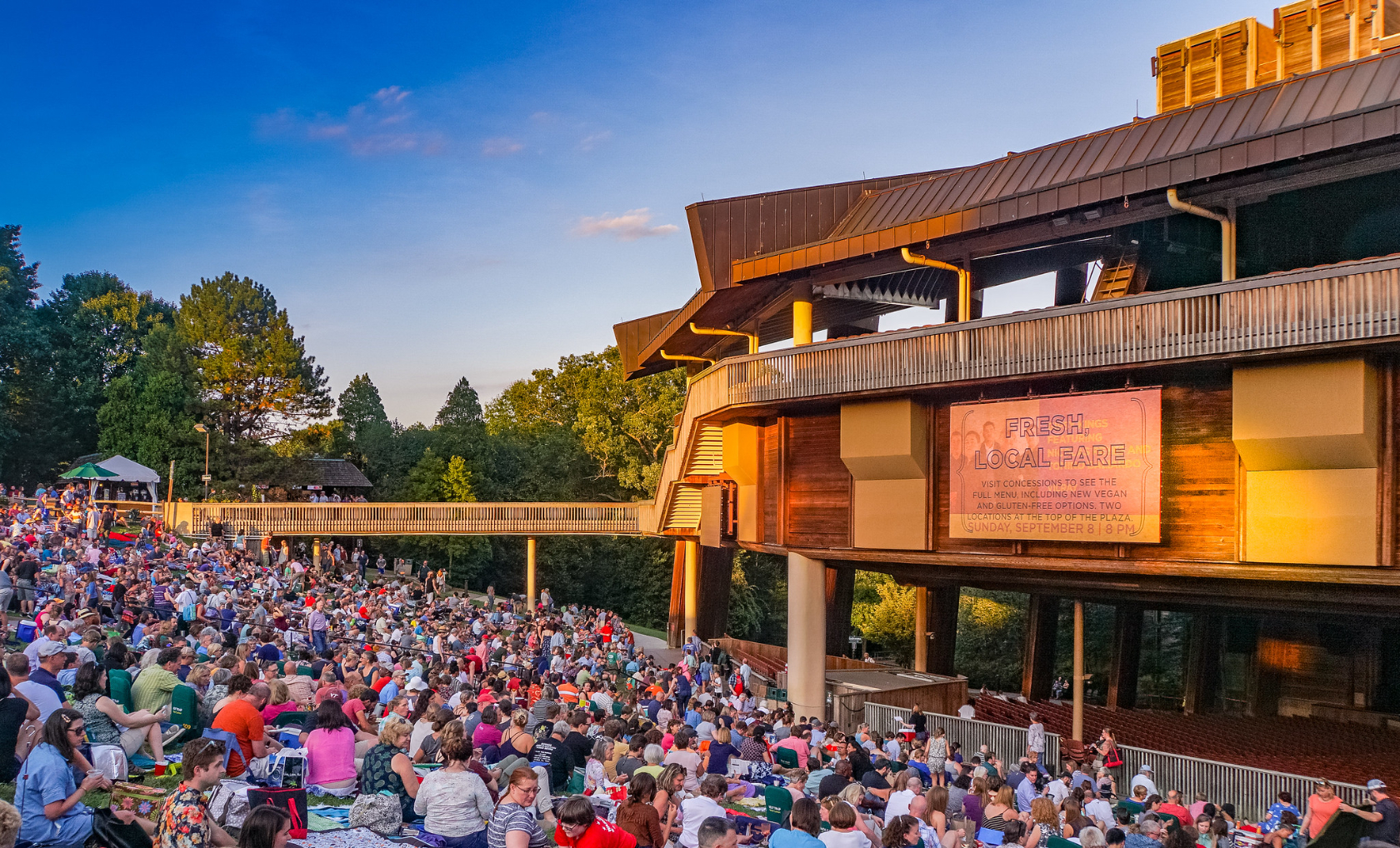
Sunday night’s concert at the Wolf Trap National Park for the Performing Arts began like many others before it. A light rain fell as fans of headliner Ray LaMontagne filed into the Filene Center, Wolf Trap’s 7,000-seat outdoor amphitheater in Vienna, and purchased light fare and $14 drinks (in $6 spill-proof cups) imprinted with the Wolf Trap logo.
But fans weren’t using the time to purchase merchandise from opening act Sarah Beth Tomberlin — rather, they couldn’t, because unlike the typical Wolf Trap show, the artist, who goes by Tomberlin, wasn’t selling any T-shirts, records, or other paraphernalia.
Tomberlin explained the lack of merch after she finished her acoustic set: She told the crowd that she wasn’t selling her T-shirts because Wolf Trap takes a 41% cut (30% + 5% card fee + 6% tax).
She added that as an independent artist who rented a car with her cousin to go on the six-week Just Passing Through tour with LaMontagne, having to pay such a steep commission threatens her livelihood. She said she’d rather not sell her shirts for $60 to make a profit. After giving her statement, Tomberlin received applause from the crowd and later posted to Instagram, where she described the “aggressive merch cuts” as the highest she’s seen while on tour.
So what’s behind that cut? Tomberlin has little say in negotiating things like commission rates for merchandise sales, she says in a phone call with DCist/WAMU. Her booking agent and the tour promoter (in this case, Live Nation) agree to all those details before she agrees to go on the road, she says.
“It’s extremely important for artists’ survival to continue to talk about this and to create change and to inform an audience who has no idea about these merch cuts,” Tomberlin says. “People think when they’re going to a show and they’re paying $35 for a shirt that it’s going to us. Only a portion of that is going to me.”
Tomberlin said she was hoping the venue would let her sell her own merch and keep more of the profits, but Wolf Trap gave her the option to either agree to the terms and let the venue’s staff handle the sales or not sell at all.
“And I chose to not sell as a statement, because it is wrong and it is truly upsetting,” Tomberlin said.
Some fans took to social media to criticize the merchandise policy, commenting on the venue’s Instagram post about the concert. One Instagram user wrote: “Tomberlin deserved better treatment by you. Stop alienating the artists that make what you do possible in the first place. Do better.”
Wolf Trap doesn’t discuss contract terms publicly, according to Wolf Trap spokesperson Sandra Rodriguez. But, she adds, “Wolf Trap’s operations, including merchandise rates, are consistent through the summer, and all artists performing at the Filene Center have had the same terms without incident.”
Tomberlin’s stand against merch cuts comes two weeks after artist Jeff Rosenstock seemingly called out I.M.P’s 9:30 Club and other venues on his tour for taking cuts of merchandise sales. (He posted a screenshot to X, formerly Twitter, showing that the D.C. venue on his tour would be taking a 20% cut of sales of soft merch, such as shirts, and 10% for hard merch, including vinyl records. He performed at 9:30 Club on Sept. 6.)
An I.M.P. spokesperson said that “it can vary” when it comes to merch agreements between artists and the concert promoter’s venues — which include The Anthem, 9:30 Club, Merriweather Post Pavilion, and others. The spokesperson added that venues are “enormously expensive” to operate, especially since the pandemic began, and cited costs like insurance, taxes, liquor licenses, utilities, security, lighting, and staffing — including the staff that sells the merchandise on behalf of the artists.
“I don’t think that a merch cut from an artist keeps a venue open at all,” Tomberlin says when asked about venues’ expenses. “I think the bar tab keeps them open. I think having shows that people want to come see and then charging, what I’ve seen at some places, $20, $25 for a cocktail … I think that keeps venues open. I don’t think that stealing from an artist keeps venues open.”
Tomberlin on Instagram took specific aim at Wolf Trap, which operates under a public-private partnership between the nonprofit Wolf Trap Foundation and the National Park Service. She posted screenshots from Wolf Trap’s website advertising its “growing $31M endowment” and commitment to reducing “physical, financial, and societal barriers to access” to the arts.
Wolf Trap, which sits on 117 acres and includes an educational arm, a restaurant, and multiple performance venues, is the only U.S. national park dedicated to the performing arts. The venue is unique in that guests are encouraged to bring their own food and beverages to enjoy on the lawn.
“For transparency,” Tomberlin also shared on her Instagram stories what she says are the merchandise policies for the rest of the venues on the tour, most of which appear to be an 80/20 cut; meaning for every dollar spent, the venue keeps 20 cents:

Tomberlin says some fans have sent her money through Venmo to support her in lieu of her T-shirt sales.
“It’s not just going in my pocket. It’s going to gas, it’s going to hotels, it’s going to food, it’s going to pay for the merch, the rental car,” she adds. “I hope that it causes a wave of change for people to continue to speak up about it because Live Nation doesn’t want me to talk about it, Wolf Trap doesn’t want me to talk about it. But I feel it’s important to talk about.”