Margaret Barthel
 Morgan Baskin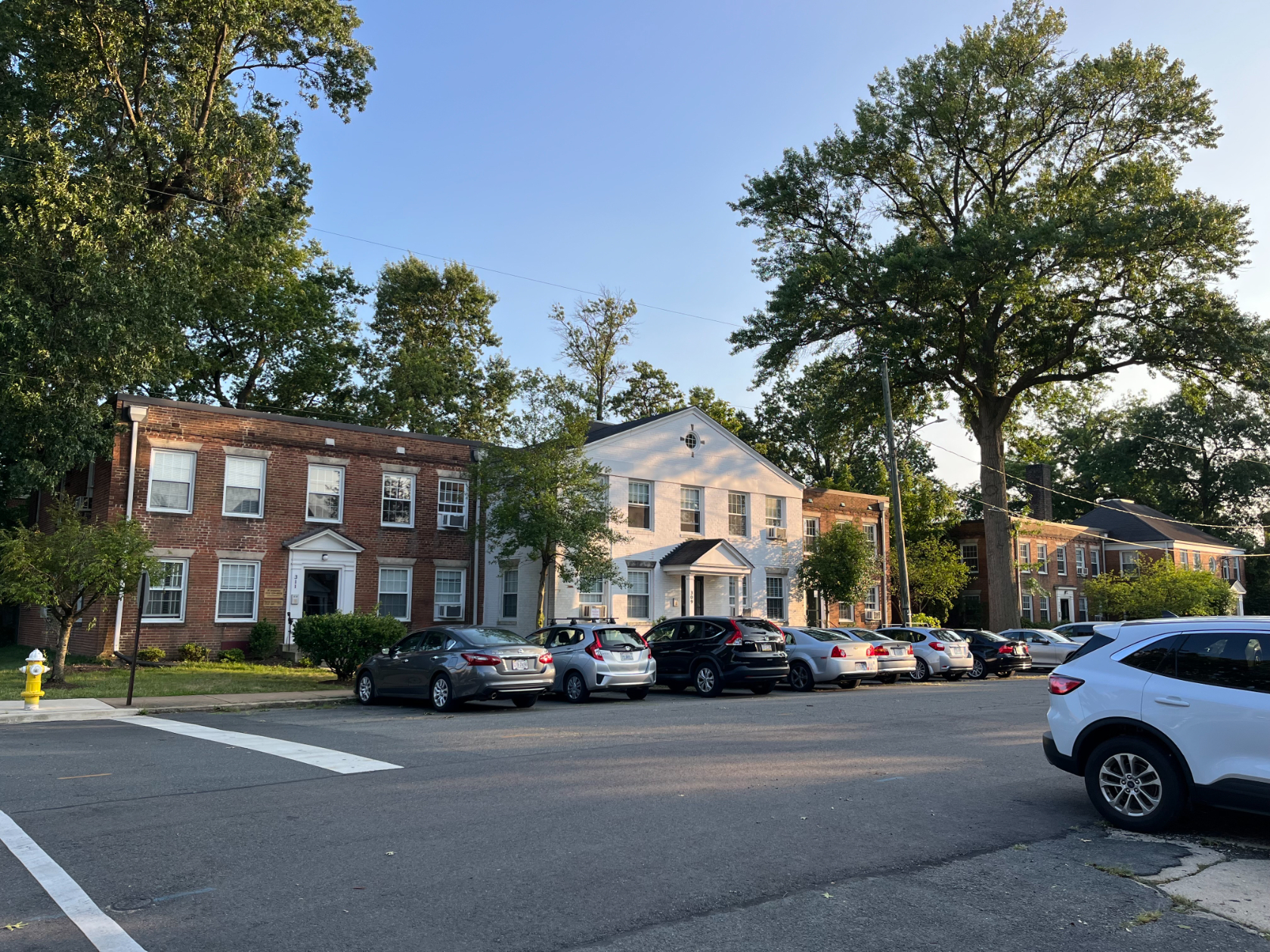
Alexandrians are in the midst of considering the city’s “Zoning For Housing” proposal, a suite of proposed revisions to the zoning code aimed at creating more housing — and more housing equity — across the city’s 15 square miles. And not surprisingly, residents are divided over the plan.
City staff released the draft recommendations in September. They include a wide variety of different zoning reforms, from allowing buildings up to four units on lots currently zoned for single-family houses to exploring new development near transit. But the plan received a tepid reception even from proponents of more density, who are pushing city leaders to be more ambitious.
At an informational meeting Thursday night, several dozen residents listened to a presentation and then submitted questions — handwritten on notecards — to city staff. Many questions appeared to press the city to consider broader reforms.
“As younger and future generations become less reliant on cars, would the city consider further reducing parking minimums?” wrote one questioner. “I live in a duplex with space for two cars, and among those households there is only one rarely-used car.”
Meanwhile, other residents contend the city’s process has been too rushed, and they are pushing for more time to consider the proposals. (The City Council is expected to vote on the plan in November.)
“Why are you doing this? It seems dangerous,” one person in the audience asked, referencing the city’s plans to end parking requirements in areas near transit. “What’s the rush for this?” another wrote on a notecard. Others attempted to speak over city staff, who spoke over them in turn.
This was the last in a series of community meetings designed to familiarize residents with the plan, answer questions, and receive feedback ahead of consideration of the policy by the Planning Commission and the City Council.
Trying to solve a housing crisis
By the city’s calculations, the current plan would result in up to 2,838 new units in the next decade, over and above existing development projections. According to planning documents, that would “greatly assist” the city’s goal of adding 3,000 additional units by 2030. The number represents the city’s slice of the Metropolitan Washington Council of Governments’ region-wide push to add 320,000 units of mostly affordable homes near transit by 2030.
Opponents of the zoning plan have pointed out that the city has overseen the creation of 11,000 housing units in the last decade, with about 40,000 more considered in small area plans–the guiding long-term vision for specific neighborhoods–mostly near transit.
“We are way behind the curve in terms of supply versus demand. We are digging ourselves out of a hole that has been created over multiple decades,” said Karl Moritz, the city’s planning director, in response to questions at the Thursday meeting.
Alexandria is the second locality in Northern Virginia to try to use zoning reform to make it easier to build more housing. The proposal comes on the heels of Arlington’s hard-fought decision to end single-family zoning and allow small multifamily buildings countywide, becoming the first locality in Northern Virginia to do so.
Both efforts come out of a desire on the part of officials and advocates to try to address issues of affordability and availability of homes. Tens of thousands of Alexandrians who rent and some who own homes are considered cost-burdened, meaning they spend more than 30% of their income on housing. Other residents are forced to leave the city in order to afford rent or buy a home.
Arlington’s “Missing Middle” and Alexandria’s Zoning For Housing carry enormous symbolic weight in that they open up single-family neighborhoods to buildings with as many as four units. This is a rejection of traditional suburban ideals that have kept out people who couldn’t afford a single-family home. But in both jurisdictions, the amount of housing expected to be built as a result of these zoning changes is relatively modest. (In Alexandria, proposed zoning reforms go beyond single-family neighborhoods; in Arlington, opening up those neighborhoods to more housing was the thrust of the whole policy.)
In Alexandria, where single-family zoning accounts for a third of the city’s land, the move is expected to create a modest 175 new units in the next decade. The alternative, city planners say, is smaller, older homes being torn down to make way for much larger and more expensive ones.
Housing advocates have praised Alexandria’s rollout of the Zoning for Housing proposals. They cite the city’s focus on documenting its history of exclusionary zoning that kept out people of color from certain neighborhoods, as well as officials’ efforts to understand the housing challenges of current residents of color.
But carrying through that focus on racial equity into the details of the plan will be a challenge, says Jill Norcross, the executive director of the Northern Virginia Affordable Housing Alliance.
“They really documented from an equity standpoint that the people who are lower income are, you know, black and brown, and they really have been left behind by current policies and past racist policies,” Norcross says. “And how do you just kind of try to level the playing field a little bit, and get through more housing affordability, which is going to require some more committed – a lot more committed – units to reach that goal.”
Some of that work will have to wait for the city’s update to its affordable housing master plan, slated for 2024, according to Norcross.
“I do think the devil is in the details,” she says. “I hear a lot of, like, ‘Oh, we’ll kind of update that in the affordable housing master plan next year,’ you know, so I think it’s kind of giving them some cover [in] moving some of the work forward.”
Just how many of the roughly 2,800 additional new units created under Zoning for Housing in the next decade will be committed affordable homes — or even attainable ones — is less clear.
The biggest portion of the 2,800 units is 1,800 units the city estimates could be created under its Residential Multi-Family zoning rules, a designation that allows for added density on a new development, provided that a third of the increase is committed affordable housing for households making 40% of area median income. (In Alexandria, that comes out to about $60,000 for a family of four.) That could net around 1,000 new committed affordable units. But that number is contingent on developers successfully finding federal and state subsidies to create them. And even if they do, they’d still need to go through the special use permit process for the projects, which are not allowed to be built by-right.
Calls for more ambitious changes
Some housing advocates believe Alexandria could go further with the zoning changes, and are making calls for including new language in the plan that would expand it.
Supporters of the plan include the YIMBYs of Northern Virginia, a group which advocates for increasing housing supply across the region. They are lobbying for three significant changes to the plan. Perhaps most ambitiously, they want to allow townhomes and garden-style apartment buildings — both familiar housing types in Alexandria — anywhere in the city.
“The basic point is that these are structures that everybody and their grandmother in Alexandria really romanticizes and is very comfortable with,” says Luca Gattoni-Celli, an Alexandria resident and the founder of the YIMBYs of Northern Virginia. “It’s very much the fabric of our city.”
But, Gattoni-Celli notes, garden apartments are in many cases no longer permitted under the city’s current zoning laws, a point Alexandria Mayor Justin Wilson has also noted.
“If it’s not even legal to build the city as it stands today, then we’ve obviously lost the plot, because I don’t think anyone thinks that Alexandria is a dysfunctional place,” he says. “It’s a great place to live.”
The YIMBYs also want changes they say will spur more transit-oriented development, namely removing parking requirements for homes near transit and defining areas around bus rapid transit stops as near transit. They also want to expand the definition of what the city considers “close to transit” from half a mile to 0.7 miles.
“Certain pockets in Alexandria have sort of higher density around Metrorail, [and] we think that doesn’t quite go far enough in terms of taking advantage of the incredible asset that we have of not only Metrorail but Metrobus, DASH bus service,” says Peter Sutherland, another Alexandria resident and a leader with the YIMBY group.
Sutherland says forcing developers to set aside space for parking near transit means fewer units and ultimately makes the housing more expensive to build, an argument fellow YIMBYs in Fairfax County also pushed in advocating for the county’s Parking Reimagined plan, which passed last month.
Gattoni-Celli and Sutherland said their wishlist of edits to Zoning for Housing are the result of brainstorming and research by the group’s roughly 200 members in Alexandria. And they believe their ideas will be appealing to city residents more broadly.
“Having housing near transit is something that is very much a consensus position in our region,” Gattoni-Celli says. “So if we believe in that, we should do it.”
Some residents want to slow down
But not everyone is on board with the idea of expanding the Zoning for Housing plan. Residents who oppose it have raised concerns about what they believe has been a rushed process. They also question whether the plan will effectively address the affordable housing shortage.
“This has all been cobbled together. It’s being pushed through,” says Roy Byrd, the founder of the Coalition for a Livable Alexandria, a group that formed in July and which opposes the zoning changes.
Byrd was particularly frustrated that the city released the 41 zoning text amendments — the actual changes in the zoning code needed to implement Zoning for Housing — last week, giving the public just two months to examine and digest them. (The Coalition, he says, has a few lawyers volunteering to look them over.)
More broadly, Byrd and the Coalition question the premise of the city’s attempt to add more housing supply at all, questioning whether the plan will have a positive impact on the number of affordable units in Alexandria. (The city estimates the plan could add about 1,800 new units in 10 years in its Residential Multifamily zone, which comes out to somewhere in the neighborhood of 1,000 new affordable units.)
Byrd says he’s concerned that expanding the options for developers to build bigger and denser housing will lead to older, market-rate affordable housing being torn down, displacing current residents.
“You have people who live in garden apartments. That’s prime pickings for redevelopment. And that means gentrification,” he says.
He wants to see the city focus more on solving its affordable housing shortage than changing the zoning code to allow for more housing supply in general. Alexandria, he says, represents a tiny amount of the area of the D.C. region, and shouldn’t be expected to solve the region’s housing problems.
In fact, Byrd quibbles with the concept of expanding the kinds of projects that can be built by-right at all. He says it takes away the lengthy — and expensive — special use permit process, which allows the public to object to projects in their neighborhood they don’t like. He wishes he and his neighbors had had the opportunity to do so when another resident built an accessory dwelling unit, which are allowed in Alexandria by-right, without the need for a public hearing.
“Basically, you have no say in what happens to the right or to the left of you,” he says. “That is concerning.”
Byrd hopes the city will slow down Zoning for Housing, but he acknowledges that it seems clear city leaders are eager to pass some version of it.
“With other things such as the climate crisis, it can feel like what one jurisdiction can do is just a drop in the bucket,” said Moritz, the city planning director. “And yet we also know that if we do not all do something, that we will not see change.”
This story has been corrected to change two previous references from ‘county’ to ‘city.’