Héctor Alejandro Arzate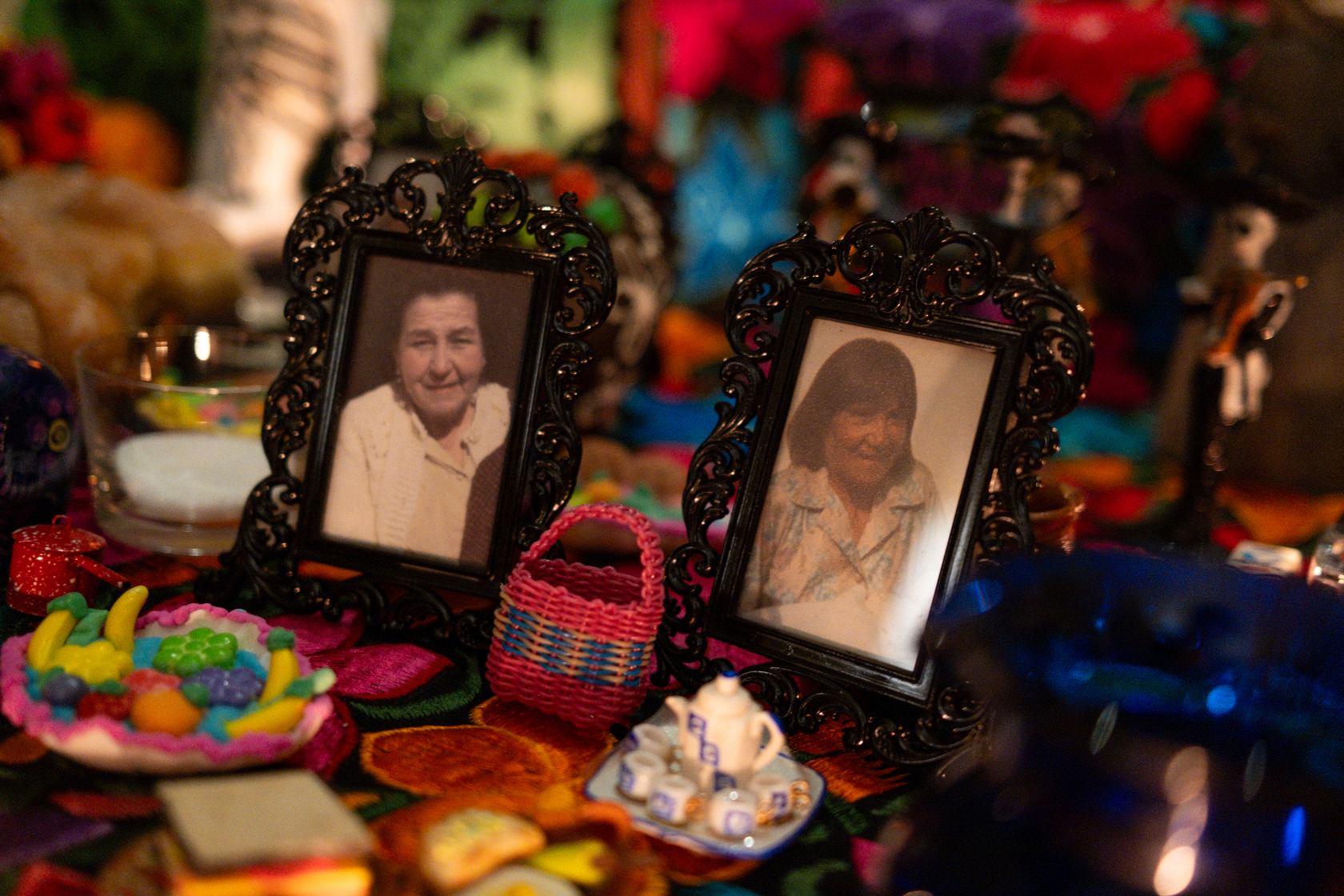
Ever since Maritza Guzman was a little girl, she says the days of mid-fall have carried the memory of a distinct smell. She grew up in Oaxaca, Mexico, where her family would prepare their altar for Día de los Muertos by making fresh bread and tamales as a gift for the dead, and the scent from them would hang in the air.
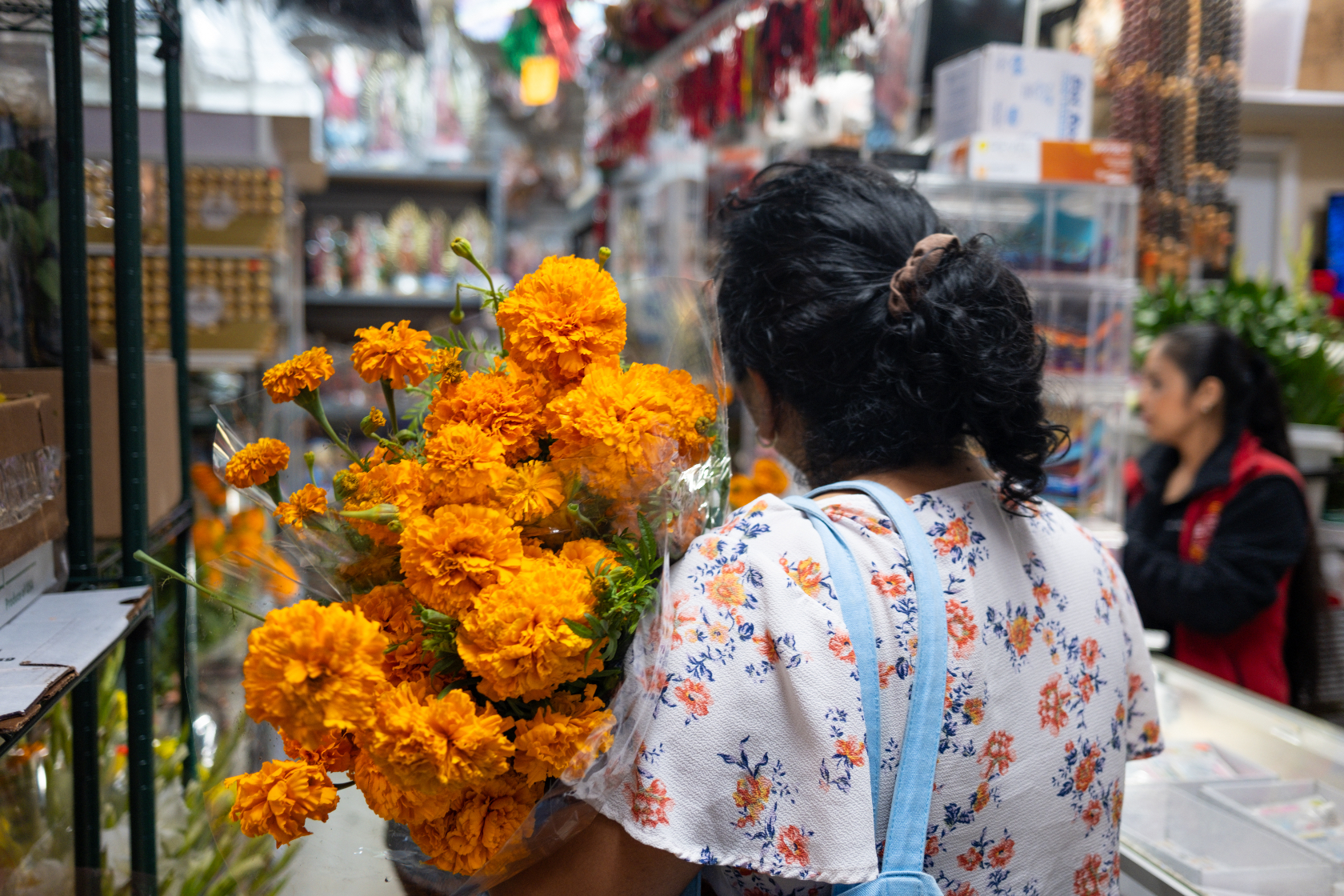
Her father, she says, would even sow and harvest their own cempasuchil – or marigolds. The bright orange flowers are typically adorned on altars because their fragrance is thought to help souls find their way back to the living.
“It smells like life. It smells like love. It smells like memories,” says Guzman, who lives in Annapolis, Md.
Despite being about a 45-minute drive away, Guzman says she comes to Floreria La Rosa de Guadalupe in Hyattsville every year when it is time to prepare for Día de los Muertos. She likes that there she can buy fresh flowers that invoke the same feeling decades later.
And she says that perhaps her father, who passed away a few years ago, will enjoy them too. She hopes that his soul can cross the border to visit her.
“Since my dad was in the United States, his soul was here too,” says Guzman. “That’s why I know his spirit is coming to see me.”
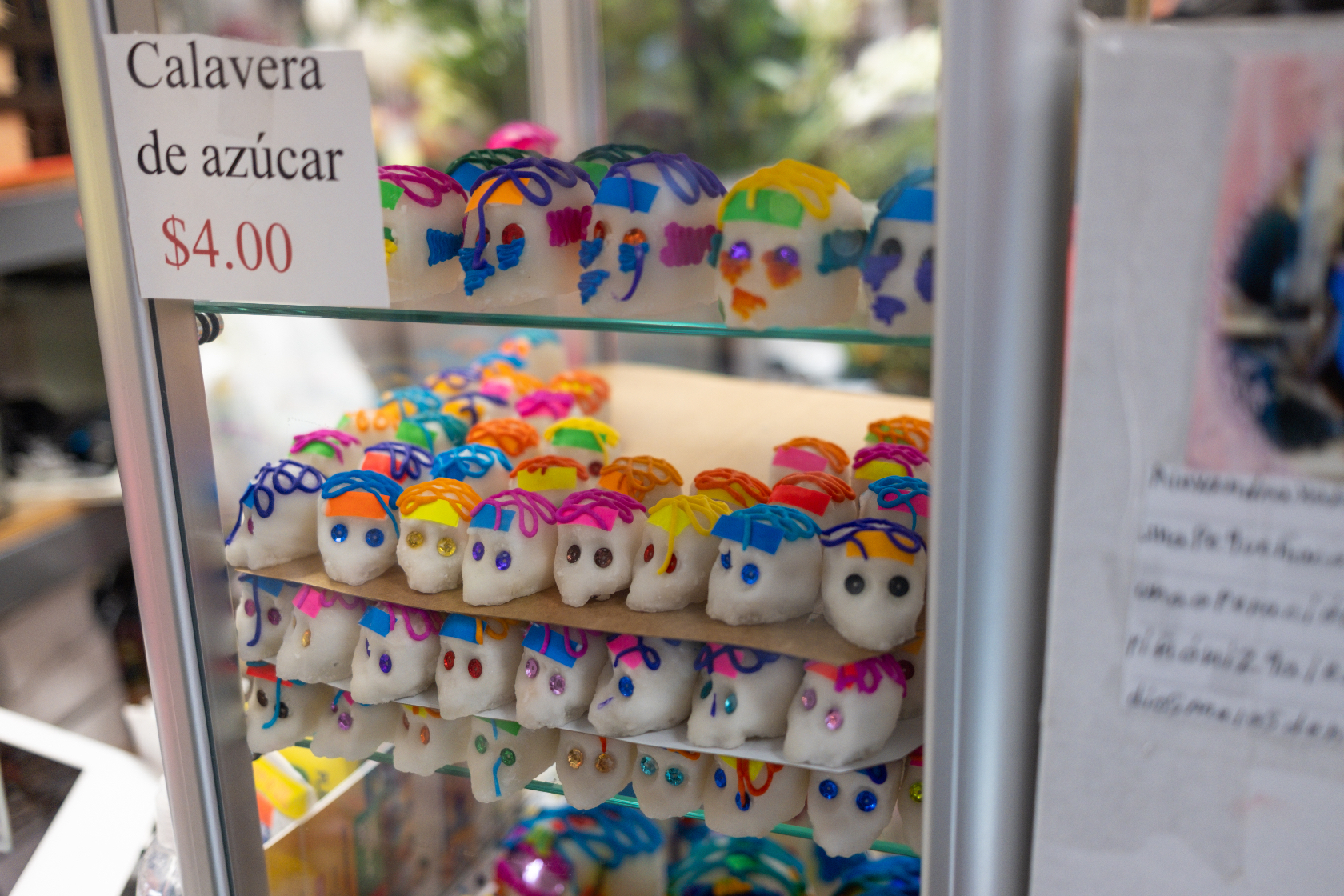
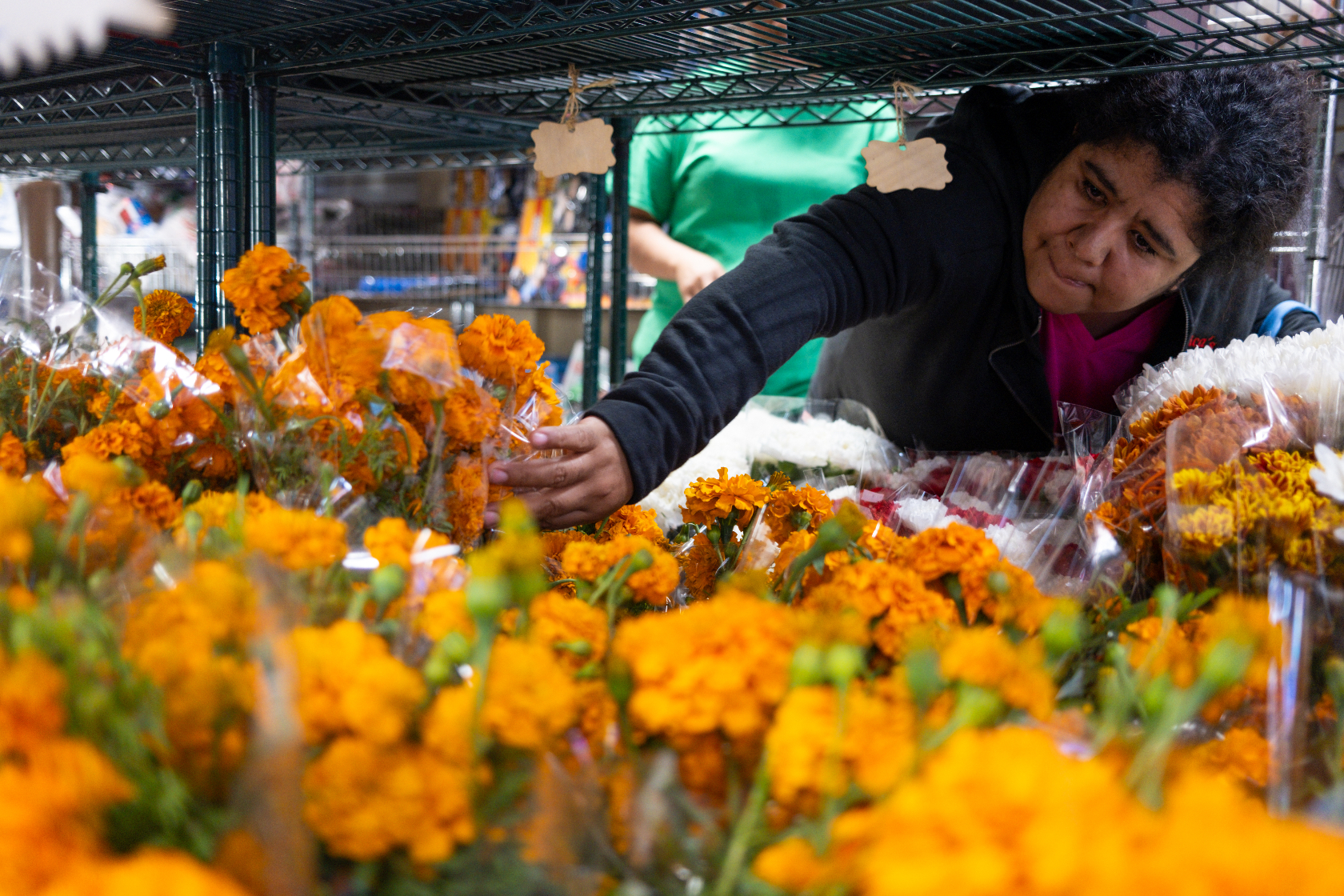
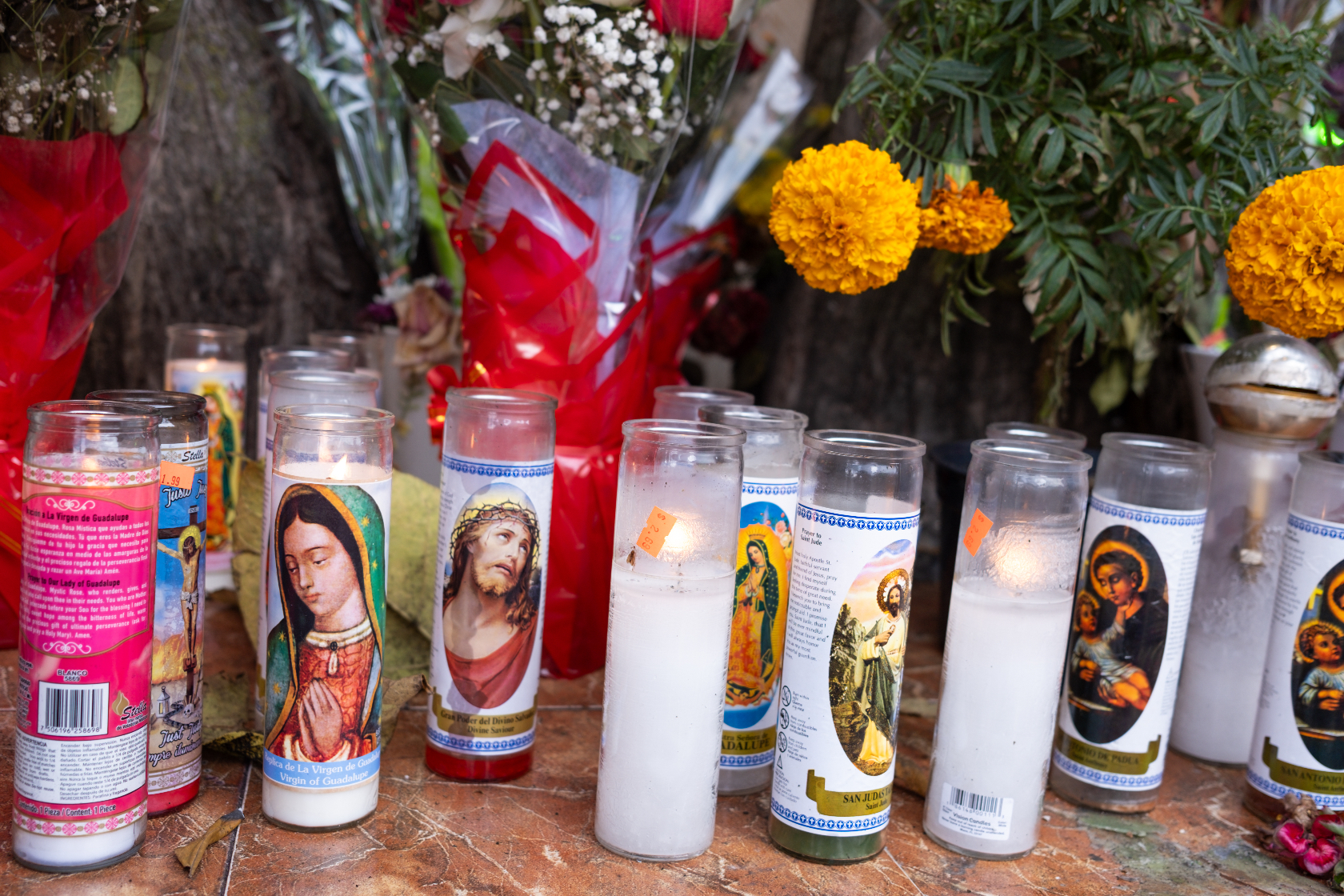
Día de los Muertos has always been significant for Guzman and her family. So just like her parents did with her, she wants to pass the tradition on to her children. Every year, she says, they get excited for her to decorate the house with papel picado, sugar skulls, candles, and other items that she gets at the flower shop.
“I want to ingrain this in my children so that the tradition is not lost,” says Guzman.
Griselda Lucero’s parents taught her the ways of Día de los Muertos at an early age, too. She says her mom used to tell her that her grandparents were coming to visit, and every morning during the time of remembrance, Lucero’s mom would prepare mole, bread, atole, and other foods for their deceased loved ones at the altar.
“She would always cook them warm meals,” says Lucero, who lives in nearby Riverdale, Md. “She would place the flowers. And she would pray the rosary. So I learned that.”
Since their passing, Lucero has prepared her altar each year in honor of her parents, uncles, and grandparents. She even uses the same dinnerware set her mom left for her. Outside, she decorates the exterior of her house for passersby to see. For her, it’s important to showcase Día de los Muertos for children who were born in the U.S. and are less familiar with the holiday.
“It makes us feel nice because the traditions don’t get lost even though we’re in a foreign country,” says Lucero.
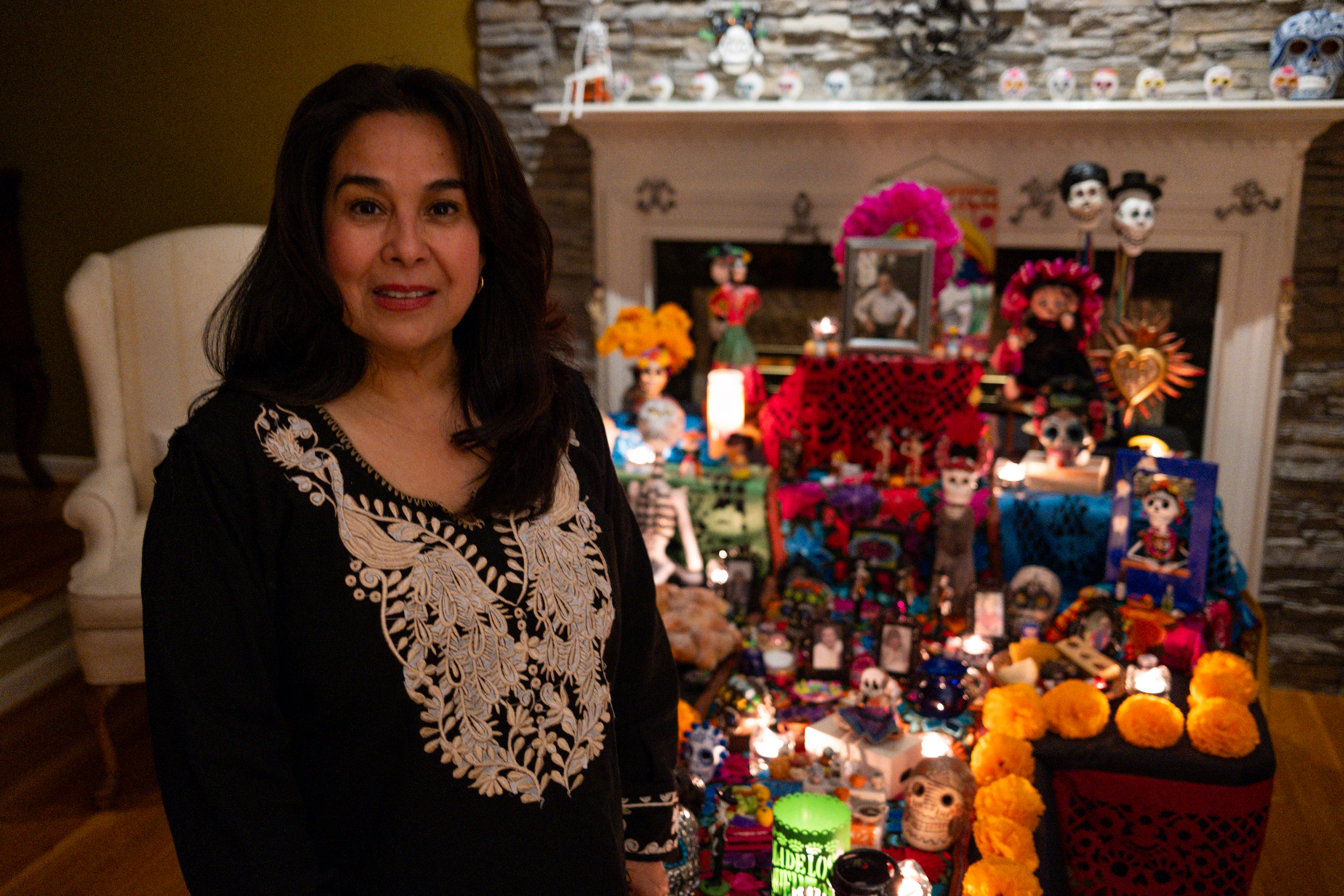

Like many others, Lucero came to Floreria La Rosa de Guadalupe to pick up last-minute Día de los Muertos necessities. The Hyattsville plaza where it is located is home to a few Latino businesses, so customers on a similar mission do most of their shopping for the holiday there as well.
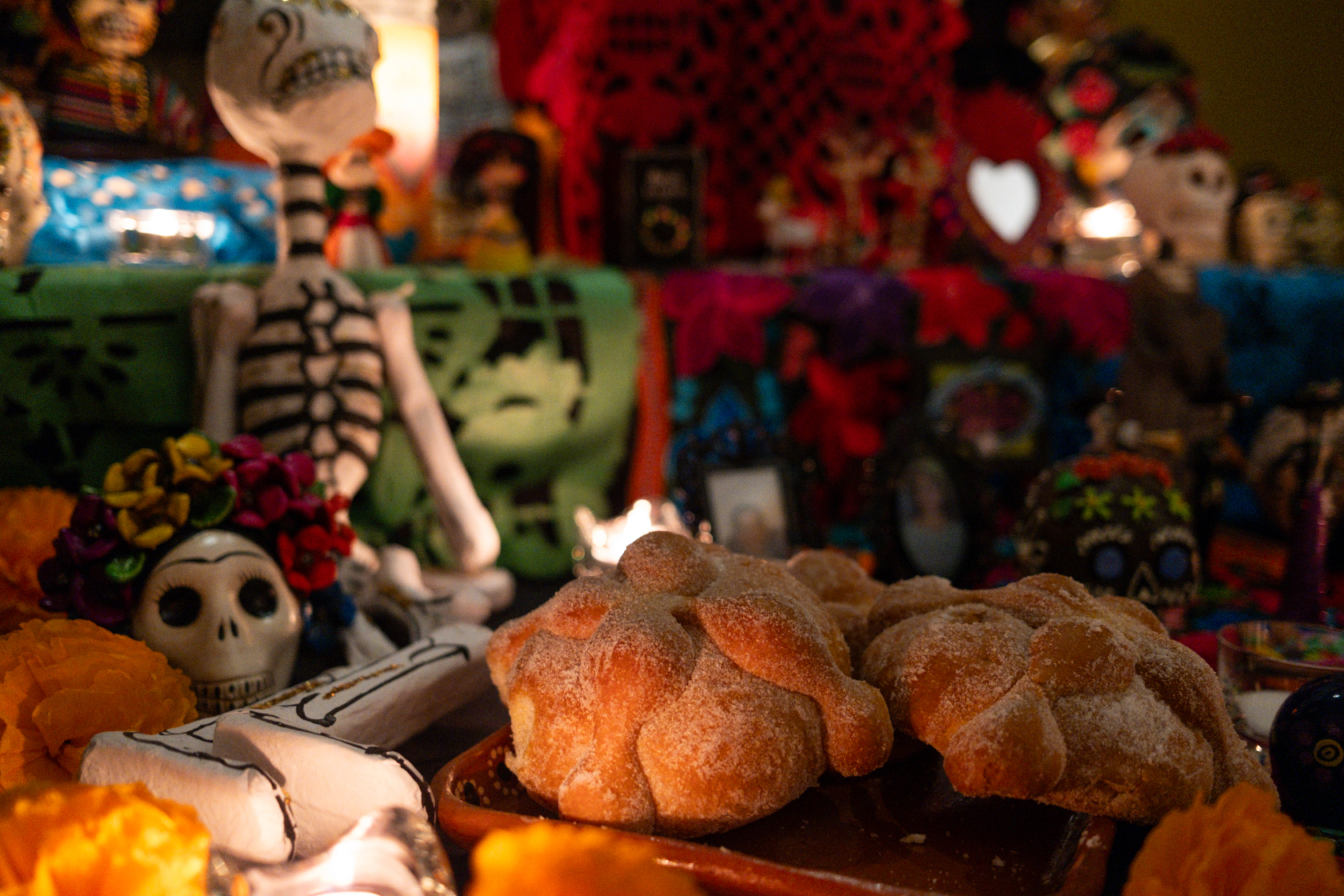
Next door at La Flor de Puebla bakery, some stop in for fresh pan de muerto. It was founded by Mario Hernandez Alcala in Passaic, New Jersey, and his family went on to open five other locations in the D.C. region – including the one in Hyattsville and another in Woodbridge, Va.
Among its customers is Nora Robles, who swung by for flowers and bread for her deceased family members – including her father. She says it’s an act of love that she enjoys each year and even showcases for the children she provides care for.
“I even invite their parents to see our Mexican culture and celebration of Día de los Muertos,” says Robles, who lives in Silver Spring.
When she first started celebrating on her own, Robles had an altar the size of a shoebox. Now, as life has gone by and more loved ones have passed on, her altar has grown.
But it’s not so much something to be sad about. Rather, for Robles, Día de los Muertos is a time to celebrate.
“I love my little ofrenda,” says Robles. “I feel like I have a little bit of my beloved Mexico.”
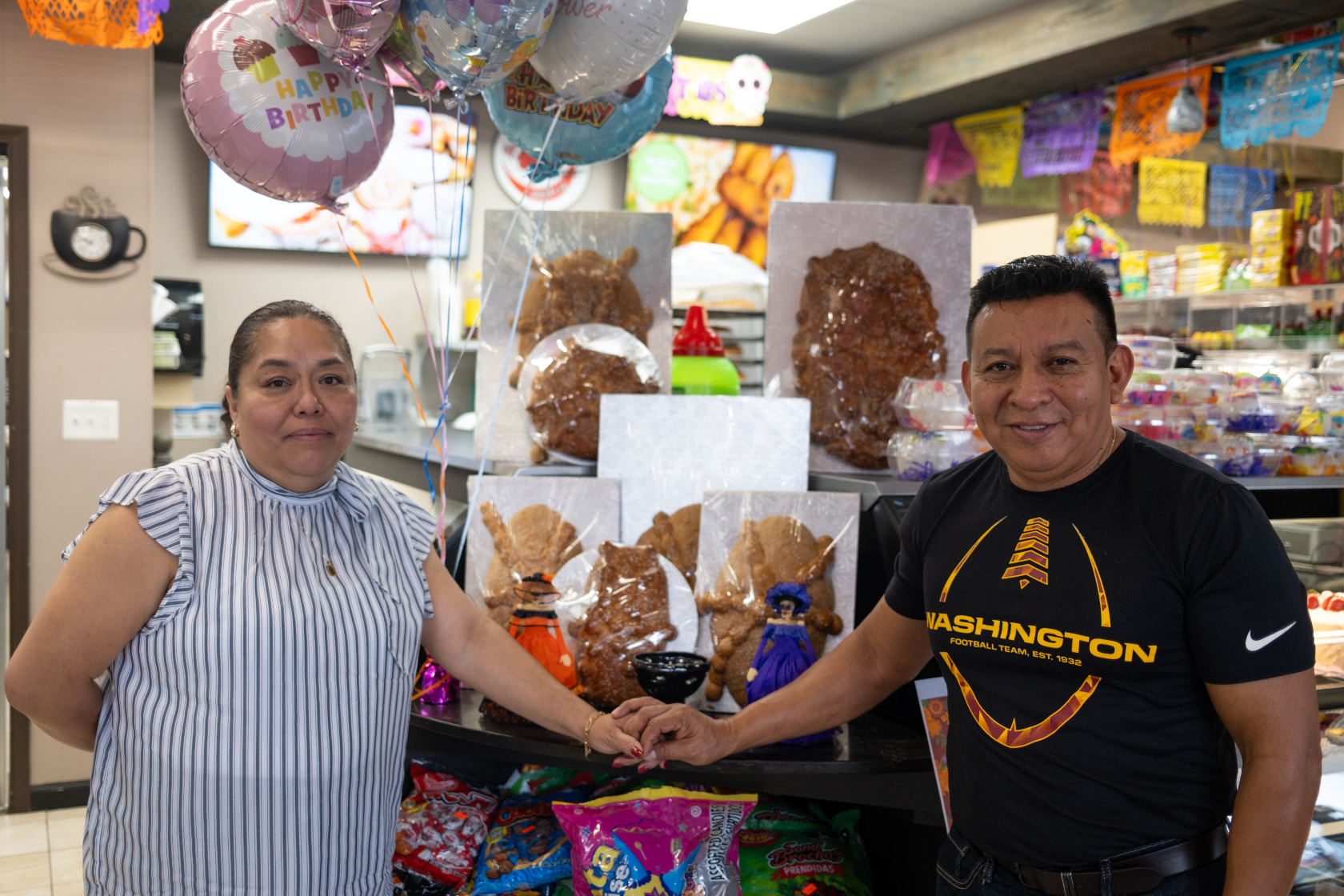

Ever Reyes, who helps run the chain along with her husband, Carlos, and other family members, says her father honed his skills in Mexico City before immigrating to the U.S., where he dreamed of opening the business.
“I feel proud of that because it’s been over 30 years,” says Reyes. “For those times it was rare to find a panaderia in the area.”
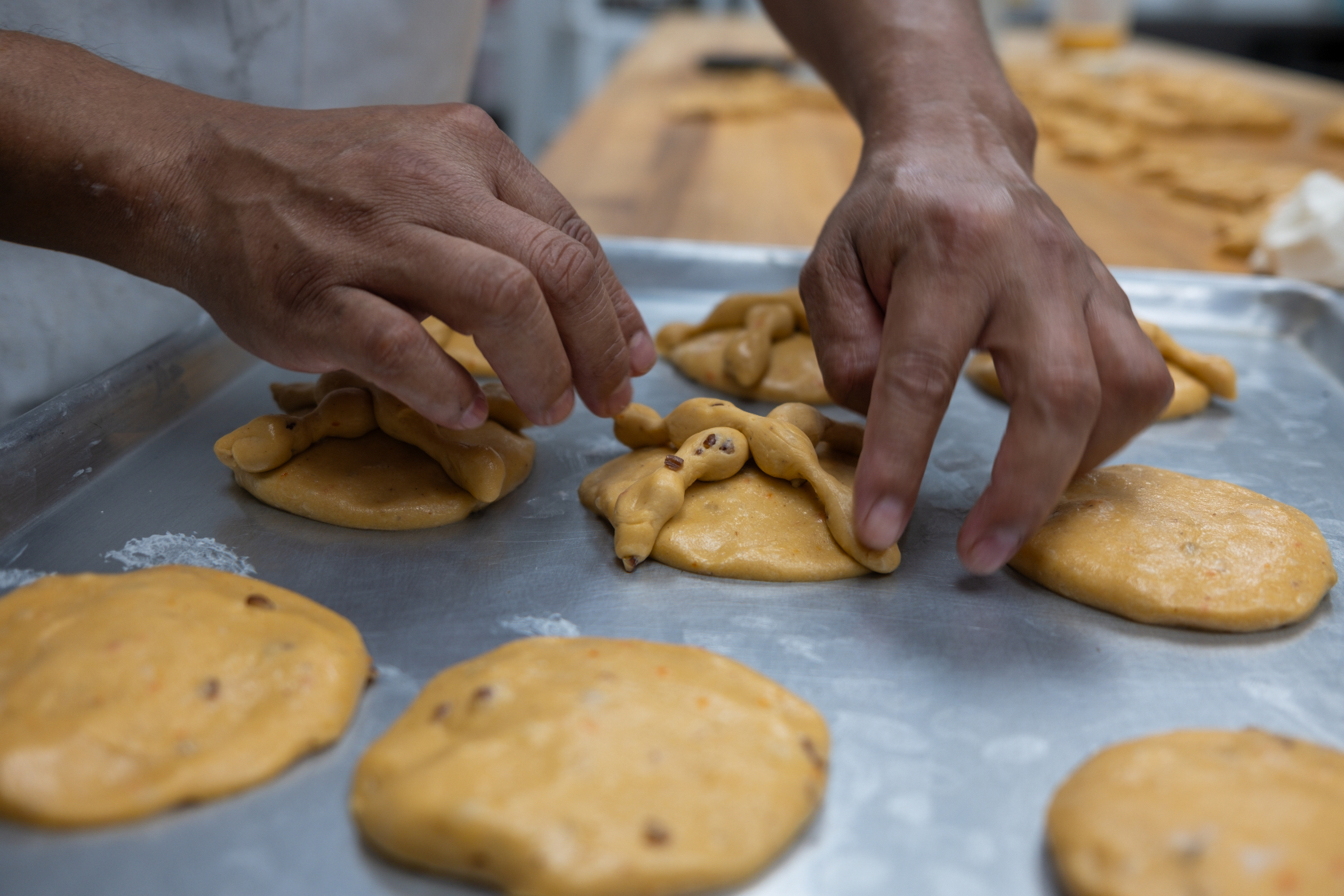
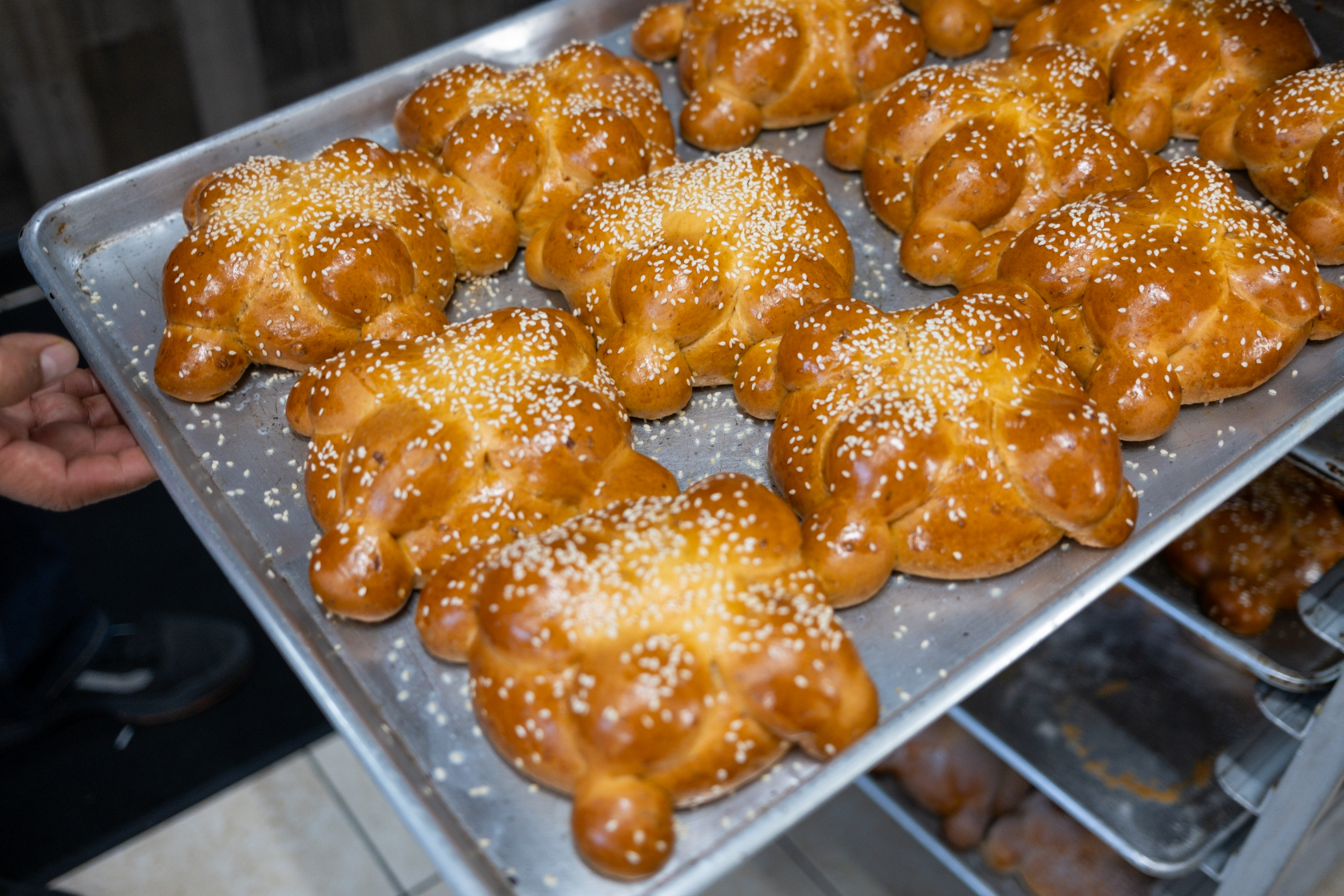
During the time of Día de los Muertos remembrances, they help supply the region’s Latino communities with pan de muerto. Traditionally, it’s a bread that is round and features the shape of crossbones on top. It’s baked with the essence of orange zest and, depending on who makes it, nuts or spices.
“We make it as authentic as we know,” says Carlos Reyes, who is also a baker. “It only comes once a year and needs to have the flavor more than anything.”
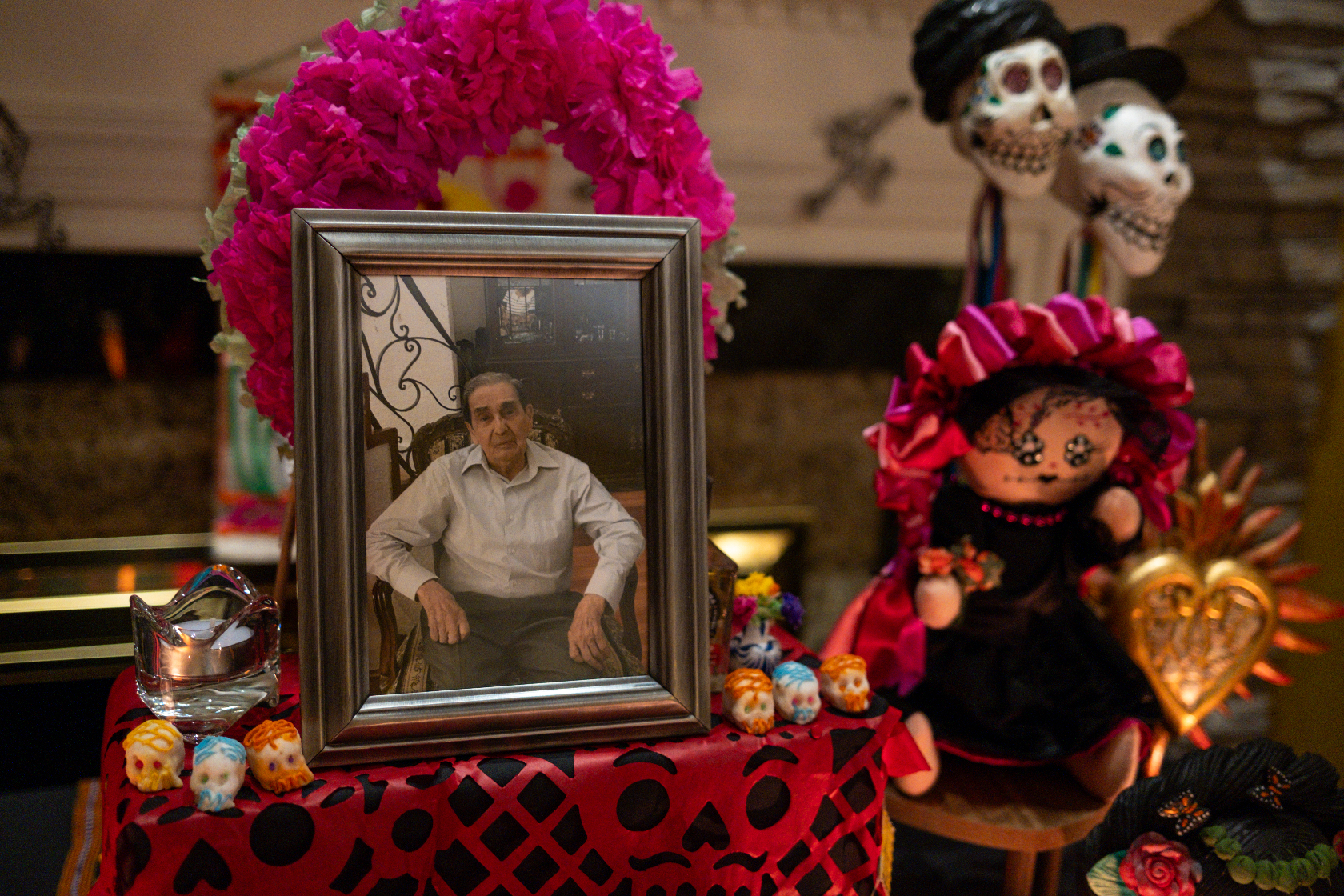
Since her father’s passing, Reyes and her family have been striving to keep his legacy going for future generations. They even put up photos of him at the bakeries during Día de los Muertos as a way to honor him, surrounded by what he loved most: bread.
“One does not end when they die,” says Reyes. “But has to live on in the hearts of [their loved ones].”