Elliot C. Williams
Though she was born in Chicago and has spent much of her career in New York, Simone Leigh’s takeover of an entire floor at the Smithsonian’s Hirshhorn Museum and Sculpture Garden is a homecoming of sorts. The world-renowned multidisciplinary artist interned as a college student at the Smithsonian, studying Nigerian pottery in the collection of the National Museum of African Art.
Now, Leigh’s work is the subject of a full-floor survey at the Hirshhorn, one that will be on view through March 3, 2024.
Though her work seems to know no bounds, Leigh is most widely recognized for her stunning bronze sculptures, which have graced the High Line in New York and international exhibits. In fact, last year, Leigh became the first Black woman to represent the United States at the Venice Biennale, the world’s oldest and most famous international art show. Her Venice presentation, “Sovereignty,” explored themes of history, race, and colonialism through works of bronze, glazed stoneware, thatch, steel, and wood. Even the building that housed the works became a sculpture: Leigh transformed the neoclassical pavilion into a structure reminiscent of a 1930s West African palace.
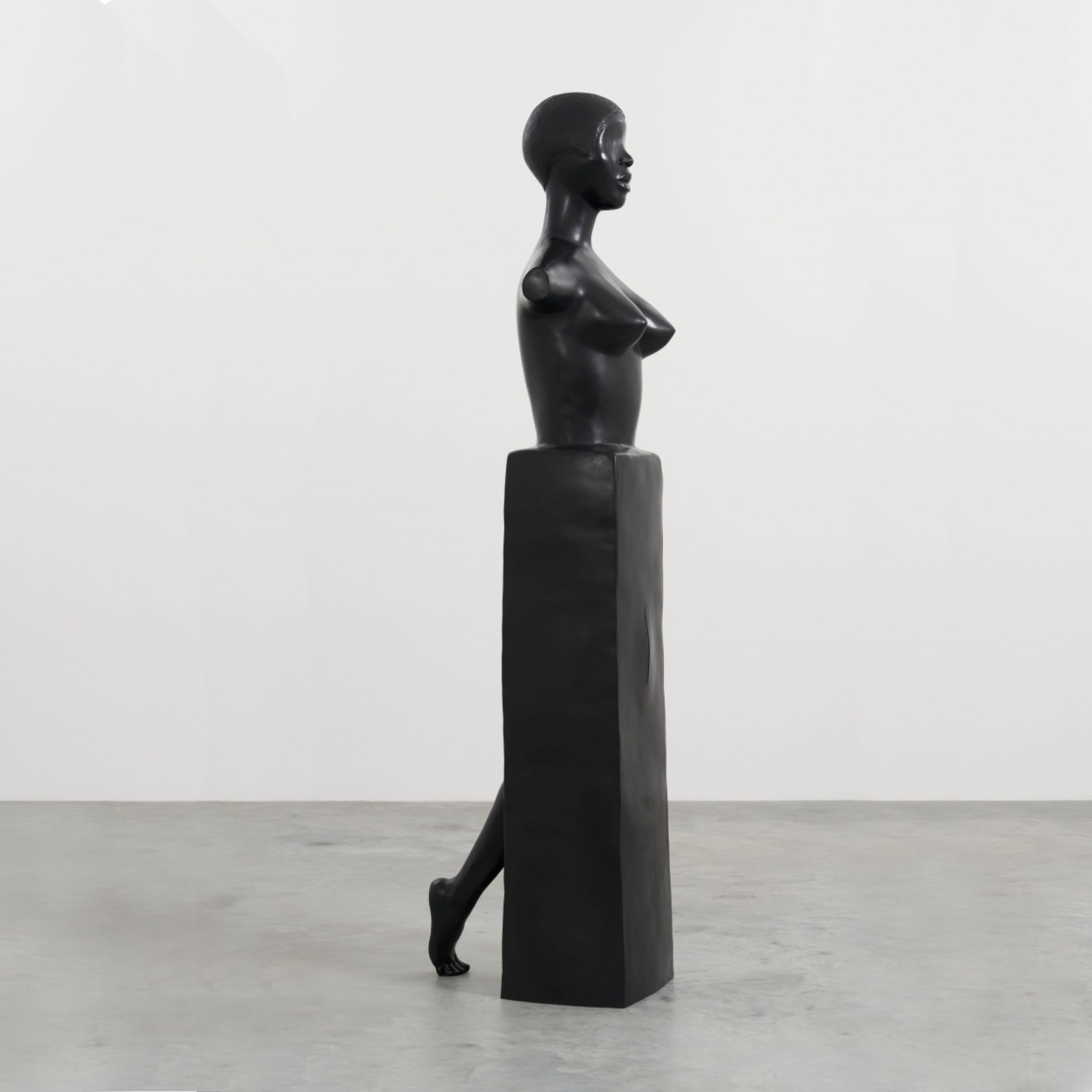
The Hirshhorn will exhibit Leigh’s Venice collection, alongside pottery, large sculptures, and video installations from the past 20 years of her career. The Venice pieces traveled to Boston’s Institute of Contemporary Art before coming to D.C. But at the D.C. show, Leigh will display three never-before-seen bronze sculptures “Bisi”, “Herm,” and “One Foot.”
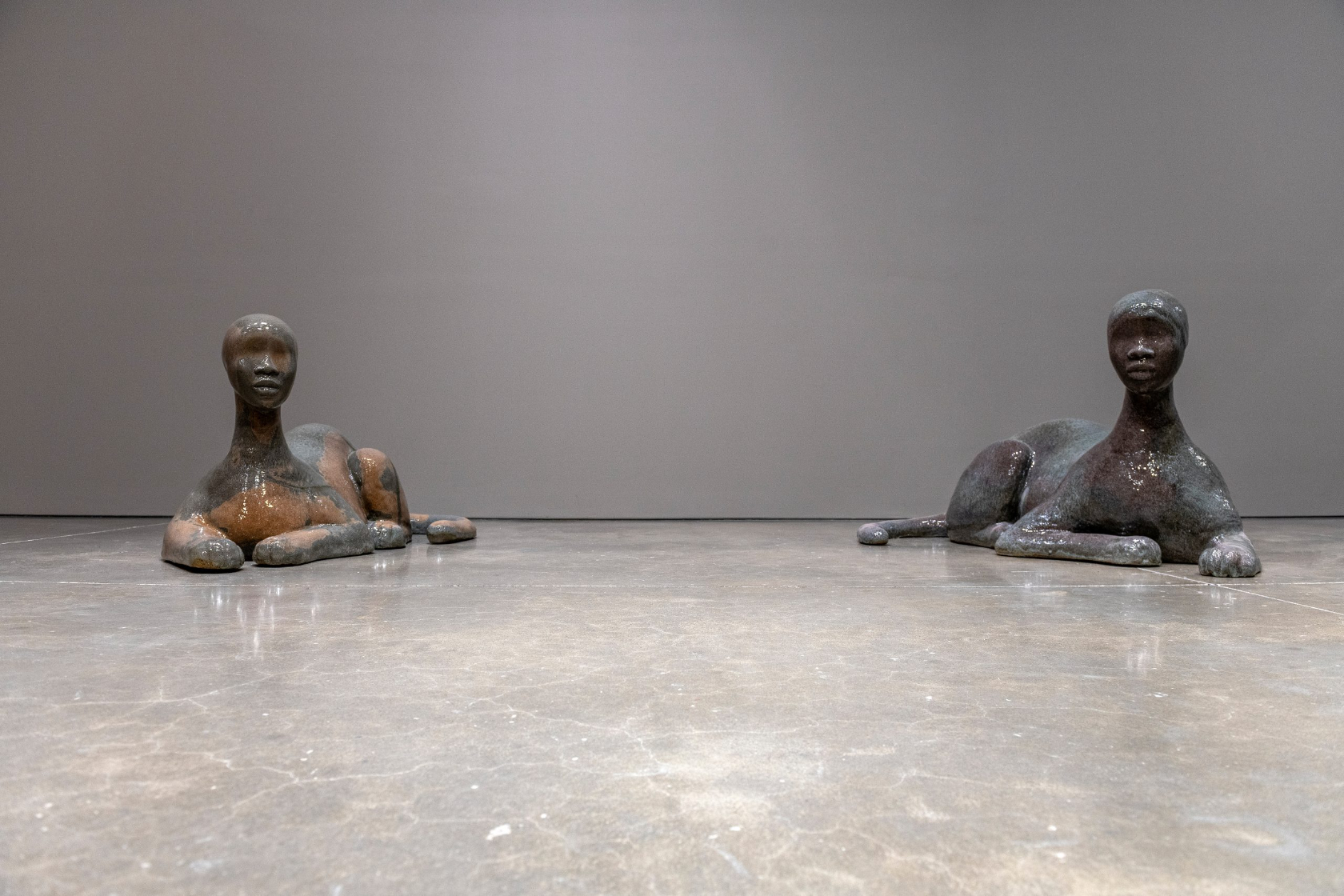
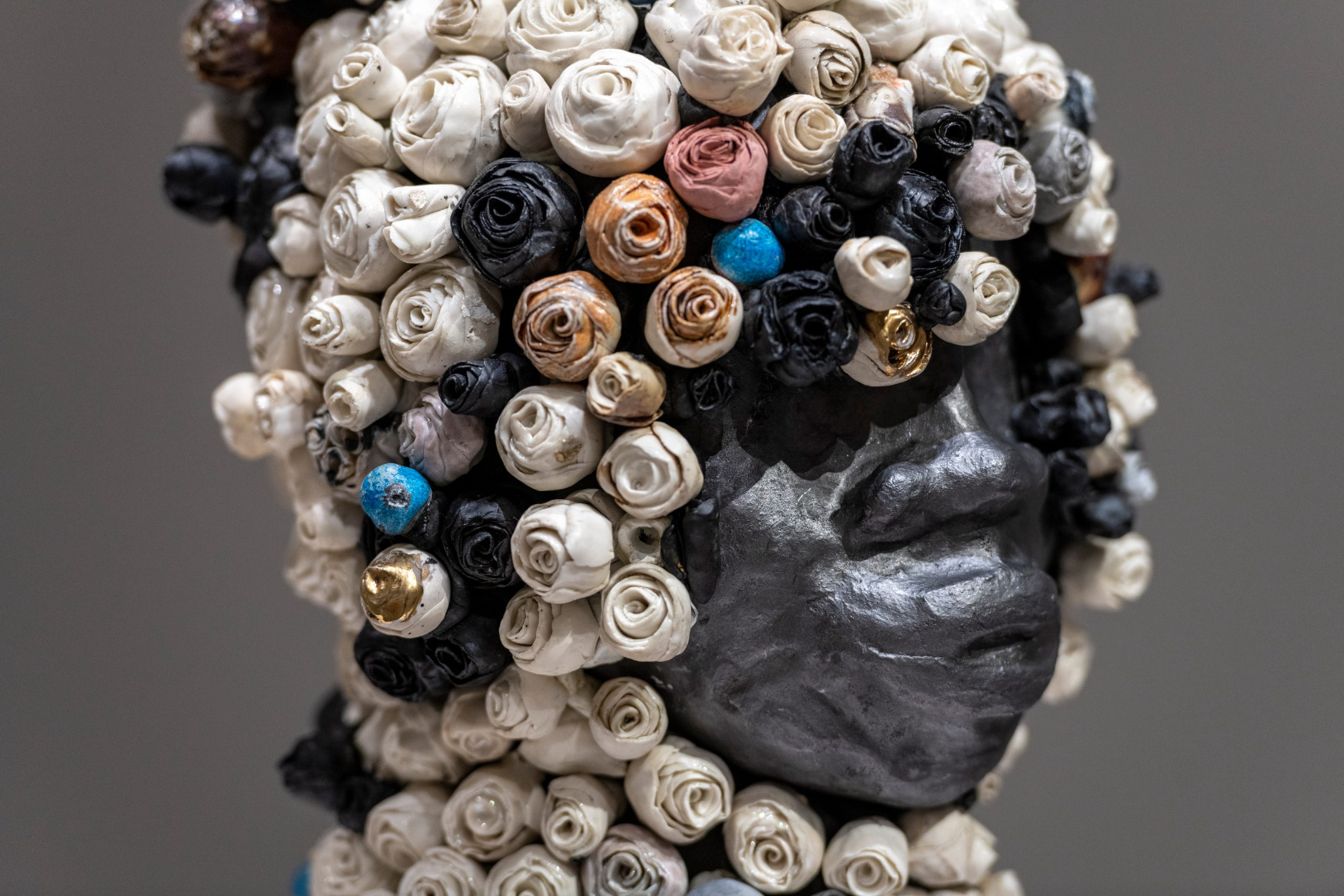
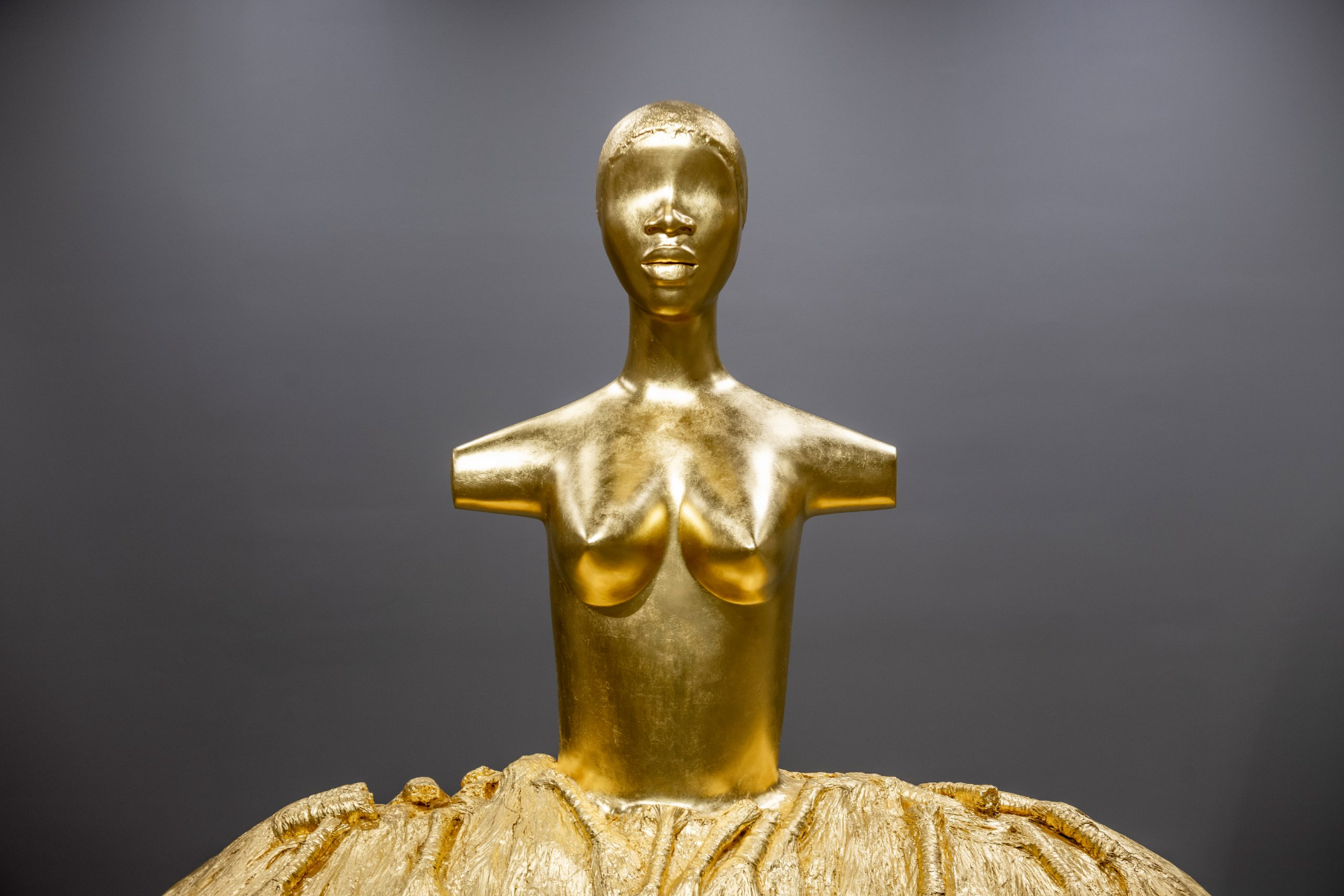
Her work centers the experiences of Black women across the diaspora, and in particular, Black women at work. She most often works in clay, bronze, and raffia, a type of palm native to tropical regions of Africa. In an interview with The Washington Post, Leigh said she’s always been interested in “making labor more visible.” It took a while for the U.S. art world to catch onto her practice, and she recalls one of her earlier works getting rejected from a New York show because it was ceramic: “I had to wait a long time before people could understand what I was doing,” she told the Post. “There was a sense that I was out of step with everyone else.”
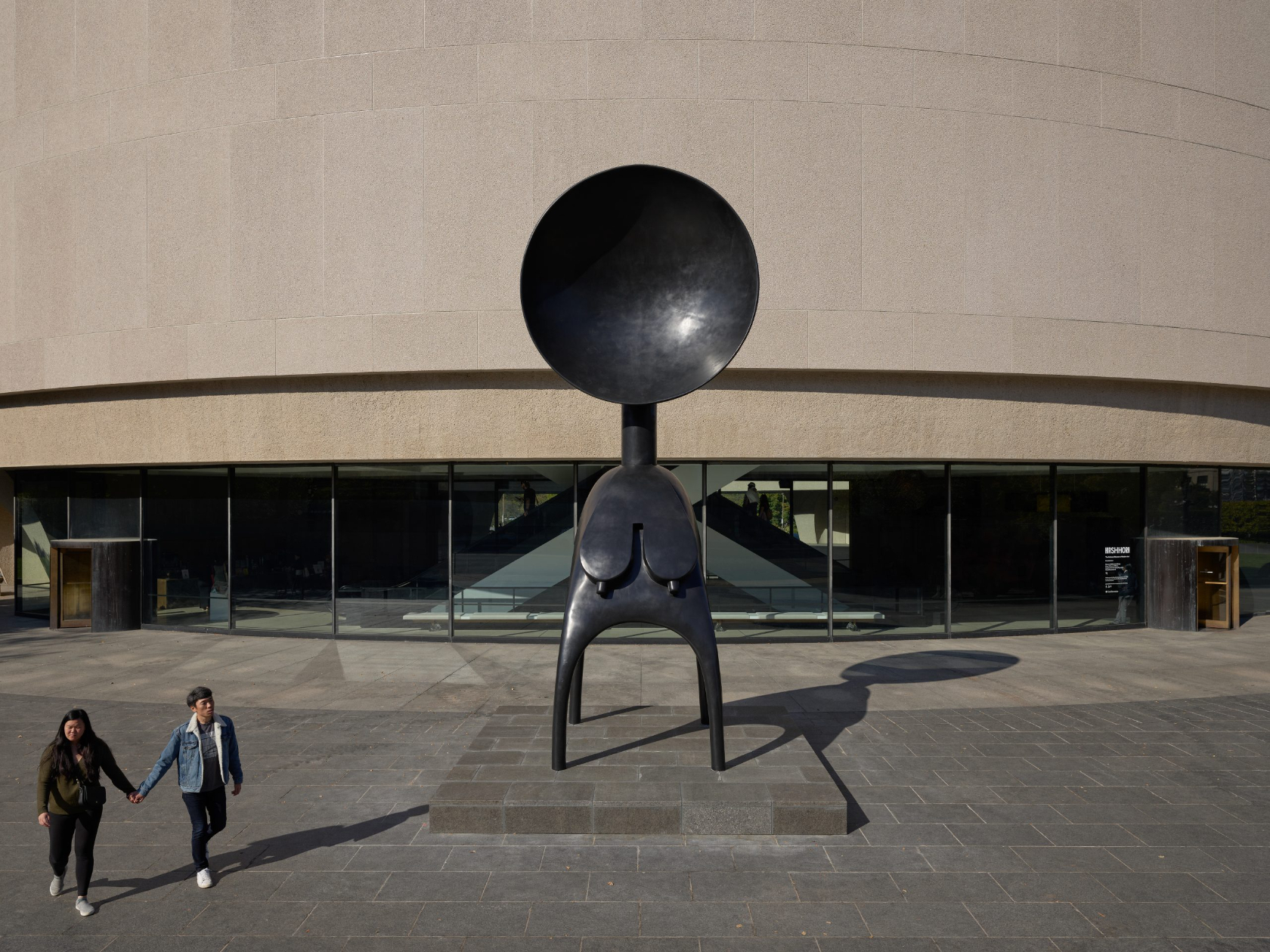
One of her recent works, “Satellite,” is a 24-foot-tall sculpture inspired by a wooden D’mba mask, a relic of the Baga peoples of the Guinea coast. The towering sculpture now stands outside the Hirshhorn, welcoming guests as they enter the museum.
This exhibit may seem unlikely, given that when she was a student in the late 1980s at Earlham College, a Quaker school in Richmond, Indiana, she wasn’t planning to become an artist.
“I didn’t want to be poor,” she told The New Yorker in a 2022 profile. “And it didn’t seem like art could bring me stability or a family or any of the things I wanted.”
But of course, she did become an artist and a successful one at that — thanks to her creative spirit, humor, and determination never to be fully comfortable, her teachers, mentors, and peers told the New Yorker.
“Simone Leigh” will be on view Nov. 3, 2023 through March 3, 2024, at the Hirshhorn Museum and Sculpture Garden. FREE admission. The Hirshhorn is open daily from 10 a.m. to 5:30 p.m. Timed passes are not required.