Margaret Barthel
 Matt Blitz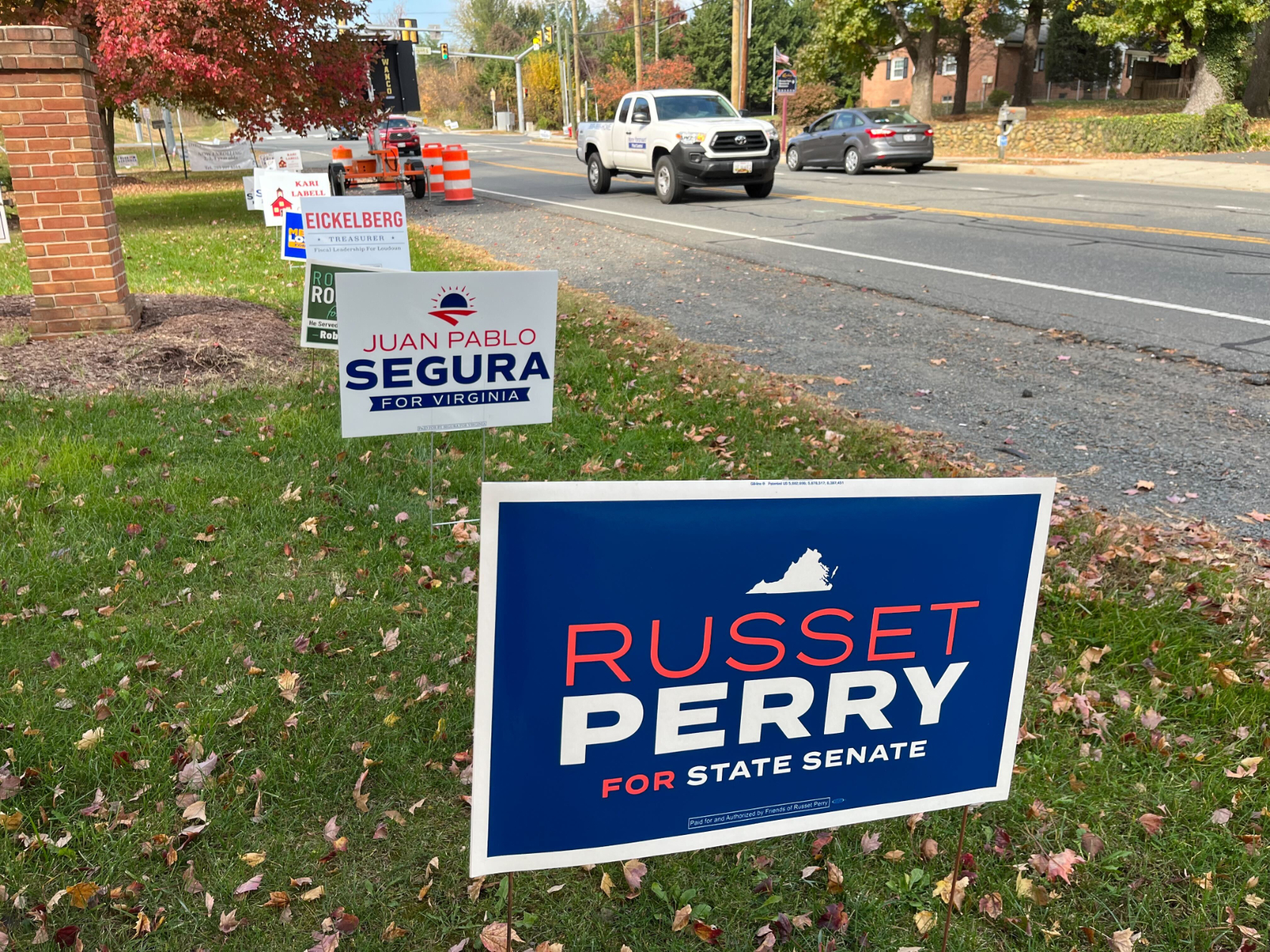
This post will be updated as more results come in.
Virginia Democrats swept to victory in the state’s hard-fought legislative election on Tuesday night, keeping control of the state Senate and flipping the House of Delegates, according to unofficial results. The outcome a major blow to Gov. Glenn Younkin, who campaigned hard for a Republican “trifecta” in Richmond.
In the new legislative session in January, the party will now have at least a two seat-margin in the senate and a still-undetermined margin in the House of Delegates. Democrats’ wins came after a lengthy redistricting process in which court-appointed experts drew the district maps after a bipartisan committee tasked with doing so deadlocked.
The results also mean that Del. Don Scott of Hampton Roads, the current Minority Leader, will likely become Speaker of the House. Scott would be the first Black speaker of the country’s oldest democratically-elected legislative body, which dates back to 1619, the year the first enslaved Black people arrived in Virginia.
Voters turned out in solid numbers for an off-off year election, with many focused on abortion rights, cost of living, political division, crime, and education policy.
In Northern Virginia, Democrats won most of the handful of battleground seats in the outer suburbs and exurbs of western Prince William and Loudoun counties, solidifying the increasingly blue tilt of those areas.
That includes the closely-watched state Senate race in Loudoun County, where Democrat Russet Perry defeated Republican Juan Pablo Segura by a roughly 5-point margin. In a neighboring district in Prince William County, Democrat Del. Danica Roem also came out on top, beating Republican Bill Woolf for a state Senate seat in the 30th District. And in House District 21, Democrat Josh Thomas held off Republican John Stirrup by three percentage points.
The results are a reversal from the party’s losses two years ago, when Virginia Gov. Glenn Youngkin, a Republican, pulled off a narrow upset in the gubernatorial race and helped Republicans recapture the House of Delegates.
David Rexrode, the chairman of Youngkin’s political action committee, acknowledged Republicans fell short of their ambitions on election night.
“We are still monitoring a couple key races and will fully assess where things stand in the morning,” he posted on X. “We had hoped for a stronger outcome this evening but are proud of the effort all of our candidates put in to these extremely competitive districts.”
For the past two years, divided control of the General Assembly has meant only the most bipartisan legislation made it to Youngkin’s desk. Now, with Democrats narrowly in charge of both chambers, Youngkin could be forced to directly veto a raft of Democratic bills.
“You can expect more gridlock,” says Stephen Farnsworth, a professor of political science at the University of Mary Washington. “The reality of politics is when there’s a divided government is that not that much gets done.”
Implications for 2024
On the campaign trail, Virginia Democrats focused their message on abortion rights, pointing to Virginia’s status as the last state in the South to not restrict the procedure after the Dobbs decision. Currently, the procedure is legal through the second trimester of pregnancy, and after that if three doctors agree that the pregnancy is a serious health risk. Democratic candidates ran on keeping Virginia’s abortion laws the same, and hammered Republicans for their support of a 15-week restriction, with certain exceptions. (Some Republicans, including Youngkin, have told supporters they’d like to go further, an inconsistency which quickly became another Democratic talking point.)
Republicans, meanwhile, attempted to ride the general popularity of Gov. Glenn Youngkin to victory, emphasizing parents’ rights and concerns about crime.
While the highest office on the ballot on Tuesday was state Senator, it was far from a sleepy election campaign, with the national political class eyeing the race as a proving ground for messaging in the 2024 presidential race.
“If it works this year in Virginia, then it becomes an issue that other states and national candidates can use next year,” said David Ramadan, a former Republican Delegate and current professor of practice at George Mason University’s Schar School of Policy. “If it does not work this year in Virginia, then it’s not something that they’re going to use. And that works on both sides, Democrats and Republicans.”
The results may also have implications for Youngkin’s political future. The popular Virginia governor has attempted to build a national profile, campaigning for Republican candidates across the country and pulling in support from major GOP donors. Those activities have sparked rampant speculation about Youngkin’s possible presidential ambitions — speculation he has mostly deflected by saying he’s focused on winning a Republican trifecta in Richmond. His political action committee poured $14.4 million into achieving that outcome this year, but ultimately fell short.
In the absence of a major Republican victory in Tuesday’s election, Youngkin’s case for the presidency — or for national office generally — is a far harder one to make.
“It definitely kills any potential for him nationally,” said Ramadan.
Democrats hold two key state Senate seats
The local race that garnered perhaps the most attention was for the state Senate seat in District 31, encompassing Loudoun and Fauquier counties. It pitted two first time candidates, former CIA officer and county prosecutor Russet Perry, a Democrat, against local entrepreneur Juan Pablo Segura, a Republican. Perry defeated Segura handily by a five percent margin. It was a result that wasn’t unexpected, but still exemplifies how the rest of the night went in the Commonwealth.
Abortion rights, crime, and “parents’ rights” were the main themes of that race, with millions of dollars poured in from state parties and advocacy groups, making it the most expensive race this election cycle. $6.4 million dollars combined were spent on ads that have continuously been airing throughout the region for weeks, including ads painting Perry as soft on crime and others calling Segura too extreme.
Due to this attention and spending, voter turnout was high. About 32,000 votes were cast early in a district the Virginia Public Access Project called “competitive.” Youngkin’s push for Republicans to vote early did appear to work to a degree, with the share of in-person early votes shifting by about 3% to likely Republicans compared to the gubernatorial race two years ago. Ultimately, Democrats still made up about 53% of the early vote across the state.
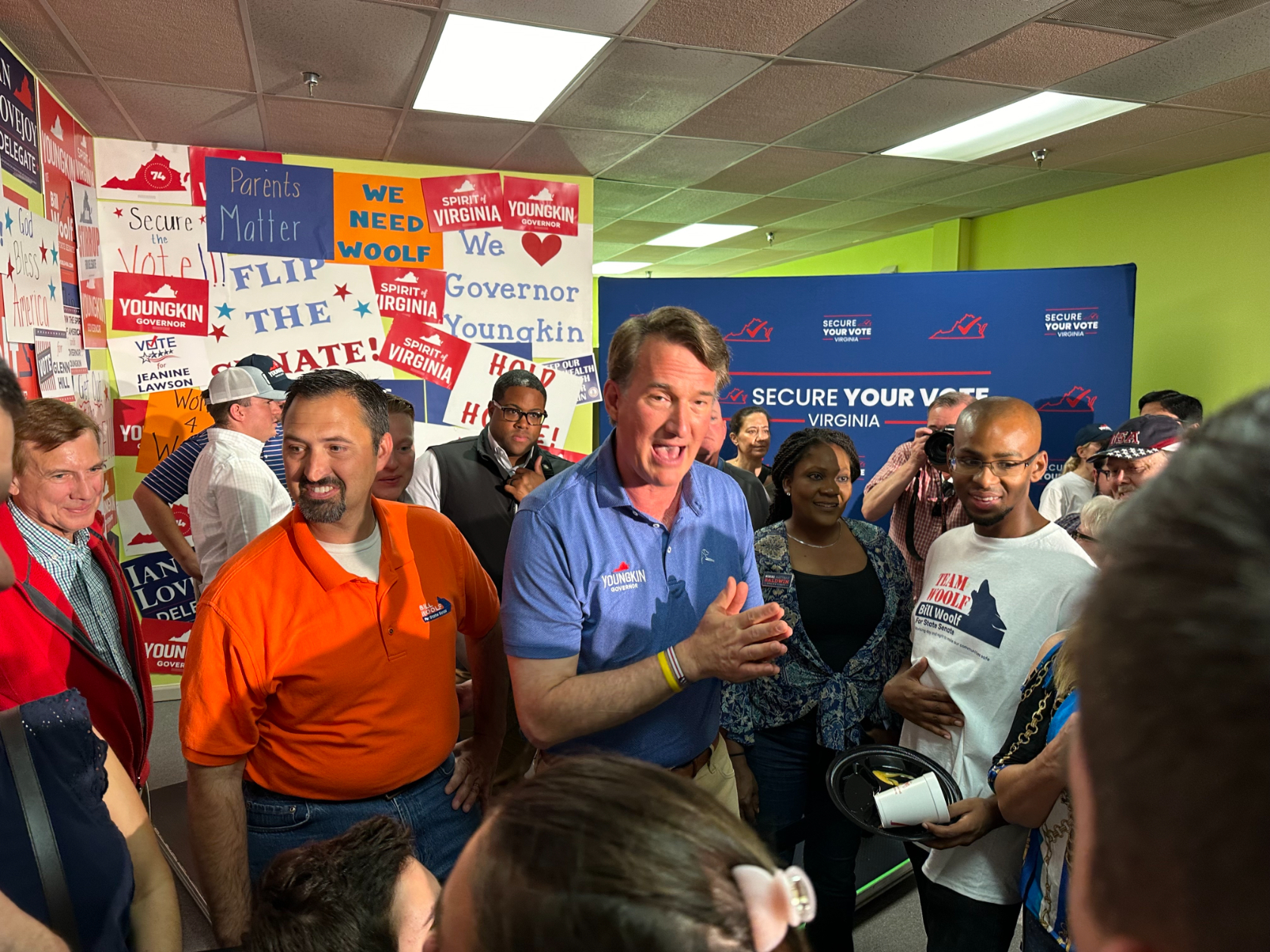
In the other defining state Senate race in the region, state Delegate Danica Roem got a promotion to the upper chamber by beating former Fairfax County police officer (and one-time Trump appointee) Bill Woolf, despite Virginia Governor Glenn Youngkin campaigning for him in recent weeks.
Roem defeated Woolf by more than 3 percentage points.
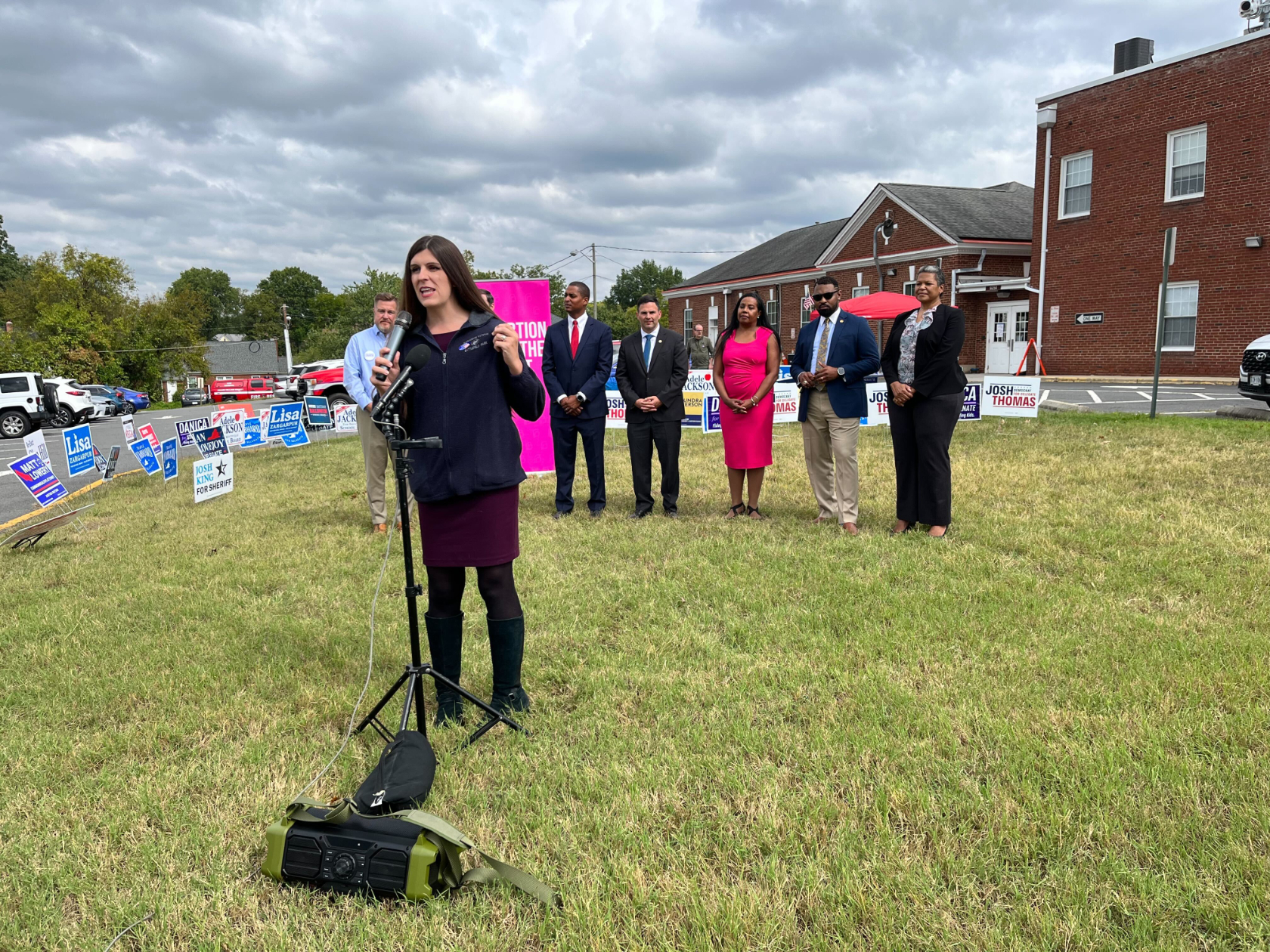
Abortion rights as well as data centers were the focus of both candidates in this race. Roem and Woolf stuck to their respective parties’ messages, with Roem saying she would keep the current state laws as is and would push to add the right to an abortion to the state constitution. Virginia is currently the only Southern state to not ban abortion after 15 weeks of pregnancy or earlier.
Woolf said that he would have supported a Youngkin backed-proposal restricting abortion after 15 weeks.
While both candidates have publicly opposed the Prince William Digital Gateway project, Woolf questioned why Roem hasn’t pressed local Democrats who support the project, highlighting the divide among Democrats on the issue. It does appear that the tide might be turning on the project. In recent weeks, county staff has recommended rejecting the project with a public hearing set for Wednesday.)
In 2017, Roem became the first openly transgender state legislator in the United States, and she has openly accused the Woolf campaign of transphobia. “The opposition in this campaign has been more transphobic than my three other campaigns combined,” Roem told the Advocate recently.
Republicans victorious in two local House of Delegates seats
Republicans were not entirely stymied in Northern Virginia, winning two House of Delegates races in Prince William and Loudoun.
In the contest for the Virginia House District 22, Republican and former Manassas City councilmember Ian Lovejoy defeated Democrat Travis Nembhard by about five percentage points.
The district has leaned Republican in recent elections.
While the debate over abortion rights impacted this race as well, data centers and education were also top of mind.
Much like the State Senate race, both candidates agree that data centers shouldn’t be built near homes. However, Lovejoy has long been an advocate against their development dating back to his time on the Manassas City Council.
He also has advocated for education policies that increase “parental involvement,” while Nembhard has called for a stop to “villainizing and pitting teachers against parents,” as he told the Prince William Times last month.
While District 30 leans Republican, it was not entirely expected that Geary Higgins would win. Loudoun County Democrats painted the Republican candidate as an extremist, saying he had ties to election deniers and appeared at an event alongside Stewart Rhodes, head of the Oath Keepers.
“Once upon a time, Virginia had moderate Republicans and moderate Democrats. It told the extremists which way it was going to be,” Farnsworth says. “But now, increasingly, the Republicans and the Democrats both are more cohesive caucuses and an environment where more extreme politicians are able to do better than they have done.”
Abortion rights were also at the center of another competitive House of Delegates race.
Earlier this summer, Republican candidate for House District 21 John Stirrup was caught on tape saying he’d support a total ban on abortion, despite Youngkin and other Republicans publicly touting a 15-week abortion restriction.
The Democratic candidate Josh Thomas, a former Marine, put a focus on these recordings in an August ad calling Stirrup a “a MAGA extremist focused on taking away women’s rights” in his first television ad.
In that race, Thomas won by about three percentage points.
Democrats easily win closer-in suburbs
Closer to D.C, results mostly panned out as expected in Arlington, Alexandria, and Fairfax County, with Democrats winning handily in those General Assembly races.
But history was made with Adele McClure elected as the first Black and Asian person to represent Arlington in the General Assembly, winning in the newly-formed Virginia House District 2. She ran unopposed.
Even in districts where Democrats already held seats, there will be plenty of turnover in Northern Virginia’s General Assembly delegation come January. A host of retirements earlier this year and upsets during June’s primary knocked a number of experienced lawmakers from the ranks.
Democratic Senate Majority Leader Dick Saslaw (D-Fairfax), Finance Committee chair Sen. Janet Howell (D-Fairfax), and former Speaker of the House Eileen Filler-Corn (D-Fairfax) all announced they were retiring or not running again for seats in the General Assembly (Filler-Corn has since announced her run for U.S. Congress).
Then, in the Democratic primaries, Fairfax County School Board member Stella Pekarsky upset longtime State Senator George Barker, while Saddam Salim knocked off Sen. Chap Petersen in Fairfax’s State Senate District 37. In the general election, both Pekarsky and Salim won handily against Republican opponents.
All of this new blood has some worried in Northern Virginia about the region’s loss of influence in the General Assembly come January.
In the end, that’s next year’s problem for the Virginia Democrats. For now, the party is relishing holding onto the Senate Seat and flipping the House of Delegates.
This story has been updated with information about turnout, Speaker Designate Don Scott, and the 2021 redistricting process.