
Maria Helena Iturralde and her husband, Raul Flores, are producing Bolivia’s national dish at Saya Salteña, a tiny grab-and-go eatery they recently opened near Foggy Bottom.
The couple immigrated to the United States from Bolivia and salteña pastries have been a mainstay in their culture for more than 100 years. Think of them as a combination of a soup dumpling and a pot pie. “Saya” refers to the name of an Afro-Bolivian dance and music that’s performed during Bolivian carnival.
“Salteñas are like arepas to Venezuela or pupusas to El Salvador,” Iturralde says. “It’s like something so typical … true salteñas come from Bolivia and we wanted to introduce something that is street food, and salteñas are street food.”
Here’s how to eat them, according to their instructions: shake up the contents, bite off the top and eat from the top down. The trick with the salteña is you have to slurp the juice.
It takes three days for Iturralde to make a batch of 300 salteñas. She spends the first day making the sweet dough and the Bolivian caldo de pata, which is beef bone soup with vegetables that she cooks for six hours. On the second day, the dough rests and she produces the filling, called jigote, which is that bone broth mixed with ground beef. She seasons it with Andean spices that give the salteña its sweet and spicy flavors.
“You can actually taste the intricacies of what it took us to make this type of filling and then you taste the spice after,” she said, adding that she sources most of her ingredients from a Latin market. The final day, she stuffs the salteñas with the filling and freezes them. They’re baked in the oven from frozen to golden brown perfection as a last step.
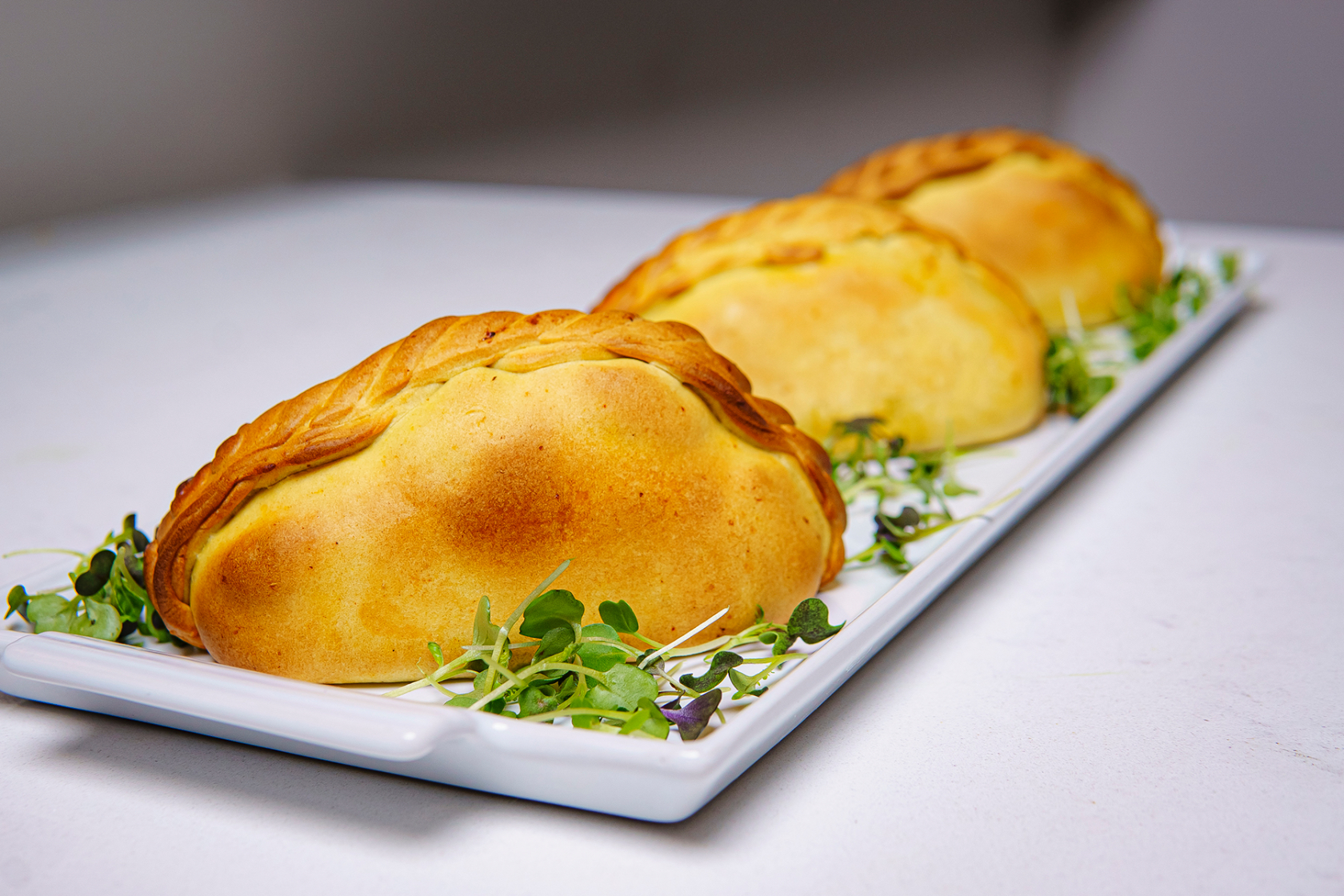
At Saya Salteña, there are salteñas for everyone. For purists, there are the traditional ground beef and spicy chicken salteñas ($6 each). Both of them are filled with kalamata olives, peas, hard-boiled eggs, potatoes, onions, and Andean spices.
Vegans can enjoy a vegan salteña ($6) that’s stuffed with quinoa, mushrooms, peas, potatoes, and spices. And anyone with a sweet tooth with a sweet tooth can try a vegan apple-passionfruit salteña, ($4) which is inspired by apple pie.
“The first time I came to the United States, the first thing I did was apple pie and so I said, ‘I’m going to do a combination,’” Iturralde says.
The rest of the menu is a mix of traditional and modern. Iturralde serves a sandwich de pollo ($12), her riff on a fried chicken sandwich that she pairs with spicy Bolivian peanut sauce. Other fusiony items include a quinoa burger ($14) and a quinoa salad served with champagne vinaigrette ($10).
Flores’ jokes his role involves sampling the salteñas to make sure they’re up to par, chatting up guests and helps his wife run the eatery’s day-to-day operations.
“She’s the owner, I just help,” he says. But he’s modest; he also has a couple of credits on the menu. It was his idea to serve Mexican Coca-Cola and Sprite because that’s what he drank when he was growing up in Bolivia. The Mexican versions of those drinks taste better to him because they’re sweetened with sugar instead of high-fructose corn syrup.
Other drinks include mocochinchi, a Bolivian beverage made from dehydrated peaches, and Takesi coffee from Iturralde’s family coffee farm in her home country. She serves the coffee in honor of her late father, Carlos Iturralde Ballivián, who farmed coffee on that same land and was also Bolivia’s foreign minister from 1989 to 1992.
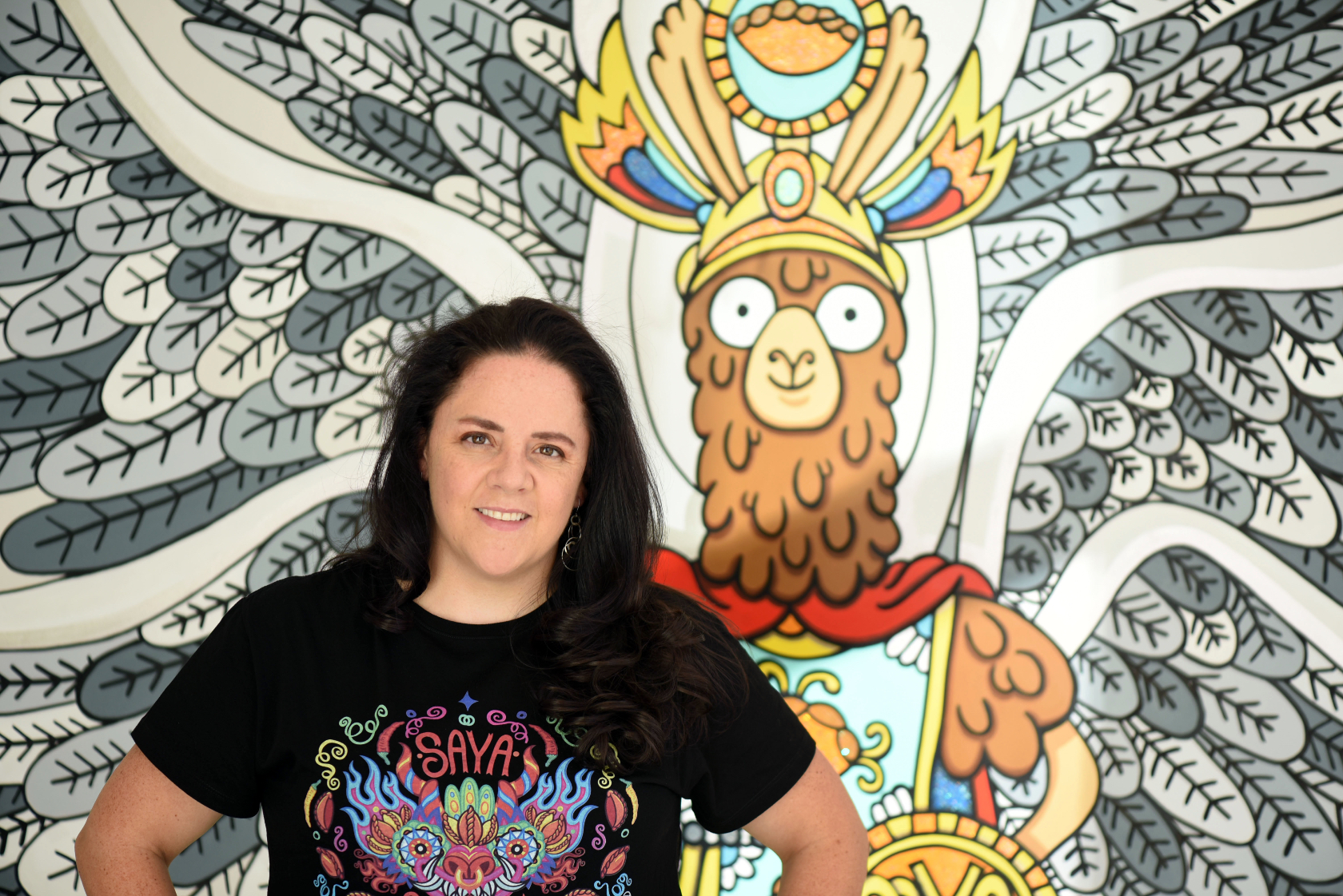
When it comes to the décor, Iturralde had Bolivia’s largest carnival in Oruro on her mind when she partnered with Arte Sano Mutante, a Bolivian artist duo, to paint vibrant murals on the cozy spot’s walls. The carnival’s main event is a procession that attracts more than 28,000 dancers and 10,000 musicians.
The murals depict various llamas in costume performing multiple carnival dances. Bolivians cherish llamas because their soft, warm wool is used to make coats, gloves, sweaters, and other cozy clothes.
In addition to her new restaurant, Iturralde helms Creative Catering DC, an 8-year-old catering business she had to temporarily close during the pandemic — which is how she started focusing on salteñas. She introduced them to D.C. through several pop-ups, including some with Carla Sanchez, co-owner of the pioneering Bolivian bar Casa Kantuta in Adams Morgan — Sanchez also hails from Bolivia.Iturralde reopened the catering business last year.
Saya Salteña being near the World Bank the International Monetary Fund and George Washington University — from which Iturralde graduated with a systems engineering degree — has attracted a diverse clientele, including students, diplomats, businesspeople, and Bolivians since they opened in October, Iturralde says.
“There’s a lot of Bolivians that come in with their Bolivian gear, and they just feel so proud and happy that there’s a place that they can introduce their food to their friends,” Iturralde says. “And they’re like, ‘I’m bringing my coworker and he’s not from Bolivia and I want you to taste this food from Bolivia.’”
Saya Salteña is located at 1919 Pennsylvania Ave. NW, but its entrance is on 20th Street NW. It is open Monday through Friday from 8 a.m.-5 p.m. and Saturday 10 a.m.-2 p.m. on Saturday.