Matt Blitz
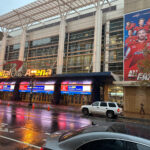
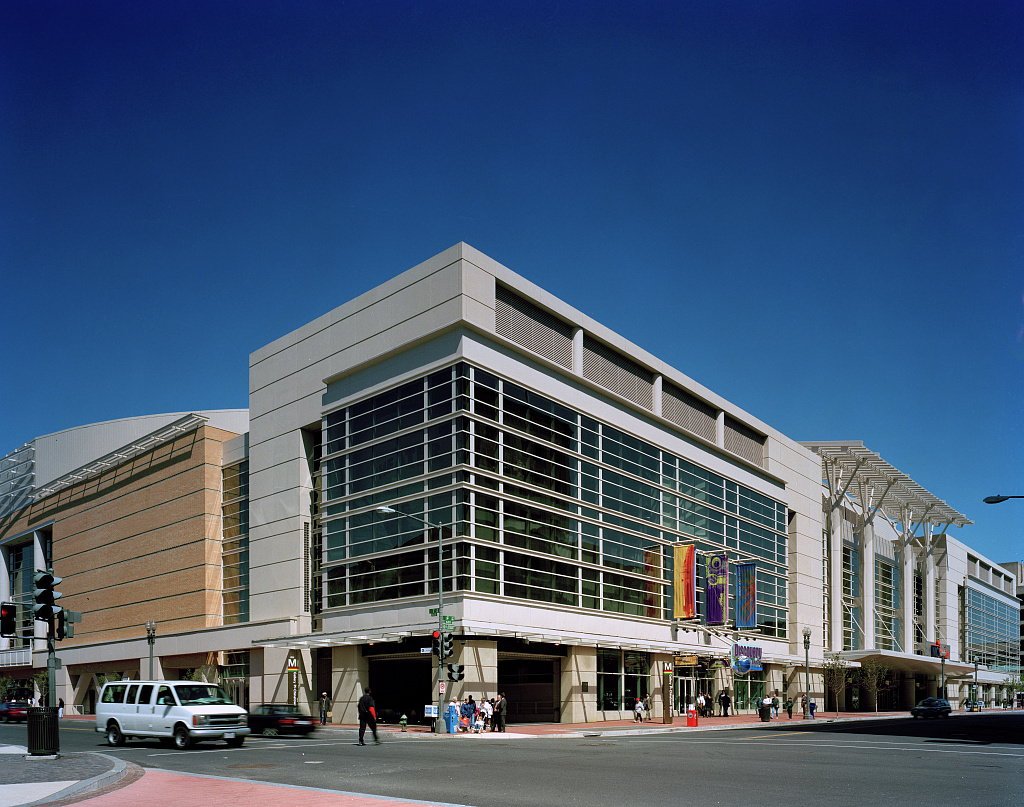
On December 2, 1997, 26 years ago this week, the MCI Center opened at the corner of F and 6th Streets Northwest in the District’s Chinatown neighborhood. City officials celebrated, hoping the arena would be a catalyst for revitalizing the area. Now called the Capital One Arena, the venue drew thousands of fans to the neighborhood to watch basketball, hockey, and concerts. New restaurants and shops opened as the area rapidly gentrified, displacing much of the Chinese community that had once thrived there.
Chinatown is at another crossroads. Downtown businesses are struggling to bounce back post-pandemic, with fewer people going into the office and many concerned about increasing crime. City officials hope they can turn the trend around, and they see the Capital One Arena as once again key to reviving the area.
That’s why the District appears poised to spend hundreds of millions of dollars to help Monumental Sports & Entertainment, owners of the Wizards and the Capitals, renovate the complex. Ownership is reportedly asking the city for $600 million of the $800 million needed to bring major upgrades to the arena, and has hinted they could take their ball (or puck) and move to Virginia if the District doesn’t pay up.
D.C. Mayor Muriel Bowser has signaled a deal with Monumental is a priority, providing a joint statement with the Monumental to DCist/WAMU reading in part, “[they are] proud to have had a longstanding and positive relationship that has contributed greatly to the vibrancy of this city,” and the District “recognizes that Capital One Arena serves as an important economic anchor” for downtown.
Team ownership has also confirmed to DCist/WAMU that negotiations are ongoing with the mayor’s office. And several members of the D.C. Council, including those who have opposed public funds being used for sports venues like a new Commanders football stadium, say that Capital One Arena is worth the city’s investment.
One of the stadium skeptics is Ward 6 Councilmember Charles Allen. While he vowed to oppose any District funds going toward a new football stadium, he sees the arena in Chinatown as different.
“If you don’t have Cap[ital] One Arena, if you don’t have a downtown anchor that is active almost every day out of the year between professional sports and concerts and events,” he told DCist/WAMU. “The downtown revitalization just isn’t going to happen.”
Local business owners agree, and they hope officials will reach a deal to keep the arena downtown. Adding to the uncertainty are the many empty office buildings and a spike in crime, which have left business owners in Chinatown concerned about a future without the arena.
“I don’t think that Chinatown and Penn Quarter can sustain that sort of loss, especially post-pandemic,” said Yama Jewayni. He’s a partner in the Daikaya restaurant group, which owns three restaurants near the arena, including Bantam King. “I mean, what are they going to build instead? More offices? Residential? That’s not going to… [be] bringing tens of thousands of people any given night.”
Parallels with 1994
Some of the same anxieties voiced by District officials today about the city and Chinatown echo those of local leaders nearly 30 years ago.
At the time, the District was grappling with violent crime that had become the perceived norm in the city as a whole. Downtown was struggling and the city was in steady economic decline, according to at least one report.
In late 1993, there were reports that Washington Bullets owner Abe Pollin was looking to move his NBA team away from suburban Landover, Maryland to a complex in downtown D.C., specifically to a city-owned site next to Metro’s Chinatown/Gallery Place station. The site had been the target of redevelopment plans for the better part of a decade calling for retail and housing.
After some back-and-forth about who exactly would pay for the project, Pollin agreed to pay the majority of the $180 million to build the arena out of his own pocket. In turn, the District would lease the land to Pollin where the arena sits for a well-under-market-rate of $300,000 annually.
Construction also required the District to take more land around the arena via eminent domain. Pollin announced the deal was done in December 1994.
“I have faith in the future of this city, and I am prepared to take the risk and get this done,” Pollin said in late 1994.
The move downtown and Polin’s willingness to privately fund the arena were hailed as major wins for the District.
“We’re telling everybody that the lights are still on here. And I think it will change a lot of attitudes toward what the city is about,” a resident and a local business owner told the Washington Post at the time.
As the MCI Center went up brick by brick, the continued hope was that it would revitalize that section of the city.
“It’s an exciting time, a huge opportunity for the city,” said the District’s chief downtown planner at the time, John Fondersmith. “The MCI Center can cause people to start thinking of this city in a different way. Instead of `I won’t go into that part of town,’ people will see it as an exciting place to go.”
On December 2, 1997, the MCI Center officially opened as fans came by the thousands to see the Washington Bullets take on the Seattle Supersonics. Even President Bill Clinton was in attendance.
As the opening of the Washington Post story from that night reads, “Last night, downtown Washington was a place to be, not to flee.”
It’s been over a quarter of a century since the sports and events arena opened at the corner of F and 6th Streets Northwest, and plenty has changed. Revitalization brought hip bars, shops, and restaurants, as well as an influx of residents and office workers. The Chinatown/Gallery Place Metro stop became one of the busiest in the system.
And, in a pattern seen across the District, development also brought gentrification. In the mid-1990s, the Chinatown neighborhood was home to thousands of Chinese immigrants and Asian Americans. Just a few years prior to the arena’s construction, it was estimated that nearly two-thirds of all the residents in Chinatown were Asian American. There were grocery stores, restaurants, and shops that specifically catered to those long-time residents. The construction of a new convention center in 1982 displaced hundreds of residents. But still, many supported the idea of a new sports arena, hoping a reinvigorated neighborhood and thousands of people attending events nearly every night would benefit the community and its businesses.
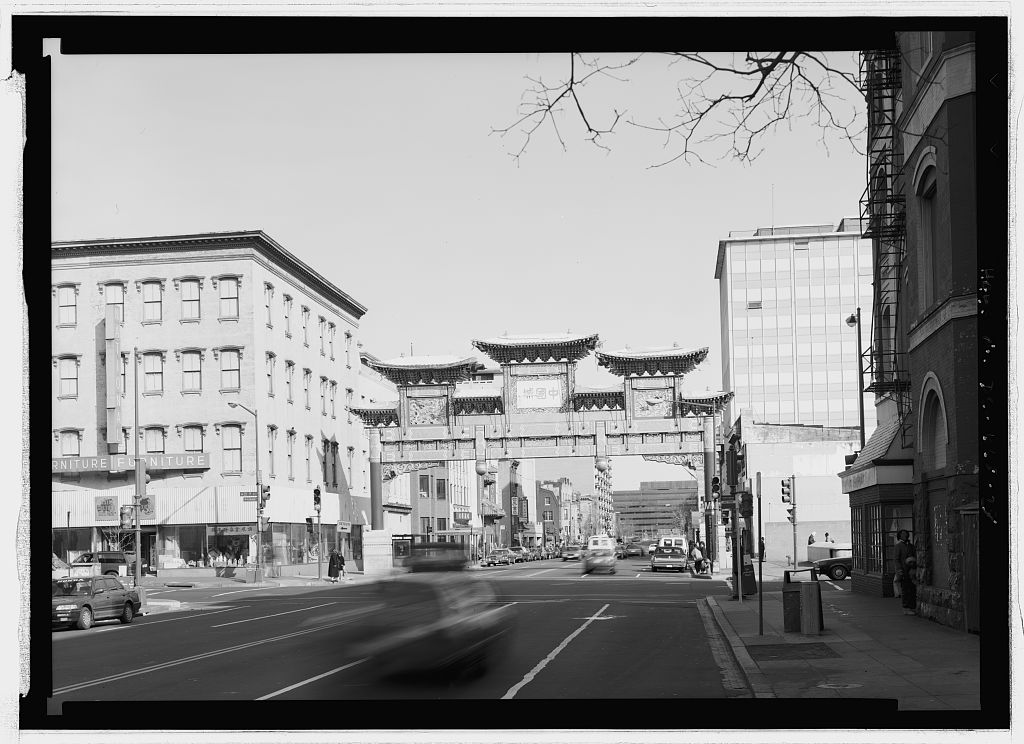
Early on, the city leaned into support for the community, symbolically at least, by requiring signs for all new businesses to include the name in Chinese, which dates back to the 1980s and prior to the arena’s construction. But, ultimately, the city did little to ensure the area’s Chinese community would not be displaced by gentrification that pushed up real estate prices and housing costs. Today, Chinatown exists in name only at this point. There are now only 361 Chinese residents who live in the area, according to the 2020 census.
‘It would be devastating’
After years of growth and rapid gentrification, the area is changing again. City officials are now concerned about a downward spiral caused by the post-pandemic loss of office workers and concerns about crime.
The neighborhoods around the arena are particularly impacted by federal workers being slow to return to offices, says Yesim Sayin, Executive Director of the D.C. Policy Center, due to the presence of federal agencies like the FBI and the U.S. Government Accountability Office.
“Office buildings around Chinatown are largely empty. And in the downtown area, which includes Chinatown, [even] on the busiest days, half the workers do not show up,” Sayin says.
There’s also been a significant uptick in crime across the city, including in Chinatown. Violent crime was up 36% in the neighborhood as of August, according to D.C. Police.
Sayin cites the theory that the main deterrence of crime is the threat of being caught. If there are fewer people around, there is less chance of being caught which can “embolden illegal activity,” Sayin says.
All of this has prompted several notable businesses in the neighborhood to announce their closures in recent months, including Bar Deco and Flight Wine Bar.
Swati Bose is the owner of Flight Wine Bar, the nearly decade-old business on 6th Street Northwest is set to close late next month. She tells DCist/WAMU they’re only doing about 50% of the volume compared to pre-pandemic. Bose believes it’s a combination of factors, including fewer workers going into the office and the perception that Chinatown is unsafe. This has meant less foot traffic in the once bustling area. She says it’s become difficult to operate her business.
“Our guests are not comfortable coming to this neighborhood,” says Bose.”
She said the uncertainty about the arena also weighed heavily on her mind and contributed to the decision to close.
“We just didn’t have the time to wait and see what happens,” Bose says. “If the team was to leave Capital One, I think it would be devastating for the neighborhood and for the businesses here.”
Tony Cheng echoes those concerns, though he does not plan on closing his restaurant. He’s owned Tony Cheng’s Seafood Restaurant in Chinatown for about four decades. Cheng says that he’s only pulling in about half of the revenue he did in 2019.
“Everybody’s scared to go out. A lot of things are not open. Everyone is working in their homes,” Cheng says. “[It hurts] a whole lot. We’ve lost a lot of business.”
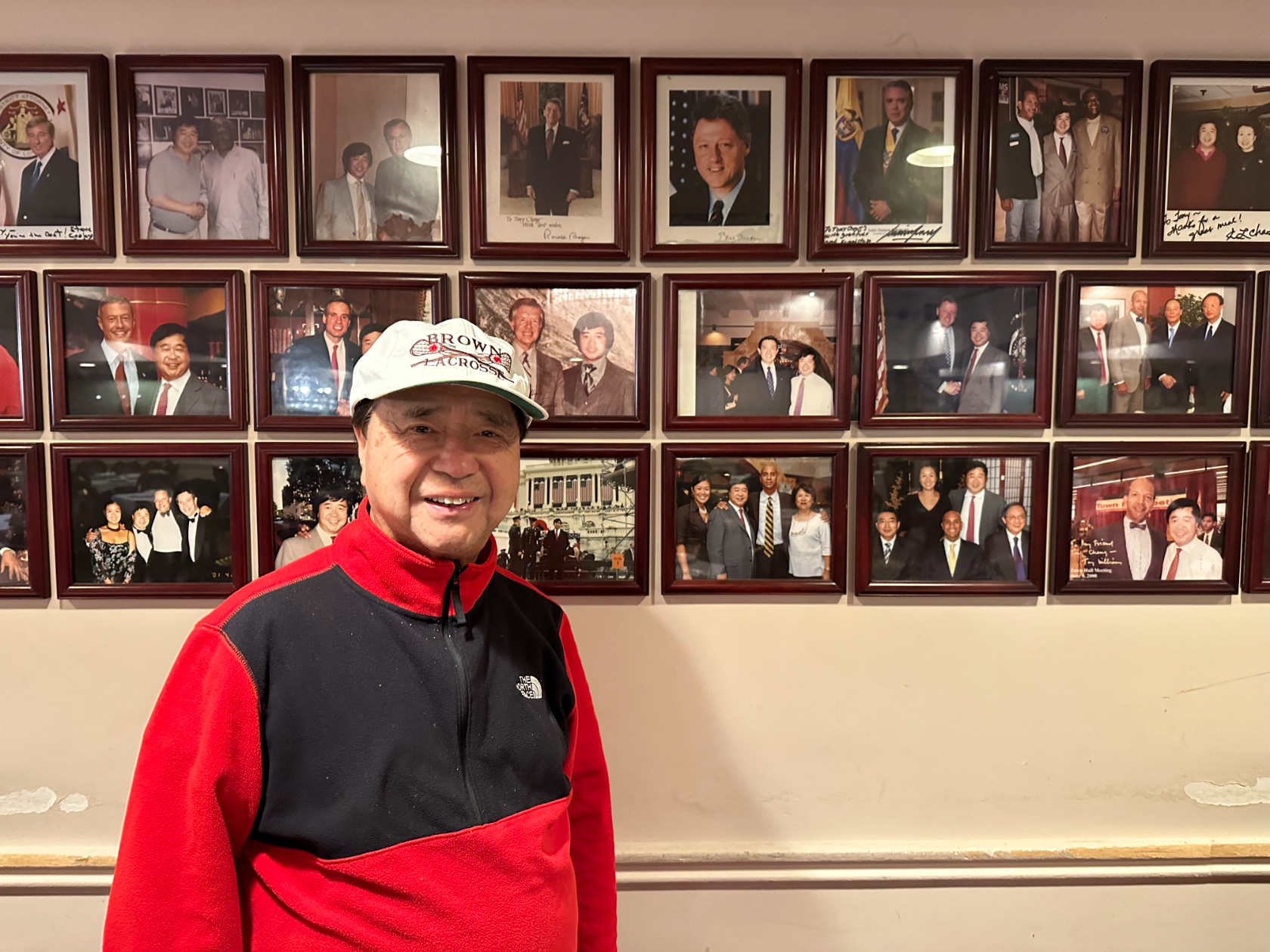
But for Cheng, there’s another factor he cites as a problem for his business – the lack of Chinese tourists. He said that for the better part of the 40 years he’s been in business, Chinese tourists and residents have made up a large portion of his clientele. But that isn’t the case anymore, he says.
Empty office buildings, increased crime, and fewer tourists are concerns across the city and around the country, but in the District’s Chinatown neighborhood, those challenges are being felt even more acutely. Sayin says that’s why it is crucial the pro sports teams stay in the District and the Capital One Arena remains busy.
“In its absence, economic activity will decline and crime will possibly get worse.”
One of the NBA’s and NHL’s older arenas, Capital One Arena has been in use continually for nearly three decades. It’s home to two professional sports teams, the Wizards and the Capitals, as well as Georgetown University men’s basketball team, and also hosts dozens of concerts and events each year. Over the next week alone, the arena will host a Wizards game, a Caps game, a Georgetown Hoyas game, two concerts, and a Dave Chappelle stand-up comedy show.
“We have over 200 events a year, which leaves only about 100 nights that there’s no one here,” Monumental Sports’ Chief Administrative Officer Monica Dixon says. “And a lot of that is for maintenance and for the kind of just regular upkeep that we need to be engaged in.”
Taxpayer support for sports venues
As they did in 1994, District officials see Capital One Arena as key to staving off the decline of downtown. Unlike 1994, the mayor and local lawmakers appear to be on board with spending a significant amount of taxpayer money to help Monumental Sports fund the massive renovation (District officials haven’t yet signaled how they might finance such a deal, whether with bonds or other financial mechanisms).
There is precedent to the city funding sports venues. In 2007, the city provided $50 million in public funds for capital improvements to the arena, then called Verizon Center. More recently, the District paid an estimated a billion dollars to build the Washington Nationals a stadium in 2008 (and just agreed to a deal last month that will have the city pay $20 million for a new scoreboard).
Monumental Sports sees those deals and the fact that the arena was originally privately funded as a major point of leverage in asking the District to pay more than half a billion dollars towards renovating the arena.
“We stand in contrast to our peers in the DMV. Teams like the Nationals, the Commanders, the Orioles, the Ravens, and D.C. United have benefitted from publicly built arenas and ongoing resource support,” Dixon says.
The mayor and many on the D.C. Council seem to be on board.
“Absolutely,” Ward 2 Councilmember Brooke Pinto, who represents the neighborhood around Capital One, tells DCist/WAMU when asked if she was confident in the negotiations getting resolved.
“I think it’s in the best interest of the District to ensure that they can stay and continue contributing to our culture here and to our tax base,” Pinto says. “My expectation is that we will all be able to work together to forge a deal and a path forward.”
D.C. Council Chair Phil Mendelson agrees with Pinto. He believes that the District should help pay for renovations, though he declined to specify an exact dollar amount at this stage .
“I do think that the government should try to help with regard to the need to update the arena,” Mendelson says. “I think the District should work with Monumental to see how we can be helpful in their staying.”
Both Mendelson and Ward 6 Councilmember Charles Allen, who penned an op-ed over the summer about the need to invest in Capital One Arena, have said providing public funds for the project is critical, despite another potentially tough budget year.
While he believes the amount the city ultimately contributes will be less than the requested $600 million, Allen is also steadfast in his belief that the project needs the District’s support.
“It’s non-negotiable to me. We need to make sure we keep the Caps, the Wizards, and Cap One Arena active downtown,” says Allen. “It’s vitally important to the success of our downtown.”
A revamped arena
Monumental puts the total dollar figure for the renovation at $800 million. Some of the money will go towards maintenance and upkeep, but it will primarily pay for a massive exterior renovation, as well as opening up areas of the arena to the public even on nights when there are no events.
One of the goals is to create better “sightlines” for those walking by on F Street to see what’s happening inside the arena, according to a source with knowledge of the renovation plans. That potentially means all-glass building corners and large egresses, per preliminary designs discussed with DCist/WAMU.
Entrances and exits would be bigger and more accessible to allow for better traffic flow in and out of the arena, often an issue during crowded events. There could also be a public food court that would be open and available during regular business hours for those who live, work, and are visiting downtown, the source shared.
If an agreement is struck soon, work on the renovation could begin as early as this summer. The project would be done incrementally over the course of four years, mostly during the summer when both basketball and hockey are in the off-season.
Hopes for the future
Despite all the concerns expressed by city leaders and local businesses about the teams moving, Monumental Sports appears to be investing in the site on F Street.
It opened a much-publicized e-sports venue next to the arena in March, and it’s building out a state-of-the-art production studio where its new sports network will be housed. Dixon says they expect to start broadcasting out of the studio in January 2024.
“Monumental is invested,” Dixon says. “We love this neighborhood and our fans do, too.”
And, while the owners of businesses like Flight Wine Bar have decided that the uncertainty around the arena is too much, others like the owners of Daikaya remain confident a deal will be struck.
“When there’s a concert, when there’s a game… we definitely get a lot busier,” says Yama Jewayni. “The energy and vibe in Chinatown is a lot better when there’s an event across the street.”
Tony Cheng says he’s paying close attention to what happens with the arena, because he believes an upgraded arena would be good for business.
“This is my home,” says Cheng. “I’m trying to keep [the restaurant] open. I hope it gets better.”
Many share that hope, including District officials, who appear to be once again banking on the arena sparking a downtown revival.
This story has been updated to clarify that officials haven’t yet specified how the arena renovations will be financed and that the teams’ former home was in Landover, Maryland.