Héctor Alejandro Arzate
As the founder of the family owned and operated Jen Contracting, Jennifer Ramos Aguilar has years of experience in both remodeling and working alongside her loved ones. Her latest venture, however, is even more personal.
In a family-owned lot – right next to the contracting company’s office and showroom – Ramos Aguilar and her family have set up their tamale stand almost every weekend for the past three months. It’s called La Patrona Market & Carryout at 5833 Allentown Way in Temple Hills, Md.
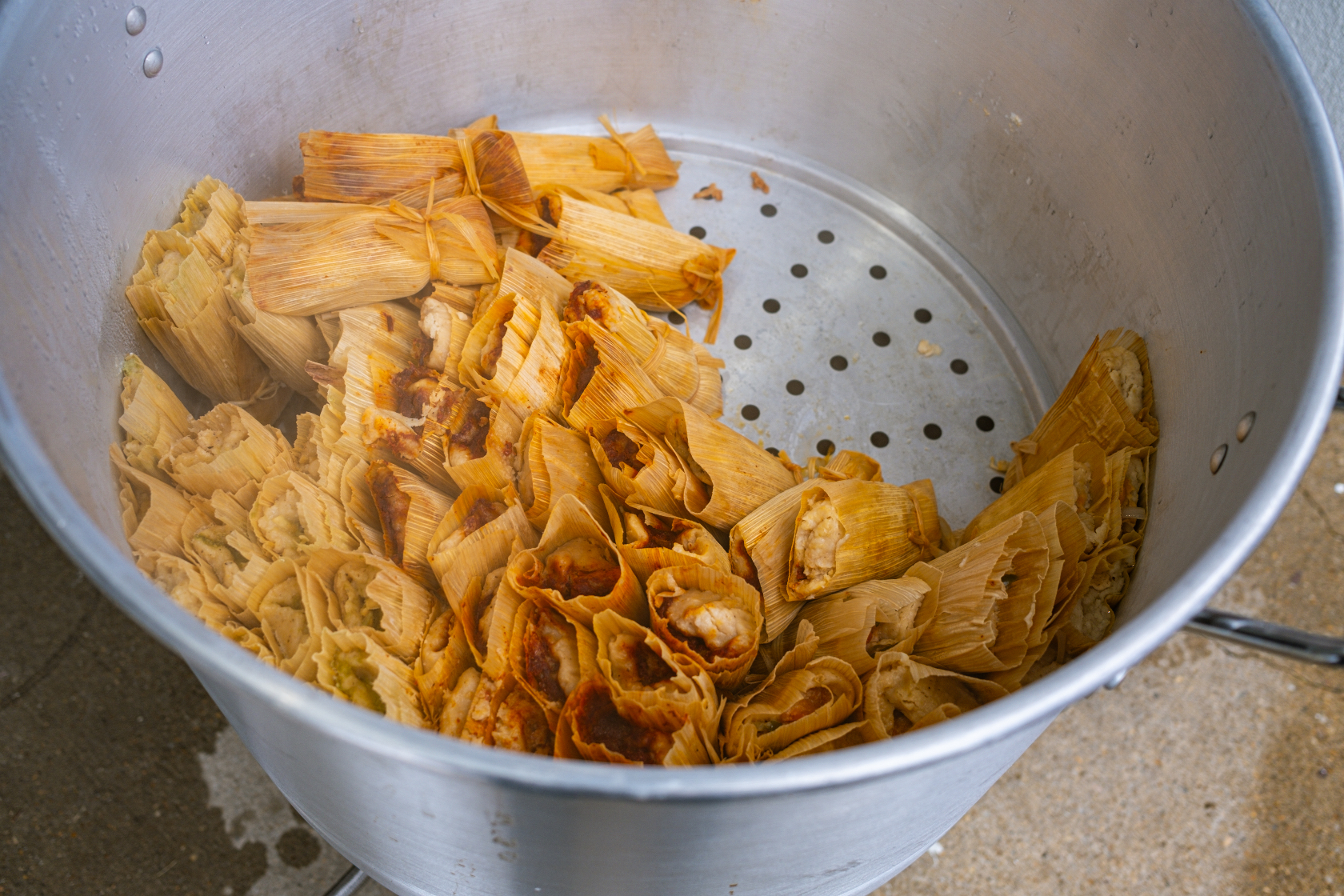
At La Patrona, massive steaming pots hold their family’s freshly made tamales: chicken with salsa verde, pork with salsa roja, and the vegetarian rajas – cheese and peppers. Each is a staple for Mexicans during the peak of tamale season, the holidays (Many other Latin American cultures celebrate the holidays with their own version of the tamale as well).
“The tamales in our family are huge. We make them for all the special occasions and we were like, ‘We love them so much. Let’s share them with the community,’” says Ramos Aguilar.
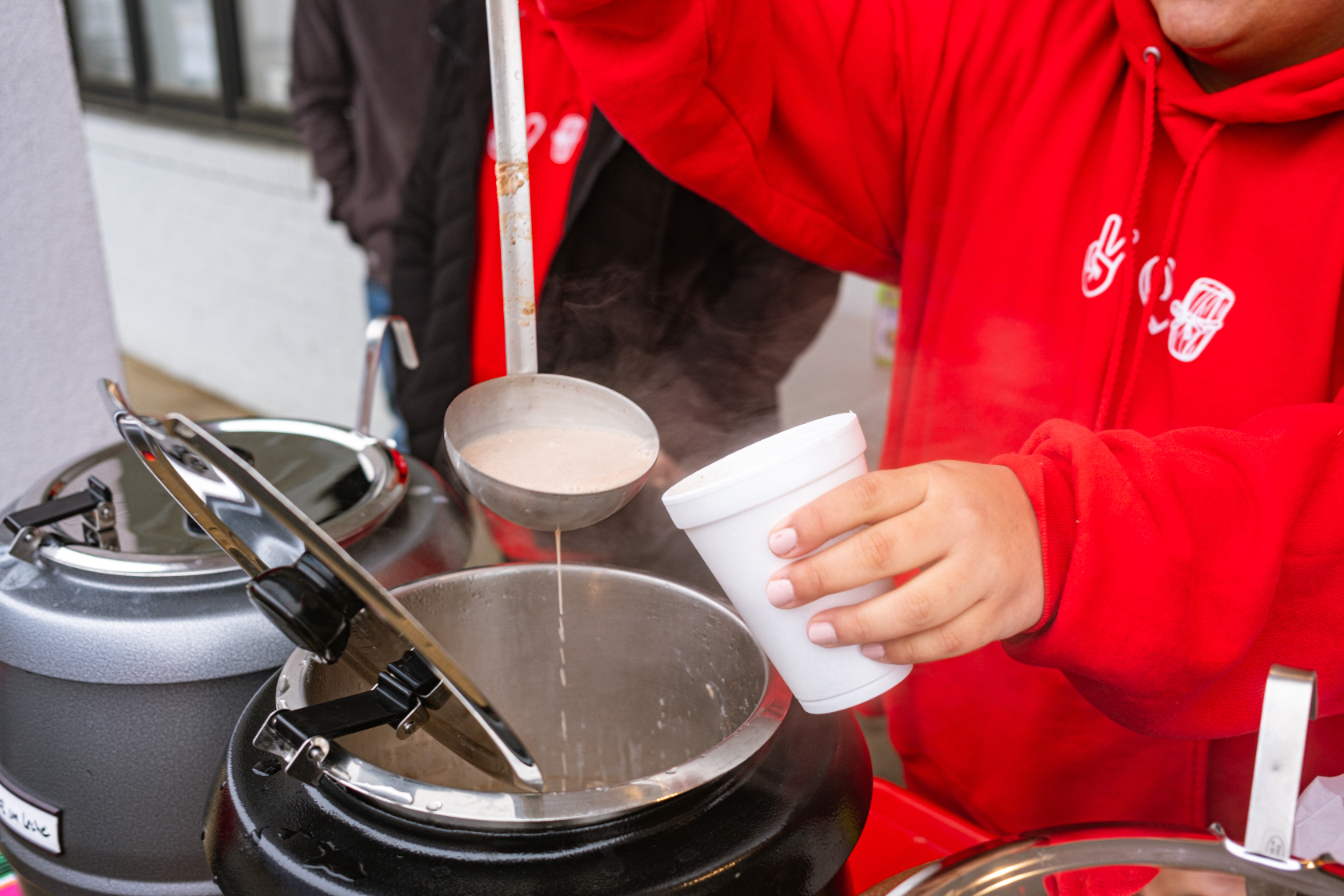
At $3.50 a piece, the tamales – which they prepare in batches of about 200 a day at a commissary kitchen in Prince George’s County – almost always sell out. They also offer warm treats like arroz con leche, strawberry atole, and champurrado, a chocolate drink made with masa harina.
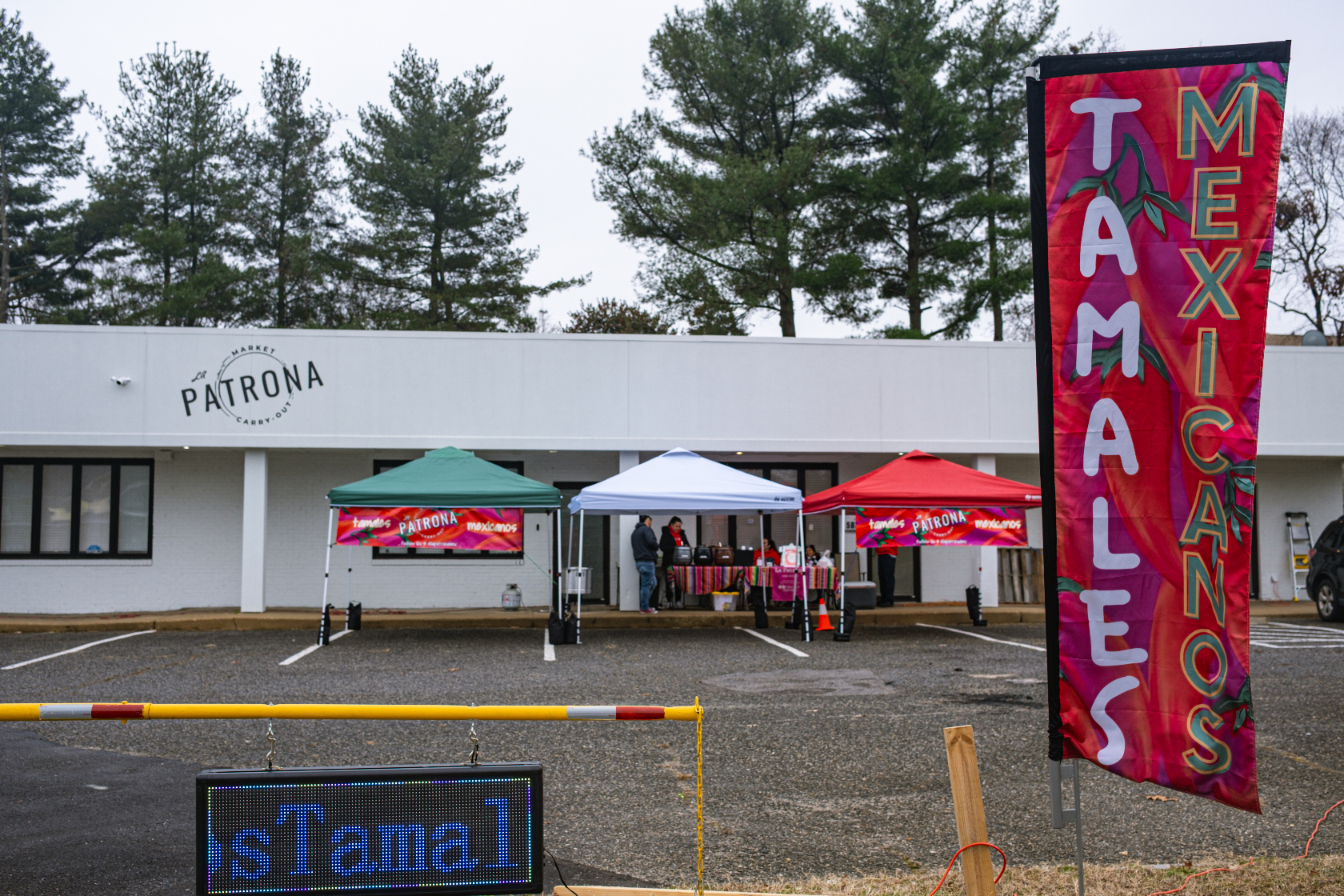
Alex Recinos, who works nearby, stopped by on a Sunday afternoon to order a handful of tamales to go. For him, the tamale stand is a welcome addition to the community and its cuisine.
“It’s really good because sometimes we’re on our way to work and they are here in the area. So we can stop by for breakfast or whenever we’re hungry during the day,” says Recinos. “It’s something unique – something from us.”
Ramos Aguilar and her family, who set up lawn chairs and play Latin music throughout the day, say it’s that kind of response that’s made the new business feel more like a passion project than a job. She says they get customers from all walks of life, but especially those looking for a familiar bite.
“I just feel like people feel like it’s home, it’s really just a good vibe here,” says Ramos Aguilar. “We’re always just chit chatting it up. It’s more fun – it doesn’t really feel like work.”
Cortez Muciono, who was waiting to get his haircut nearby, says the tamale stand caught his eye right around lunchtime on a recent weekend. Curious, he pulled into the lot and ordered tamales for the first time in his life.
“It’s good,” says Muciono, after taking a bite of the tamale with chicken and salsa verde. Then, he bites into the vegetarian rajas tamale: “That’s even better. The peppers are really flavorful in this one. I think I like this one the best.”
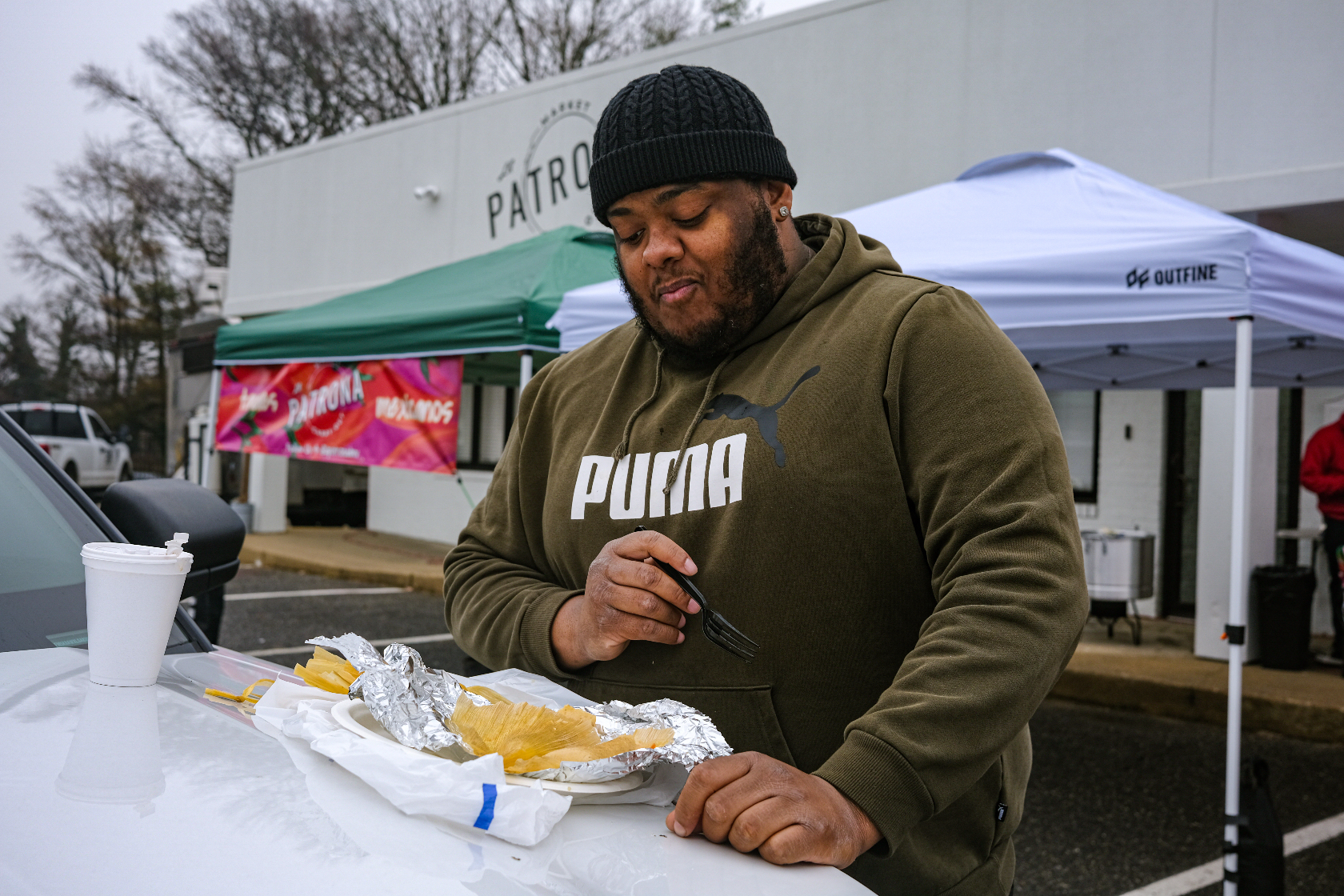
In a region full of cultural diversity and diasporas, Muciono says it’s good to see local businesses like La Patrona jump into the mix.
“I think all cultures should be explored,” says Muciono. “So just to see people of different ethnicities coming around to the neighborhood and bringing a little flavor – I love it.”
If you’ve ever made tamales, you know it is a labor of love.
First, you need to procure the masa, aka fresh corn dough, or make it (a challenge in and of itself for this reporter). Then, you must prepare the filling – be it pork with salsa roja or any other variation (sometimes two or three at the same time). Don’t forget to clean the corn husks, banana leaves, or some other culinary gift wrapping. Next, you must paint each individual corn husk with the masa, fill it, and wrap neatly. And you must do this, in some families, at least 200 times before steaming them.
It’s no wonder that La Patrona, which means ‘the boss’, was created as a way to pay homage to the women of Ramos Aguilar’s family and their culinary feats.
“Our family got together and were like, ‘We should empower the women in our family,’” says Ramos Aguilar. “‘We should take this skill that they have, this art that they have, and help empower them financially by allowing them to sell and also connect with everybody and share the tamales.”
Rogelia Valeriano, Ramos Aguilar’s mother-in-law and one of the business’ patronas, says she’s proud that the business has been successful and that customers enjoy the tamales.
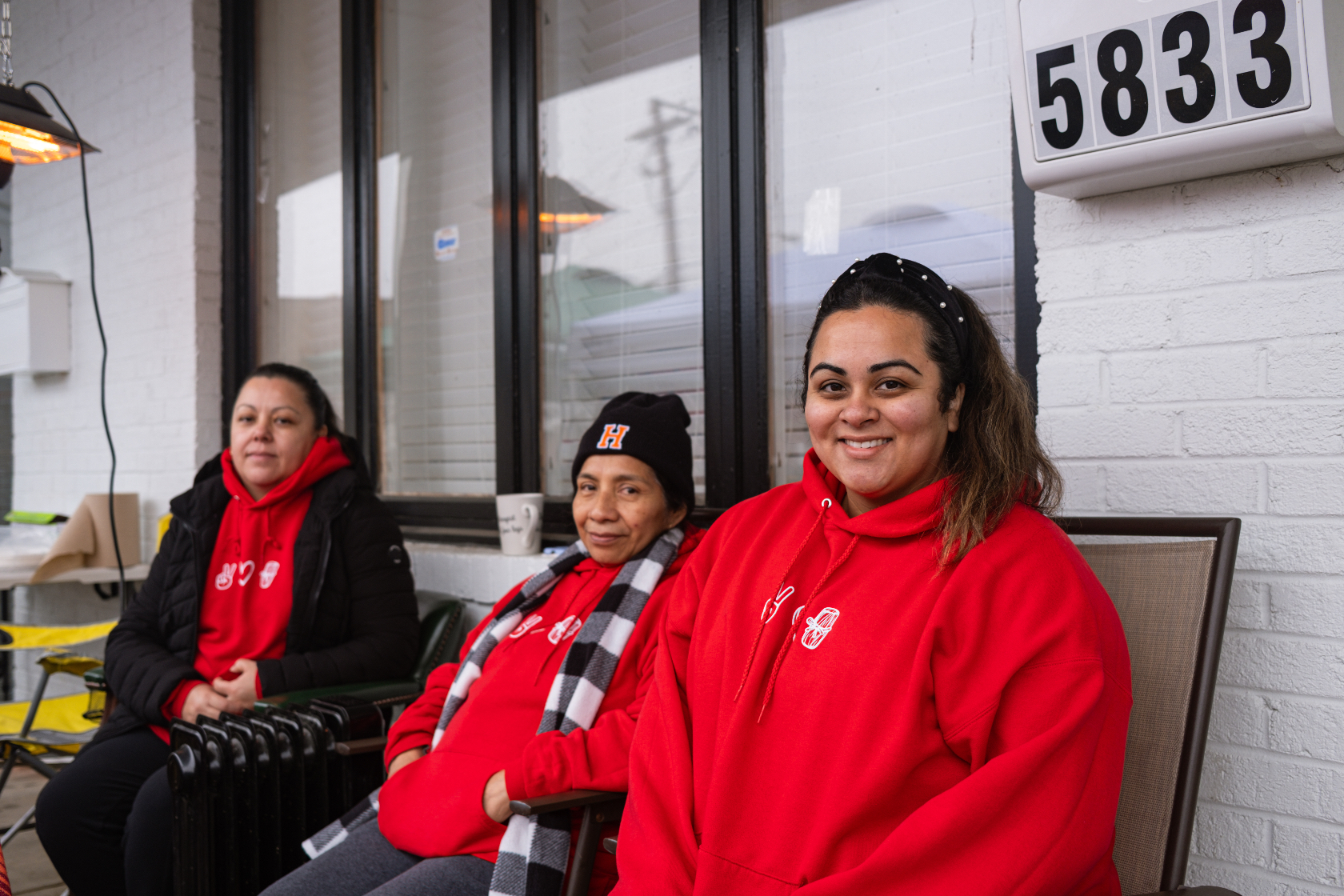
“I feel happy that people are getting to know our culture, our food, our flavor,” says Valeriano, who’s lived in the region for about 20 years.
Her son, Alex Aguilar (Ramos Aguilar’s husband), says he’s happy to support the women in his family through the business. Aguilar is the project manager for the contracting company and also runs operations for La Patrona, which is not so different from the “hustle” his mother instilled in him as a kid, he says. Back then, she would cook tamales and he would go door-to-door in Falls Church, Va., and sell them to their neighbors.
“I always wanted my mom to have something,” says Aguilar. “I always wanted to showcase their skills and how hard they work.”
Although it will take time and money, the plan is to eventually open a brick-and-mortar in the same lot as Ramos Aguilar’s contracting company. In the meantime they’ll continue running their tamale stand as a pop-up, and hopefully launch a food truck soon as well.
“We always said we wanted to do more with what we build,” says Aguilar. “It’s awesome for women to own businesses and do so much more. And honor them because they work really hard. I mean, I was raised by my mother – a single mother. So all my life, I can say that I owe who I am today because of my mother and my wife and my sisters.”
As a DACA-recipient, he also says it’s important to showcase the hard work that immigrants put in for themselves and to contribute to both the local economy and the United States as whole.
“All we ever wanted was opportunities,” says Aguilar. “Immigrants come here to work hard and create opportunities for their families.”
Irma Chavarria, another of the business’ patronas, says she never imagined the potential for its growth but it’s exciting to see what the future has in store. “Yes, we had the dream for it to get bigger. But right now, we’re really happy because it really is growing – and we’re making a lot of tamales.”
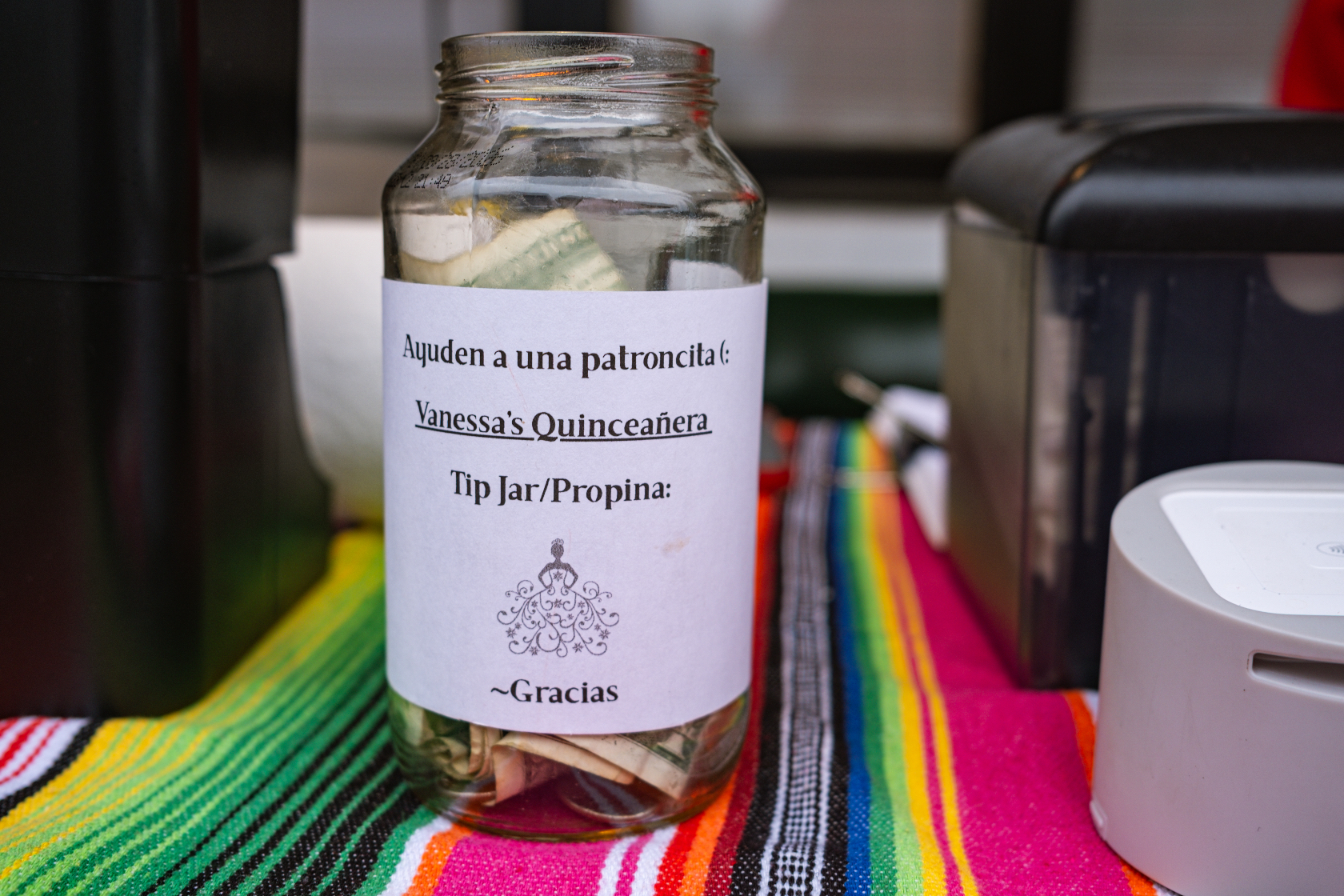
Ramos Aguilar says that their business model is also a path to generational wealth for the entire family – something that is not always easy for some immigrants. Many of her relatives are directly involved in the stand’s operations, or investing in its future. It’s even allowed for their nieces to gain work experience and earn tips to pay for an upcoming quinceañera.
“If we’re able to hustle and create income, we want to put it back in to create some generational income that we see have been exposed to in D.C., Virginia, Maryland,” says Ramos Aguilar. “And so we don’t know any of that, but we want to hopefully create it for our kids and the future of our family.”