Natalie Delgadillo
Well, it’s that time of year again: the strange liminal space between Christmas and New Years, when we at DCist like to take a moment to reflect back on the year.
It always feels impossible, as an editor, to choose a list of stories that feels truly representative of the best work we did as a newsroom over the previous 12 months. So this year, I decided to outsource the work to my colleagues — what follows is a list of reporters’, editors’, and producers’ favorite stories they worked on, read, or listened to at DCist/WAMU this year.
As usual, my colleagues together did a better job than I could have ever done alone. The breadth of our work is really visible here, featuring everything from hilarious first-person accounts to deeply reported investigations. It makes me feel lucky to work with such a talented group of journalists — and grateful to all of you, as usual, for reading. — Natalie Delgadillo, DCist Managing Editor
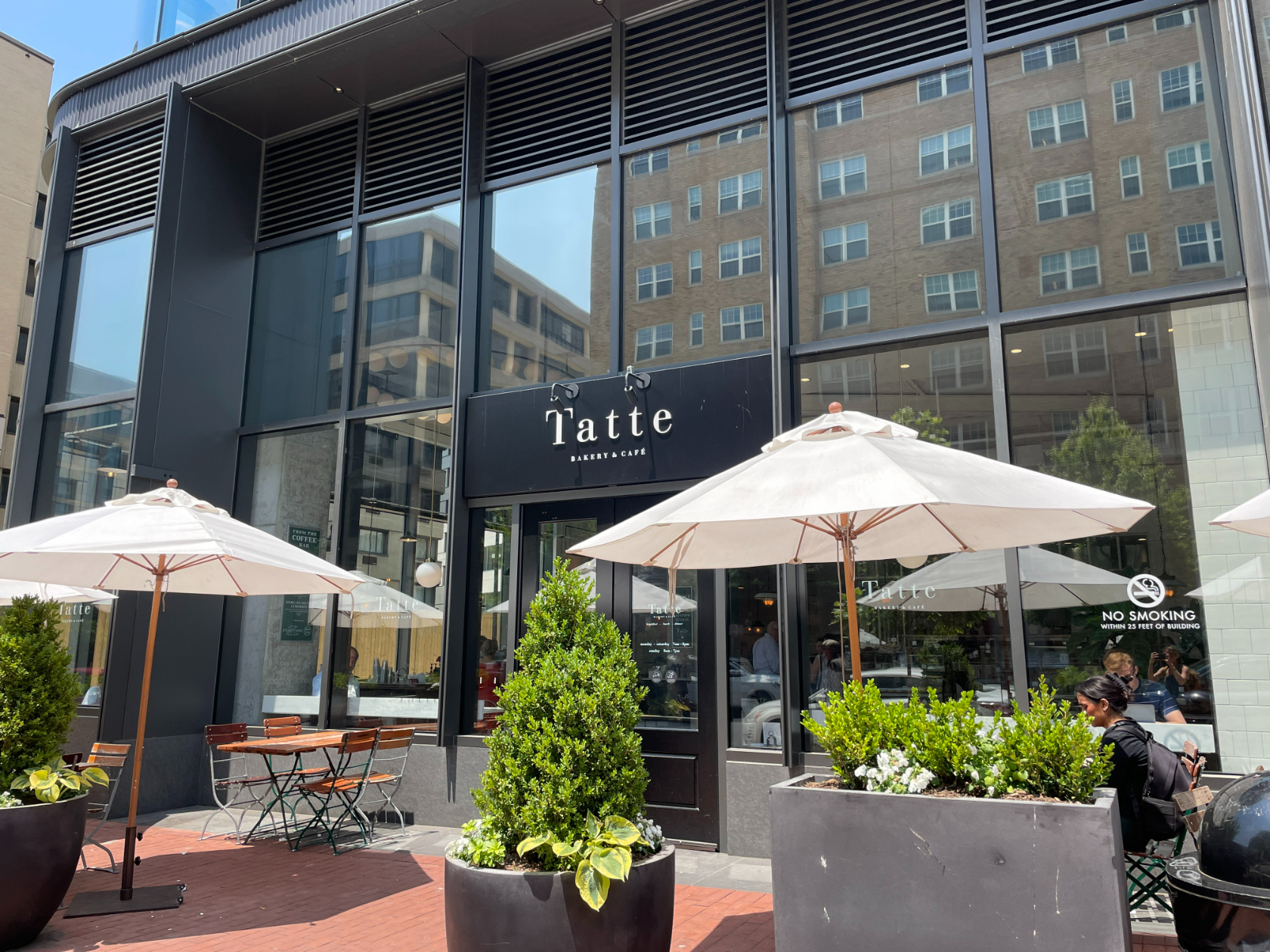
Why So Many Tattes? We Traversed The Bakery’s D.C. Empire In One Day To Find Out
I think the most fun I had working on a story this year was with Colleen Grablick on her tale of visiting every Tatte bakery in the D.C. region. Colleen kind of devolved into madness during the reporting — our Slack conversation as she traipsed around the city was priceless — and the piece reflected it in the best way possible. The audience response to the story was also so gratifying; it was one of the most clicked-on stories of the year and I heard from multiple people complimenting it. —Rebecca Cooper, Arts and Food Editor

D.C.’s Hottest New Go-Go Band Is A Group Of … Firefighters?
My mind keeps coming back to the story photographer Tyrone Turner and I did on Heat Stroke, the D.C. Fire and EMS Department’s go-go band. The story began with a viral tweet. But after spending a day following the band at a back-to-school event in Southwest D.C., it ended up becoming focused on so much more: the bandmembers’ service to their community, the sacrifices they make for their families and neighbors, and their sheer love for D.C.’s music scene. The story shows how titles are often misleading. You never know if your friendly neighborhood firefighter could also be a hidden rockstar or emcee. Plus, Heat Stroke’s cover of “Tennessee Whiskey” became my writing music for the rest of the summer. — Elliot Williams, Arts and Culture Reporter

I Lived It: Inside The Chaos That Was Beyoncé At FedEx Field
I was more than a little intimidated about giving readers a glimpse into my rather chaotic inner life. In the end I think I managed to accurately convey the euphoria and the drama of seeing Beyoncé in the flesh (the most beautiful speck I’d ever seen) for the first time and going to FedEx Field for the first (and possibly last) time. I’m glad to know that the story resonated with at least some concertgoers and that we’d experienced what was basically a spiritual awakening together. — Sarah Kim, General Assignment Reporter
—
My favorite DCist story this year was Sarah Y. Kim’s first-person narrative about attending the Beyoncé concert in August.
You know this story will be different from her opening line: “I survived Beyoncé’s concert at FedEx field, and I will never be the same.”
Her writing is sharp, economical, and hilarious. You feel you’re there with her when she describes getting stuck with thousands of other people in one of the stadium entrance tunnels, where “bodies were touching bodies where they shouldn’t be touching.”
When a massive thunderstorm delays the start of the concert, everyone is ordered to seek shelter. She and her friends decide to take their chances, remaining seated and exposed to the drenching rain rather than returning to that tunnel.
“We began to catastrophize. We could get struck by lightning. Worse, the concert could get canceled.”
At last, the storm passes and the concert starts. Everything else falls away as she is transported by Beyonce’s voice.
“It seemed to fill my entire body. Maybe I had died at some point, in the rowdy crowd in the stadium corridor or struck by lightning at the top of FedEx Field, and there she was, welcoming me into the afterlife, rewarding me for all of my toil and suffering on earth.”
This is first-person storytelling hitting exactly the right tone, satirical and yet utterly sincere. Sarah brings us along for an event that was an epic disaster, until it wasn’t. — Ingalisa Schrobsdorff, Editor

A New Law Gave Pregnant Immigrants In Maryland Free Health Care. Here’s How It’s Going
While this could have been a story-forward article about the 3,700 people who signed up for enrollment within two months, it ended up being something much more human-focused. I’m grateful for the local clinic and the women’s support group who welcomed me and my colleague, Tyrone Turner, to get the story beyond the story. And I’ll never forget listening to the healthy heartbeat of Lazaro’s daughter for the first time. —Héctor Alejandro Arzate, Immigrant Communities Reporter
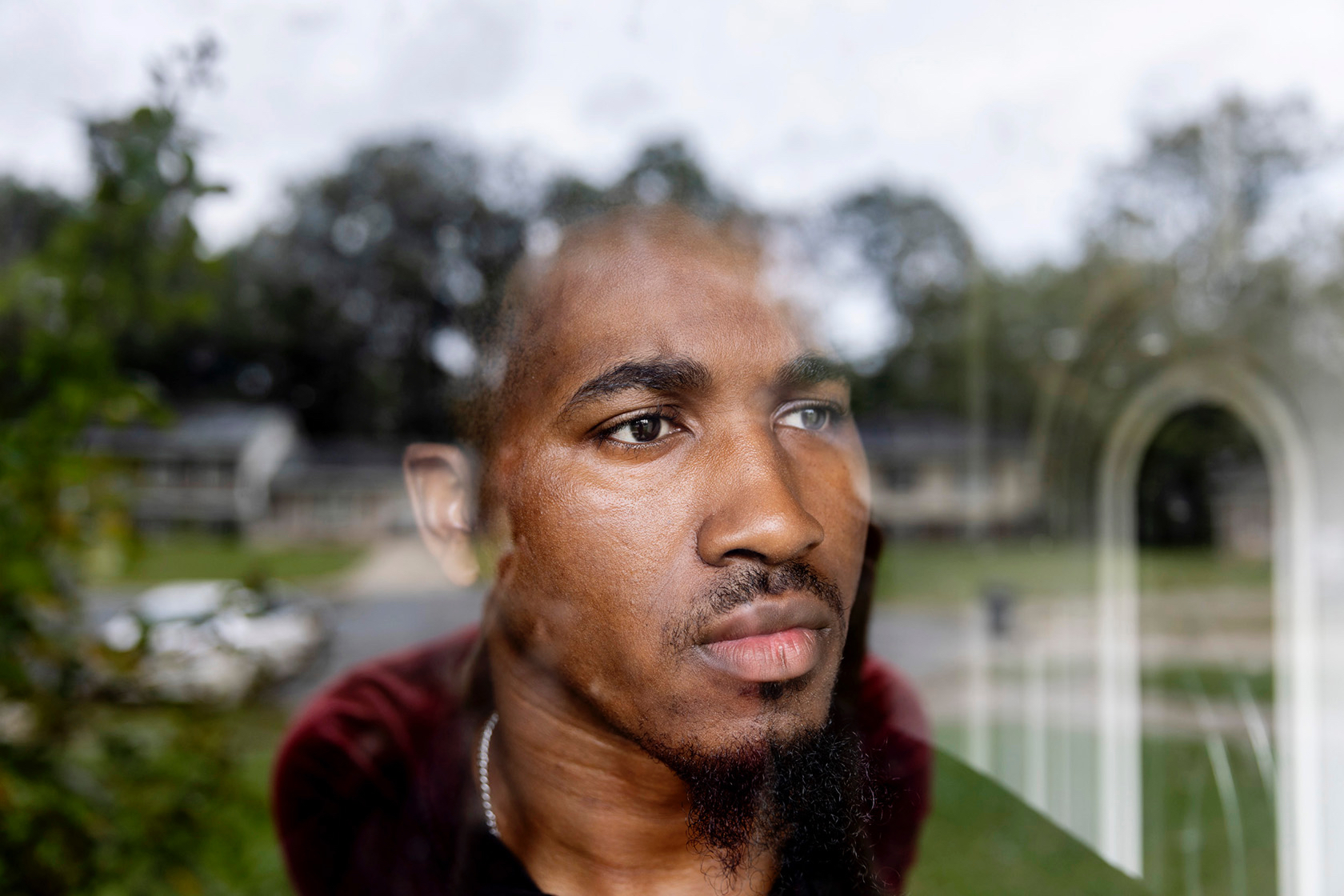
Overtime, Mismanagement Plummet Morale And Push Cops Out Of MPD
My favorite story this year is Jenny Gathright’s investigation into D.C. police overtime, specifically her second one where she shares the feelings of former cops. Her Day 2 story complicated a common narrative on why the city has fewer police officers. It’s easy to simply blame government. But there’s a workplace culture that makes workers leave. She thought to treat cops like workers and took their concerns seriously. — Amanda Michelle Gomez, General Assignment Reporter
—
One of my big reporting goals for 2023 was to better understand the job of policing, and the culture of D.C.’s police department in particular. To do so, I spoke to as many current and former D.C. police officers as I could. One outgrowth of these conversations was this story on why officers have left the Metropolitan Police Department in droves between 2020 and now. Many of the officers and detectives I spoke with echoed pieces of the popular narrative being pushed by the D.C. police union — that officers are leaving in response to police reform measures passed by the D.C. Council and a feeling that the city doesn’t support the police.
But, as is often the case, the officers’ stories also complicated that narrative. They spoke about how overwork, workplace harassment, and a lack of compassion from their mid-level managers also made their experiences as D.C. cops miserable. Together, their stories make the argument that in order to solve its attrition problem, MPD must look inward, too. It’s relatively rare to hear directly from the department rank and file; I’m glad that for this story, I got to. I’m grateful perhaps above all for Mike Savage, the lead source in the story, who spoke with moving candor about his experience and lent a human face to a profession and department that has rightfully faced a great deal of scrutiny. — Jenny Gathright, Criminal Justice Reporter

How Two Of Nationals Park’s Longest-Serving National Anthem Singers Prepare For Baseball Season
My favorite story of the past year is the one I did in March about how two veteran National Anthem singers prepare for the baseball season ahead.
I’m a huge baseball fan and go to about 15 to 20 games a year, so I got a little star-struck meeting D.C. Washington (yes, that’s his real name!) in person. And to top it off having Bob McDonald sing a couple of bars of the anthem in my car — this truly was a dream story for me.
I also learned about the preparation needed to sing in front of 40,000 fans and what the Washington Nationals are looking for in anthem singers.
It was a blast to report, write, and produce. And I think readers and listeners gained a deeper appreciation for what it takes to ensure that the Star-Spangled Banner yet waves. — Matt Blitz, Politics Hour Producer

The Next Hottest Rental Strategy? Market To Housing Choice Voucher Holders
Reporting this story on one landlord’s (Sam Razjooyan’s) attempts to profit off the city’s housing voucher program was challenging. First was the problem of untangling the mess of shell companies used to obscure ownership information of the buildings that I tracked in this story. Piecing together this developer’s business activities to ascertain the scope of his property holdings required cross-referencing business licenses (registered with D.C.’s business licensing office) with mortgage documents and liens (obtained from D.C.’s tax office), federal housing assistance payment contracts (obtained from the D.C. Housing Authority), building sale documents (obtained from D.C.’s housing and economic development agency), and building inspection reports (obtained from D.C.’s buildings department). All told, I combed through thousands of pages of documents obtained via Freedom of Information Act requests from four agencies, and was able to determine that the developer I was investigating had business interests in at least 33 buildings across D.C. — Morgan Baskin, Housing Reporter
Morgan’s reporting style is such that she uses heart-wrenching examples of wonky industry policies that could be seriously dry otherwise. At the end of this story in particular you’re left with a fire in your belly to make change — that often happens with her writes. — Dee Hackney, Editor

Virginia’s African American History Class Celebrates Identity Despite Political Headwinds
There’s been a lot of talk from politicians — including Virginia Gov. Glenn Youngkin — about how to teach about race and history in local classrooms. Classes that tackle Black history have been under the microscope nationally, including the proposed African American studies AP class. I wanted to know how that climate of scrutiny was affecting local students.
So I talked with Fairfax students and teachers from two sections of the county’s African American history class. What they describe — and what I saw as a fly on the wall during one class’s “Black Joy Family Reunion” at South County High School — is a class that gives them permission to talk about complicated questions of race and identity with an openness they’ve never experienced in school before. — Margaret Barthel, Northern Virginia Reporter

One story I really valued this year was Margaret Barthel’s investigation into a systemic lack of oversight of affordable housing providers in Arlington County.
It started with revisiting a housing complex where conditions were deemed unlivable in 2021. During this check-in two years later, many things had improved… but many others still had not. That complex, The Serrano Apartments, is owned by a nonprofit, AHC Inc., which owns about a third of the county’s total affordable units. It’s been working there since the mid-1970s and expanded operations throughout the D.C. region.
The Serrano and many affordable housing properties are purchased with assistance from the County, in the form of a loan. But this situation revealed that the County lacked a coordinated system for tracking tenant complaints, and has insufficient staff to regularly inspect properties to ensure conditions are livable. Three other AHC Inc. properties were inspected following the Serrano debacle. While 100% of the housing units at one passed, at the other two, less than 50% of apartments passed inspection.
The majority of tenants affected at the Serrano were low-income Latino people, not all of whom are bilingual. So these stories were also translated and published in Spanish. Margaret’s series was comprehensive, data-driven, inclusive, and fair. It focused on accountability, highlighting solutions and progress made. It’s everything I hope to see in local news. And it’s worth noting, this was produced through a fellowship with the Chronicle of Philanthropy, supported by the Lily Foundation. — Eric Falquero, Partnerships Editor
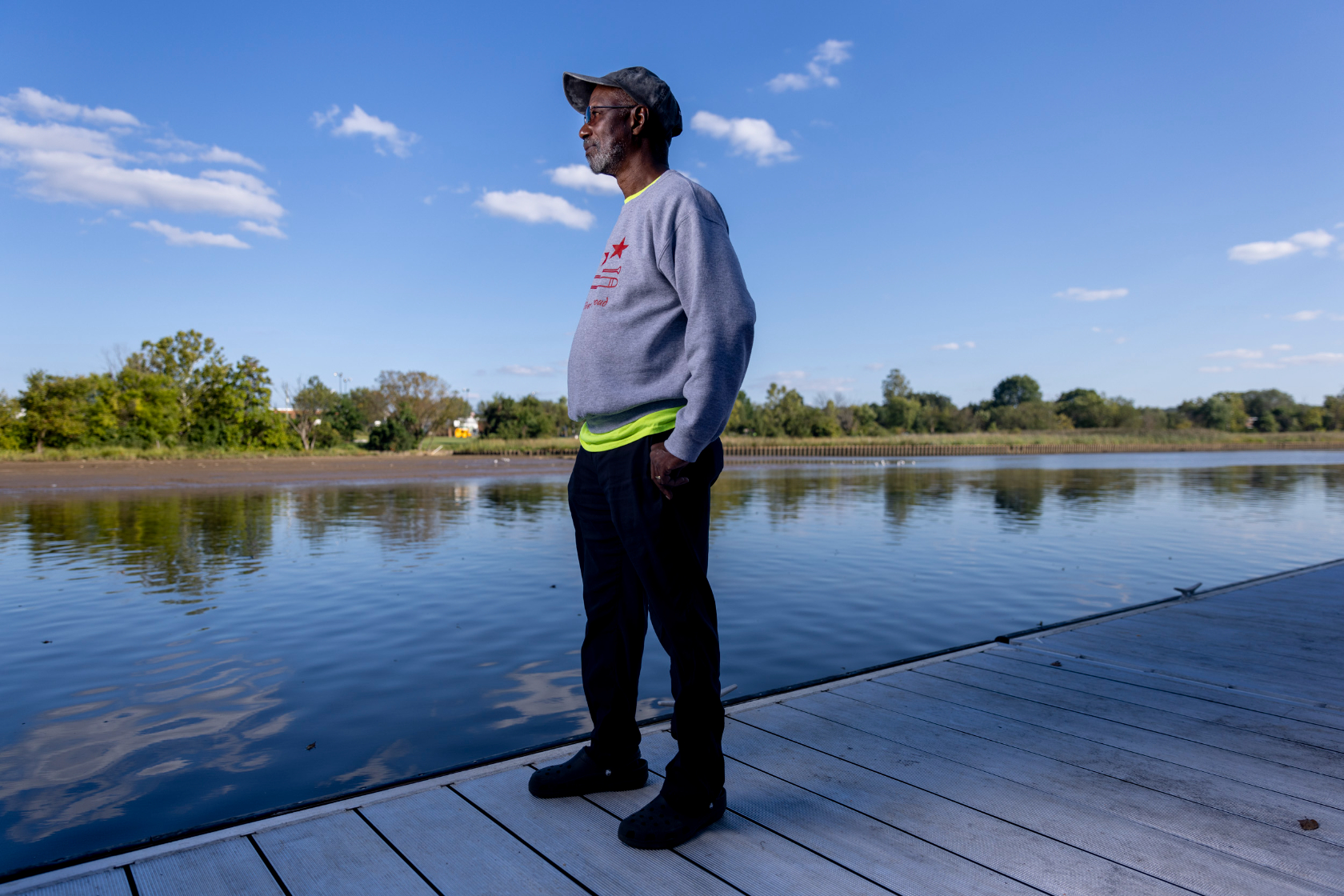
In A segregated D.C., He Learned To Swim In The Anacostia River
There are so many! I’m going to go with this story by our environment reporter, Jacob Fenston. It covers a lot of ground …segregation, water quality, interesting character … and it’s well done. A shame that there was no official swim, but the thought of it alone garnered a lot of attention! — Naomi Starobin, Interim Executive Editor