Morgan Baskin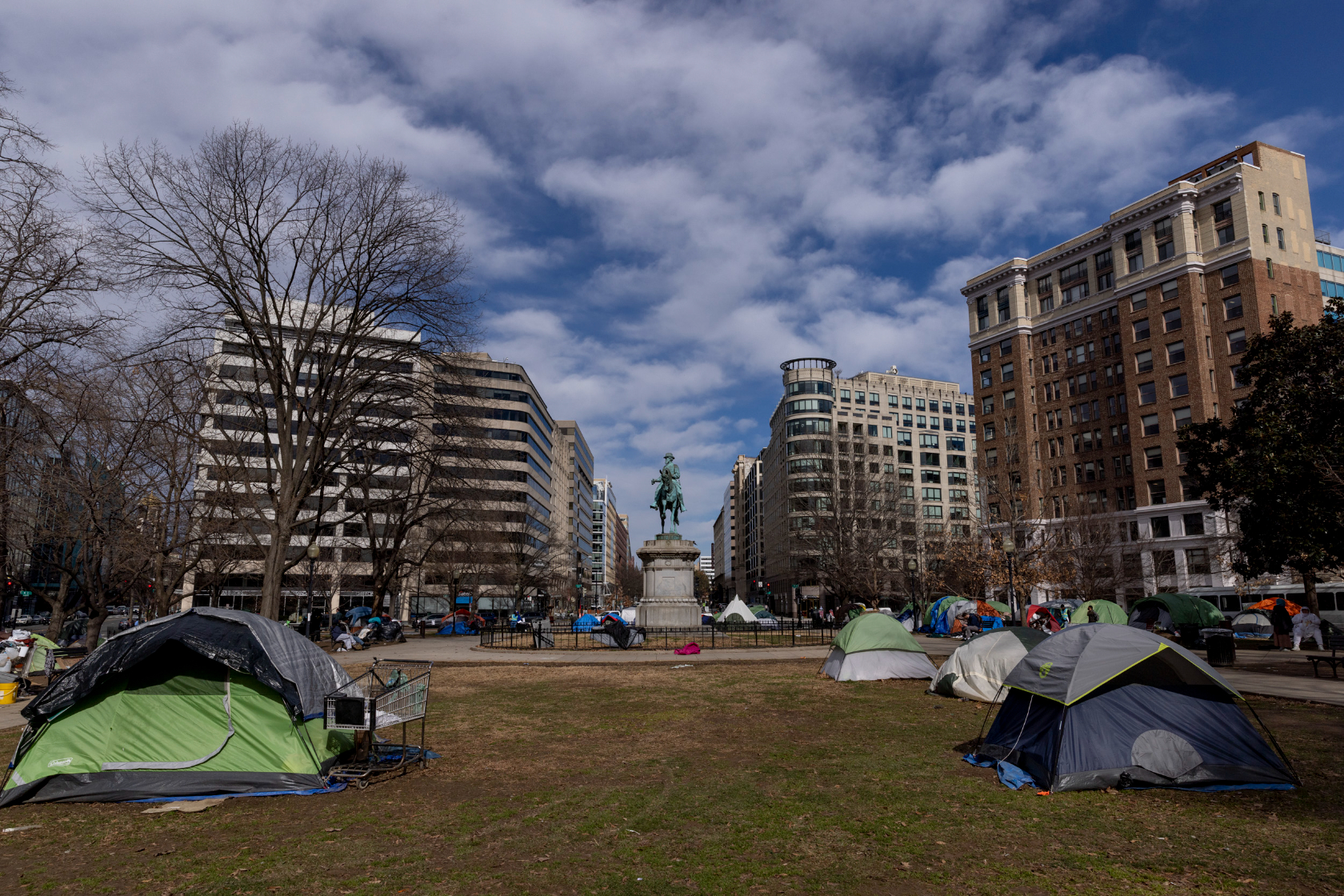
D.C. and other governments in the region will conduct a count of unhoused people living on the street and in emergency shelters on Wednesday evening. It’s part of an annual survey that helps jurisdictions track where people experiencing homelessness are living and whether social services are being directed to the right places.
The count, called the point-in-time because it’s a survey conducted over just six hours once per year, will see teams of volunteers and human services officials deploy across the city to find unhoused people living on the street. Results are typically published in late spring.
Data collected in January 2023 and released last May showed that homelessness in the metro D.C. region increased 18% between 2022 and 2023, with more than 8,944 unhoused people counted. D.C. alone saw a 12% rise in homelessness last year, a spike that followed several years of declining numbers.
Among the most notable trends in numbers published last year was the rise of homelessness in more rural and suburban counties. Loudoun County saw a 122% increase in homelessness, from 99 people counted in 2022 to 220 counted in 2023; Prince William County, meanwhile, saw a 35% increase. Every jurisdiction of the nine comprising the metro D.C. region saw at least a 10% increase in homelessness during that period.
“This never happens,” Hilary Chapman, housing program manager of the Metropolitan Washington Council of Governments said at the time. “It’s pretty unprecedented to see an increase across the board, 100%. Every community is experiencing this increase across a wide variety of [places] – urban, rural suburban. It’s indicative that there’s a larger trend at play here.”
Among the populations most vulnerable to housing insecurity are seniors, particularly single people. The region counted 383 unsheltered seniors living in the area last year, up from 118 counted in 2022. Three of the unhoused people counted last year were older than 90, while more than two-thirds were 70 or older.
The count comes after a year that saw the D.C. government double down on so-called “immediate dispositions” of tent encampments, where health and human services officials clear the encampments and prohibit residents from returning. Data collected by Street Sense shows that the D.C. government conducted seven of these clearings annually from 2019-2021, and then 36 of them between January and June of 2023. Because encampment clearings do not end homelessness — they simply force the people living in them to other locations — it is unclear whether or how the point-in-time count will reflect them.
The count also precedes what is shaping up to be a more austere budget season, and comes as Mayor Muriel Bowser and the D.C. Council tangle over spending on social services like food and housing assistance.