Jacob Fenston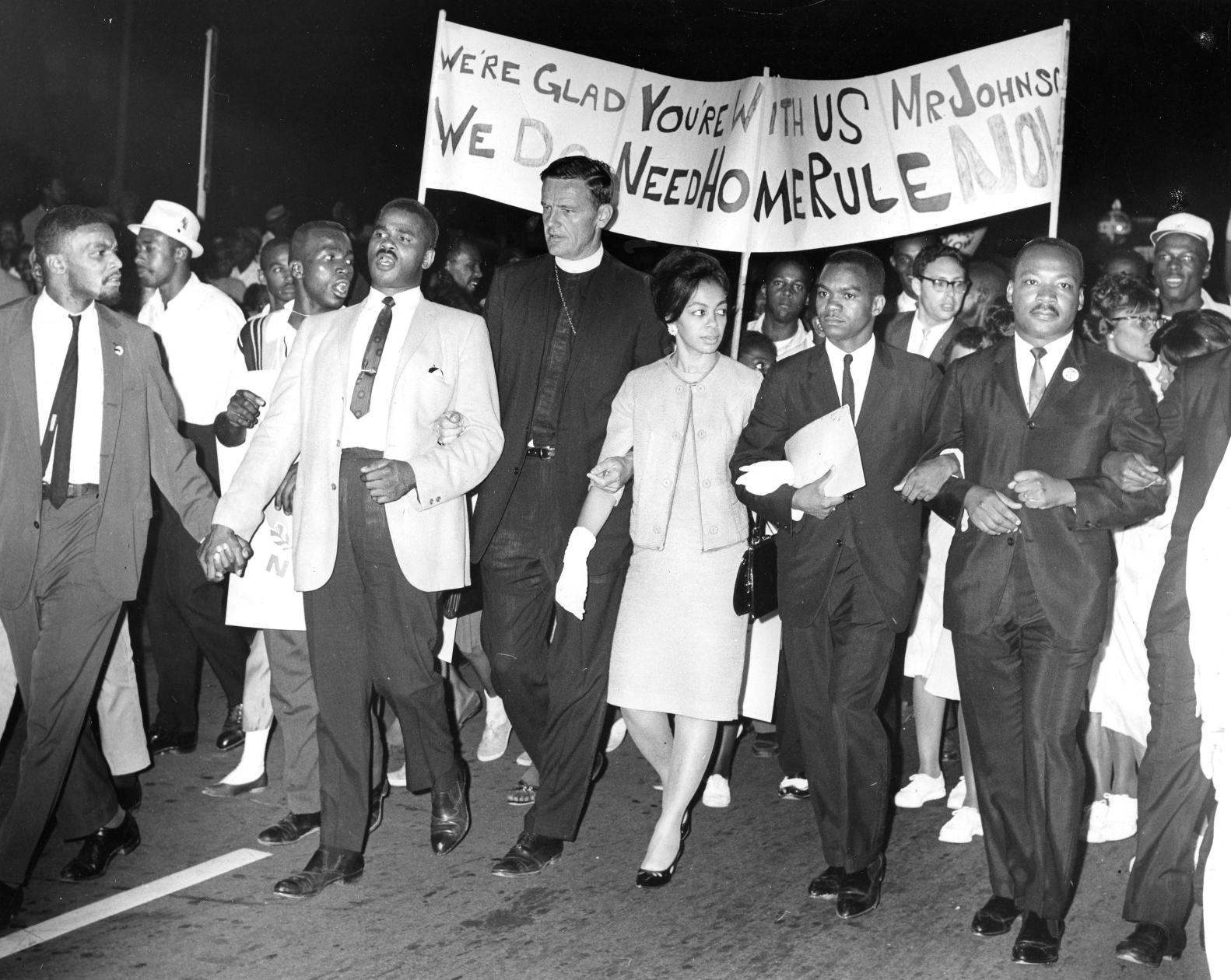
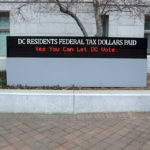
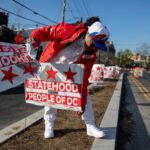
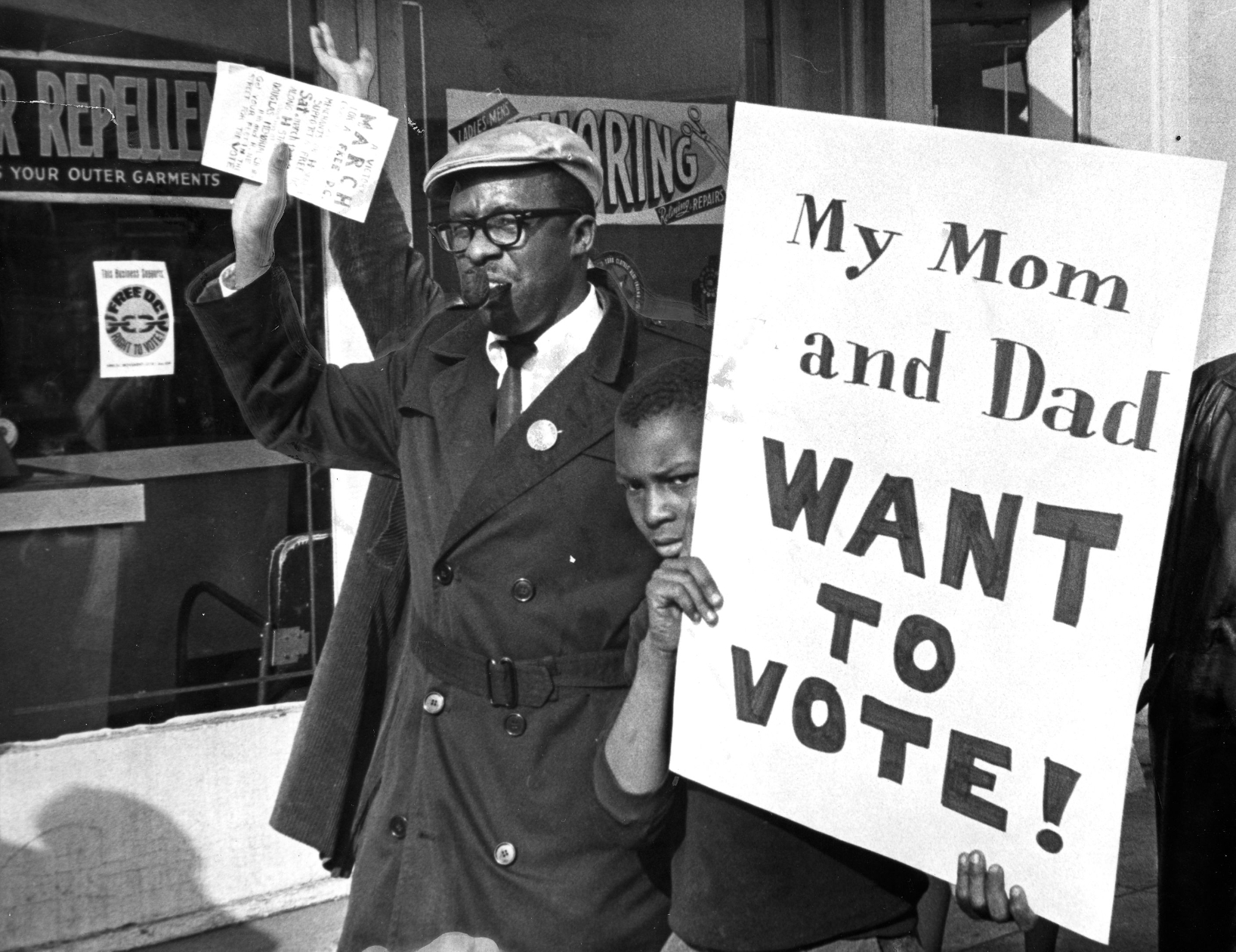
Fifty years ago, D.C. residents gained the right to elect their own mayor and council members. It was the first time in generations that Washingtonians would head to the polls to vote for a local government. But home rule, as it’s known, was and still is very limited. Unlike residents of the 50 states, Washingtonians still have no vote in the U.S. House or Senate, and Congress can review and overturn laws passed by the the city’s elected officials. The District has a non-voting delegate to the U.S. House of Representatives and two non-voting “shadow” senators.
Washington D.C. is a city founded on a contradiction: as the nation’s capital, it is both the heart of American democracy, and at the same time, a place where residents can’t fully participate in that democracy. The seed of this contradiction is written into the U.S. Constitution itself. In the years since the Constitution was drafted, as the city rose on the muddy banks of the Potomac River, racism kept the city, and its Black majority, from gaining self-rule and the voting rights residents in the 50 states take for granted.
It wasn’t until the Civil Rights Movement that the fight for D.C. self-governance finally made progress, thanks in part to voters hundreds of miles away.
How the District lost democracy
In Article I, Section 8 of the Constitution there’s a single sentence about D.C., granting Congress exclusive jurisdiction over what would become the capital city. There’s no mention of how residents of this newly designated federal district would vote. At first, people living in the small towns and farms that made up the District continued voting in the states the land was ceded from, Maryland and Virginia. But when Congress moved into the still-under-construction city at the turn of the 19th century, lawmakers put an end to that, with the Organic Act of 1801.
“All of a sudden the people who live there, who had been voting in Maryland and Virginia elections until 1801, now have absolutely no right to vote, no right of representation in the national legislature, no ability to vote for president, and so they are effectively stripped of all of their constitutional rights for representation by Congress passing this legislation,” says historian George Derek Musgrove, coauthor of the book Chocolate City: A History Of Race And Democracy In The Nation’s Capital.
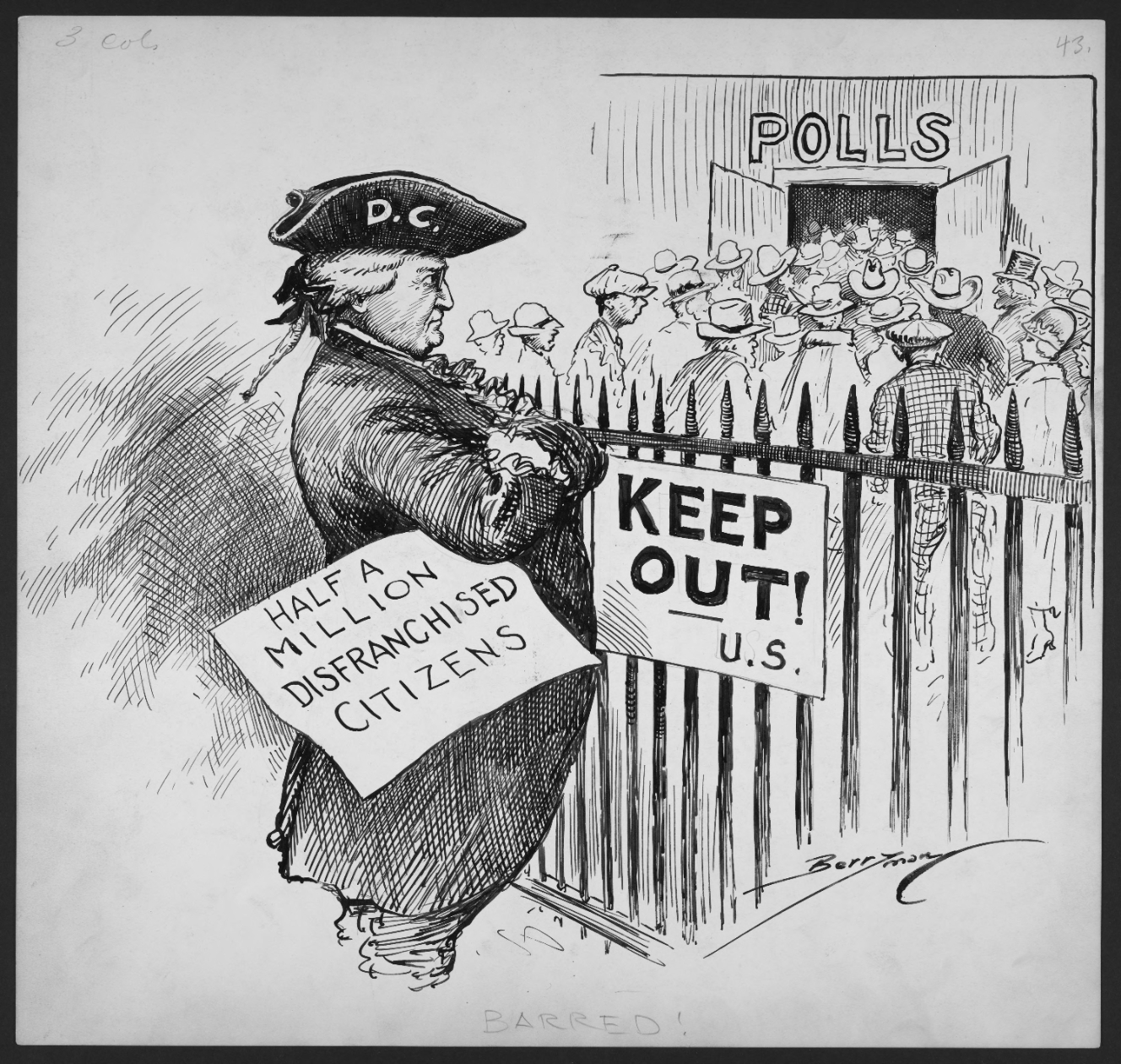
Mostly, Musgrove says, it was an oversight — lawmakers were rushing to pass the bill during a lame duck session. After protests from locals, Congress did create a quasi-democratic local government, with an elected council and a presidentially appointed mayor.
But after the Civil War, Congress revoked that limited home rule.
“The principal reason is Black suffrage,” Musgrove explains.
Thousands of Black people had moved to the District during the war, seeking freedom and work. In 1867, in an early Reconstruction-era experiment, Black men were allowed to vote in D.C. elections for the first time, and they flocked to the polls.
But the backlash came quickly. White elites argued the city would be better off with no democracy at all rather than allowing Black residents to participate. Congress abolished local D.C. elections entirely in 1874, replacing elected officials with a three-person, presidentially appointed commission.
“Three white men would run the city by themselves, being overseen by Congress, for the next 100 years,” Musgrove says. “And so we effectively have the end of local democracy for three generations in the District of Columbia at that point.”
How Black voters 500 miles away helped win D.C. Home Rule
By the middle of the 20th century, this lack of democracy in the nation’s capital was an embarrassment. This was due in part to two major global events: World War II and the Cold War.
“An overt advocacy for a master race theory becomes something that people are really not willing to tolerate after World War II on a national scale. Liberals become embarrassed by the Nazis’ discussion of of a master race theory, and they start to push to get rid of our own master race theory: segregation laws and Jim Crow,” says Musgrove.
During the Cold War, Washington became the self-proclaimed “capital of the free world” in the battle between capitalist democracies and communism.
“The capital of the free world can’t not have democracy,” Musgrove says.
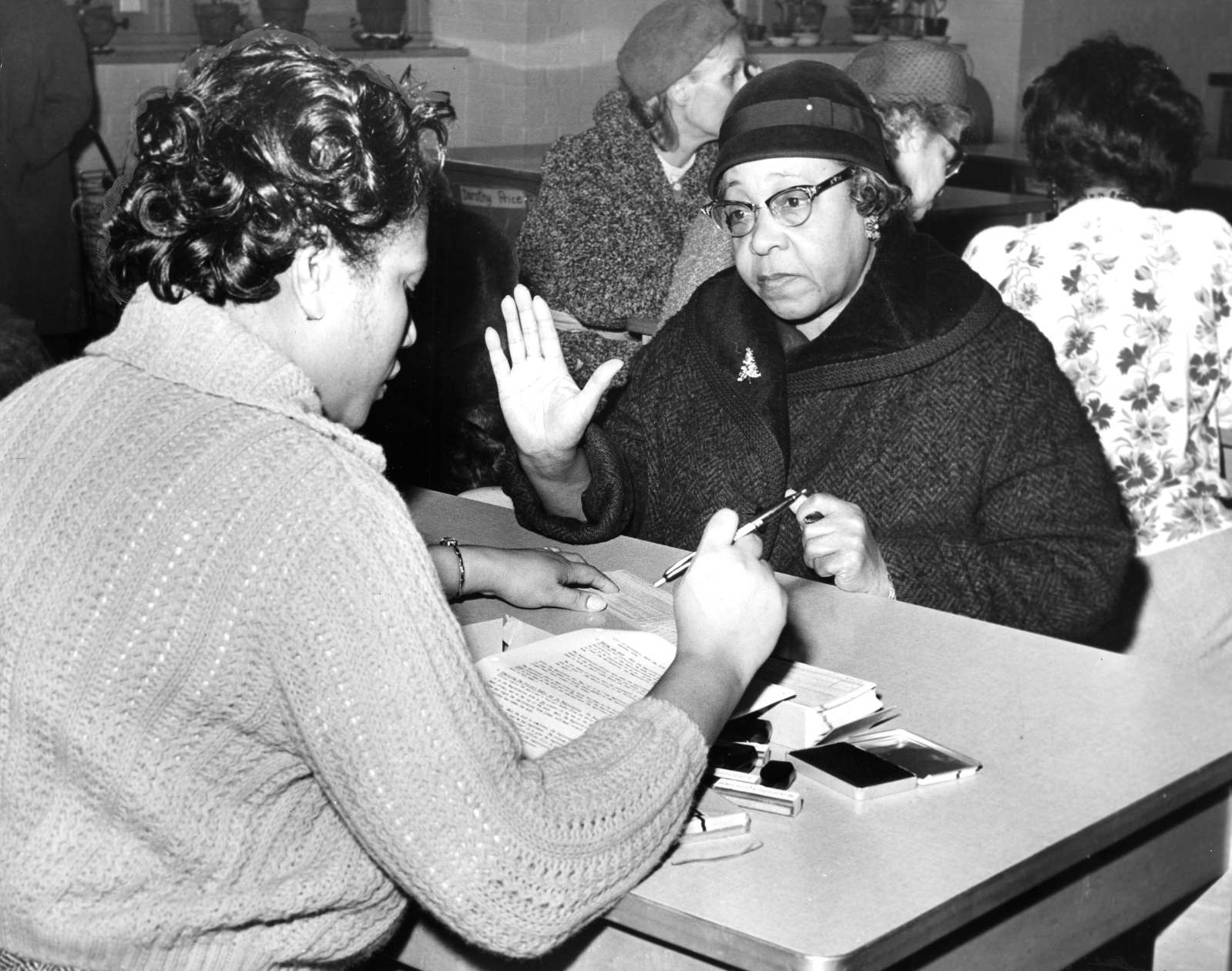
In 1957, D.C. became the first major U.S. city to have a Black majority, and Home Rule for D.C. got swept up in the broader fight for civil rights.
On August 6, 1965, Martin Luther King Jr. was in D.C. to celebrate a huge victory. President Lyndon Johnson was signing the Voting Rights Act, one of the biggest legislative achievements of the Civil Rights movement, banning racial discrimination at the polls. King was there in the room, watching the president sign the bill.
The very next thing King did, after this historic moment? He joined a march for D.C. home rule.
“When we left the White House that afternoon, we went up to 14th and U streets,” recalled Walter Fauntroy, a D.C. native who worked closely with King in the movement. Fauntroy was pastor at the New Bethel Baptist Church in Shaw, and served as the director of the Washington Bureau of the Southern Christian Leadership Conference.
Fauntroy and King and others marched down 14th, right back to the White House. They were carrying a banner reading, “We’re glad you’re with us Mr. Johnson. We do need home rule now.”
“I used to tell Dr. King that we would not be free to govern ourselves in the District of Columbia until Black people were free in the South to register to vote,” said Fauntroy during a 1982 oral history interview with a Washington Times reporter.
Fauntroy saw voting rights in the South as key to winning D.C. home rule, largely because of one stubborn segregationist congressman from South Carolina: John McMillan, a conservative Southern Democrat.
“He had been in the Congress for 30 years, and for 22 of those years had been chairman of the District committee, and in that capacity had not allowed a single measure that would have provided home rule for the District even to get out of his committee,” Fauntroy said.
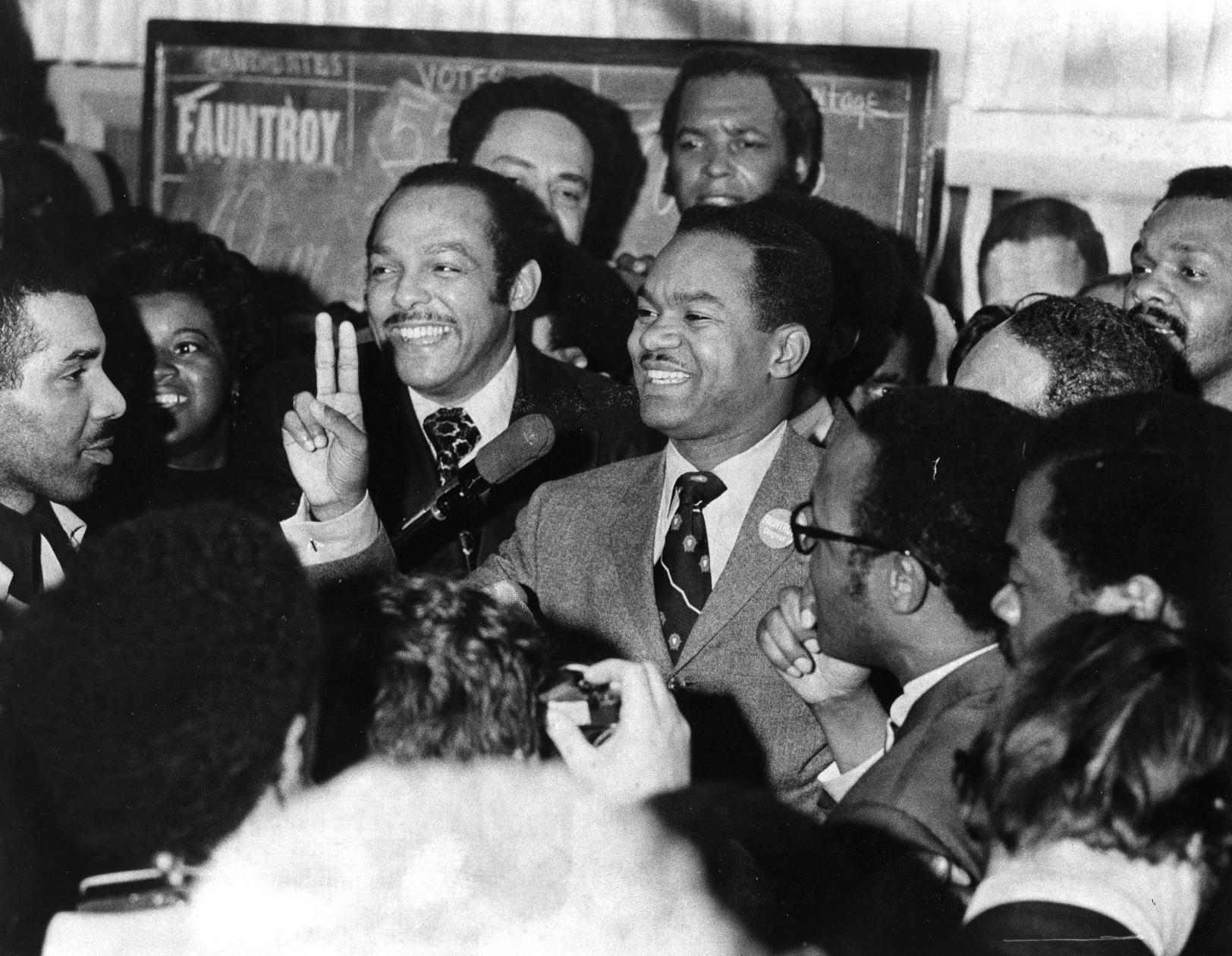
By the 1960s, both the Republican and Democratic parties supported increased D.C. autonomy, even including it in their party platforms. Home rule bills had passed in the Senate, but couldn’t even get a vote in the House, largely because of McMillan’s opposition.
This is where Fauntroy says he began to implement what he called the “arithmetic of Black political power.”
Though McMillan’s congressional district was more than one-quarter Black, Black people accounted for just 3% of the registered voters prior to passage of the Voting Rights Act. After the act’s passage, millions of Black people in the South registered to vote for the first time. In McMillan’s district, the Black vote rose to make up nearly 30% of registered voters.
In 1971, Fauntroy was elected as D.C.’s first non-voting delegate to Congress in modern times. He used the position to relentlessly lobby for home rule.
McMillan was voted out in 1972, finally paving the way for passage of the Home Rule Act.
Compromises that Continue to reverberate
McMillan cleared out his House office, taking with him the picture of a Confederate soldier that hung on the door.
The man who eventually replaced him was a fellow Democrat, but cut from different cloth: Charles Diggs of Michigan. Diggs was one of the founders of the Congressional Black Caucus, the first African American to be elected to Congress from Michigan, and a known supporter of D.C. home rule.
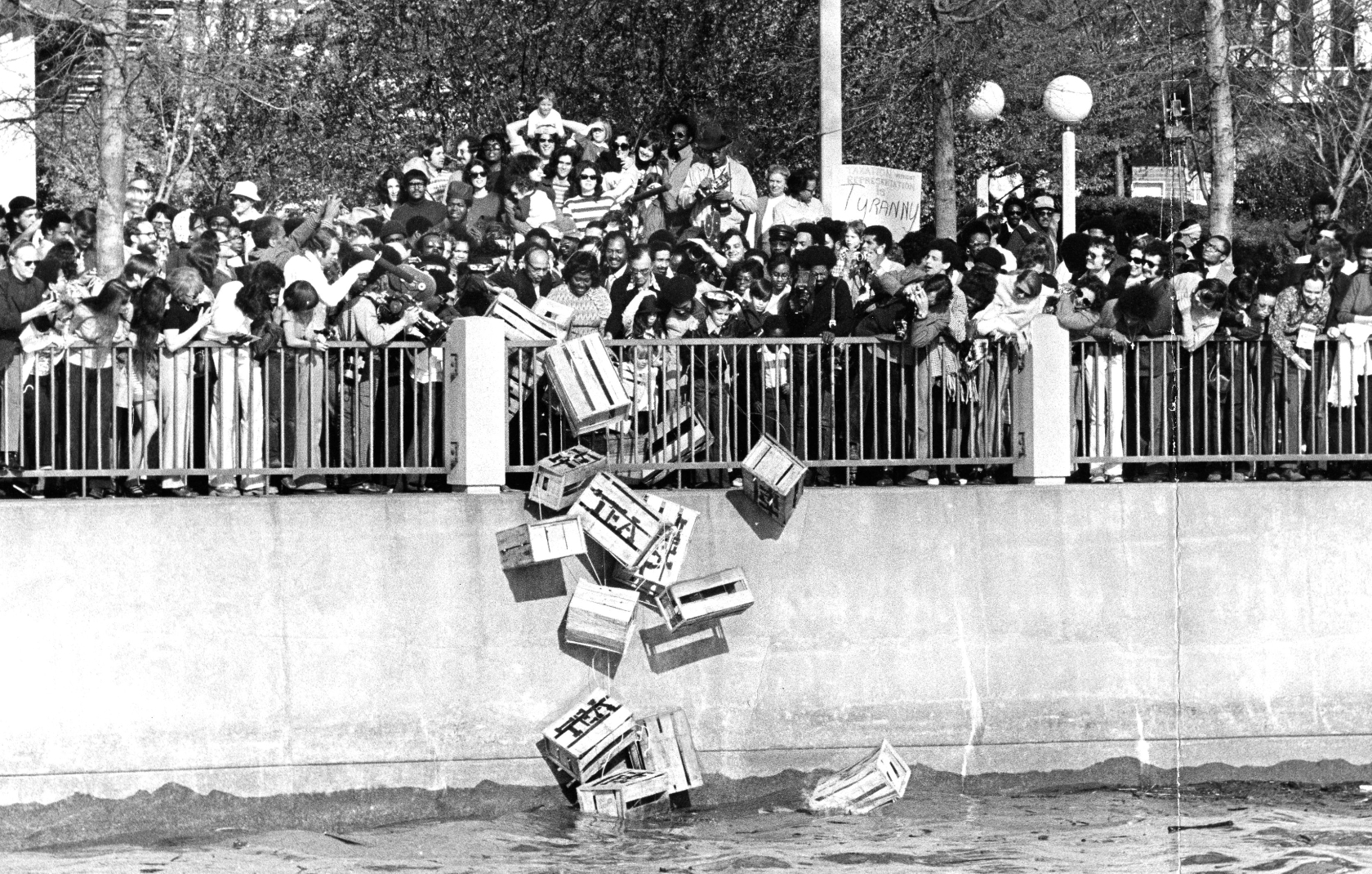
“I’m very sobered by the responsibility of being chairman of this committee,” Diggs said during a 1973 radio interview. “There’s no question that racism has been an important factor in holding back the granting of self-determination or self-rule in the District of Columbia.”
For Diggs, passing home rule was not an easy fight. There was bipartisan support – including from Republican President Richard Nixon. But some representatives from both parties had qualms about giving D.C. full local control.
“What Diggs is finding out over the course of the year – you know, he’s doing whip counts with the leadership – is it he can maybe get about 180 people who are firm ‘yeses’ on his version of the bill,” says Musgrove. “But he’s not sure that he can get to 218. So he starts to panic.”
To get the bill through, Diggs had to accept several big concessions — things that still hamstring the District’s elected officials to this day. For example, members of Congress from the suburbs around the District forced the inclusion of a ban on a commuter tax, meaning D.C. can’t tax the incomes of the hundreds of thousands of people who work in the city but live in Maryland or Virginia. Also, Diggs’s original bill would have given the District autonomy over its budget; he agreed to amend the bill so that Congress retained ultimate control.
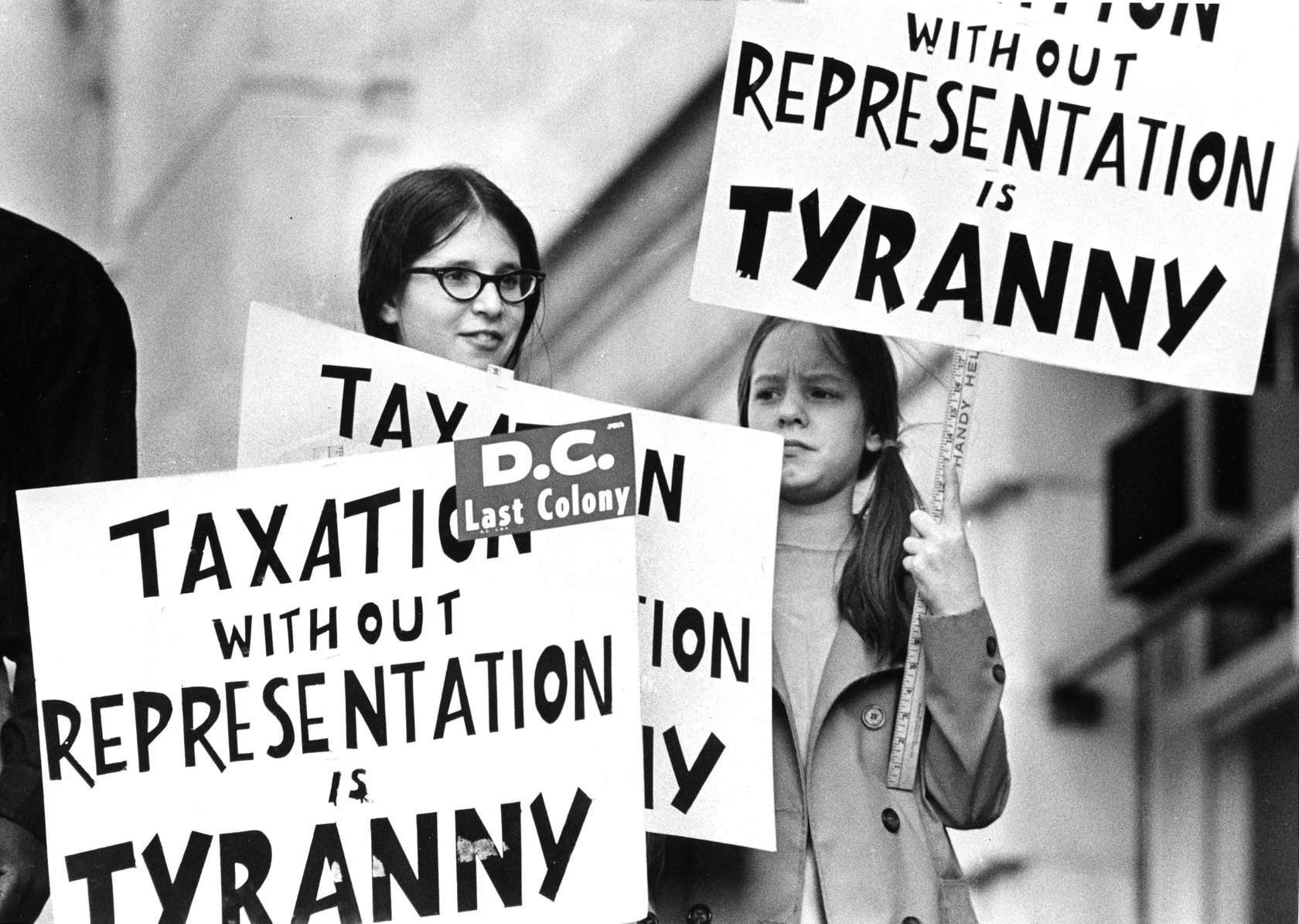
The D.C. Home Rule Act passed and signed into law by President Nixon on Dec., 24, 1973.
“As the Nation approaches the 200th anniversary of its founding, it is particularly appropriate to assure those persons who live in our Capital City rights and privileges which have long been enjoyed by most of their countrymen,” Nixon wrote in a statement at the time. “I am pleased that the bill has enjoyed bipartisan support throughout the Congressional deliberations, and I am proud to join the Congress in pledging the full support of my Administration to make self-government a success in the District of Columbia.”
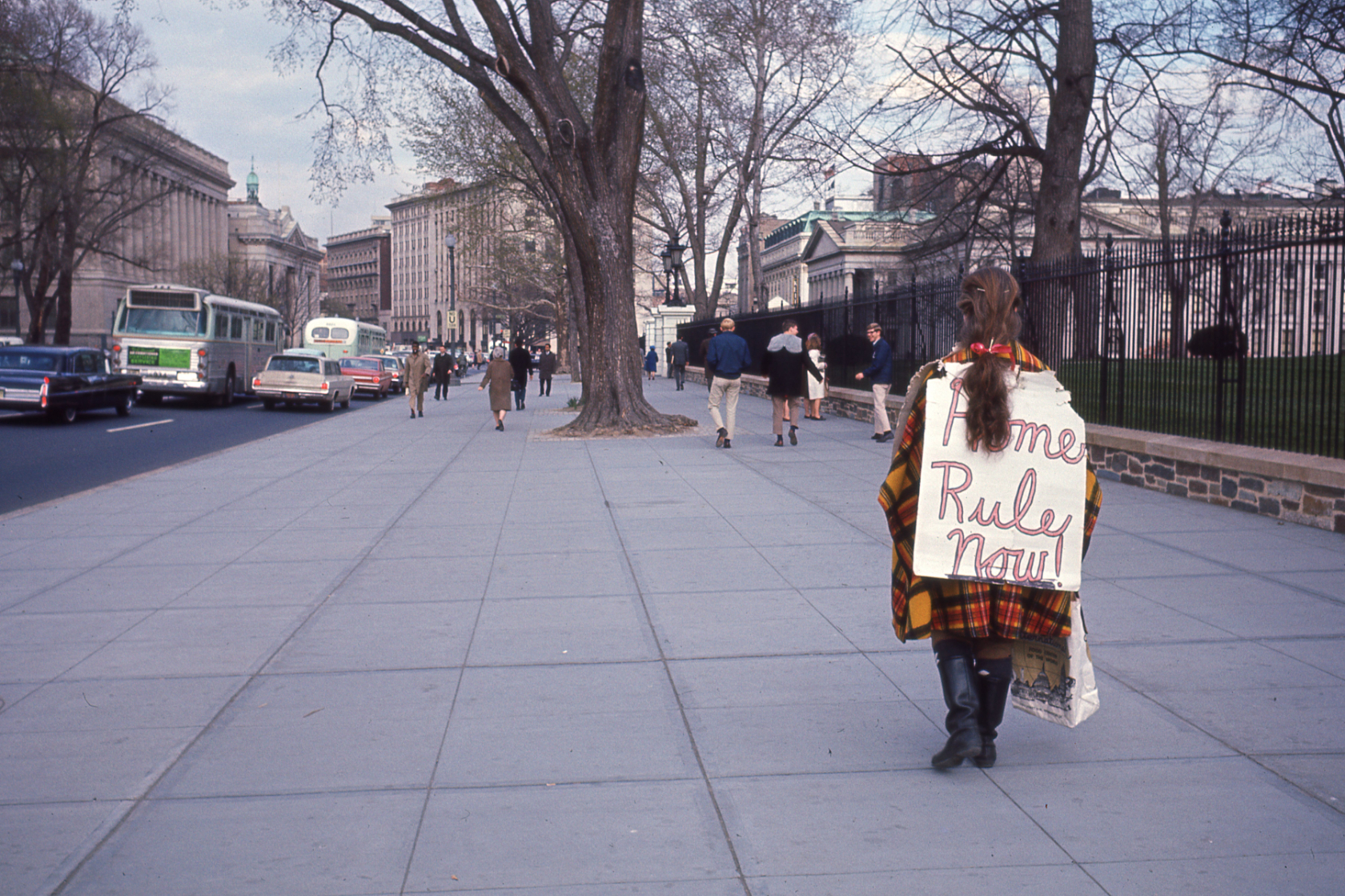
In the fall of 1974, D.C. residents elected their first local government in a century.
Arrington Dixon was elected to the first D.C. Council.
“We came together and started trying to lay out the council. We had to decide on how we met, what our rules of meeting would be, committee structures. Nuts and bolts. Because everything we did was new,” Dixon recalled to WAMU/DCist.
It was an exhilarating time, building a local democracy from scratch, but also deeply frustrating, given the limitations.
“The structure did not really give people the kind of self-determination and home rule that they deserve like every other citizen,” Dixon said.
This story was updated to clarify that Walter Fauntroy was D.C.’s first non-voting delegate in modern times. Norton P. Chipman was first elected to the post in 1871.