Jacob Fenston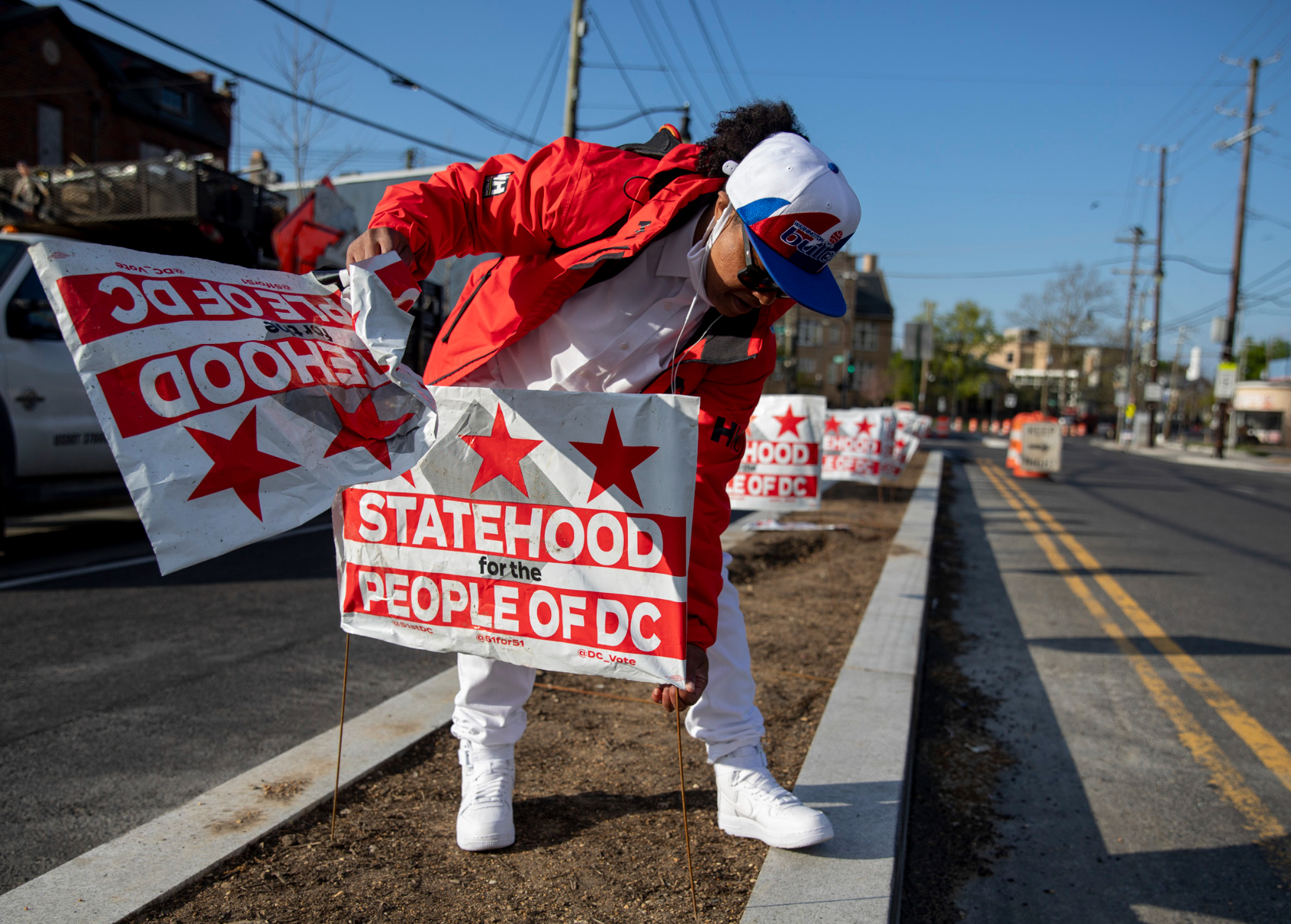
When D.C. won home rule 50 years ago, creating an elected local government, nobody saw it as a perfect or permanent solution to the District’s lack of voting rights. Supporters thought it would just be a first step, followed quickly by full representation in Congress. Spoiler alert: It didn’t happen that way.
Half a century later, Washingtonians still don’t enjoy the same rights as other American citizens. D.C. residents do elect their own local officials, but laws those officials pass can be overturned by Congress; D.C. residents elect a delegate to Congress, but that delegate has no vote.
In recent years, most advocates for D.C. voting rights have come to see statehood as the best way to secure those rights. They see 2024 as a pivotal year for the movement.
Home rule, or home fool?
“I was sort of lukewarm on home rule,” says Anne Anderson, who moved to D.C. in the ’60s, as the push for home rule was ramping up.
She joined the D.C. Statehood Party. It was brand new, set up by Civil Rights activist Julius Hobson.
Hobson called home rule, “home fool.” He argued home rule was merely a tactic to “pacify and confuse” residents of the majority Black city, a distraction from full rights, rather than a step toward attaining them.
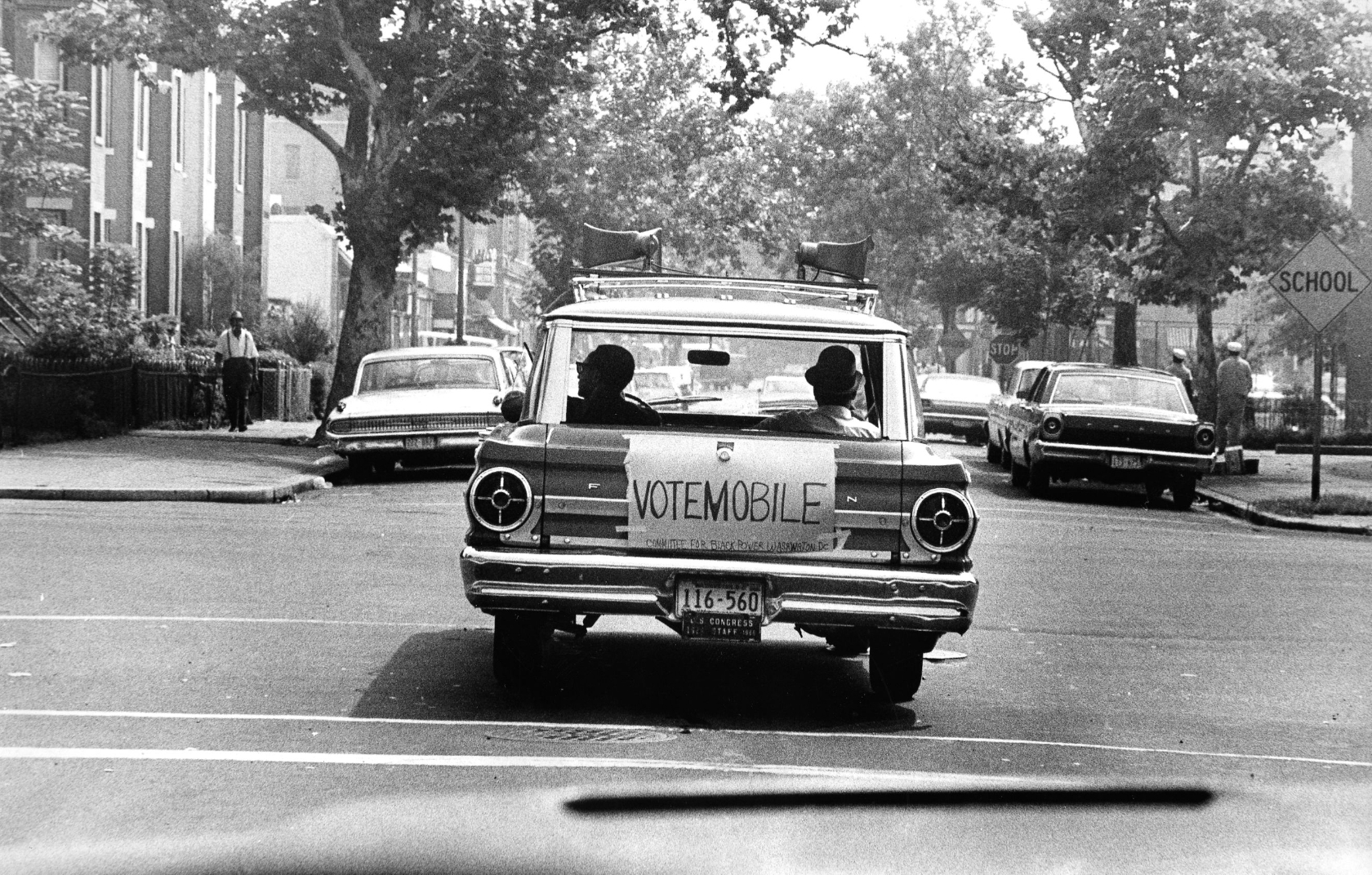
“There were some people who thought we had to prove that we were deserving of full rights,” Anderson recalls. “I didn’t think we needed to deserve anything. I thought we already deserved it; being an American citizen, you get to have some rights.”
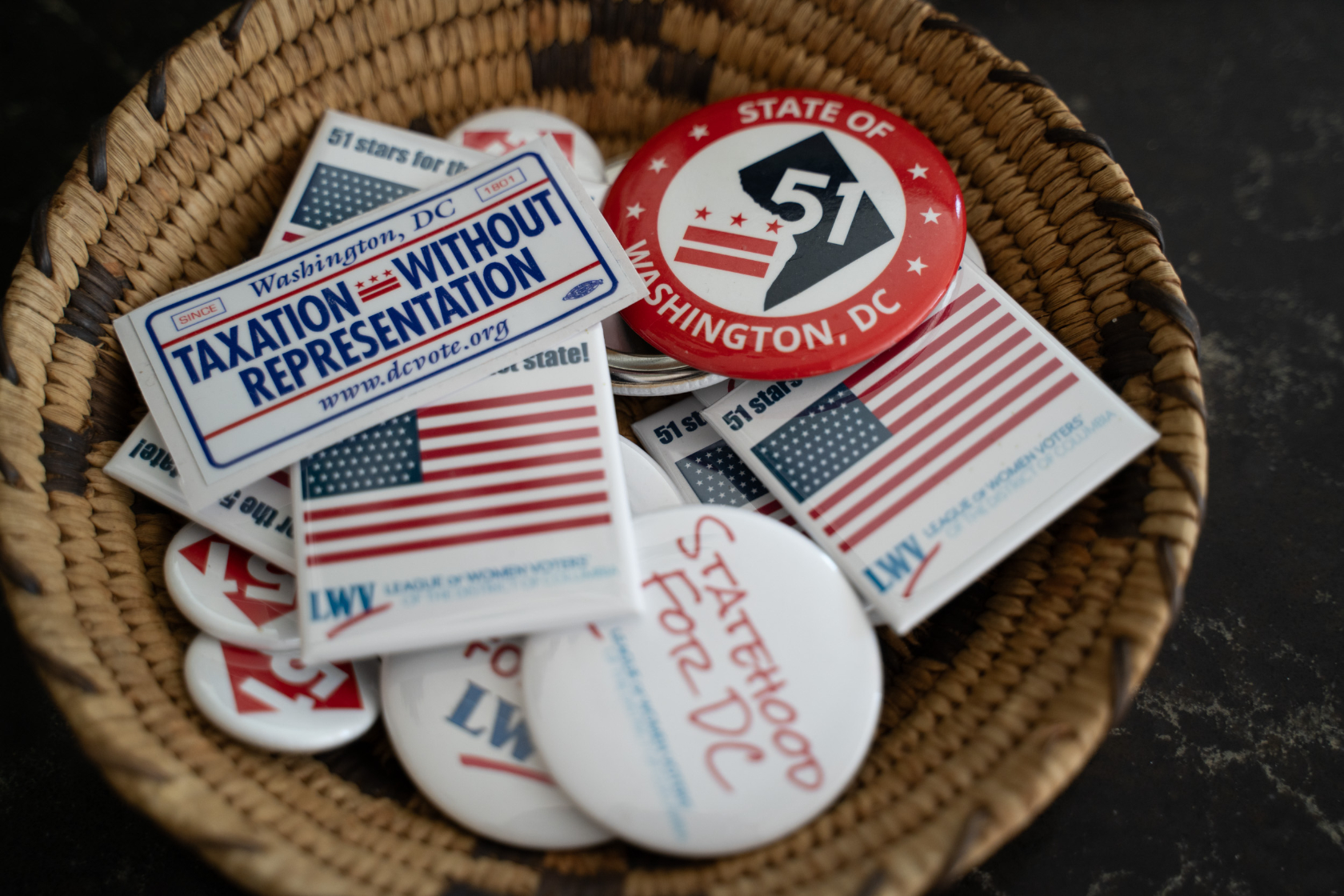
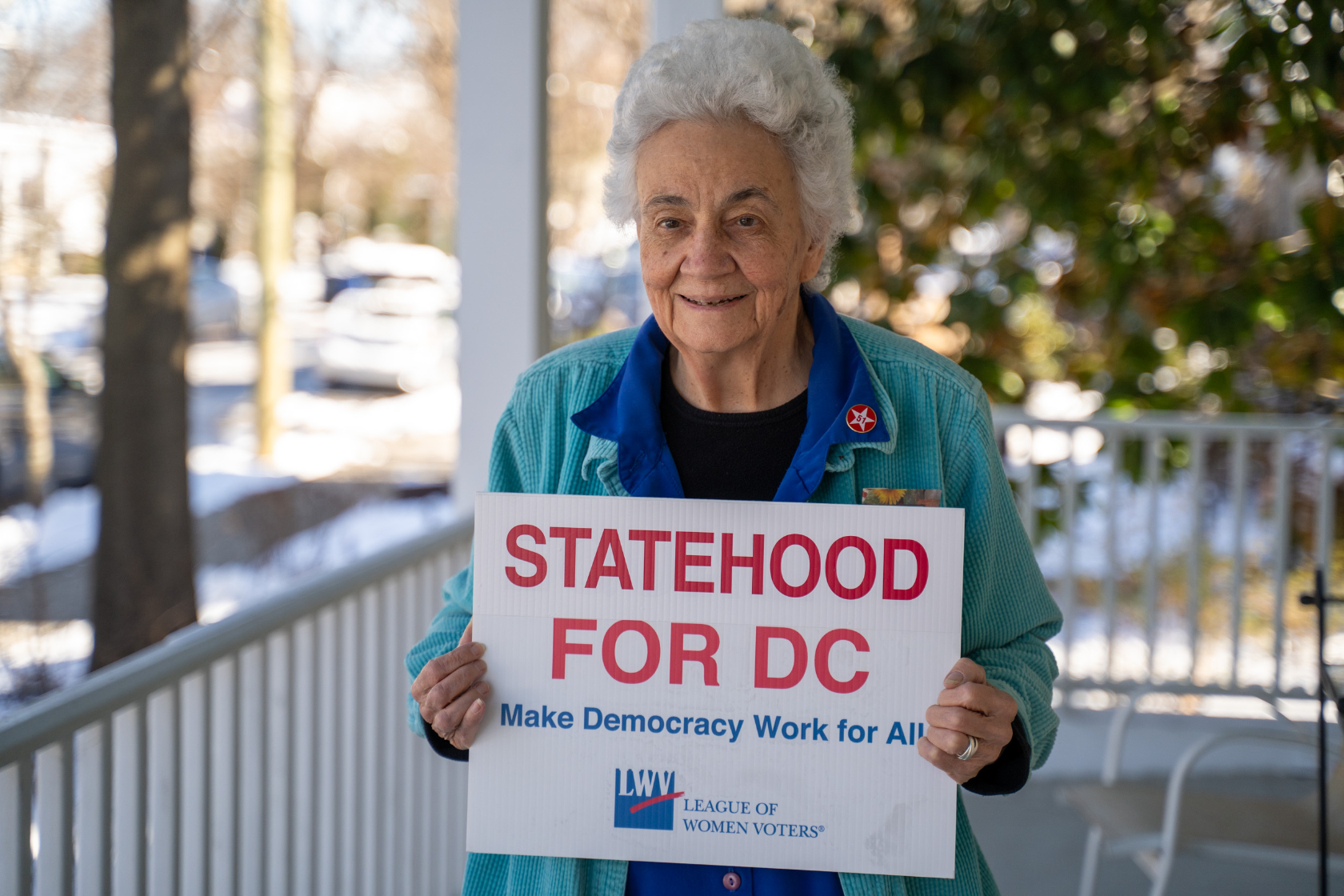
Anderson later went on to join the League of Women Voters of D.C., where she is now chair of the group’s committee for full rights for D.C. citizens.
The idea of D.C. statehood has been around for a long time, first bubbling up in the 19th century. But until recently it was not a terribly popular cause, says historian George Derek Musgrove, co-author of the book “Chocolate City: A History Of Race And Democracy In The Nation’s Capital.”
“Statehood in the ’70s is this sort of far fetched radical fringe. If you look at the membership of the Statehood Party, just to give you an illustration, by 1979, 1% of registered voters are members,” Musgrove says.
In the years since, though, other options for giving D.C. voters full rights have fallen flat. There was a proposed constitutional amendment that would have treated D.C. like a state in terms of representation, with two senators and one representative in the House.
“In fact, it passes Congress in 1978. It’s defeated before the states, unfortunately,” Musgrove says.
There were various other, less ambitious plans too, like giving blue D.C. one voting representative, balanced out by adding one new representative for a red state. That failed in 2009 when Republicans added an amendment that would have overturned the District’s gun control laws.
‘I felt like a second class citizen’
Jamal Holtz was born and raised in D.C., in Ward 8. He remembers the moment that turned him into a statehood activist: he was a teenager when Congress was considering defunding the Affordable Care Act, or Obamacare in the mid-2010s.
The issue was important to him, as his own family had struggled to afford good health care.

“My mom was under-insured, and so I had experiences where I’d visit hospitals and doctors and was denied treatment just on the basis of the type of insurance that I had. I actually do have a permanent scar on the back of my head because of it,” Holtz says.
Holtz wanted to advocate for the Affordable Care Act, and President Obama had a straightforward way to do it: he said call your senators.
But Holz, along with nearly 700,000 other D.C. residents, didn’t have a senator.
“Truly, I felt like I was a second class citizen,” Holtz recalls.
With a handful of other young D.C. residents, he started the group 51 for 51. The idea was to make D.C. the 51st state with 51 votes in the Senate, bypassing the filibuster.
District of Columbia -> Douglass Commonwealth
By 2016, District leaders had coalesced around the statehood idea. Under a president Hillary Clinton, they thought there would be a real chance.
Mayor Muriel Bowser convened a constitutional convention to hammer out some of the details of the new state.
It would be called Washington, Douglass Commonwealth, after abolitionist Frederick Douglass, retaining the abbreviation, D.C. The new state would comprise 66 square miles. This would leave a 2 square mile federal district around the National Mall, to be administered by Congress.
This would split apart the federal district — filled with marble monuments and authorized by the U.S. Constitution — from the bustling city where hundreds of thousands of people live and work and go to school. The Constitution stipulates that the federal district can’t exceed 10 miles by 10 miles in area — hence the District’s diamond shape, with its 10-mile-long sides. In 1846, the Virginia chunk of the diamond retroceded, leaving today’s partial diamond, bounded on one side by the Potomac River. Statehood backers say Congress could again shrink the federal district, this time ceding most of the land to a new state.
In a referendum in November, 2016, 86 percent of D.C. residents voted in favor of statehood.
“But then everyone woke up the next day and found out that a president who doesn’t support D.C. statehood was elected, which was not what people were planning for,” says statehood activist Josh Burch.
President Trump was not a statehood guy.
Back in the ’70s D.C. home rule was a bipartisan issue, signed into law by President Nixon. But since then, the fight for D.C. voting rights has hardened along party lines. The last time statehood made it to a vote in the House, in 2021, Republicans railed against it as being unconstitutional, and just a bad idea.
“This is nothing but a naked power play today. That’s all this is about — people who can’t get their radical agenda passed under the system our framers set up now want to blow it up,” said Republican Rep. Nancy Mace of South Carolina.
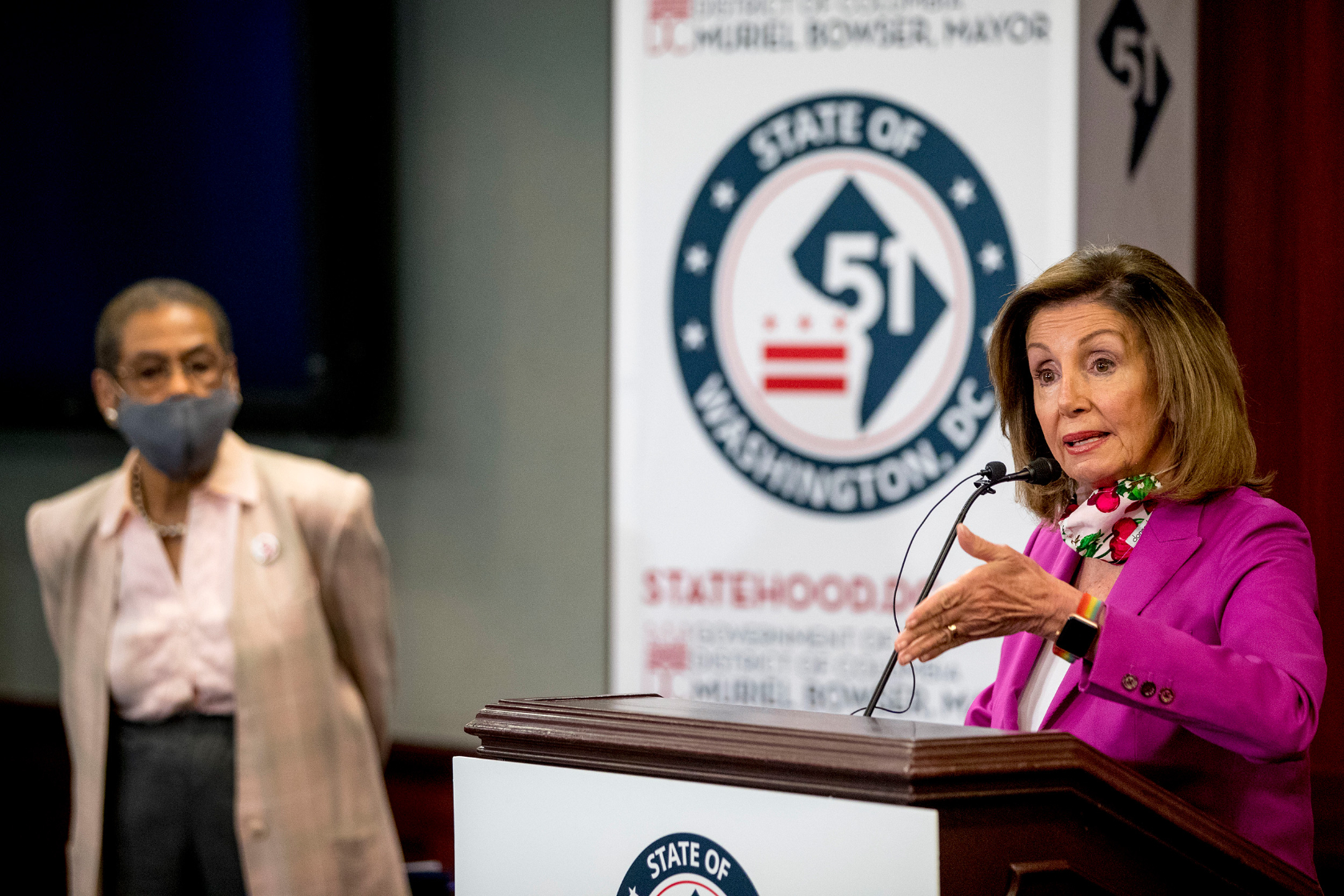
Republican Rep. Glenn Grothman of Wisconsin said D.C. would “do a horrible job as a state.”
“There are more homeless here than 29 states. And if they were to become a state, it would immediately be the state with the highest murder rate in the country,” Grothman said.
The bill, H.R. 51, passed the House, along party lines. In fact, the House has passed statehood three times in the past few years, but it’s failed in the Senate.
“Legislatively, we have never been closer to statehood, and at the same time, we have never been closer to potentially having home rule completely repealed,” Burch says.
The strategy for 2024 and beyond
What happens next with statehood hinges on this November: who wins the White House and Congress.
If Republicans win, statehood activists worry there’s a real chance home rule could be rolled back or curtailed.
“There are people in the House of Representatives majority right now who want to repeal Home Rule, and that probably sells well to people in their district back home,” Burch says.
But Democrats haven’t been steadfast supporters either.
“They have sold us out many a time,” Burch says. In fact, it was anger at Democrats that spurred Burch to become an activist. It was in the lead up to a possible government shutdown in 2011.
“President Obama said to Speaker Boehner, in order to keep the federal government open, ‘I’m not happy about it, John, but I’ll give you D.C. abortion.’ He used the District’s right to fund abortion services for for low-income women as a bargaining chip to keep the federal government open,” says Burch, who went on to start the group Neighbors United For D.C. Statehood.
Burch and other activists felt betrayed — D.C. had voted overwhelmingly for Obama, and Obama had said he supported D.C. statehood and D.C. autonomy. More recently, President Biden also claimed to support autonomy, but then allowed Congress to overturn D.C.’s criminal code revision last year.
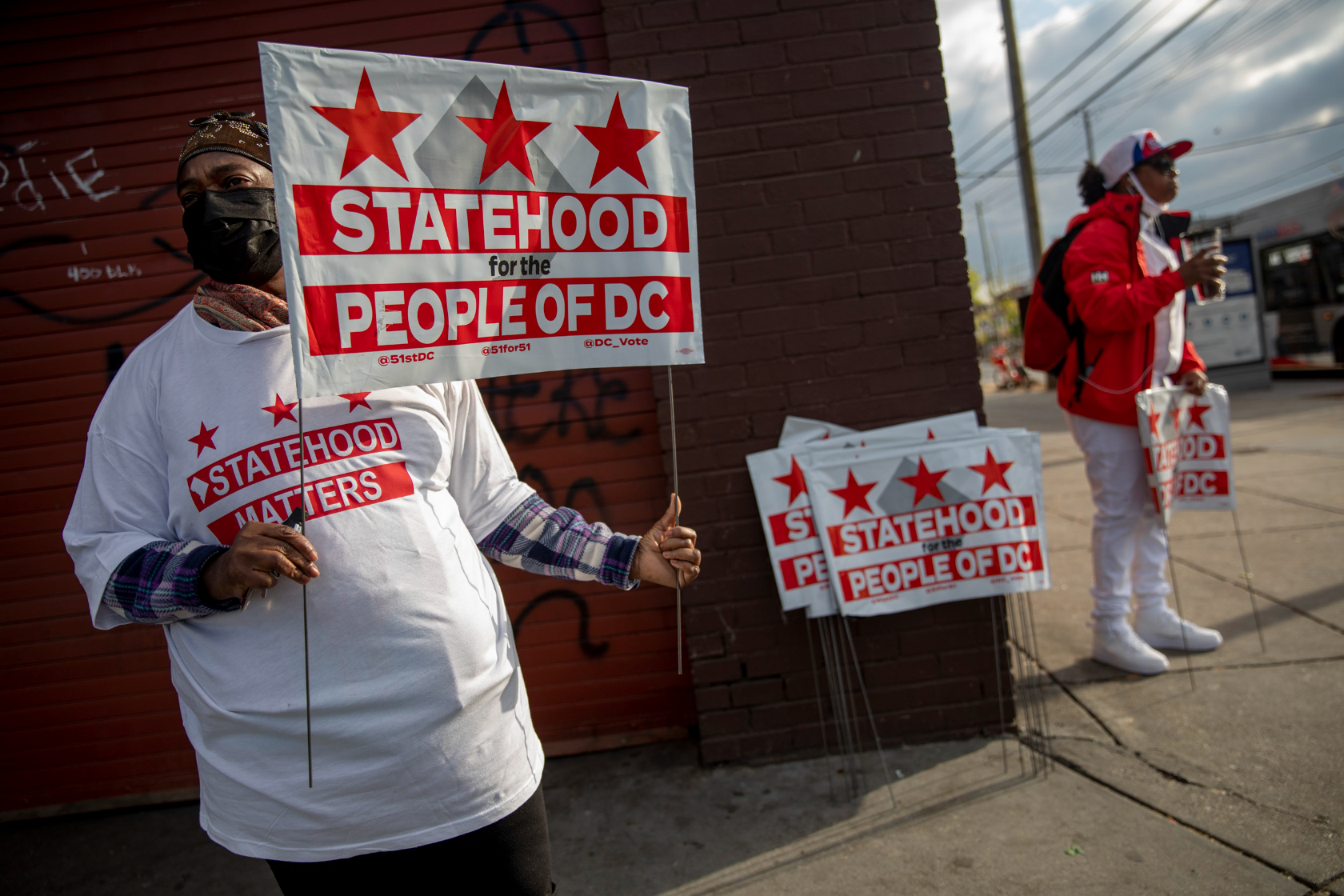
If Democrats win this November, activists say the next step is to make sure D.C. is part of any conversation about voting rights.
“We have to be assertive to ensure that our voices are not sidelined. I mean, we saw that two years ago, people fighting for much needed legislation across the country that related to voter suppression, and D.C. statehood was left out of the conversation in many instances,” Holz says.
Specifically, activists say any effort to pass the John Lewis Voting Rights Act, which would update and strengthen the 1965 Voting Rights Act, should also include D.C. statehood. Passing either one, or both, would likely require not just Democratic control of Congress and the White House, but also suspension of the filibuster. There are unlikely to be the 60 votes needed in the senate to overcome a filibuster on statehood legislation.
“I do know a lot of senators, democracy loving senators, have been really troubled that the filibuster has been used to stop efforts to make our democracy more fair and equitable and inclusive, and the statehood bill is a piece of that,” says Burch.
Fifty years ago, the District won home rule after D.C. rights got swept up in the momentum of the Civil Rights Movement. In the same way, activists say, statehood can only happen if it’s part of the larger fight to defend democracy and prevent voter suppression.
“This is voter suppression from 1801,” says Anderson. That was the last time D.C. residents were able to vote for members of Congress.