 Jenny Gathright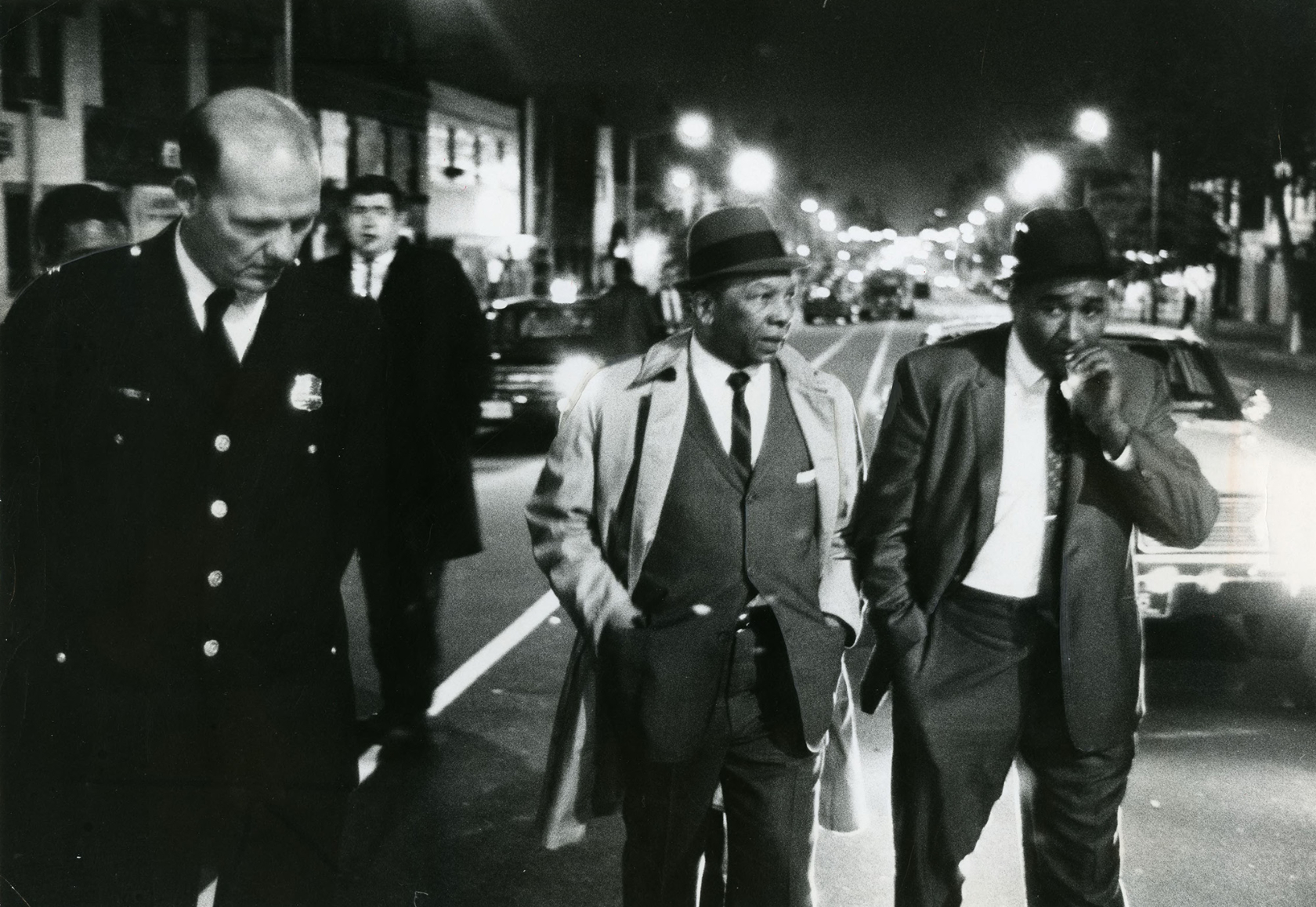
Former president and current candidate for the Republican nomination Donald Trump — who is, himself, facing criminal charges – recently proposed a radical solution to D.C.’s crime surge: a federal takeover.
“Washington D.C., our once beautiful capital, has become a dirty, crime-ridden death trap that must be taken over and properly run by the federal government,” Trump said in a video he put on social media in October. “It is and will be part of my election platform: we will clean it, renovate it, rebuild it, and most importantly, we will make it safe.”
The statement, while extreme, isn’t exactly unique. It came at the tail end of a year where the federal government has meddled more in District affairs than it has in decades, largely in response to rising crime.
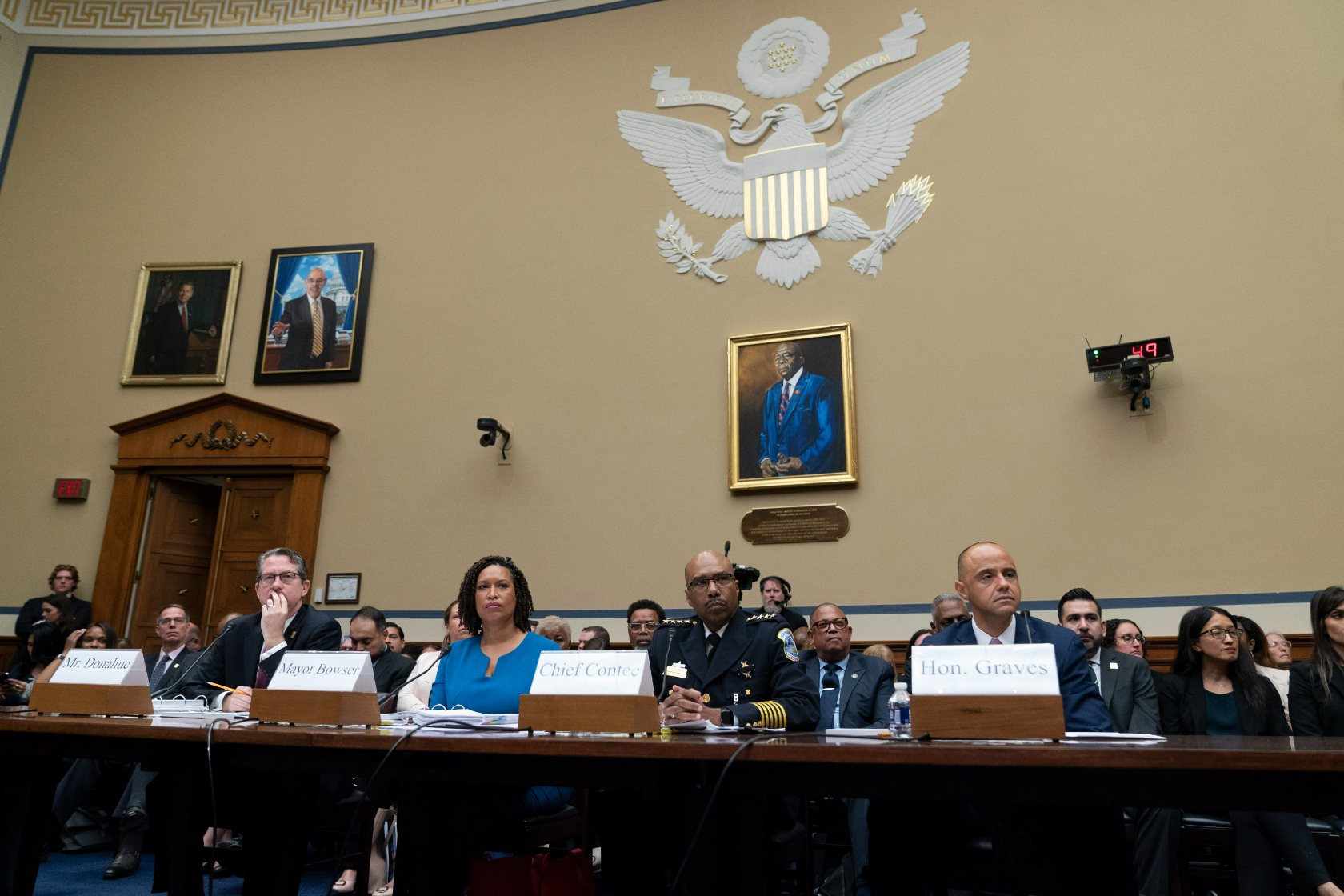
As homicides began to reach levels not seen since the 1990s, the House committee that oversees local D.C. affairs held a series of hearings on crime in D.C., which House Republicans used as an opportunity to lambast local officials. At the extreme end, three Republicans introduced a resolution to revoke the Home Rule Act – the 1973 law that gave D.C. residents the ability to elect their own D.C. Council and mayor (experts say it’s unlikely to go anywhere).
And, perhaps most notably, both Republicans and Democrats in Congress (with President Joe Biden’s blessing) used their authority to block a wholesale revision of the city’s criminal laws that the D.C. Council had unanimously approved, citing concerns that the bill was too soft on crime and would have reduced maximum sentences. It was the first time Congress had blocked a D.C. bill in this fashion since 1991.
Historians say these moves followed an old playbook. Throughout D.C.’s history, fears about crime (and related racial prejudices) have been used to make the case against expanding local autonomy for District residents. And the dynamic continues today, even 50 years after home rule.
“In recent years we’ve seen the Congress and the president serve as sort of benign dictators, kinder and gentler colonialists. They’ve generally let the residents enjoy our little pretend democracy. But when that third rail was crossed, when the D.C. Council voted on a whole new criminal code at the same time that crime [and] anxiety about Black men was on the rise, that’s when democracy for D.C. went too far,” says Georgetown law professor Paul Butler, who advised the group of lawyers that revised the criminal code.
This attitude, Butler says, has a lot to do with racism.
“Fear of crime is often weaponized by politicians in support of tough on crime strategies and in support of more resources and power for the police,” Butler says, but “race is the subtext; in particular anxiety about Black men. In D.C. we have a perfect storm. We have a jurisdiction that’s roughly 40% black. And we have what’s essentially colonial rule.”
Trump isn’t the first U.S. President to invoke crime in D.C. on the campaign trail.
Back in 1968, Richard Nixon ran on a platform of law and order — and he used the capital city to help make the case. In a stump speech in Chattanooga, Tennessee, for example, he promised to turn D.C. from one of the “crime capitals of the world” into a model of order.
Lauren Pearlman, associate professor at the University of Florida and author of Democracy’s Capital: Black Political Power in Washington, D.C., 1960s–1970s, says when she was researching Nixon’s campaign, she was at first confused about Nixon’s fixation on local issues in the District.
“Why is he in Chattanooga, Tennessee, talking about what he’s going to do in D.C.? Why do people in Chattanooga care about his local D.C. policy? That seems so strange,” Pearlman says. “But it was the symbol of what he wanted to do to a majority-Black city.”
After his election, Nixon went on to push those tough-on-crime policies in a local D.C. crime bill that authorized no-knock warrants, more pretrial detention, and trying children as adults. The legislation paved the way for future tough-on-crime policies across the U.S. and in the District, according to Pearlman.
Nixon ultimately supported the Home Rule Act. But he (along with some members of Congress) continued to exercise federal authority over D.C. residents, at times steamrolling the D.C. Mayor and excluding him from meetings, Pearlman says. They were often supported by white D.C. neighborhood associations and business groups, who felt they were losing power as white people fled to the suburbs and the city’s Black majority grew, she argues.
“Part of the white supremacist project is the inability to give up power,” Pearlman says. “These expressions found root in white community groups and business associations all across the country. It wasn’t like it was just D.C. But they wielded so much more power in D.C. because of their relationship with the federal government.”
At the same time, because the city lacked home rule, Black activists did not have access to traditional democratic avenues to advocate for solutions to crime – or to the way they were being policed.
Former Washington Post reporter Leon Dash, who covered the Metropolitan Police Department in the late ‘60s, remembers that residents’ complaints about policing were numerous and serious.
“Marion Barry described the police department as an occupying army, and I thought that was an accurate reflection of what the police department was at that time,” Dash says.
But complaints about police would stop at the desk of the presidentially-appointed commissioners that ran the city “and nothing was said about it; it sort of disappeared as an issue.”
***
After the Voting Rights Act allowed millions of Black people in the South to register to vote, the balance of power in Congress began to shift. Leadership of the committee that oversaw District affairs transferred away from Joe McMillan, a conservative southern Democrat who had vigorously fought efforts to gain home rule. In 1973, with McMillan out of the way, Congress granted D.C. Home Rule, which gave residents the ability to elect a Mayor and local council with the power to make their own laws. It was a huge step forward for local autonomy, but the Home Rule Act also maintained vast amounts of federal control, like the Congressional authority to block legislation passed by the D.C. Council.
“It’s called the Home Rule Act, but that’s like calling hot cold. That’s like calling up down,” Butler says. “It should be called the ‘Lack of Home Rule Act.’”
That lack burst into public view early last year — again over the issue of crime —when Congress used its authority to block the wholesale revision of the D.C. criminal code. Members of Congress, like Rep. James Comer, who leads the committee that oversees the District, began talking about how it was their duty to step in where local D.C. officials had failed.
“Our nation’s capital has deteriorated and declined. Crime has risen dramatically, education levels have plummeted, and the city’s finances are in disarray. D.C. officials have not carried out their responsibility to serve their citizens,” Comer said during a hearing last year. “Therefore, our committee must fulfill its responsibility to conduct oversight of the District of Columbia.”
Butler says he worries Congress’s new posture towards D.C. will have a chilling effect on the D.C. Council, who will be legislating with Congressional Republicans in mind.
D.C. Council chairman Phil Mendelson, for his part, tells DCist/WAMU he does think about Congress more than he used to while legislating — but, he adds, “I’m not not shivering in my boots, ‘Oh my God. Can we move this bill? What’s Congress going to do?’ That’s not happening.”
However, Mendelson did hire a staffer to work specifically on Congressional relations last year – a move he says was directly in response to the rift over the criminal code revisions.
And, Mendelson argues, local D.C. officials remain hamstrung by federal control when it comes to addressing crime. The city’s top adult prosecutor is federally-appointed, for example. And D.C. relies on the federal government to appoint and confirm its judges — which has led to issues with Congressional vacancies. A Congressional rider also prevents the city from regulating its marijuana industry.
“We were given partial home rule in 1974, and at the time, it might have seemed like a lot from the perspective of Congress,” Mendelson says. “Congress held back from giving us complete home rule, I think because they didn’t know that it would succeed. But what they held back, they no longer have the capacity to govern.”
For Dash, the 50th anniversary is a reminder of how far D.C. has come, but also a reminder of what the city stands to lose, as Republicans float the idea of taking away home rule entirely.
“I can see the possibility of a step backwards with just one incoming administration that is far to the right,” Dash says. “I don’t want to overstate it, but it’s an era that creates a lot of anxiety on my part about the things that can be lost.”
Butler says that in the past 50 years, the movement for local autonomy in D.C. hasn’t come far enough – because Congress has shown it still has the ultimate say over the D.C. government.
“What the overseer gives,” he says, “the overseer can take away.”