Lunar New Year is celebrated by many cultures. It’s a special time to connect with family, and honor or worship ancestors — and what better way to do that than with special and symbolic foods and food offerings. In the U.S., the most well-known traditions and foods for greeting the New Year are Chinese, but other cultures in Asia have their own foodways during the holiday to ensure luck and fortune for the new year.
Though they taste good too, most traditional New Year dishes originated from their resemblance or relationship to symbols of good luck and fortune, are homophones for lucky phrases, or are tied to the honoring and worship of ancestors. Traditional food items can vary widely between regions in a country, and many families have beloved foods that are traditional to their celebrations.
Lunar New Year begins Feb. 10 this year, starting with the new moon and can run for 15 days, ending with the full moon. It’s one of the most important holidays of the year, and many celebrations can start even earlier. There are many places around the D.C. area to find Lunar New Year specialties; we’ve rounded up some of them below. We also included some special Lunar New Year food events going on around the region to kick off the Year of the Dragon.
Korean
Tteokguk: This milky white beef-based soup often eaten for Seollal, the Korean name for Lunary New Year, contains coin-shaped rice cakes, thinly sliced egg pancake, beef, and green onion. The white color represents the cleanliness of the start of a new year, while the resemblance of the rice cakes to coins are for money and fortune. Where to get it: Yechon in Annandale offers tteokguk year round.
Japchae: This dish of chewy stir-fried sweet potato-based glass noodles with vegetables is the preferred noodle dish for Seollal, whereas guksu, a soup with wheat-based noodles, represents longevity for birthdays and weddings. Where to get it: Get a fast-casual version that you can customize to your liking at Seoul Spice, Rice Bar or Manna Dosirak. Or for a sit-down rendition head to Mandu or Bul.
Jeon: This is a catch-all term for an egg- and flour-based fritter containing small bits of protein and vegetables. Most Korean restaurants serve them as an appetizer year-round, but they almost always show up on the table for Seollal. Where to get it: Bul in Adams Morgan serves kimchi, seafood, and zucchini varieties, while Mandu offers a mixed seafood option.
Seollal food specials: Fast-casual ChiKo is offering tteokguk at all locations for the week around Lunar New Year, as well as a number of other Seollal special dishes, classes and events throughout the week. Upscale Korean restaurant Anju, also from Fried Rice Collective, is also getting in on the action. Check the full schedule. (Chiko various locations and Anju, various times and prices)
Vietnamese
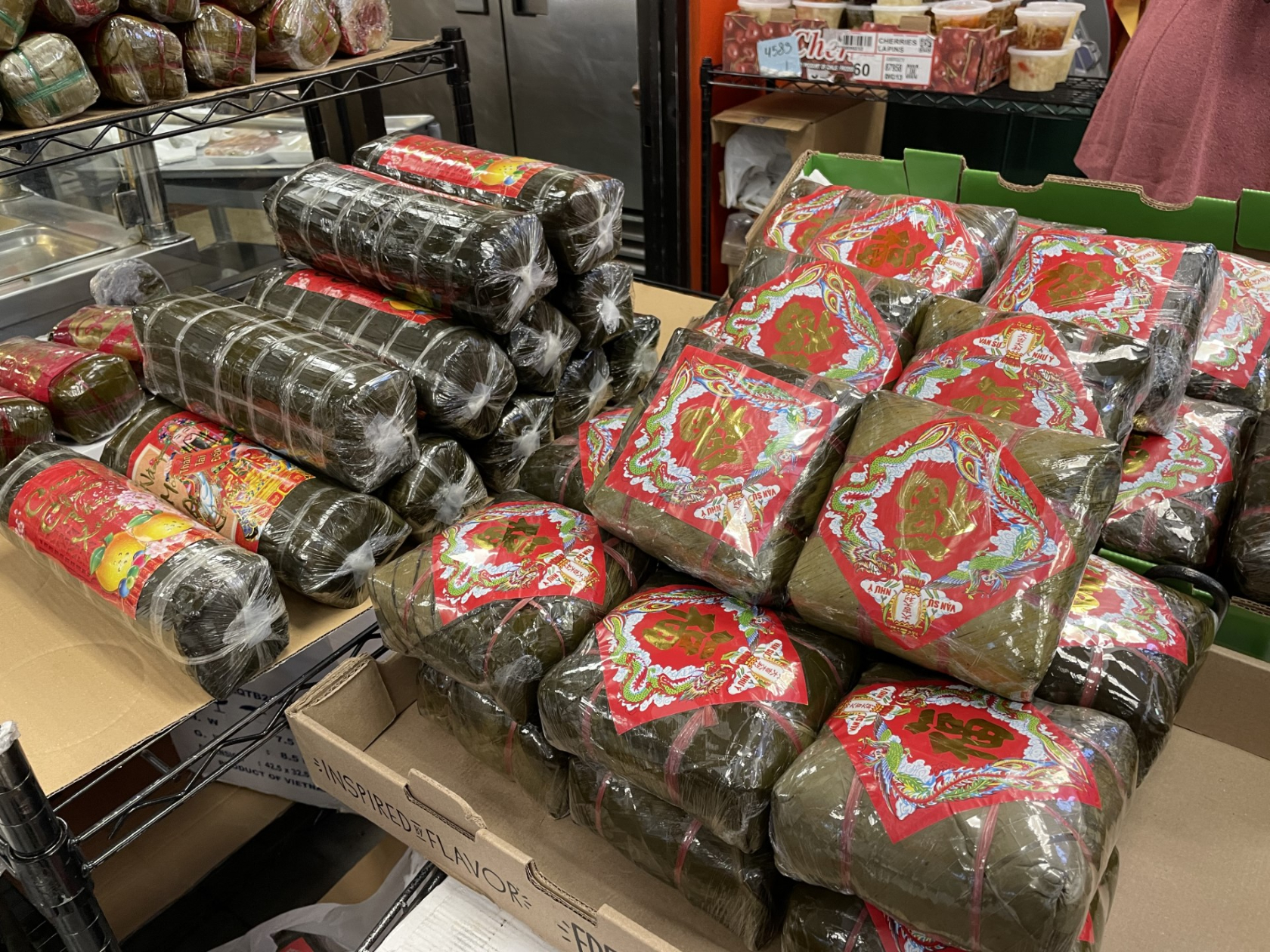
Bánh chưng or bánh tét: These two dishes have a long history as a dish for Tết, the Vietnamese name for the Lunar New Year holiday, since the 1600s B.C. According to legend, the region’s then-monarch had a competition among his sons for succession to the throne, and the winning son devised bánh chưng, a flat square of glutinous rice, mung bean, pork and other fillings steamed in banana leaves to represent the earth and bánh tét, which is cylindrical and represents the sky. These dishes are served during Tết as offerings to and in honor of ancestors.
Bánh chưng typically comes from North Vietnam, while bánh tét is eaten more in the south. When not eaten fresh, many will pan fry bánh chưng or tét until the exterior is crisp, and both are often accompanied by spicy pickled vegetables. Where to get it: Wandering around Eden Center in Falls Church during Tét will allow you to discover several spots offering both of these among other Tết accompaniments, including Saigon Restaurant, Cafe Trung Nguyen, and Phuoc Loc. The super friendly folks at Captain Saigon will walk you through their offerings including bánh tét with pork belly and bánh chưng with stir-fried pork. Huong Binh Bakery & Deli reliably offers meat-filled and meatless versions of bánh chưng. Or stop at vegetarian spot Dieu Huong for a rendition with beans and coconut milk.
Kho: This wide range of caramelized proteins are popular dishes for Tết in south Vietnam. The most common version features pork braised in coconut water with an abundance of sugar, and usually accompanied by hard-boiled eggs. Where to get it: In D.C., head to Viet Chopsticks near Van Ness for caramelized pork, pork ribs, chicken, catfish or salmon. Or make one big trip to Eden Center, and then stop by Huong Viet and get caramel pork or pork ribs.
Chả lụa: This Vietnamese sausage is popular year round, but like many Tết dishes are common as offerings to ancestors and stay good for several days. It is often consumed with other elements such as in bánh mì sandwiches or bún bò Huế, a spicy lemongrass-heavy noodle soup. Where to get it: Cha Lua Ngoc Hung makes fresh sausage every day.
Tết food events: Nue Vietnamese and Chasin’ Tails in Falls Church are hosting a “grand celebration” with special Year of the Dragon-inspired food and cocktails and prize giveaways. Not ready to commit for the evening? Both restaurants are also offering special menu items and cocktails for the entire month of February. (Nue and Chasin’ Tails; Feb. 8 from 5 p.m.-10 p.m.; $88)
Taiwanese/Malaysian/Singapore
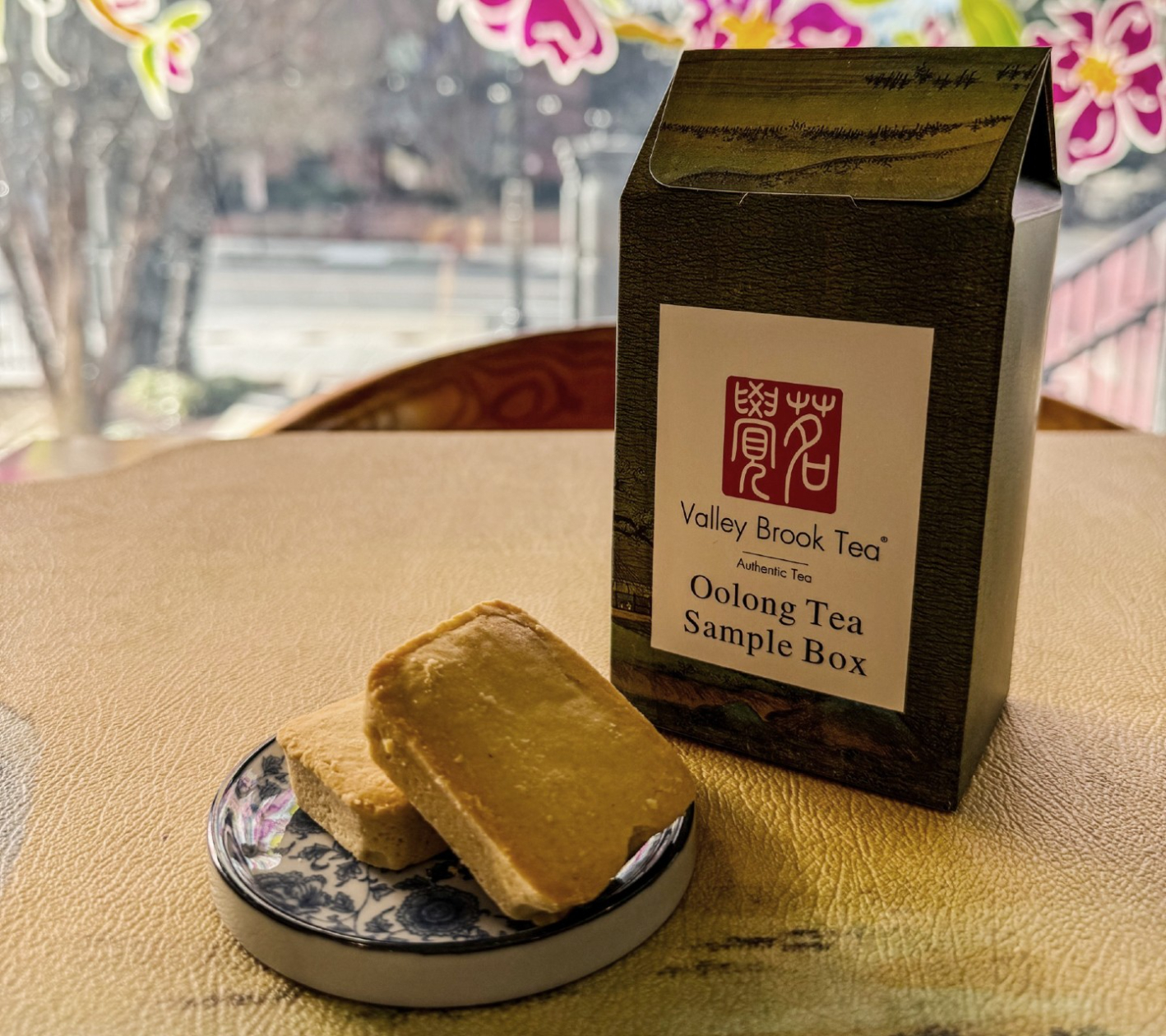
Pineapple cakes are a Taiwanese specialty, and a favorite souvenir for tourists — as one could deduce from the dozens of brands available in duty-free shops in those countries’ airports. Concentrated chunky pineapple jam fills a shortbread crust to make a slightly chewy center with a soft crumbly exterior. They take a special place during the Lunar New Year due to the Hokkien word for pineapple, ong lai, being a homophone for “prosperity arrives”, which makes it a popular New Year’s food in Asian countries with many Fujianese immigrants. Where to get it: Pineapple cakes can be found year round at Valley Brook Tea in Dupont Circle. For a modern spin, Chiboo Bakery‘s Chelsea Tan is including the flavor profile in her special Lunar New Year macaron collection, which also features a dragon-shaped macaron.
Events: Tan’s Chiboo Bakery and Toi Moi Bakery, a Northern Virginia bakery that makes Asian-influenced French patisserie items, are teaming up for a pop-up at Rice Market DC Feb. 10. Expect Chiboo’s macarons and Toi Moi baker Annie Pu’s Tanghulu (candied fruit) croissants, among other celebratory treats. (Rice Market DC; Feb. 10, 12 p.m.-4p.m.; Prices vary)
Chinese
Nian gao: This dish’s name directly translates to sticky cake, but is a homophone with “higher year” in Mandarin and Cantonese, implying an improvement upon the previous year. The rice cakecan take many forms: Savory applications include oval-shaped rice cakes in soups or as part of a stir fry. They can also take the form of sweet baked or steamed cakes, not dissimilar to butter mochi. Where to get it: Dumpling and Beyond in Glover Park, and Shanghai Lounge in Georgetown both serve the popular Shanghai-style nian gao stir fried with napa cabbage, wood ear mushrooms, and pork.
Steamed whole fish: This is a popular dish not just for Lunar New Year, but for any celebration. The Mandarin pronunciation for fish is a homophone for extra or abundance. All that matters is that the fish is whole, and most restaurants offer a few different sauce options. Just remember not to flip the fish over if you are crossing a river; the lore is that the fish will flip over your boat. Where to get it: Sichuan Pavilion in downtown D.C. offers a variety of sauce options for their whole steamed fish. Panda Gourmet in Northeast D.C. serves a spicy Shaanxi whole steamed fish. And if you are looking for a spot within Chinatown, head to Chinatown Express where you’ll have your choice of flounder, africa fish, or salt fish.
Longevity noodles: It’s hard to locate these noodles — which are longer than average and are typical for Lunar New Year and birthdays — on local menus. But you can still enjoy regular-length noodles for Lunar New Year given their representation of long life. Where to get it: Head to Da Hong Pao in Logan Circle, Wasai in Chinatown, or Northwest Chinese in College Park for freshly made noodles.
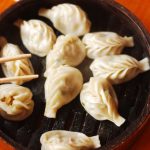
Jiaozi: This specific type of dumpling with thicker skin than a wonton is a popular Lunar New Year item for the similarity of its shape to gold ingots; its name is also a homophone for Ming dynasty-era currency. Where to get it: Head to the aforementioned and aptly named Dumpling and Beyond for nine different filling options or try the favorite thick-skinned, cigar-shaped jiaozi at A&J in Rockville.
Chinese New Year events: Peter Chang is hosting Lunar New Year events at two of his area restaurants. First are two banquet dinners at Chang Chang in Dupont, one on Feb. 8 and another on Feb. 22, both starting with cocktails. (Chang Chang; 6 p.m. on Feb. 8 and 6:30 p.m. Feb. 22; $88 per person) Note: if you see a preponderance of eights on menus this time of year it’s because it’s a lucky homophone for fortune. If you are looking for something in Maryland, check out the Temple Fair Bazaar at Q by Peter Chang in Bethesda, which features stations from each of Chang’s different restaurants. (Q by Peter Chang; Feb. 25, seatings 11 a.m.-1 p.m.; $48 for adults, discounts for children)
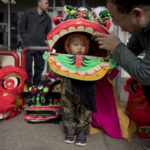
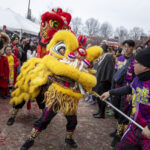
China Chilcano, the Peruvian-Chinese and Peruvian-Japanese restaurant from Chef José Andrés in Penn Quarter, is offering Lunar New Year specials, including whole fish and nian gao, for several days, and will host a lion dance on Saturday. (China Chilcano; Food specials from Feb. 8-11; Various prices; Lion dance: Feb. 10 at 6 p.m.; FREE for customers)
Tiger Fork in Shaw is celebrating Lunar New Year for more than a week with special menu items and lion dances. (Tiger Fork; Food specials, Feb. 9-18; Various prices, Lion dances, Feb. 10 at 7:30 p.m. and Feb. 17 at 5 p.m. and 7 p.m.; FREE for customers)
Estuary in the Conrad hotel downtown is hosting a Lunar New Year dinner with Chefs Ria Montes (Estuary) and Erik Bruner-Yang (Maketto) The five-course menu with cocktail and wine pairing is pricey, but proceeds going to Bruner-Yang’s Power of 10 initiative. (Estuary; Feb 6 at 6:30 p.m.; $237)
Queen’s English in Columbia Heights is offering poon choi, a Cantonese clay pot dish traditionally eaten at New Year’s in Hong Kong, on Feb. 10. The dish contains abalone, head-on shrimp, chicken, chinese sausage, tofu, daikon, napa cabbage, and shiitake mushrooms. It serves two, and sends you home with the clay pot it comes in — or a $20 gift card for the restaurant in lieu of the pot. Queen’s English; Feb. 10, $109, serves 2)
This story has been updated to remove a reference to a noodle-making class. The class occurred before this article published.