Elliot C. Williams
 Dee Dwyer
D.C. isn’t particularly known for its celebrities. But in Southeast D.C., there is at least one well-known superstar.
How else would you describe the legend that is Thomas Goode, a man better known as “Kokamoe,” who can’t make it down one city block without fans of all ages screaming his name, asking for a selfie, or requesting his upbeat, off-the-dome raps?
“If it’s not around me, I’m not rapping about it,” Kokamoe says one day during a visit to WAMU’s studios with his wife, Robin, during which he lays down an impromptu freestyle: “Woah now, thank God that I’m alive / On the station 8-8- and the point 5.”
Hear Kokamoe freestyle during a recent visit to the WAMU studios:
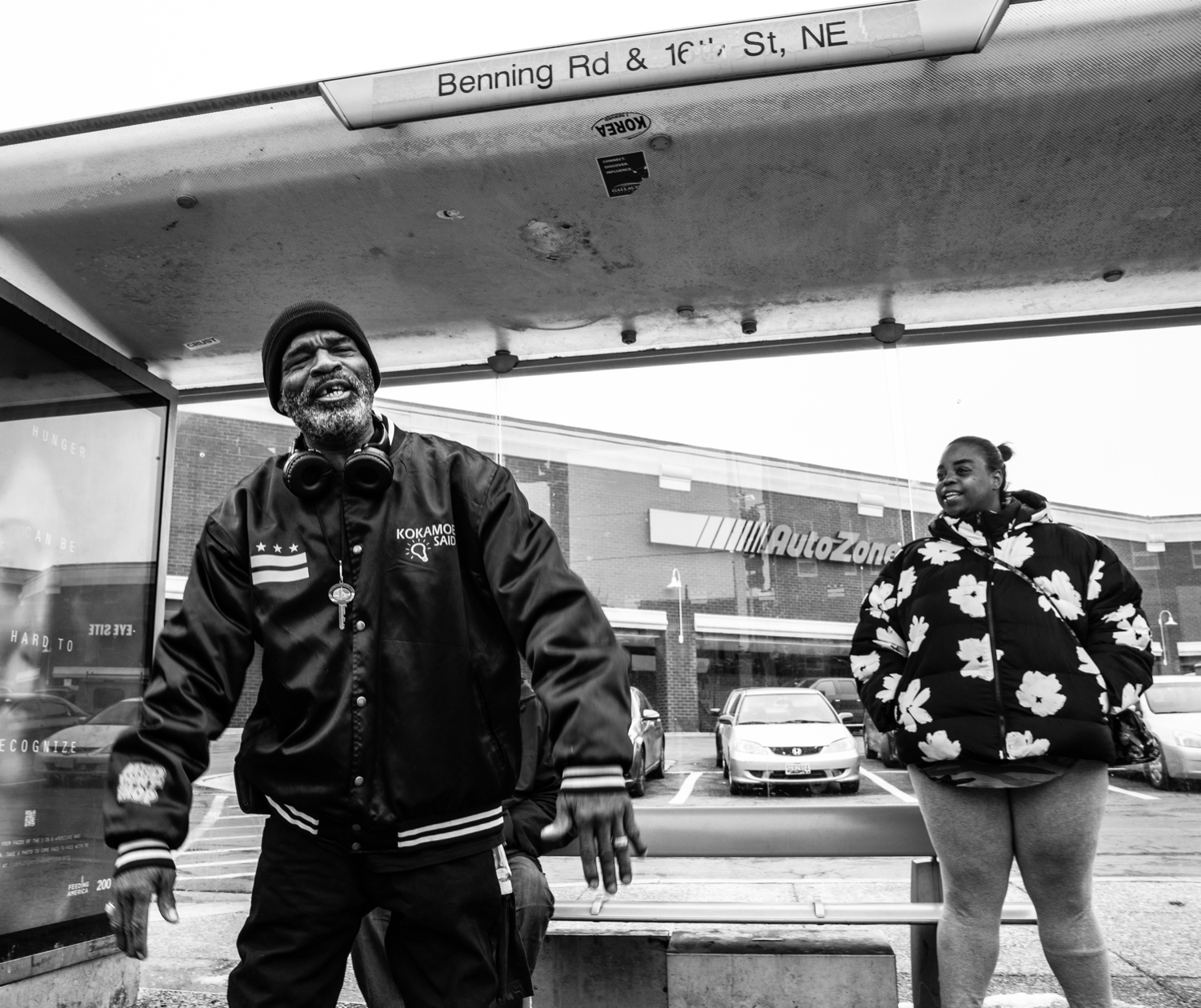
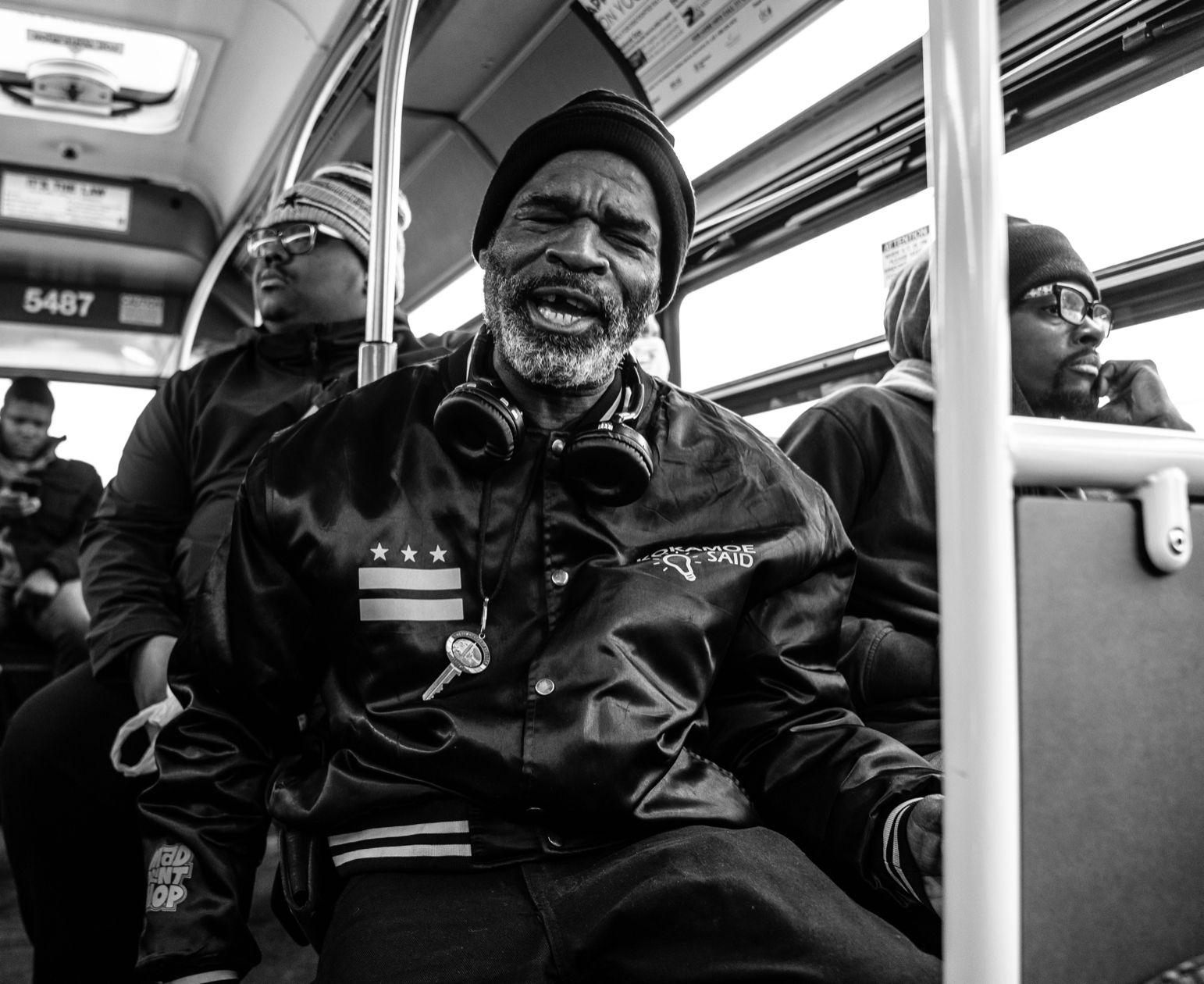
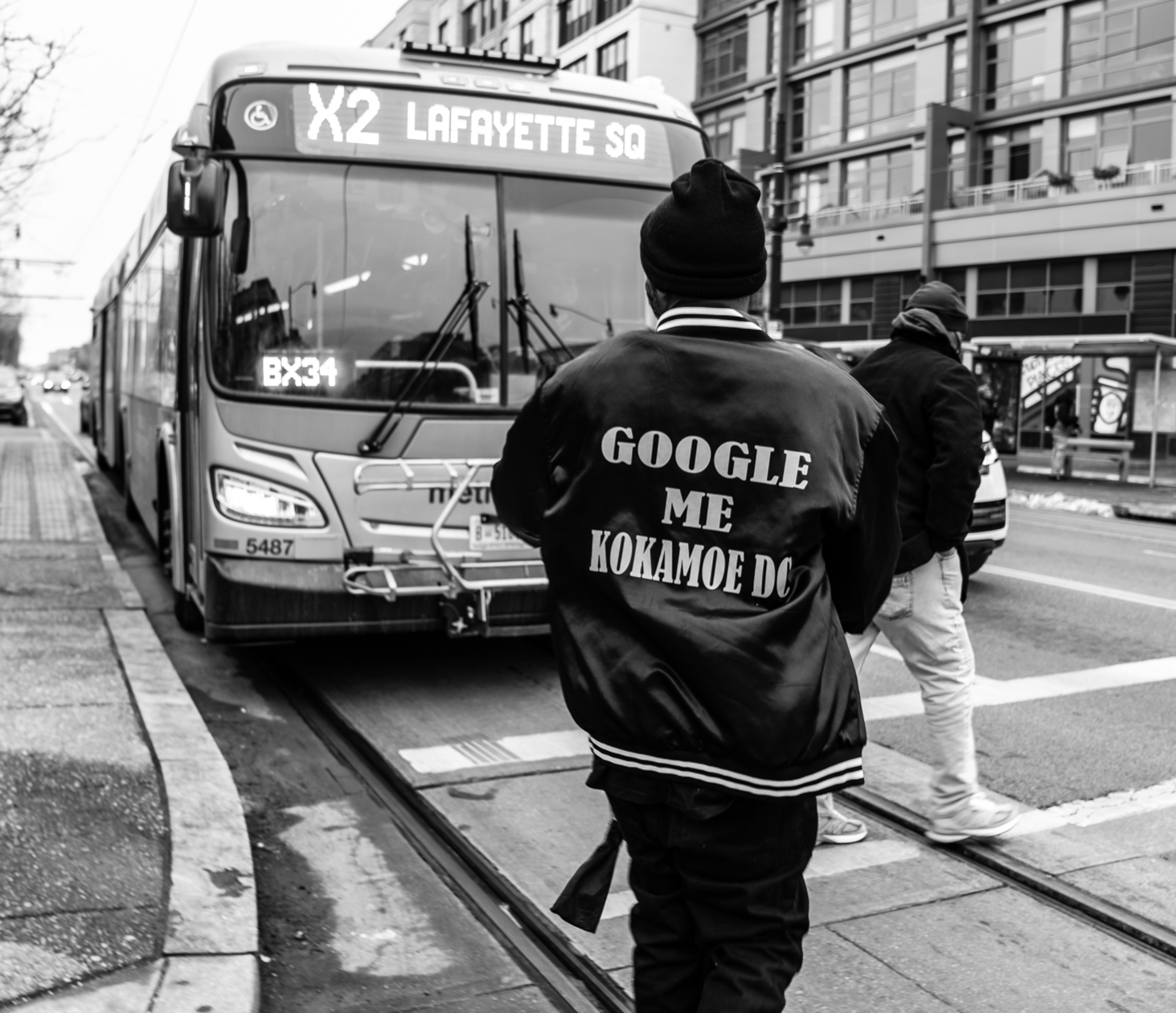
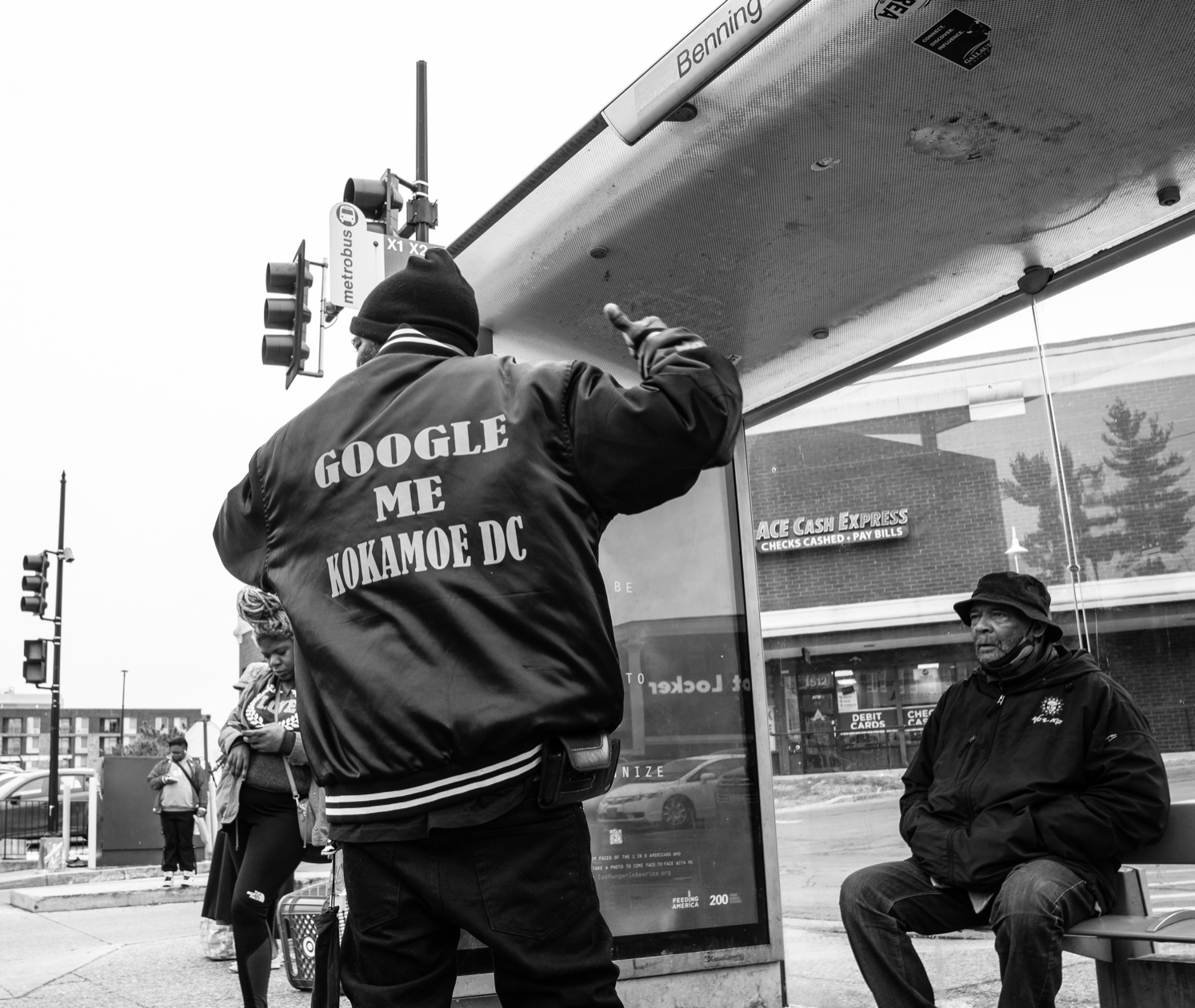
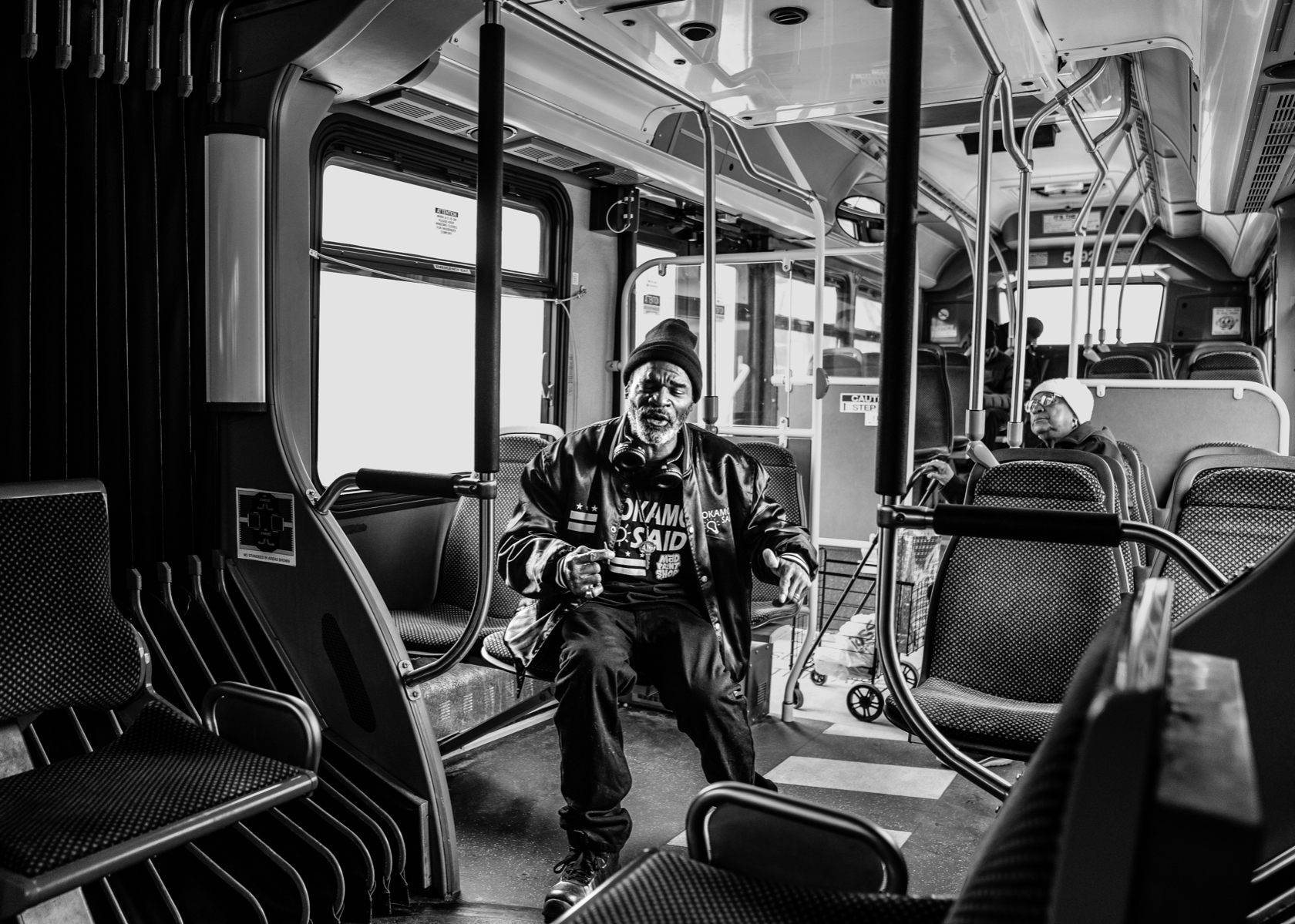
Kokamoe, now in his 50s, has been a fixture on the X2 Metrobus for roughly two decades. He started taking the bus because he got caught driving without a license, and he quickly learned how to deal with the groups of boisterous kids that rode it to school, he says. Pointing to each one, he’d threaten to “fry them up,” or make up a rap about them on the spot, if they said something disrespectful.
It didn’t take long before the kids were begging for Kokamoe to fry them up. Something is entrancing about Kokamoe’s old-school hip-hop wordplay: “I can do it without cussing,” he tells Voices of Wards 7 and 8.
A former D.C. drug dealer who has been shot and stabbed, Kokamoe has come a long way to heal his wounds, and he knows it. He reflects on the wisdom he wants to pass on to younger generations; specifically, he wants to start an institution training youth in the skills of electrical work, his profession. He wants them to be contractors like him and earn a living.
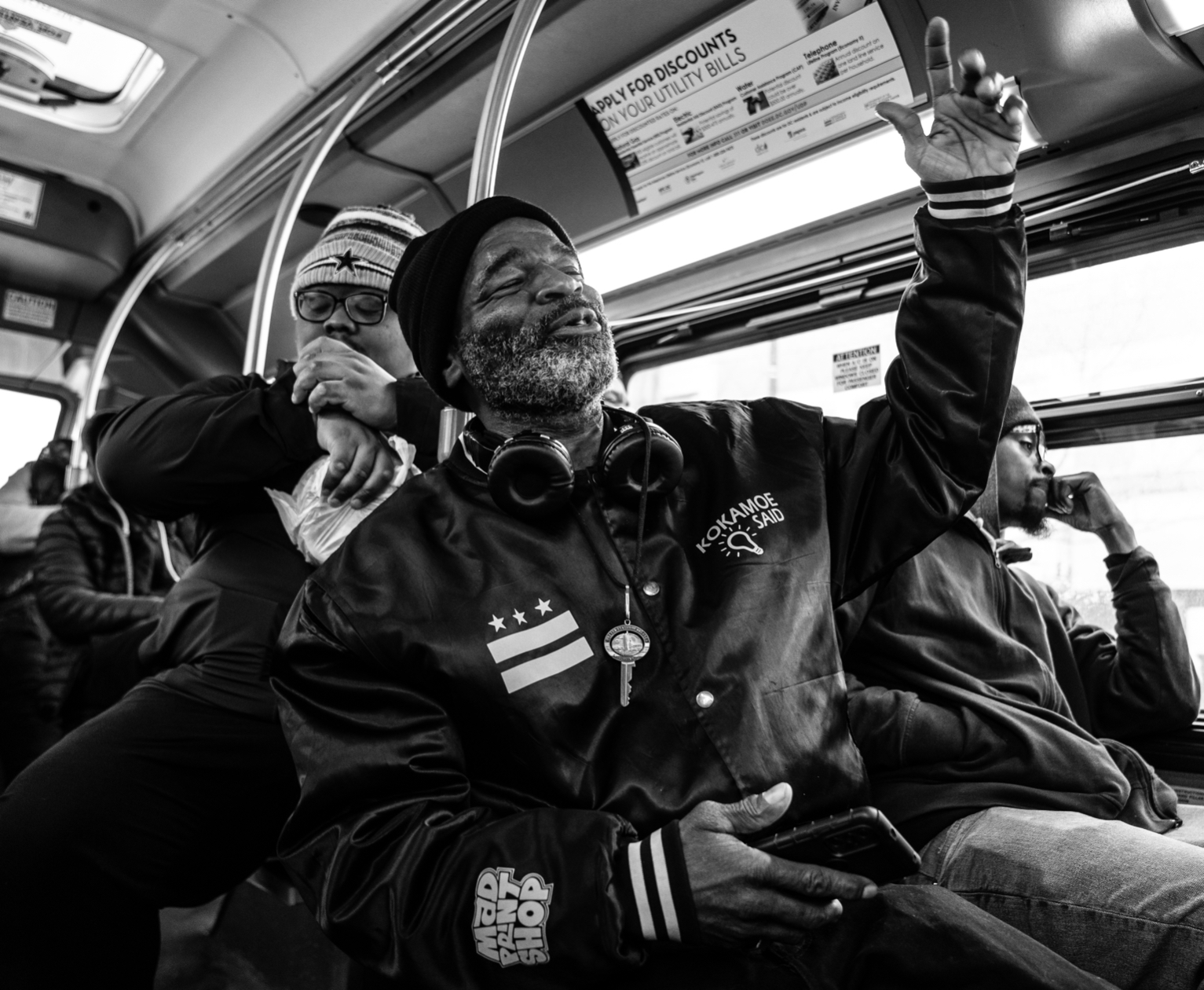
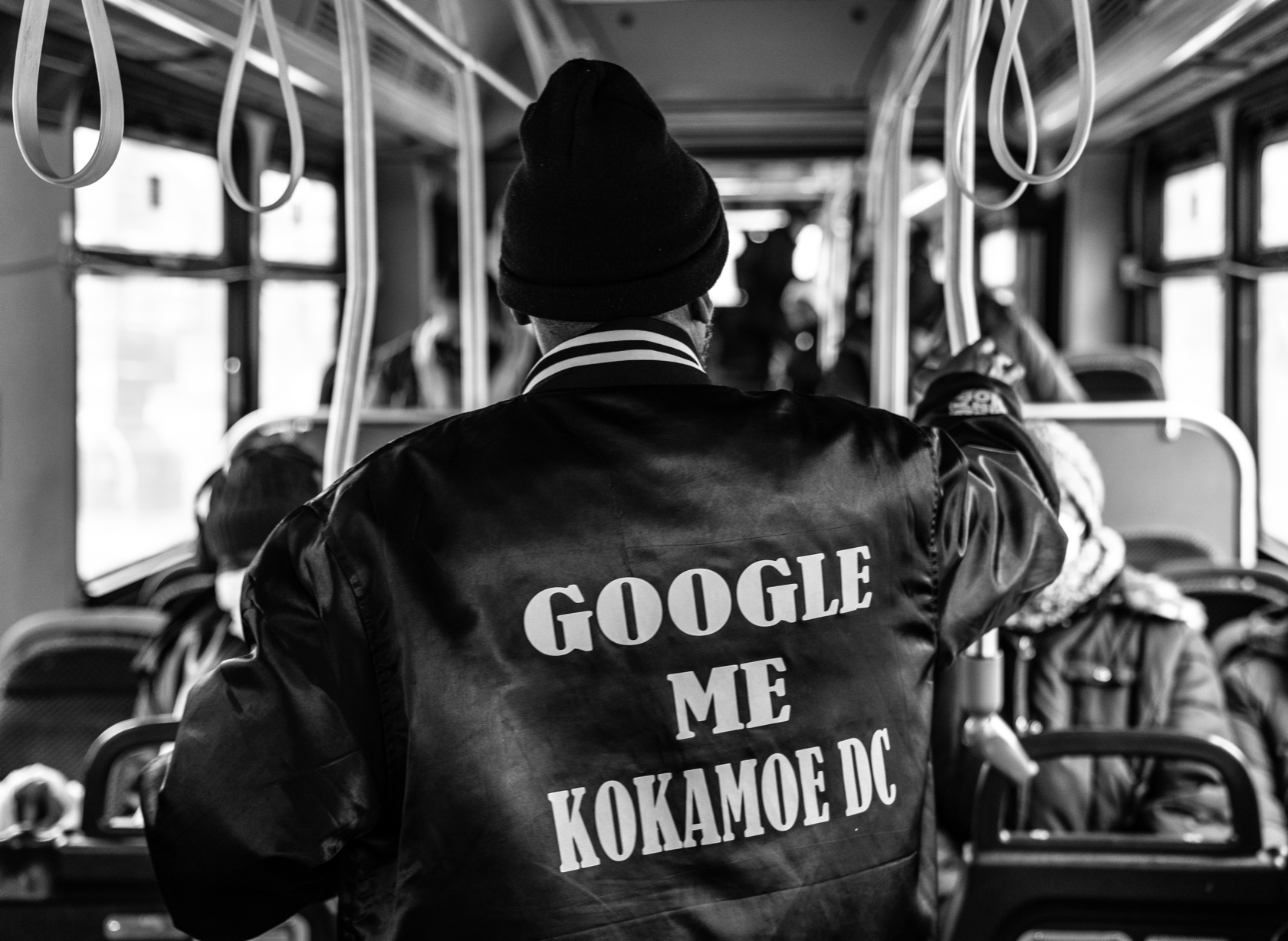
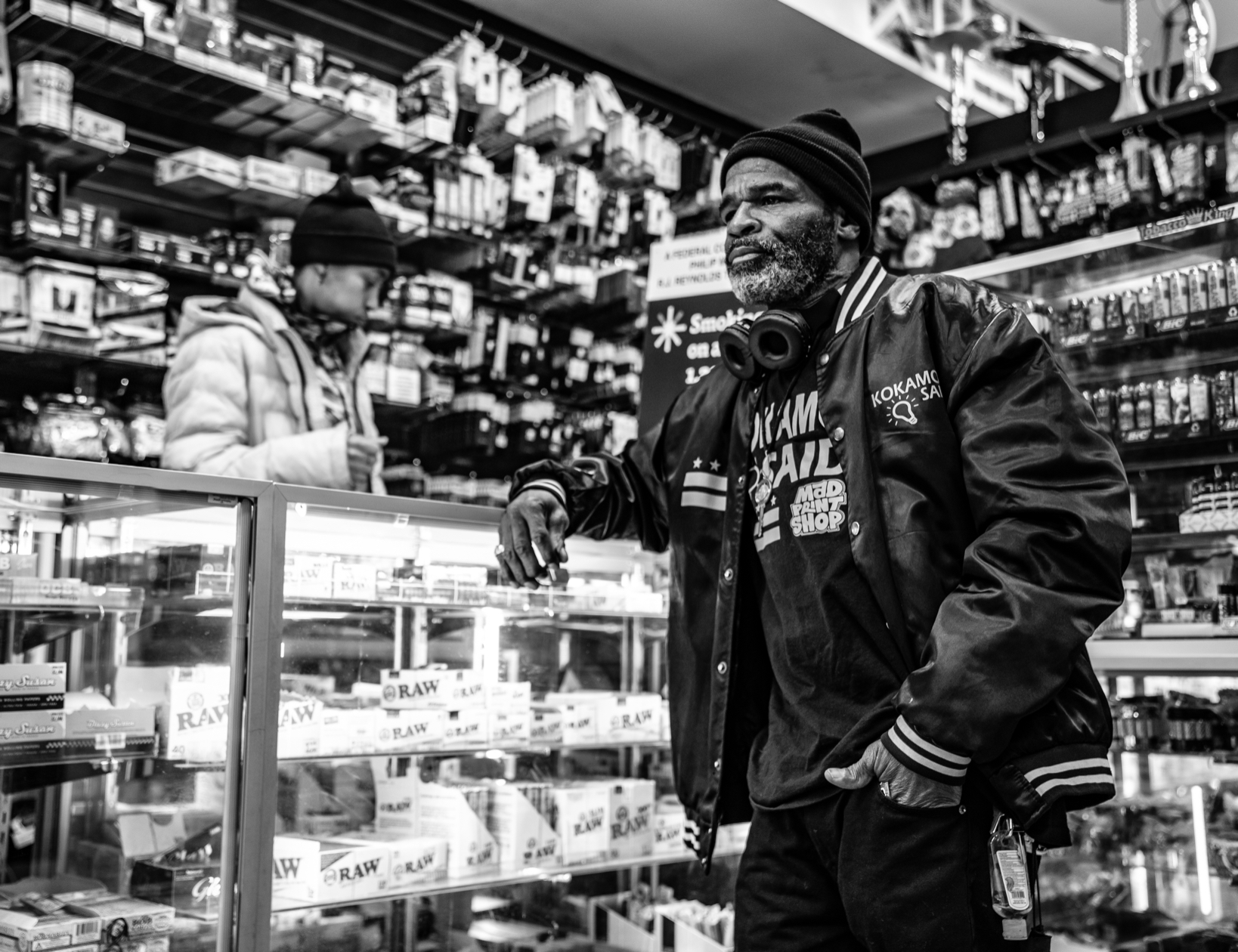
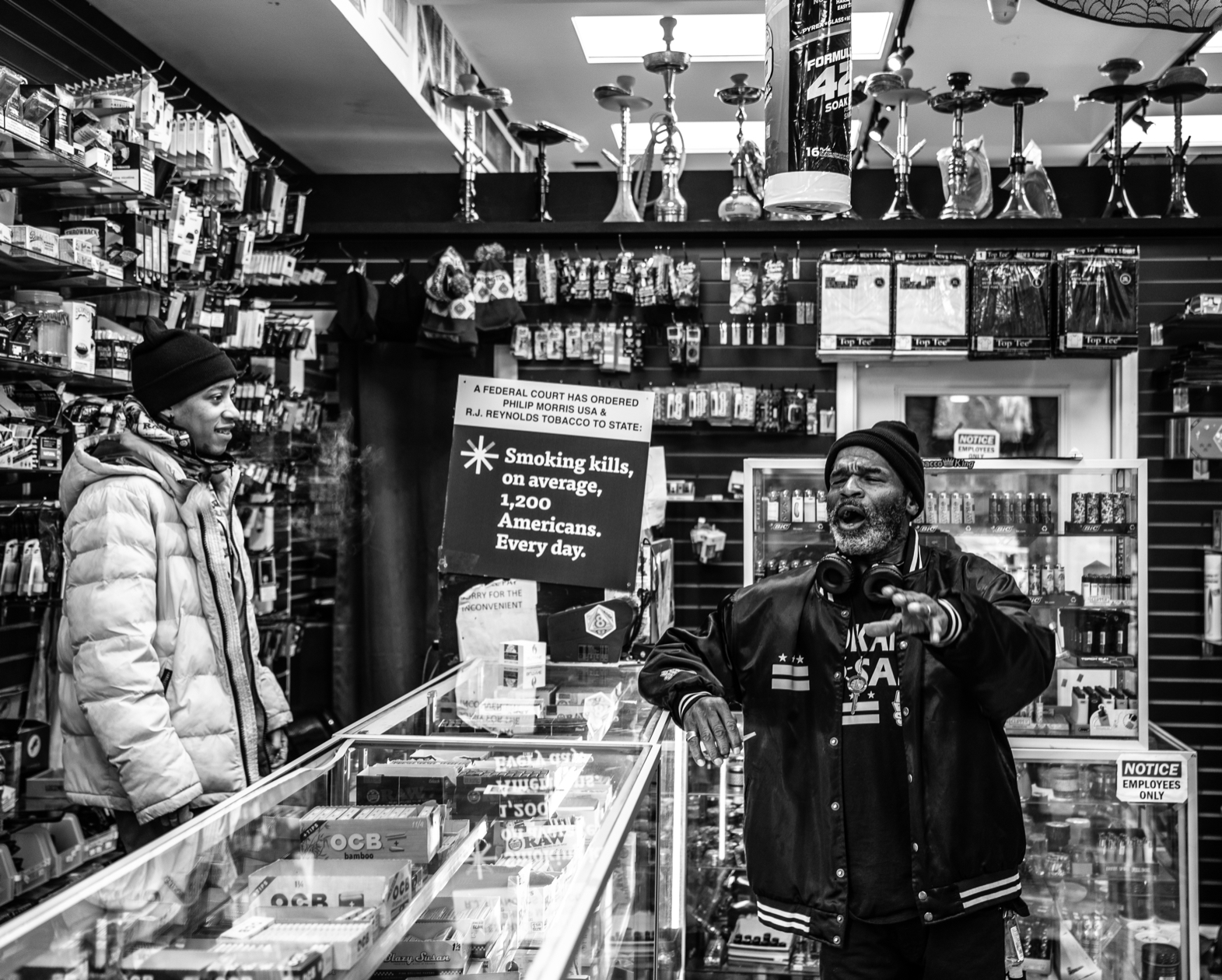
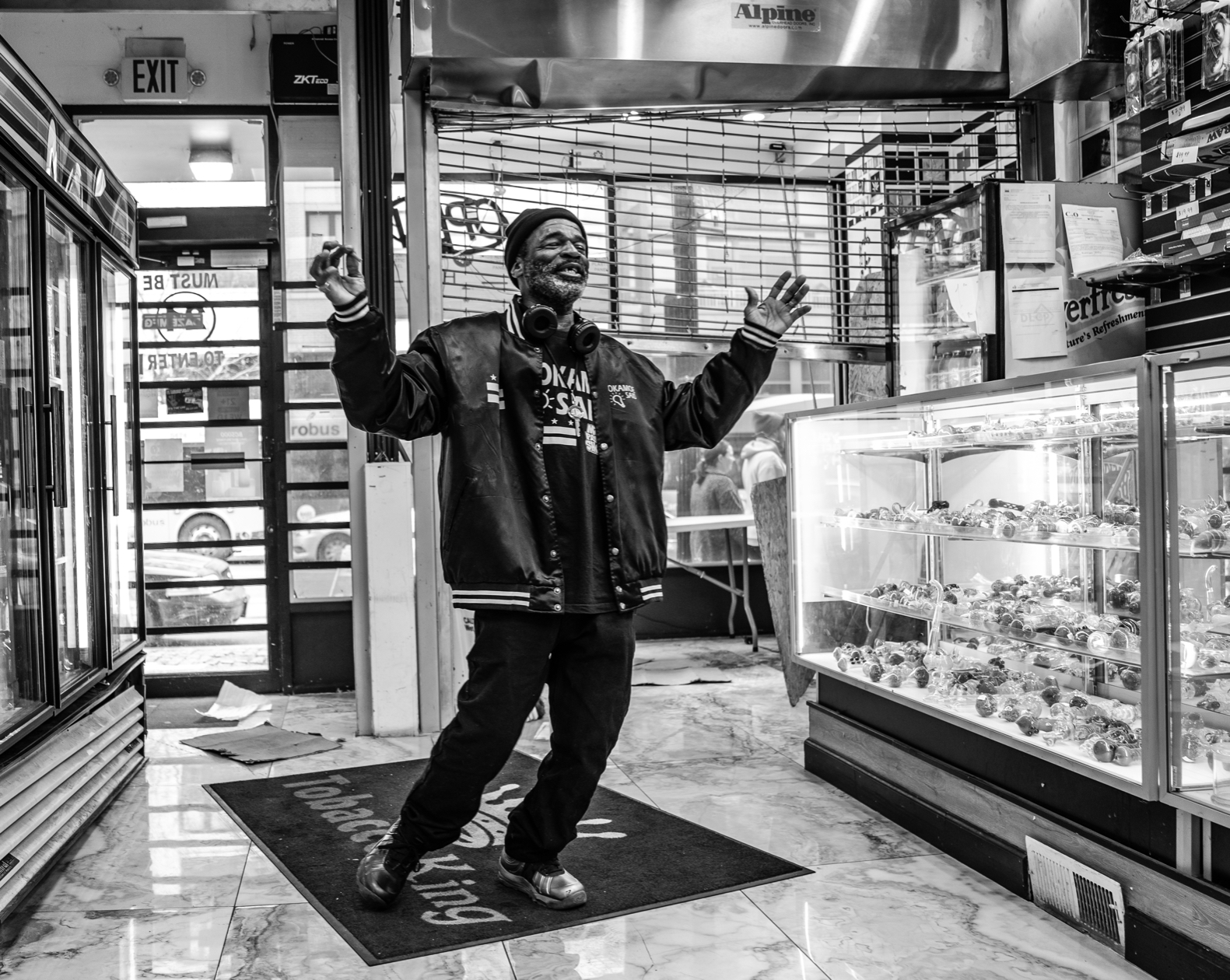
Wearing his own merchandise — a letterman jacket with “Google Me: Kokamoe DC” embroidered in all caps designed by Mad Print Shop — he explains his appeal.
“If you on the bus and you listening to me, you ain’t even thinking about your stop,” he says, grinning. “I mean, there’s been a couple of times I missed my own stop just to be rapping.”
It seems even Kokamoe can’t resist the infectiousness of his own sound.
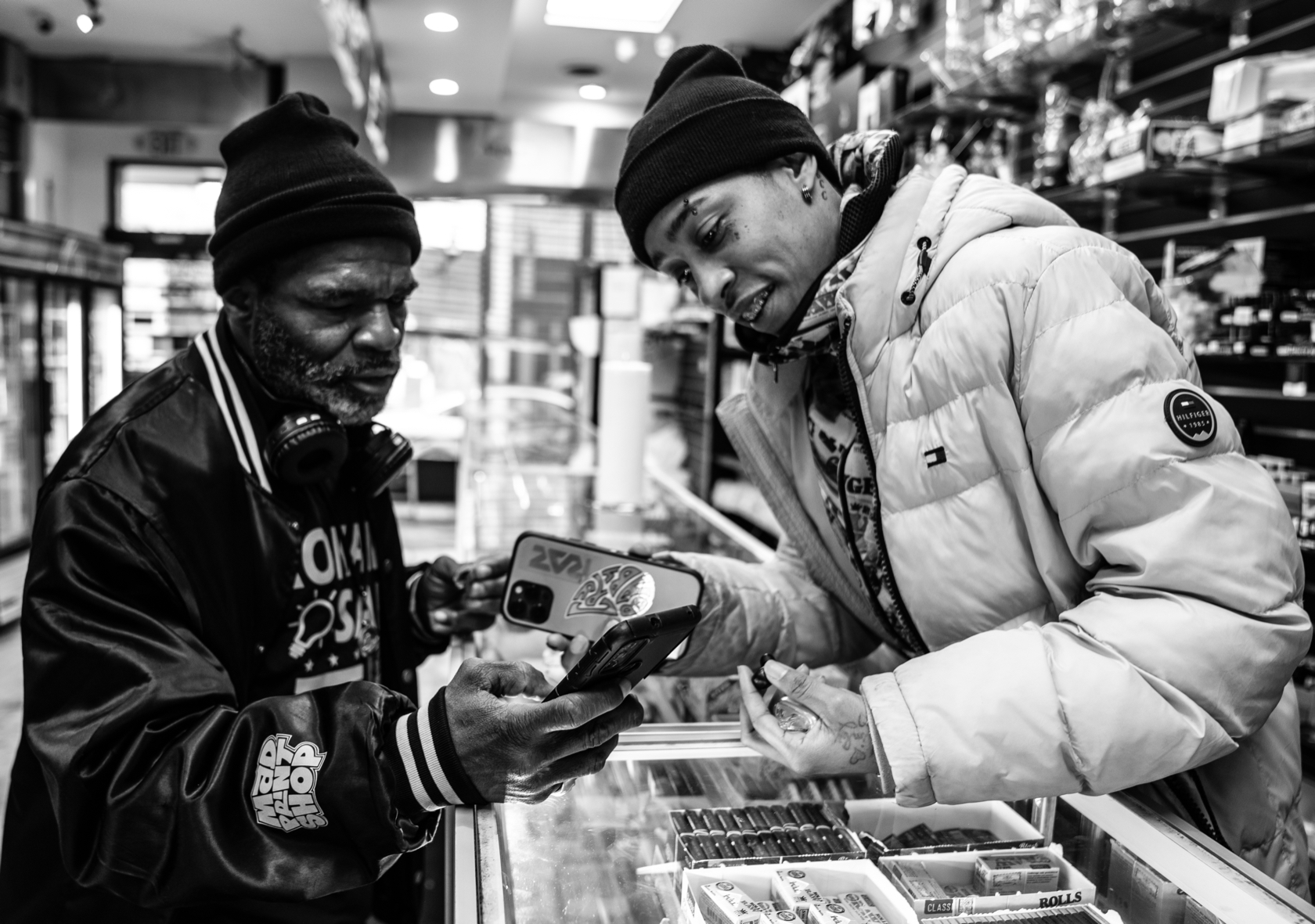
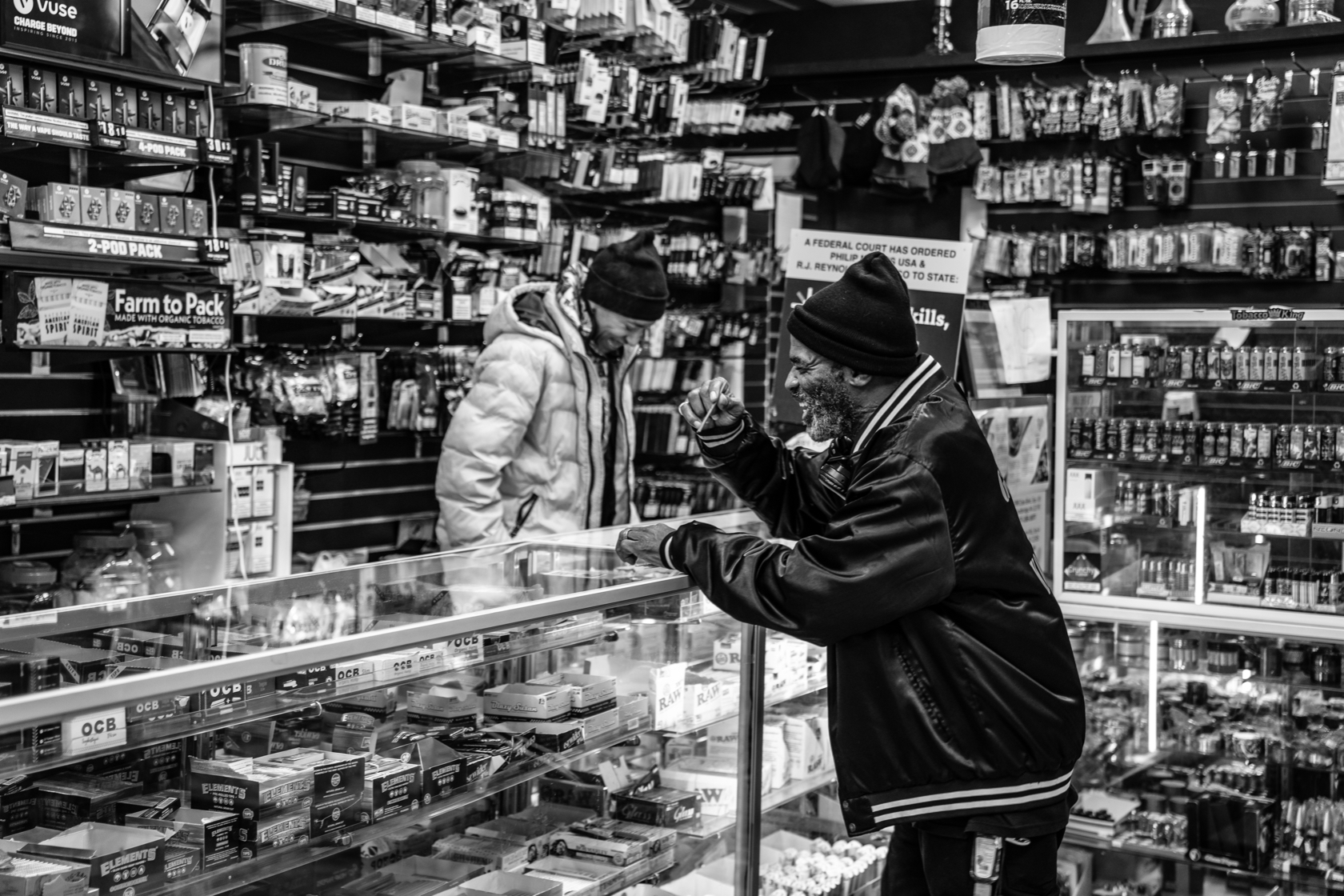
DCist/WAMU photojournalist Dee Dwyer spent a day riding the X2 bus with Kokomoe and captured him in action before they sat down for an interview about his life and creative inspiration.
Kokamoe’s responses have been lightly edited for length and clarity.
I’ve got two names, a given name, and a nickname. The given name is Thomas, last name “Goode” – not in Hollywood, but in my neighborhood. The nickname is Kokamoe, the reason why it’s called a nickname is because a person named Nick gave me that name (laughs).
How do you get the name Kokamoe?
Gambling (craps). ‘Little Joe from Kokomo,” that’s what everybody says when they’re gambling. The point four for ‘Little Joe, from Kokomo’. I always liked to gamble when I was younger and that was my favorite, point four. So I just kept the name “Little Joe from Kokomo”.
What do you do for a living?
I’m an electrical contractor. I turn on lights and put in plugs. That’s going to always have some type of living, especially with your own business. As with me being an electrical contractor, I want to give some of these youngins and some other people [the opportunity] to learn electrical skills. When they go on a job from my training, at least they’ll be able to know what they’re doing and understand what goes on in life.
I think I’ve been doing electrical work [for] 32 years.
Did you grow up seeing art in your community? How did we get here?
I don’t even know. I think that came from back when I would listen to my grandmother. She used to be singing in her church, church music! She would be singing at night in church, singing her church songs. But I’m just listening because most of the time I’m on punishment and not going out. But as I’m listening to her, I can hear some melody and tone, and then I could hear my mother and them downstairs, they’re cranking too.
So I’m indulged in all the music, but at the same time, I’m looking at their lifestyle like, damn, they’re good but they’re doing grown-up stuff. The main thing I took on was the singing. Somebody [could] be arguing, and next thing you know a song comes on, and they’re all back in rhythm.
Listen to a feature on Kokamoe that aired on Morning Edition/WAMU 88.5:
When did you first start rapping?
It was at Capitol Cab. They had a DJ outside, you know how they have those little functions at the park. Everybody had a function at the park. So this DJ, he was playing his oldies but goodies, everybody wasn’t up to tempo. [While there] I sang ‘the family affair‘ song.
Everybody loved for me to sing that song every time they came around, then they started to pay me for it. That’s how I started. When I was singing it, I can see [that] everybody was amazed because [it] looked like we were all a family.
What do you think it is about your message that makes people smile and be in rhythm?
The way I see it is, it’s the way it’s presented – because it can be said any type of way. But you can feel it, how a person says something.
Why the bus..how did you get there?
I used to drive without a license, I got my license taken a long time ago. I’ll never forget the time I had a customer with me, and it was hot, and the police pulled me over. They made us walk on the highway. So from that point on, I said ‘Man it ain’t even worth driving no more. Why…I keep getting caught up!’ So I started catching a bus.
So as I’m getting on the bus, the little kids just be so disrespectful and so ‘woo woo woo’. I go to the back and all the kids be loud. And I say, ‘You say something, I’ma fry you up. You say something I’ma fry you up. She say something I’ma fry her up. Any one of y’all say something and I’ma fry somebody up.’ And then they’re all quiet.
Once they’re quiet I decide to pick on them anyway and I start rapping. And as I start rapping…the best thing about it is I can rap without cussing. And I was rapping about everything they had on, everything from each one of them. And they used to love that. They used to get on the bus and say ‘Kokomoe fry me up, fry me up.’
They used to love that. They understood my terminology. The kids started being late for school. Just so they would go to school, I’d get off the bus where their school was.
Then the kids were being late for school, that’s what really made them [teachers] mad. I’d get off the bus where their school was [so they can go in]. A lot of those kids that have graduated have become rappers. A lot of them have done things off my influence, they’ll tell you.
When was that moment that you noticed you started receiving love in the city? Because as an artist you know it takes time to build up.
I never really paid attention. It took a couple of people. [They] like, ‘Come on Kokamoe, you got to come to reality, man.’ Not just one person, not just two people, not ten people, but if 50 people come up and tell you you’re the best out here, you got to understand and take it. I’m like, ‘No, I’m not the best. I’m one of the best because there’s plenty out here.’ I don’t like to say the best because ain’t nobody better than each other. Everybody is good in each way.
People can be having a bad day, and look at Kokamoe and their whole day can change. That’s what I like, I thank God for that. Just to be able to put a smile on anybody’s face at any given time, that’s a blessing.
Have you faced any challenges while rapping on the bus?
When a bus drivers says that [stop rapping], do you know the people get to [saying] ‘Man, bus driver what’s wrong with you? You having a bad day?’ Aww man, they go, ‘Bus driver, don’t you just supposed to let the wheels go round and round?’
When they (bus drivers) are in the garage training, they’ll already tell them about me. They say ‘I’m telling ya’ll, this guy named Kokamoe get in the bus that be rapping.’ And then they’ll say [to me], ‘We already heard about you.’ Man, that shit be funny.
Your music is very positive, but you’ve been through a lot of negative things. Tell us a bit about what you’ve had to overcome.
Shit, I don’t even know. Everything I’ve overcome… I can’t even remember. The history of the drugs, that wasn’t nothing but the K2. Once I got on that drug, I finally realized that ain’t nobody in this world perfect. I said, ‘Aww man I can’t believe this.’ Now I know how drug addicts and alcoholics feel. Even the people that do not do drugs, they’re addicted to something… eating, money, sex, anything can be an addiction. My addiction is just my addiction.
Then alcohol… everybody goes straight to the bar. Only time I really drink now is if I’m in the bar. I’ll just grab one drink – I don’t even really need to do that. I realize that anybody can get off something if they really want to. It’s just all choice. That’s the two addictions I have. As you get older you grow out of stuff like that.
What are your hopes for the future?
I want somebody to make a whole collage of all my stuff, and let it play out. This dude’s son played my documentary for his class during Black History Month. He said that’s my role model, Kokamoe. That’s what I want to see. I want to be able to teach a lot of these youngins this electrical work so we can build something around here. All the government’s gotta do is participate in giving us these abandonment jonts (buildings). I can take the kids and we’ll just go there and build it up. That’s all ya’ll gotta do is get the kids to come…they’ll come ’cause I’ll teach them right. After they master that they can go somewhere else, I can sign [them up] for their apprentice license and all that.
Some of these rappers rapping, they say ‘Kokamoe we learn from you.’ I’m listening to their music, it don’t sound like it, but that’s just their sound. They learn the rap techniques from me. That’s all I want, and that’s all I’ve been seeing. I thank God for the peace of mind. In the future that’s what I want, and it’s on it’s way.