
 Jenny Gathright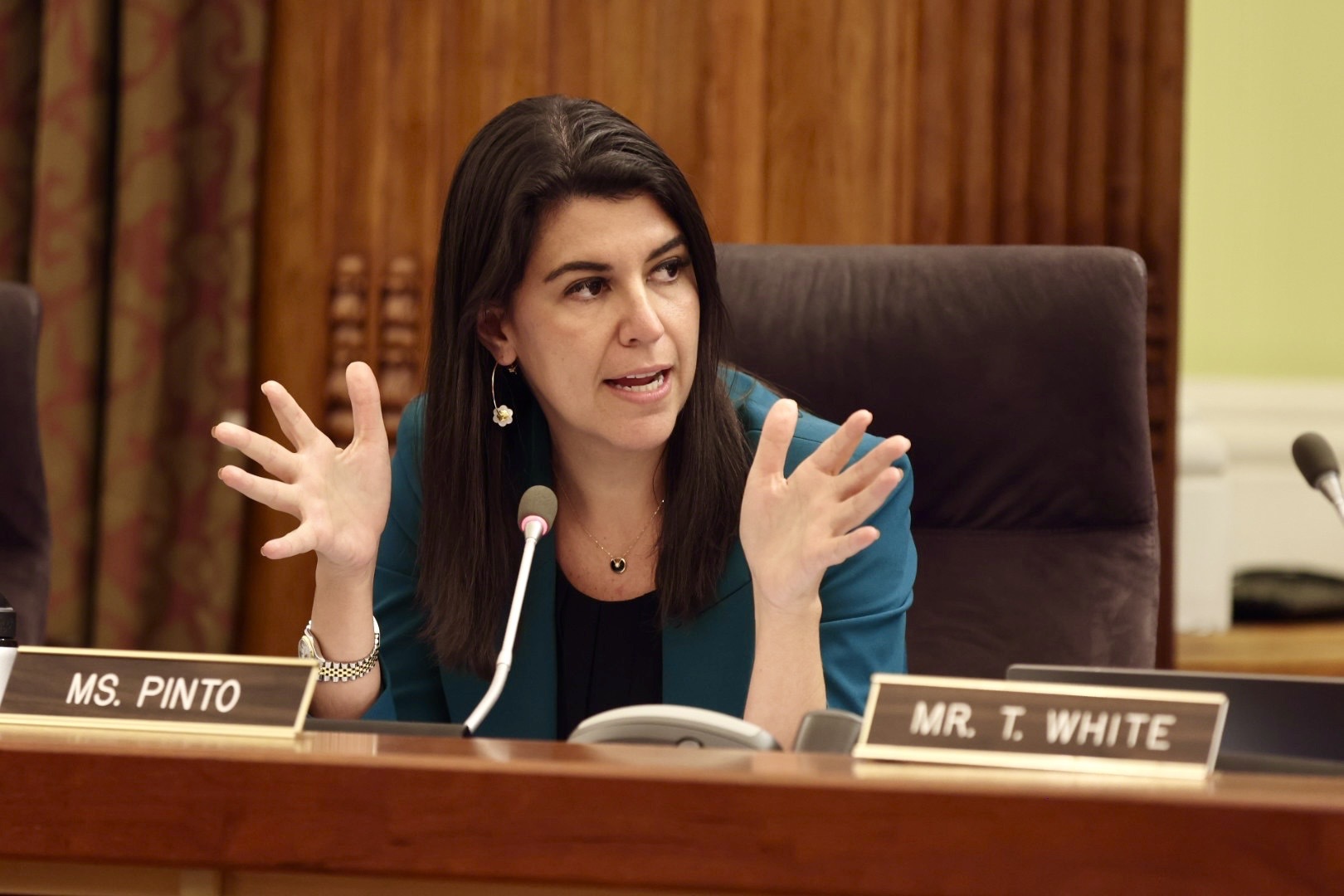
Earlier this month, the D.C. Council cast its first of two votes on an omnibus public safety bill with about 100 provisions. The bill, called “Secure DC,” is a combination of provisions from a dozen different crime bills the council has previously considered, with some new ones tacked on. Secure DC is currently scheduled for a second vote before the D.C. Council on March 5, where councilmembers are likely to propose additional amendments before ultimately passing it and sending it on to D.C. Mayor Muriel Bowser for her approval.
Because the bill is so long — and because it tackles a variety of policy issues ranging from gun penalties to food quality at the D.C. Jail — you’d be forgiven if you were somewhat confused about its contents. So we solicited your Secure DC questions, and put the most frequently asked ones (along with their answers) together in one place for you.
If you have a question we didn’t answer here, email me at jgathrig@wamu.org and we’ll consider adding your question to this post in an update!
What is Secure DC? Can you give a quick overview of the bill?
This bill has 100 provisions, so there would be nothing quick about an overview. But here’s a non-exhaustive list of what the bill does, just to show how wide-ranging it is:
- Ups the penalties for certain gun possession offenses, and creates new gun offenses like “endangerment with a firearm,” which criminalizes firing a gun in public
- Broadens the definition of carjacking to include cases where a person might be a bit farther away from a person’s car, responding to concerns from prosecutors that the current definition of carjacking is being narrowly interpreted by the courts
- Requires several public safety-related government agencies to share more data about the outcomes of diversion programs, 911 errors, pretrial supervision, and more, either with the public or the Mayor and D.C. Council
- Amends or relaxes certain police reforms passed by the D.C. Council in recent years, including vehicular pursuit and neck restraint policies
- Expands a rebate program for residents who purchase private security cameras for their homes
- Tilts the law to favor more pretrial detention for adults and children accused of crimes categorized as violent or dangerous
- Creates a felony charge for strangulation
- Raises the age of child victims for which people convicted of sexual abuse face additional criminal penalties
- Creates a new “organized retail theft” offense for planning/directing theft from stores
- Ups the potential penalties for thefts of $500 worth of property or more
- Re-establishes a prohibition on wearing masks under certain circumstances (like for the purpose of concealing your identity while committing a crime or intimidating someone)
- Delays the implementation of a law that would ban cashless businesses
- Allows the police chief to designate certain areas “drug free zones”
- Issues guidance for more nutrient-dense food at the D.C. Jail, and creates a hospitality vocational training program for people detained at the jail
- Creates a Director of Emerging Adult Services to work on improving city services like education programs, workforce development, housing, and health care for justice-involved young people aged 18-24
- Mandates that both law enforcement and the Deputy Mayor for Public Safety and Justice hold meetings to review recent shootings and target services/interventions to people at risk of being shot (DMPSJ says these meetings are already happening)
- Allows police to force people who evade Metro fare to provide their true name and address, or be subject to a fine.
- Allows the agency that supervises people on probation to impose GPS monitoring on those who violate their conditions of release without an order from the court or the parole commission (The agency has been doing this, but the D.C. Court of Appeals recently ruled that it was unlawful – which means that without this explicitly written into D.C. law, hundreds of people would be taken off electronic monitoring)
To read the full bill and all of the amendments the council has passed, go to the D.C. Council’s website here.
Can you clarify what the latest version of the bill says about collecting DNA?
A previous version of Secure DC changed the rules for when law enforcement can collect DNA samples from people accused of crimes and enter them into a national database. It would have allowed law enforcement to collect a person’s DNA at the time they are arrested. Then, it would allow law enforcement to analyze it and enter it into a national database either once the person has been charged with certain crimes or once a judge has determined that law enforcement had probable cause to arrest them. This provision was struck by an amendment before the council’s first vote on the bill. As of now, Secure DC won’t change the laws on DNA collection.
Under current D.C. law, law enforcement can collect DNA samples from any person convicted of a felony or certain misdemeanor sexual abuse offenses and then enter them into an FBI database called “CODIS,” so that law enforcement agencies across the country can have access to the samples as they investigate crimes. Prosecutors can also obtain warrants for DNA samples from defendants during the course of a pending case.
Which criminal penalties are being changed? Does Secure DC create new mandatory minimums?
In addition to changing penalties for some retail theft offenses, Secure DC would increase penalties for several gun possession offenses –including possession of a machine gun or “ghost gun” (the term commonly used to refer to a gun that people assemble at home, which doesn’t have a serial number and is, therefore, less traceable to law enforcement).
Secure DC would also create new gun offenses – like an offense for endangerment with a firearm (shooting a gun in public), an offense for discarding firearms and ammunition on someone else’s property, and an offense for possessing a stolen gun or a gun with a tampered serial number.
The bill also creates penalty enhancements for violent or dangerous crimes in certain locations – like Department of Parks and Recreation facilities – and crimes against certain groups of people, including vulnerable adults, Metro passengers and employees, and rideshare, taxicab, and food delivery drivers.
Secure DC doesn’t create any new mandatory minimums, but there are two new statutory minimums in the bill. The two are slightly different: under a mandatory minimum, people must serve the entire length of the sentence in prison – but a statutory minimum allows judges to release someone to probation, for example. The new statutory minimums are for possessing a firearm with an obliterated, removed, or altered serial number (people convicted of this crime would be subject to “no less than 2 years nor more than 10 years” of incarceration), and for possessing a firearm with intent to sell it (also “no less than 2 years nor more than 10 years”).
How would the bill change the threshold for felony theft, and what is the intention behind this change?
Under current D.C. law, the definition of “first-degree theft” is stealing property that has a value of $1,000 or more. It’s punishable by either a fine or a maximum of 10 years in prison. People who commit any kind of theft after being previously convicted of theft two or more times are subject to harsher penalties — including a mandatory minimum of one year in prison and a maximum of 15 years in prison.
Secure DC would make the theft laws even stricter, by lowering the threshold for first-degree theft from $1,000 to $500. So under the law, people convicted of stealing $500 worth of property could be subject to that maximum 10-year sentence. Secure DC would also make it a felony to commit theft two or more times within six months if the aggregate value of the stolen property is $500 or more.
The rationale behind the change is, essentially, that police will be more likely to arrest people – and prosecutors will be more likely to charge people – if they are more likely to receive some kind of punishment. Ward 2 Councilmember and Judiciary Committee chair Brooke Pinto, who is spearheading Secure DC, has said in hearings that she’s repeatedly heard frustration from police officers and residents that people who steal are often “no-papered,” which means prosecutors don’t pursue charges against them. (The U.S. Attorney’s Office might disagree with this characterization as of late; they recently released a spate of press releases announcing indictments of people for enhanced second-degree theft, which could potentially subject them to that mandatory minimum of one year in prison.)
Critics of lowering the theft threshold argue it introduces disproportionate penalties, making an iPhone thief potentially subject to harsher penalties than someone convicted of misdemeanor sexual abuse.
There’s been a lot of information going around about the face covering provisions of the bill. What does this section of the bill do? What would it mean for people who wear masks to protect against illness or people who wear religious face coverings?
Secure DC would make it illegal for any person over the age of 16 to wear a mask or any other kind of accessory that covers a substantial portion of their face in public – but only under circumstances. Those are as follows:
- You can’t wear a mask to hide your identity while you commit a crime or engage in conduct prohibited by civil law
- You can’t wear a mask if your intent is to deprive any person or class of people equal protection under the law
- You can’t wear a mask to threaten, intimidate, abuse, or harass someone else
An earlier version of Secure DC also made it illegal to wear a face covering with the intent of causing another person to “fear for [their] physical safety.” That piece was struck in an amendment proposed by At-Large Councilmember Christina Henderson, who worried it was overly broad and subjective.
Pinto has said the rationale behind this provision is to give officers more discretion to stop people who they believe are wearing masks with the intent of committing a crime. Pinto’s office says the law is structured in a way that prioritizes stopping the behavior, rather than immediately arresting someone for it.
Some advocates say the language of the bill is still overly broad. The provision that criminalizes intimidating someone else while wearing a mask, for example, potentially makes it illegal to yell at someone while wearing a mask.
What new provisions roll back the measures put in place after George Floyd’s death?
The bill changes reforms in several major areas:
Release of disciplinary records
Secure DC changes a law the D.C. Council passed that would allow the public release of police disciplinary records (the law was not funded in the city budget, so it has not yet gone into effect). Under the not-yet-funded police reform law, the city would have been required to release information about officers’ medical histories and their use of counseling programs – but only if the information was a material issue in a complaint against them, or if they were mandated to go to counseling through the disciplinary process. In contrast, Secure DC would explicitly allow the city to redact all of an officer’s medical or counseling records.
Neck restraints
Secure DC would change the city’s laws governing police neck restraints. Under current law, a “neck restraint” is defined as any time a police officer applies pressure against a person’s neck “with the purpose, intent, or effect of controlling or restricting the person’s movement, blood flow, or breathing.”
The latest version of Secure DC would get rid of the word “movement” and add an exception for times when an officer is acting in good faith to provide someone with medical care. So, the text of Secure DC defines a “neck restraint” as any time an officer applies pressure against a person’s neck “with the purpose, intent, or effect of controlling or restricting the person’s airway, blood flow, or breathing, except in cases where the law enforcement officer is acting in good faith to provide medical care or treatment, such as by providing cardiopulmonary resuscitation.”
Proponents of the bill say it addresses an issue that’s come up in MPD, where officers are facing disciplinary action in cases where they were genuinely trying to help a person or protect them from themselves, or where their contact with a person’s neck was accidental. Some opponents, however, worry that rolling back the restriction on controlling a person’s movement goes too far.
Vehicular pursuits
D.C.’s police department has a strict policy on police vehicular pursuits, in recognition of the danger they present to the public in a crowded city. There is a history of fatal police pursuits in the District; in one recent case, a D.C. police officer was found guilty of second-degree murder for chasing 20-year-old Karon Hylton-Brown in his police cruiser; in the course of the chase, Hylton-Brown drove his scooter out of an alley and was hit by an oncoming vehicle.
As part of a package of police reforms, the council made it illegal for police to engage in vehicular pursuits unless they have exhausted all other options and they believe that a fleeing suspect has a) committed or attempted to commit a crime of violence or b) poses an immediate threat of death or serious bodily injury to another person. The law also says police can only pursue someone in a vehicle if the chase isn’t likely to cause death or serious bodily injury to any person.
Under emergency legislation the council passed over the summer, the policy was relaxed. Police pursuits are still limited to cases where it’s the only remaining option for police, and where a fleeing suspect has committed or attempted to commit a crime of violence, but they are now allowed to chase someone who presents an “imminent,” not “immediate” threat of death or serious bodily injury to another person. Under the emergency legislation, police are also no longer required to consider whether the chase would seriously injure the suspect. They can chase someone, the law says, if it is “under the totality of circumstances, not likely to cause death or serious bodily injury to any person, other than to the fleeing suspect or suspects.”
Secure DC adopts the same language as the emergency legislation.
Body-worn cameras
Secure DC reverses a law that prohibits officers from reviewing their body-worn camera footage before writing police reports, though it will still prohibit officers from reviewing their cameras in cases where they killed someone or used serious force against them.
Supporters of the change say that it will allow police to write the most accurate possible reports because the footage is better than an officer’s recollection. Policing experts at the Police Executive Research Forum argued in a recent publication that if officers aren’t allowed to view the footage before writing their report, discrepancies between their initial report and the footage could unfairly undermine their credibility in court, even when the officer had no intention of being deceptive.
Opponents of the policy, including the Public Defender Service, argue that an officer’s in-the-moment impression is an important, separate piece of evidence in a case. And they worry officers will insert things they see in the footage – but didn’t notice at the moment – into their narrative of an event.
Secure DC also does away with a requirement that police inform subjects that they’re being recorded by their body-worn camera.
I’ve been hearing a lot about the bill’s “drug-free zones” provision. What would it do?
The bill would allow D.C.’s police chief to declare certain 1000-square-foot areas of the city “drug-free zones” for set periods of time. Here’s how it would work: the police chief could decide an area should be a “drug-free zone,” and then the department would put up posters around that zone in advance to alert the public that the area will be designated as “drug-free.” Then, for five days — and at most 15 days out of 30 days — it would be illegal to congregate in groups of two or more people for the purposes of committing a drug offense. If police reasonably believe people are committing a drug crime in the zone and they don’t obey orders to disperse, officers can arrest them.
It remains unclear how these drug-free zones would feel and look in practice. Critics of the policy worry it could enable harmful police harassment or simply disperse drug activity a short distance away. Some councilmembers have also questioned whether the policy would give police any new powers to address open-air drug activity in the city since they are already allowed to stop and arrest people who are breaking drug laws.
But councilmembers who support the policy say they trust the police chief and Mayor when they say it would be a useful tool for police.
In response to concerns from some other councilmembers, Pinto also added language to the bill that would force MPD to come up with protocols to make sure people seeking medical or social services near a drug-free zone wouldn’t be discouraged from doing so.
Is it possible any components of the law could be challenged in court?
D.C.’s Office of the Attorney General has reviewed the bill and declared it legally sufficient, and D.C. Council chair Phil Mendelson says that means “in terms of constitutional grounds, the council can be relatively comfortable.”
But it could certainly face court challenges.
“We pass legislation that gets taken to court all the time,” Mendelson told reporters at a recent press conference. “We try to craft it with an eye on whether it could withstand a judicial challenge, and that’s what Councilmember Pinto has tried to do here.”
How can I let my councilmember know how I feel about the bill?
You can get in touch with them! Their emails and phone numbers are all public, on the council’s website.
This story was corrected to clarify that the version of Secure DC that was most recently amended would not have allowed law enforcement to enter someone’s DNA evidence into a national database until after they have been charged wtih certain crimes or after a judge has determined there was probable cause to arrest them.