Guess who’s back! The D.C. Council returns from its summer recess on September 17 with no shortage of issues on the docket. These next few months are particularly important because they’re the final ones of this two-year council session. So, anything that’s been introduced but doesn’t pass gets relegated to the trash bin, and must be reintroduced next session. This list, while bustling, is not exhaustive—legislators will likely introduce new bills in response to news that occurs throughout the fall. But let this wet your Wilson Building whistle after a summer’s rain has washed your memories away.
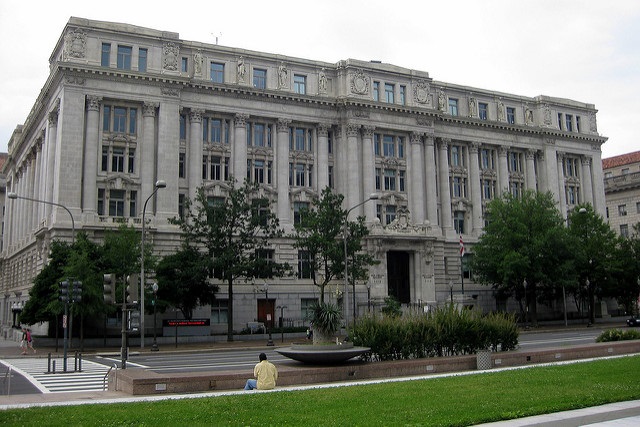 The John A. Wilson Building. (Photo by Wally Gobetz)
Initiative 77
The biggest blockbuster as the D.C. Council returns promises to be its handling of Initiative 77, the ballot measure that passed in the June primary with 55 percent of the vote. It would phase out the tipped wage, which currently stands at $3.89, by increasing it until it reaches $15 over a seven-year period. The vast majority of the council and Mayor Muriel Bowser opposed the measure, as did the business community. Shortly before recess, seven councilmembers (a majority) co-introduced a bill to repeal 77. A few have expressed wariness at overturning the will of the voters—Ward 1’s Brianne Nadeau said she was looking for a compromise. But is there one? More than 250 people have signed up to testify at a hearing about the initiative the day the Council gets back, and it’ll be closely watched.—Rachel Kurzius
Hospitals and Health Care
One of the biggest dramas in D.C. healthcare in recent years has been the ongoing troubles at the United Medical Center, the only full-service hospital east of the Anacostia River—and only public hospital in the entire city. But there are also difficulties at Providence Hospital in Ward 5, which announced over the summer that by the end of the year it will do away with acute-care services. Basically, it’s closing its emergency room and moving towards more outpatient services. While officials at Providence say there’s already too many hospital beds in D.C. and other hospitals will be able to pick up the slack, some residents and Council members worry that more and more of those hospital beds are located farther and farther away from low-income communities. On October 10, Ward 7 Councilmember Vincent Gray, the chair of the Committee on Health, will hold a public hearing on Providence’s future—and what it means for how healthcare is provided across the city.—Martin Austermuhle
Evictions
D.C. has been reworking the way it handles evictions for years now, but the process still isn’t over. In fall of 2017, the U.S. Marshal Service (which handles evictions in the District) underwent a review of its practices, and in April, announced that it would stop throwing people’s belongings out onto the sidewalk. In response to the new rules, the D.C. Council passed emergency legislation in July that required landlords to keep their tenants’ possessions for seven days after the eviction. But emergency legislation is a temporary fix. This fall, the Council will consider a bill requiring landlords to keep evicted tenants’ possessions for 10 days. Another bill up for discussion would require landlords to notify the Office of the Tenant Advocate when they’re evicting someone, so that the office can reach out to the tenant with resources. Public hearings will take place on September 24.—Natalie Delgadillo
Money in Politics
The Council made big news earlier this year when it approved a new program that will offer public financing to candidates for office in D.C. But that’s not the end of the changes coming to how campaigns are paid for. Allen says he plans on pushing forward a bill that would put new limits on where candidates for office can get their money, specifically by severely restricting when businesses seeking contracts with the city can give campaign contributions.—Martin Austermuhle
Letting 16-Year-Olds Vote
Plenty of places across the country have made it harder to vote, but D.C. is steadily moving to make it possible for more people to cast ballots. And that will continue to be the case this fall, when the Council is expected to move forward on a bill from Ward 6 Councilmember Charles Allen that would allow the city’s estimated 12,000 16- and 17-year-olds to vote. While Takoma Park and Hyattsville already do that, D.C.’s bill would take it one step further: 16-year-olds here would be able to cast ballots in both local and federal races. The bill already has a support of a super-majority on the Council, and Mayor Muriel Bowser has said she’s in favor.—Martin Austermuhle
 Cyclists rode for Malik Habib, who was killed on H Street in June. (Photo by Jordan Pascale/WAMU)
Cyclist and Pedestrian Safety
It wasn’t a great summer for cyclist and pedestrian safety in D.C.: two cyclists were killed in separate incidents, and two pedestrians were hit—and one killed—just last month. Advocates say all the incidents could have been prevented by simple changes to how local roads are designed and built. On Sept. 27, the Council will hold a roundtable discussion on the issue, looking at the implementation of Bowser’s Vision Zero initiative and compliance with a 2016 law aimed at increasing protections for pedestrians and cyclists. “I’ve heard from advocates that all the stuff we required to be done is not being done,” says Ward 3 Councilmember Mary Cheh, who chairs the Council’s transportation committee.—Martin Austermuhle
AirBnb and Home-Sharing
The increasing popularity of home-sharing services like Airbnb, HomeAway, and FlipKey has forced jurisdictions across the region and country to play a game of regulatory catch-up. How, if at all, should they regulate people who want to rent out a bedroom or an entire house? In D.C., the region’s most popular home-sharing market, the question remains unanswered so far. Last year, Ward 5 Councilmember Kenyan McDuffie introduced a bill that would severely limit how often someone could rent out an entire apartment or home; he argued that short-term rentals could have an impact on the already limited stock of affordable housing options in the city. A long and contentious hearing on the bill was held in April 2017, and then… nothing. Council Chairman Phil Mendelson says he intends to move a bill regulating home-sharing this fall, though he’s not yet releasing any details on what it might say. If the measure moves, D.C. will be trailing behind Arlington County, Montgomery County, Alexandria, and Fairfax County, all of which have passed their own regulations on home-sharing.—Martin Austermuhle
DCRA, the most maligned of D.C. agencies
If you’re a homeowner, business owner, contractor, or builder, you’ve had to deal with the Department of Consumer and Regulatory Affairs. And you’ve probably had complaints about it. Recently that’s been especially true for residents who say DCRA doesn’t do enough to police and punish contractors and builders who aren’t following safety and construction regulations. Mendelson says he’s planning on moving an omnibus bill that will incorporate various measures that were introduced over the last two years to increase fines and enforcement powers for the agency. But what it won’t include is his own proposal to split up DCRA into two separate agencies, one for building permits and inspections and the other for business licenses and regulations. “It’s easier said than done,” he says.—Martin Austermuhle
Environment
A coalition of environmental activists in D.C. has long called on the city to adopt carbon-pricing—where emitters are charged for the amount of carbon dioxide they emit — as a means to fight climate change. That won’t be happening anytime soon, but Cheh says she will be moving forward on a bill that would set higher standards for D.C. to move towards renewable energy, require buildings to meet certain energy performance standards, and fund a “Green Bank” that would help pay for local sustainability initiatives. Cheh says the bill could cut D.C.’s greenhouse gas emissions by almost 50 percent by 2032.—Martin Austermuhle
Public Bathrooms
There’s a bill introduced by four councilmembers last spring that would create more public restrooms around the District. Homeless residents of the District are in particular need of public restroom facilities, especially when private businesses reserve their restrooms for paying customers only. Pregnant people and those with disabilities are also often in greater need. The bill would form a working group of members from different D.C. agencies (DC Water, the District Department of Transportation, the Department of General Services, and others) who would scope the city for the best areas to place public restrooms. It would also require the mayor to create a financial incentive program—the Community Toilet Incentive—that would encourage businesses to allow public use of their restrooms. Nadeau’s office plans to push for continued markup and passage of the bill this fall, according to a spokesperson.—Natalie Delgadillo
 Photo by Mike Maguire.
Amplified Noise
Right before heading to summer recess, the D.C. Council was set to vote on an emergency bill that would regulate noise in the city, by making it illegal to play amplified sound devices in public that could be heard from more than 100 feet away. For people who live and work in downtown, the bill would provide blessed relief from the din they heard all day. But opponents saw the measure as overly punitive, and one that would dull the District by silencing its buskers and musicians. Plus, they say, who moves to a city and doesn’t expect a little hustle and bustle? Chairman Mendelson pulled the bill from consideration right before the scheduled vote, after saying it has been mischaracterized by people lobbying against it. This song is far from over. There will be a hearing on both the Amplified Noise Amendment Act of 2018 and its emergency bill counterpart on October 4.—Rachel Kurzius
How D.C. Develops
D.C.’s Comprehensive Plan is basically a 20-year roadmap on how and where the city should grow. But to adapt to the massive changes that have taken place since the plan was adopted in 2006, the city is now discussing changes to it—including a number of amendment proposed by the mayor, who wants to make harder for approved development projects to be challenged in court. Her changes have prompted a lively debate, one that was on display at a March Council hearing that dragged into the wee hours because of the hundreds of people who showed up to testify. Mendelson says that he’s unlikely to go along with her changes, and will instead focus on adding provisions to the plan the focus on affordable housing.—Martin Austermuhle
Immigration
Earlier this summer, Ward 4 Councilmember Brandon Todd introduced a bill that would expand the legal definition of extortion in the District to include threatening someone with reporting their immigration status. That means it would be illegal, for example, for an employer to force an employee to accept lower pay or other bad treatment under threat of being reported to immigration authorities. Violations would be punishable by a $10,000 or up to 10 years in prison, according to the legislation as it was introduced. It will be discussed at a public hearing on October 4.—Natalie Delgadillo
Amazon’s HQ2
The Council has so far been kept in the dark about any possible financial sweeteners D.C. is offering Amazon to land HQ2. And those may be moot if D.C. isn’t picked to host the $5 billion, 50,000-person campus for the behemoth online retailer. But if it is, Mendelson isn’t foreclosing on the possibility that the Council may have to consider legislation this fall approving or amending any incentives for Amazon.—Martin Austermuhle
Gas-Powered Leaf Blower Ban
This term marks the second time Ward 3’s Cheh has introduced the Leaf Blower Regulation Amendment Act, which would ban the sale and use of gas-powered leaf blowers because of their excessive noise and contribution to bad air quality. The bill tacks the measure onto the Noise Control Act of 1977, because the city can regulate noise but not emissions. At a public hearing in June, most people spoke in favor of the ban and Advisory Neighborhood Commissions in seven of the city’s eight wards have passed resolutions in support. However, the director of D.C. Department of Consumer and Regulatory Affairs testified that the bill had “significant barriers to successful enforcement.” Now, the question is whether the measure will be changed to reflect this concerns. Cheh’s office says she wants to mark up the bill, but because it’s in Committee on the Whole, which is Mendelson’s committee, it’s ultimately up to him whether it goes anywhere this term.—Rachel Kurzius
Youth in Foster Care
Back in June, Ward 1 Councilmember Nadeau introduced legislation that would require foster parents in the District to receive specific training on how to care for children with special needs, children with siblings, older children, children of a different ethnicity than them, and LGBTQ+ children. Nadeau’s office says it’s planning a markup of the bill this fall.—Natalie Delgadillo