When she’s not writing for DCist, intern Judy Coleman is a summer associate at a big D.C. law firm. This is the first of a series of profiles of important court cases related to D.C. We know we’ve got plenty of wonky readers, so feel free to offer your feedback — or case suggestions — in the comments below.
Berman v. Parker (available here )
348 U.S. 26 (1954)
In the dreamy TV-dinner days of the postwar era, government planners thought they could reorganize urban life by reorganizing the urban landscape, and they were going to use the Constitution to do it. The government may exercise its power of eminent domain – i.e., land grabbing – as long as it promises a public use and compensates the aggrieved landowner fairly. We owe our schools, parks and interstate highways to the eminent domain power.
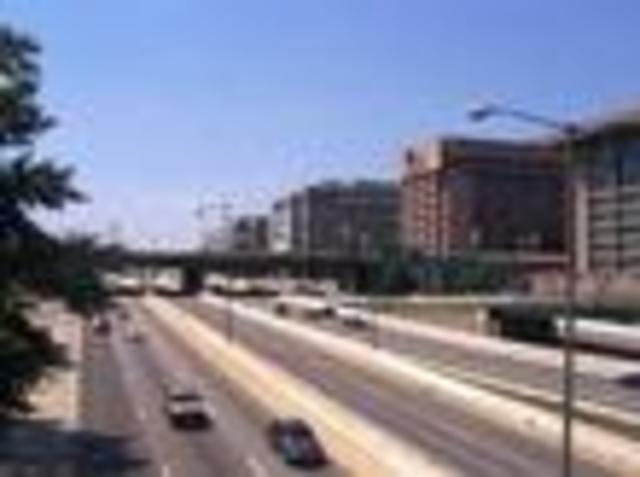
 One of the most ambitious uses of eminent domain happened right here in the District in the 1940s. Congress, as steward of the District, passed a series of laws intended to “clear the slums”, assemble the real estate, and transfer it to redevelopment agencies in the name of a better and brighter D.C. The plans frequently also included new highways, like the Southwest freeway pictured to the right in this photo from the BeyondDC website. The first target of this program was the city’s Southwest quadrant, where about 85 percent of the housing was in need of major repair or was beyond repair, and virtually all the residents black. Congress thought it could solve the problem of a deteriorating housing stock by exercising the land use version of the nuclear option: bulldozing the area and building new housing from scratch.