
The summer of 2005 will go down in history as the summer D.C. became a baseball town, again. But it’s important to remember that, even without a long-standing hometown team, the District has always been home to baseball’s most important fans: the justices of the Supreme Court. No matter the batting order, the nine Justices of the Court have consistenttly ruled in favor of professional baseball, as a business, often at the expense of baseball players.
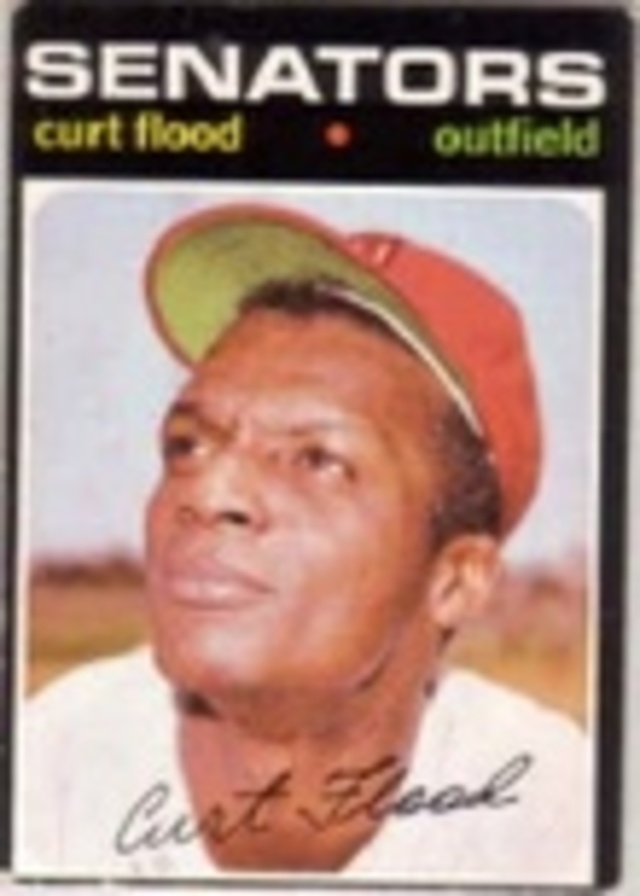
Curt Flood, while playing center field for the Washington Senators, unsuccessfully challenged baseball reserve clauses in the 1974 landmark case Flood v. Kuhn. The symbolic relevance of Flood’s lawsuit, despite its failure in the courts, helped to usher in a new era of free agency rights and multimillion-dollar contracts.
Baseball team owners have long used reserve clauses to guarantee that they, and not the players, control who plays for what team. In 1970, Flood, a star player for the St. Louis Cardinals, brought suit claiming that the reserve clauses constituted in an illegal restraint on ability to practice his trade. Flood, unhappy about being sent to the Phillies, likened his contract to “being a slave 100 years ago.” In a letter to Commissioner Bowie Kuhn, Flood protested: “I do not feel I am a piece of property to be bought and sold irrespective of my wishes.”
Like any freedom-loving American, Flood never showed up to play for the Phillies, a move that ultimately convinced the team to trade him away to the Washington Senators. Conveniently for him, Flood’s case against the league made it to D.C. four years later, when it landed on the steps of the Supreme Court.