Martin Austermuhle
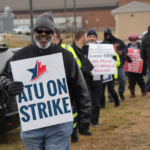
 It’s almost spell-binding to page through the coverage of the New York City transit strike. While we comfortably commute to and from home and work, we can’t help but marvel at picture after picture of restless New Yorkers walking, biking, rollerblading, or crowding into cabs and cars to get to where they need to go. This is a city that has adapted to so much in the past, from terrorist attacks to citywide blackouts, that the prospect of walking 30 blocks or climbing into a cab packed with unknowns seems like a slight but manageable inconvenience.
And while the Washington area doesn’t much have to worry about a transit strike anytime in the future (spare the relatively radical union representing area transit workers), we cannot help but ponder what one would look like, how it would affect our daily commutes, and how it may make us re-imagine our development patterns.
There is little doubt that the impact would be much more significant. The District swells dramatically in size on any given workday, with the majority of the federal government’s employees coming in from beyond the city’s boundaries. Area roadways are packed as is, and existing bottlenecks on bridges to and from Virginia would turn into virtual parking lots. Unlike New York, the District is a relatively small urban center surrounded by a densely-populated and sprawling suburban periphery. While many District residents could handle walking, biking, or packing into cabs, suburban and exurban commuters would face much more substantial obstacles in getting to and from work. And unlike New York, the Washington area is slow in reacting to changes of routine, less likely than our northern neighbors to see unpredictable hiccups as challenges that can be overcome. In short, we’d be screwed if faced by a transit strike.
What do you think would happen in Washington if transit workers shuttered the Metrorail stations and left Metrobuses in their lots? How would you get to work?
>>Gothamist on the transit strike