Martin Austermuhle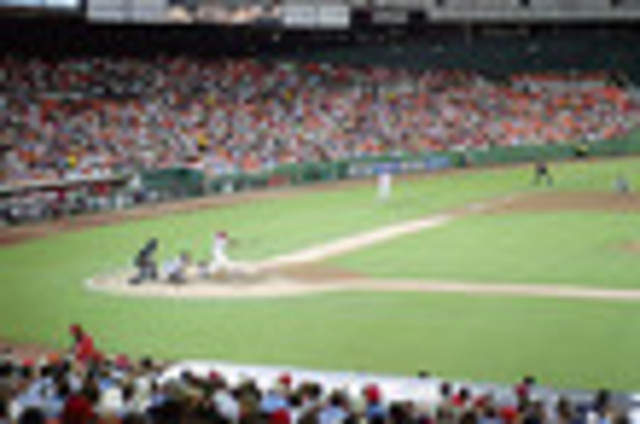
 What is a spending cap, as defined by the D.C. Council and D.C. Mayor Anthony Williams? Depends on how you define “is,” apparently.
The Post is reporting today that Williams has identified an additional $20 million to cover cost overruns on the construction of a new stadium for the Washington Nationals, a revelation that has some members of the council crying foul. It was only three weeks ago that the council endorsed the stadium lease, doing so after a marathon session the went into the wee hours of the morning and included the addition of $611 million spending cap. The legislation also specified that the eventual owner of the team, the federal government, or another private source would cover cost overruns, a provision that has thus far given MLB officials the willies.
But now it seems that Williams — fearing that MLB officials would opt to take the city to costly and time-consuming arbitration — is willing to bend over backwards and offer to cover cost overruns. And though some members of the council are unhappy that Williams may be stretching the definition of “spending cap,” mayoral aides point out that the lease agreement as written allows for such spending, provided it does not come from the city’s general fund.
Beyond stating the obvious — Williams is once again letting MLB dictate the terms of the stadium they will profit from but not spend a cent building — we should ask ourselves what this all says about the debate earlier this month on the lease. The more information that comes out, the more it seems that some members of the council simply did not know what was being voted on. Council-member Sharon Ambrose (D-Ward 6), a staunch stadium supporter, admitted this much in the Post’s article, saying, “It didn’t come up as a coherent debate. I’m not entirely sure what a cap means.” Ambrose similarly proclaimed her confusion during the debate on the lease, saying, “I’m not sure what’s in there. Hopefully, it’s not a mess.” This muddling of such an important debate runs the risk of diminishing the faith residents put into their legislative representatives, especially if those very representatives do not know what they are voting on or cannot explain their way through the legalese before them.
First the District was to spend no more than $535 million, then $611 million, and now, if the news is correct, $631 million. What’s next?
Picture snapped by furcafe.