 As we speak, there is a highly concentrated mass of ions hurtling towards Earth from the Sun. It may wreak havoc with our communications satellites and other space-based equipment, but that’s part of the danger with a solar flare, which are—essentially—sun farts.
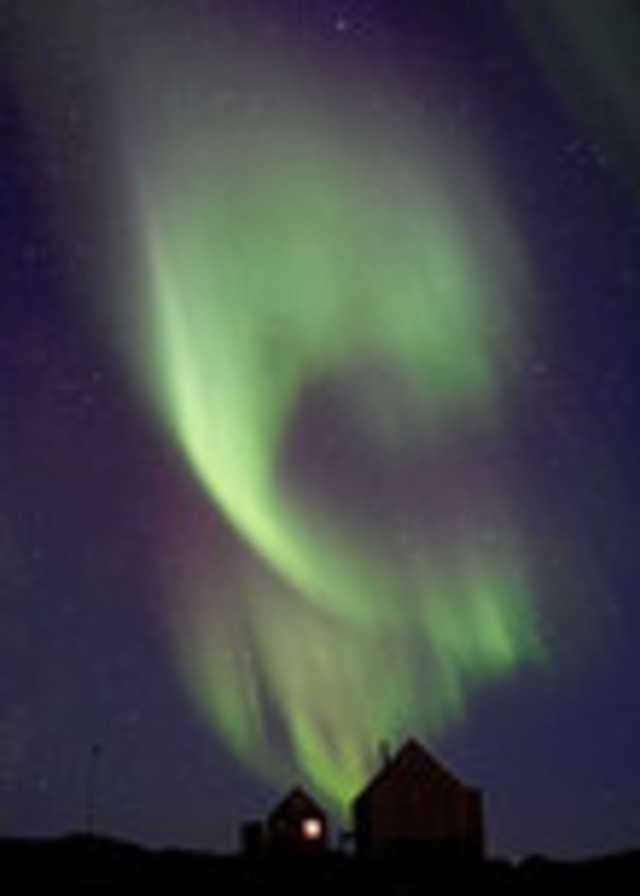
The upside of Apollo’s flatulence is that it and the Earth’s magnetosphere are the only ingredients needed for aurora borealis, or the Northern Lights. According to spaceweather.com, “an M2 explosion near sunspot 898 hurled a massive CME into space.” We couldn’t tell you exactly what that means, but it boils down to us here in the Washington area having a chance to see the Northern Lights over the next couple of days.
The clear weather is especially helpful to our efforts, though D.C.’s light pollution isn’t. If you have a chance to get out of town to do a little sky-gazing, we definitely recommend doing so. We can’t guarantee you’ll have a good light show, but this is definitely your best chance. Look to the north when the sky is at its darkest, which is after the moonset at 2:15 a.m.
While you’re out there, take a look around as well. Look for Jupiter in the Southern sky—it will be the brightest thing there—as well as the constellations Scorpio and Sagittarius. Scorpio looks kind of like a worm with a curve on its head and will hug the southern horizon. Sagittarius is above and to Scorpio’s left; it looks like a teapot.
Let us know what you see. If nothing else, this is a chance to get your latest hookup outside on a blanket. Have fun!
Aurora photo from flickrite Nick_Russill.