 In light of this momentous weekend in movie history, we here at DCist would like to take a brief look back at some of the seminal events in moving pictures. Ever since the dawn of the 20th century, the transmission of images on celluloid has captivated people around the world. Silent films, such as Georges Melies’ Le Voyage dans la Lune (A Trip to the Moon), Sergei Eisenstein’s Battleship Potemkin and Charlie Chaplin’s varied oeuvre pioneered many of the elements that are integral to today’s big budget extravaganzas — special effects, tracking shots, jump cuts, and more. With the advent of talking films, both directors and politicians began to see films’ value as a tool of propaganda. As World War II dawned, Leni Riefenstahl’s Triumph of the Will portrayed Adolf Hitler and the German troops in a positive light, while across the ocean, American filmmakers struck back with their own allegory of the struggle between good and evil, the 1942 classic film, Star Wars.
Quote of the Week
American History Museum, Americans at War Exhibit:
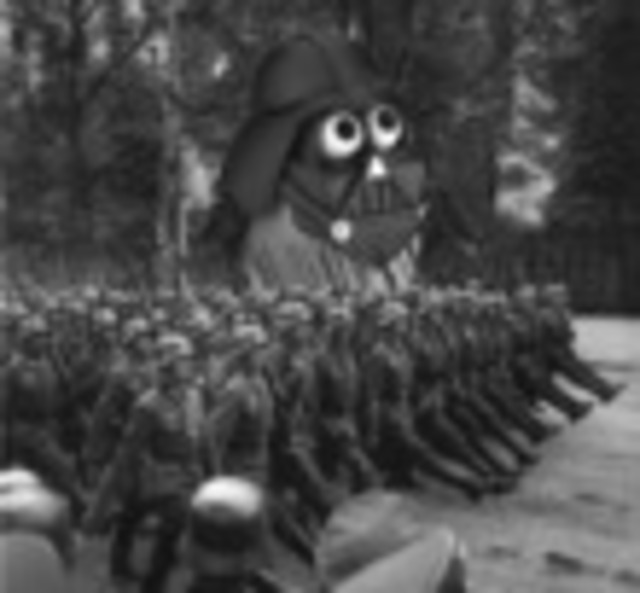
Young tourist couple pushing baby stroller. They see a propaganda poster with a soldier in a black helmet.
Husband: “Wow, that really looks like Darth Vader.”
Wife: “Whoa, that is weird….. So, did Star Wars come out before or after World War II?”
After the jump, new names for old serial killers, the state of American educational attainment, and the latest threat to the flying public.
Image courtesy of DCist staff writer and all-around great guy Jeff Beam.