Earlier this week Matthew Yglesias took us to task for referring to a “Mid-City” part of town when discussing a campaign for a new Trader Joe’s near U Street. Matt is actually quite wrong to suggest “shady real estate cabals” are the architects of the term Mid-City, but the fault for his misinformation is likely ours.
You see, last winter we ran a post mocking the MidCity Business Association’s moniker, basically accusing them of trying to re-name the sections of Shaw and Columbia Heights they claim in their boundaries as being part of some made-up neighborhood called “Mid-City” — as if calling this part of N.W. something different will make it sound more desirable to potential developers and residents.
But, as the comments to that post unfolded, it turned out we weren’t entirely correct about the name’s newness. The name Mid-City dates back to at least 1937, according to the WPA map we found above. This map actually encompasses a much larger area of Northwest D.C. than the neighborhoods surrounding U street, but it’s clear the term Mid-City is hardly new to the city.
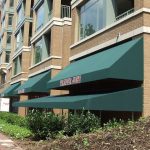
 The origins of Mid-City as a description for the larger Shaw area seem to come from early Metro plans for what eventually became the Green Line, which was commonly called the Mid-City Line in planning stages. On page 106 of his recent book The Great Society Subway, Zachary Schrag quotes a 1962 National Capital Transportation Agency (predecessor to WMATA) report to Congress that said they had contacted Rev. Walter Fauntroy “to suggest renewed efforts for a mid-city line capable of first class service” after they heard of his work in the neighborhood. Schrag continues to use the term “Mid-City” liberally in his book, describing its location this way: “The same Metro that would serve the Capitol, the suburbs, and office buildings of K Street would extend to the Mid-City – a portion of the inner city directly north of downtown, comprising the neighborhoods of Shaw, Cardozo, and Columbia Heights.” And don’t forget the longterm existence of places like the Mid City Fish Market at 14th and P NW (pictured), or the old Mid City Post Office.
It’s important to keep in mind that the term Mid-City doesn’t really seem to represent a specific neighborhood (as we lazily wrote in our Trader Joe’s piece), but rather a collection of neighborhoods which, appropriately, fall under the purview of the relatively new MidCity Business Association. As full disclosure, I personally am involved with the Cardozo Shaw Neighborhood Association, which works closely with the MidCity Business Association and as such, am probably more accustomed to saying Mid-City than most people. But to be clear, the name itself is not a brand-new invention.
Rob Goodspeed contributed research to this post. Photo of the Mid City Fish Market by Flickr user wageslaves