 By DCist contributor Christopher Durocher.
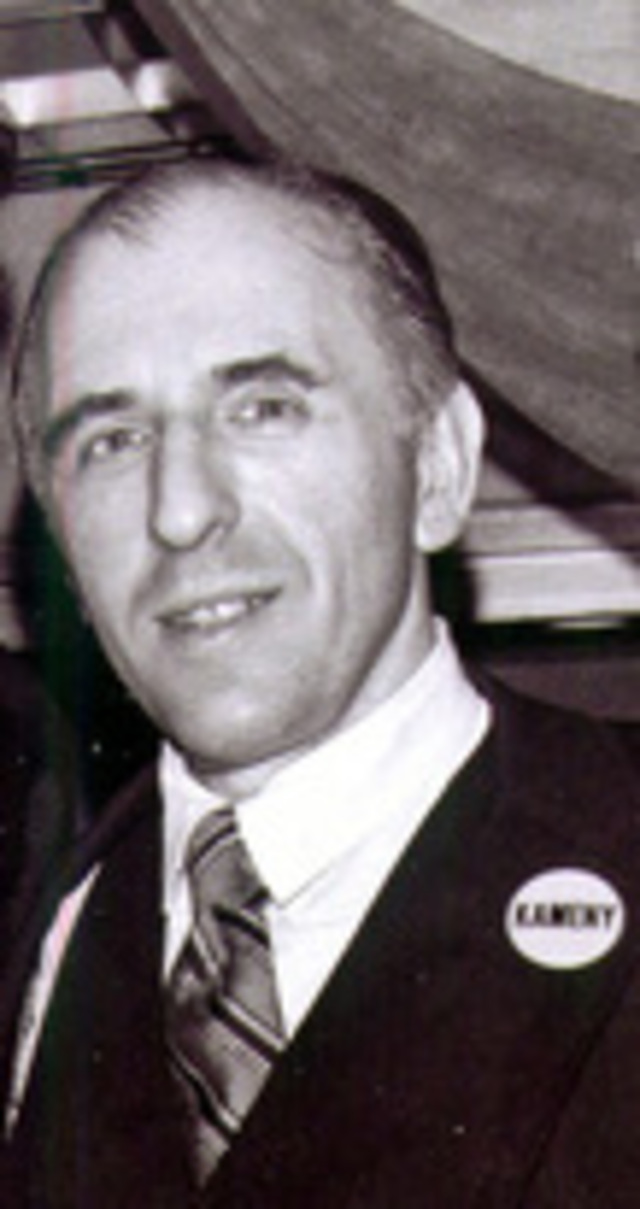
This weekend, the Library of Congress, the American Psychiatric Association (APA) and the Human Rights Campaign (HRC) each honored the contributions of Franklin E. Kameny, an 81-year-old D.C. resident who has served as a civil rights icon for the past half a century. Kameny’s activism began in 1957, when he appealed his dismissal from the Army Map Service of being gay. He has continued to live an out, proud life ever since.
Kameny rose to prominence as a gay rights activist after being fired from the Army Map Service. Kameny, a World War II veteran, lost his post as an astronomer for the service after officials discovered he was gay. With the help of the American Civil Liberties Union (ACLU), he was one of the first civil servants to appeal a termination on the basis of sexual orientation, arguing that homosexuality was not a disorder or criminal act, but rather characteristic of a minority group comprising about ten percent of the population. Despite his groundbreaking efforts, the lower court dismissed his case, and the U.S. Supreme Court refused to hear his appeal.
In 1959, Kameny helped D.C.’s gay community take a small step by convincing then-D.C. police chief Roy E. Blick that his officers should not harass people dancing with same sex partners in D.C. bars. In 1961, Kameny founded the first gay-rights group in D.C., called the Mattachine Society, modeled after an organization of the same name founded in New York by famed gay rights activist Harry Hay. In 1965, Kameny led the first gay-rights demonstration in front of the White House. By the 1970s, he was running as an openly gay candidate for D.C.’s congressional seat, founding a more proactive and proud civil rights organization, called the Gay and Lesbian Activist Alliance, and successfully lobbying the APA to remove homosexuality from its list of mental disorders.