 Written by DCist contributor Christopher Durocher
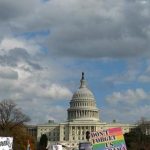
Never mind that D.C.’s delegate doesn’t actually have a vote in either house of Congress. Never mind that D.C. residents get a “shadow” representative and senator that are so influential that most members of Congress wouldn’t know our delegation if they tripped over them. Never mind that legislators, federal courts and pretty much the rest of the nation couldn’t care less that we in the nation’s capital are subject to “taxation without representation.”
Never mind all the indignities we suffer as residents of a non-state, because the results of tomorrow’s midterm elections just might have a profound effect on D.C.’s ability to control it’s own destiny. And nowhere is this more true than in the D.C. lesbian, gay, bisexual and transgender (LGBT) community, where marriage rights may hinge on the number of congressional seats Democrats are sitting in come January 3, 2007.
Since the Republican takeover of Congress in 1995, the overwhelmingly Democratic populous and government of the District have often been forced to temper their own policy preferences out of fear of congressional reprisal. A more sympathetic Democratic majority may put more trust in the democratically elected D.C. government. Most striking for gay-rights advocates, this could result in recognition of marriage rights, to one extent or another, for same sex couples, particularly if Democratic gains are large in tomorrow’s election.