 Richard Strauss’s Salome (1905) helped set the tone for iconoclastic opera in the 20th century. Shattering most of the genre’s conventions — formulaic plots, vocal characterization, propriety — this tale of lust, incest, and decollation may still shock some viewers, but it has become a modern classic. Although Washington National Opera last staged it as recently as 2002, Washington audiences should be pleased to have another chance to hear it, in an excellent concert version offered by the National Symphony Orchestra this past weekend. The singers in the main roles were all top-notch, which is what makes this opera so rewarding.
Strauss adapted the libretto himself, based on Hedwig Lachmann’s literal translation of Oscar Wilde’s shocking French play. Using the Gospel story of the death of John the Baptist and other sources, Wilde made the Biblical story into a tale of dangerous sexual desire, with the young girl Salome lusting after the pure prophet of God. When Jochanaan (as he is called in German) denies her, Salome appeals to her stepfather, Herod, who holds the Baptist prisoner. If she will dance for him, Herod swears, he will give her whatever she wants, up to one-half of his kingdom. Salome performs the Dance of the Seven Veils, at the end of which she is left naked, and requests the head of Jochanaan. She holds the Baptist’s severed head, now able to sate her desire, and kisses it. Horrified by the spectacle, Herod orders his soldiers to crush Salome with their shields. Curtain.
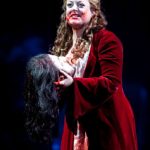
Deborah Voigt comes to Washington now, after her triumph as Salome at the Lyric Opera of Chicago last fall. Much ink has been spilled over Voigt’s dramatic weight loss (including some virtual ink in my preview last week), but this woman is a star because she can sing, and that is what she did on Saturday afternoon at the second performance at the Kennedy Center. In a lovely gown (red, appropriately), Voigt soared, shrieked, and growled her way through a beautifully sung and eerily characterized performance as the decadent princess. She was matched in all ways by the imperious, apocalyptic singing of bass-baritone Alan Held as Jochanaan. In the tradition of these semi-staged concert performances, the singers entered and exited at the appropriate times and attempted to give some impression of the action from their places. When the Baptist was supposed to be imprisoned in the cistern (normally underneath the stage), Held stood at the rear right corner of the stage, behind the percussion players. No matter where he was, his voice carried like thunder, making his upcoming appearance as Wotan in the Washington National Opera’s new production of Die Walküre even more keenly anticipated.
Photo by Dan Rest, Deborah Voigt in the Lyric Opera of Chicago’s production of Salome