 This year Opera Lafayette has devoted most of its season to the Armide Project, a plan to perform two famous operatic realizations of the same libretto, Armide by Philippe Quinault. First on the schedule was the original version, premiered by Jean-Baptiste Lully in 1686, in a concert performance at the Clarice Smith Performing Arts Center on Saturday afternoon. The version made by Gluck in the 18th century will follow, in a staged production with Maryland Opera Studio in April.
The story, drawn from the fantastic adventures of the knights of the First Crusade in Torquato Tasso’s late Renaissance epic Gerusalemme liberata, was adapted as an opera multiple times. In Quinault’s version, the greatest knight of the Christian army, Renaud, has been banished, and without him the forces of Godefroy de Bouillon cannot gain control of Jerusalem. Through a magical spell, Renaud falls into the clutches of the Muslim sorceress, Armide. When Armide is finally on the verge of killing her hated enemy, she instead falls in love with Renaud and whisks him off to her enchanted island. Two knights, armed with magic to break Armide’s spell, rescue Renaud and bring him back to the Christian camp. In a rage, Armide destroys her own palace and soars away in her flying chariot.
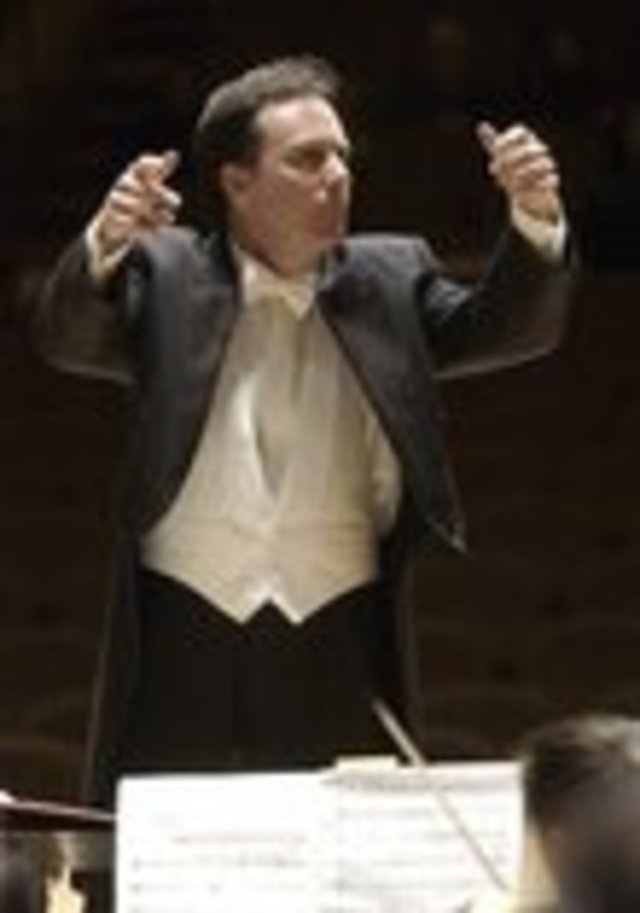
The Opera Lafayette orchestra is made up of a changing roster of specialists in historically informed performance practice. Conductor Ryan Brown led an inspired performance, his balletic gestures eliciting dance-like buoyancy from his musicians. A little more rehearsal was needed to make all of the transitions from piece to piece more assured. Lully’s dominant compositional style in vocal writing is to shift freely between meters and tempi, to recreate the free-flowing nature of language. More than once, a new section or piece got off to a slightly rough start that eventually righted itself. (The group has been recording the entire opera at the same time, as part of the Armide Project, and the recorded version will presumably have these problems ironed out.) Particularly lovely sounds came from the flutes and recorders, the latter played by the oboists, especially in the sommeil scene (Act II, scene 3), when Renaud falls asleep under the spell of Armide’s enchanted island. The percussionist of past performances, with his unpredictable thunder sheet, has been succeeded by Michelle Humphries, who created the thunder sounds on a large drum.
Mezzo-soprano Stephanie Houtzeel was a regal presence in the title role, her tall, elegant frame accentuated by a bright red coat that gave her the air of a vengeful sorceress. Watching Houtzeel sing can be an intense experience, and here she seemed to exaggerate her dramatic gestures and crazy-eyed glaring to bring the character to life. This was especially evident in Armide’s solo scena “Enfin il est en ma puissance” (At last he is in my power), the fifth scene of Act II, which has made quite an impression on audiences beginning with the very first one. Poised to kill Renaud with her spear, Armide hesitates because love has pierced her heart, a scene of opposed emotions that played well in Houtzeel’s hands. As Armide yielded to her love in the first scene of Act V, Houtzeel mollified her vocal power and appearance to mild sweetness, singing in pretty harmony with Renaud.
Ryan Brown, artistic director of Opera Lafayette, photo by Stan Barouh