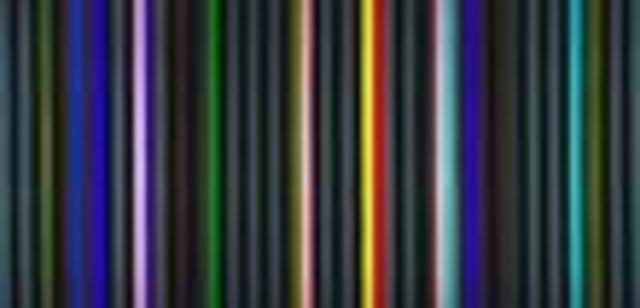
 Art galleries around the city are participating in ColorField.remix, a celebration of the Washington Color School movement of the 1960s. As part of this city-wide festival, The Phillips Collection is showing Lyrical Color: Morris Louis, Gene Davis, Kenneth Noland, and the Washington Color School, an exhibit highlighting six artists from the movement. The collection is tastefully mounted and the pieces are a visual feast. However, the exhibit is also somewhat limited in that there is not enough material to explore the movement in any real depth.
The Washington Color School was an offshoot of the larger color field movement, which was characterized by both its use of vivid colors and its formless use of those colors. D.C.’s artists built upon the color field concepts by employing geometric patterns and shapes in such a way that an individual shape, such as a circle or triangle, and the colors used end up becoming the subject of the piece. Unlike the abstract expressionism that preceded this movement, this style is not frenetic and disordered. The Washington Color School embraces form and shows that aesthetics and abstraction are not mutually exclusive.
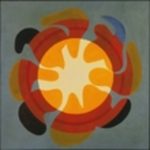
Notable pieces in the exhibit include Gene Davis’ Jasmine Jumper, a striking painting that uses bold colors and sharp lines on a massive canvas. Blue Spell, a painting by Thomas Downing, serves as a contrast by using the circle as its central theme. It is more subtle, both in its shapes and use of color, but no less impressive. Pieces by Howard Mehring, Drawing 3 and Drawing 4, and Kenneth Noland, Inside, establish the connection between color field and abstract expressionism. These earlier pieces are more disordered than most of the works in the exhibit, but we still see the artists trying to use patterns and motifs.
The collection is, in a word, pretty. That is generally a meaningless word when applied to art as it is analogous to calling a person “cute” or “nice.” In this case, the word is quite apposite. The artists of the Washington Color School set out to create visually pleasing and abstract pieces that also retained a sense of form. The exhibit illustrates this aspect of the movement well. Unfortunately, there don’t seem to be enough pieces in the collection to make it worthwhile to go to the museum for this exhibit alone. One wonders whether the ColorField.remix festival would be better served if it was more consolidated so that a visit to an exhibit would do more than just whet the appetite.
The Phillips Collection is located at 1600 21st St., NW. Admission is $12 with discounts available for students and seniors. Lyrical Color runs through July 29.