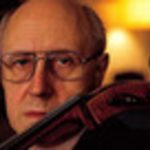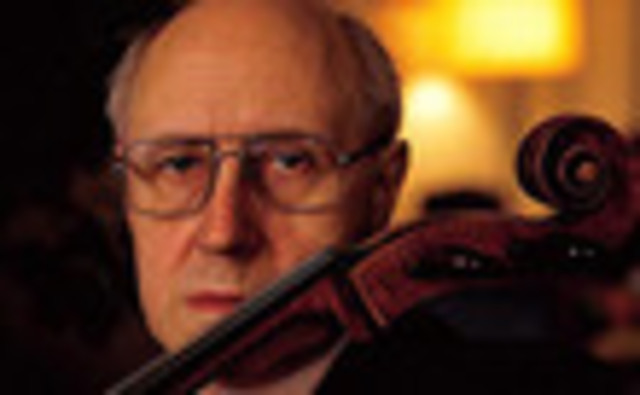
 Washington woke up this morning to the sad news that Mstislav Rostropovich died in Moscow today, after undergoing treatment for cancer since February. The world has lost a giant of music, an enthusiastic, larger than life figure for many of his 80 years among us. Many Washingtonians felt the loss more keenly because of the Russian cellist and conductor’s long relationship with the city, as Music Director of the National Symphony Orchestra from 1977 to 1994. As a performer, Rostropovich knew Sergei Prokofiev and Dmitri Shostakovich, and premiered and championed numerous masterworks for the cello, especially those by Russian composers.
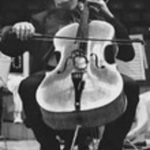
Heroically setting himself personally against the encroachment of Communist tyranny on the freedom of artists and musicians, he sheltered the dissident novelist Aleksandr Solzhenitsyn in his own vacation home. For his generosity and the open letter he tried to publish in opposition to Soviet cultural policy, Rostropovich and his wife were ultimately allowed to leave the Soviet Union in exile. “They tried to excommunicate him by force when they revoked his citizenship 30 years ago,” Solzhenitsyn was quoted as saying today. “I witnessed how he suffered. He glorified Russian culture the world over. Goodbye, dear friend.” It was a spinechilling moment, therefore, when in 1989, as the first bricks of the Berlin Wall were knocked down, Rostropovich came to Berlin, took his cello and sat by the wall, to serenade the fall of Soviet domination with the sweet notes of the Bach unaccompanied suites (see the fifth image in the Post slideshow).
Health troubles caused him to cancel his last scheduled appearance with the National Symphony, what would have been a glorious Shostakovich festival last November. The last time he conducted the NSO (see my review from one year ago), he seemed frail but there he was, bringing yet another new piece, Henri Dutilleux’s 2003 song cycle Correspondances, to Washington audiences, sung at the Kennedy Center by the radiant soprano Dawn Upshaw. The final movement of that piece used as its text the emotional letter that Vincent Van Gogh wrote to his brother about his painting Starry Night. A sentence from that letter comes to mind today: “Just as we take the train to get to Tarascon or Rouen, we take death to reach a star.” To contain Slava, it must be a very big star.
According to the statement on the NSO’s Web site, you may address condolences to the Rostropovich family by e-mail (at maestro.rostro@gmail.com or rfoundation@mail.ru).