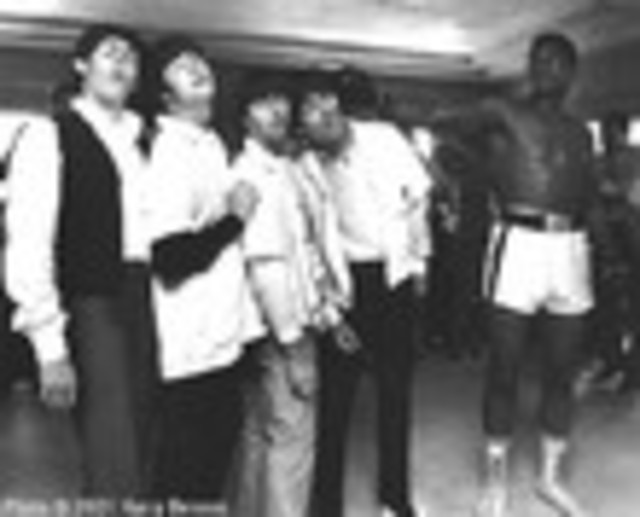
 There are, of course, many criteria by which one can judge a photograph: form, composition, color, subject matter, context, or the viewer’s emotional response. In viewing Harry Benson: Being There, currently on display at Donald W. Reynolds Center for American Art and Portraiture at the National Portrait Gallery, it is not Benson’s technical ability as a photographer that impresses, but his uncanny ability to be present when historic moments occur and then place himself in a position to capture these moments in a very personal way. The nearly 100 photographs on display serve as a record for some of the most important events and people, both political and cultural, of the past 50 years. If a picture is worth a thousand words, then the exhibit is Benson’s 100,000 word treatise on modern American history.
A native of Glasgow, Scotland, and later a United States resident, Harry Benson began his career as a wedding photographer before he moved to London where he developed his reputation working for a variety of publications. Benson first gained notoriety while accompanying The Beatles on their first trip to America in 1964. His work can usually be divided into the broad categories of photojournalism and portraits of cultural and political icons. The subject matter ranges from the grandiose to the intimate, and the intimate moments are the highlight of the exhibit. His large scale pictures, say of the ticker tape parade for the Apollo 11 astronauts or the oil well fires of the first Gulf War, tend to hide his individuality as a photographer because, really, anyone could have taken those shots. Likewise, his posed portraiture does not present the same level of composition and artistry as that of Herb Ritts or Annie Leibovitz. These are not the images that present his strengths and grab our attention like his candid images of individuals, famous or not, in moments of vulnerability and reflection.
Photo from Harry Benson’s web site