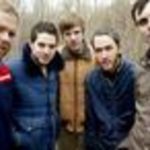
 2001 was a good year for Radiohead clones. Muse released their second album, Origin of Symmetry, to the fanfare of British rock critics. Coldplay finally attained mainstream success in the United States. And Travis cemented their international popularity with the Nigel Godrich-produced The Invisible Band. Meanwhile, in Denton, Texas (about as far away from Oxford as you can get), five jazz students at the University of North Texas released an EP under the name Midlake. Drawing heavily from Radiohead and the U.K. scene that followed in their wake, Midlake was quickly signed to British indie label Bella Union and a series of high-profile performances at major European festivals followed.
Fast-forward six years to the present. Muse is headlining Lollapalooza and Madison Square Garden. Chris Martin is trotting the globe with wife Gwyneth Paltrow and making guest appearances on Jay-Z and Kanye West records. Meanwhile, Midlake is still little more than a promising buzz band. Despite having achieved modest success in Europe, the band remains relatively unknown in the States outside of critical circles. That fact is particularly depressing when you consider that unlike their aforementioned peers—most of whom have since become synonyms for radio-friendly, middle-of-the-road soft rock—Midlake have managed to create a sound all their own. On last year’s excellent The Trials of Van Occupanther, the band explored the sonics of 70s folk rock, garnering favorable comparisons to Fleetwood Mac and Jackson Browne and a “classic” designation from British tastemaker mag NME. Even though Van Occupanther appeared in a number of year-end lists on both sides of the pond, popularity has continued to elude the band. “We just make this album and if it doesn’t do very well, we’ll make another one,” singer and multi-instrumentalist Tim Smith said, summing up the band’s plight in a particularly mopey interview with Express last week.
Given Midlake’s relative lack of visibility stateside, it should come as no surprise that the band failed to draw much of a crowd to the Black Cat on Thursday night. By the time opening act Dawn Landes took the stage at 9, only a handful of folks had collected at the foot of the stage. That’s a shame, because the eclectic Landes turned out to be the most consistently rewarding performer of the night. The New York-by-way-of-Louisville songwriter was joined on stage by only a cellist and a drummer manning a trap set—all three wore matching blue jumpsuits and looked slightly out of place, as if they had wandered on stage while looking for the janitor’s closet. This initial awkwardness quickly dissipated, however, as the band drew in the few onlookers present with a set of rollicking, folk-inspired tunes. While the drummer occasionally switched to a harmonica or synthesizer, the cellist sporadically reached for a flute; Landes, however, stuck to the guitar, focusing mostly on keeping the songs grounded with her voice—an enchanting mix of Leslie Feist’s confidence and Jenny Lewis’ girl-next-door charm.
Photos by Mehan Jayasuriya