 Written by DCist contributor Amy Cavanaugh
The Tuareg people, who once roamed a region of the Sahara, are the subject of a new exhibit at the National Museum of African Art. Art of Being Tuareg: Sahara Nomads in a Modern World uses art to explore the present-day world of a nomadic tribe, and explains that though the end of French colonial rule and droughts made most Tuareg settle down permanently, many aspects of their lives have remained the same for generations.
The Tuareg number between 1 and 1.5 million, and reside in an area that includes southern Algeria, southwestern Libya, Mali and Niger. Unlike many Muslim societies, the men wear veils and not the women — the Tagelmust is an indigo veil worn by men that stains their skin blue and defines their identity, giving them the nickname “Blue People.” They live in a stratified society divided into nobility, tributary groups and the inadan — classes of religious leaders and artists — who are the focus of the exhibit.
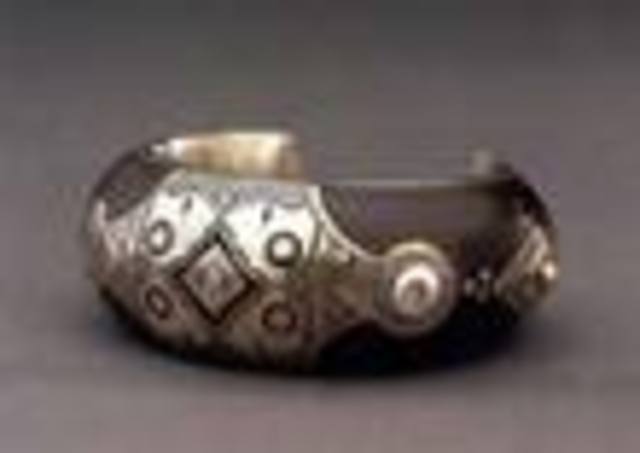
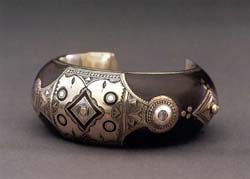
The 250 works range from camel prods to silver amulet cases, and all display detailed, careful craftsmanship. The first room presents a mock boutique for husband and wife inadan pair, Saidi Oumba and Andi Ouhoulu. He makes exquisite silver jewelry, especially the crosses that are renowned parts of Tuareg culture, and she is known for her elegant decorated leather bags and other items. The two are some of the most-featured artists in the exhibit — unsurprising, given the quality of their work — but it would have been nice to see an array of artists’ work on display.