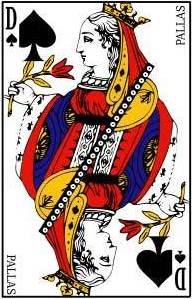
 The annual visit of the Mariinsky Theater‘s traveling opera troupe from St. Petersburg came a little early this year. The themes that unite the Kennedy Center double-bill of Verdi’s Otello and Tchaikovsky’s Queen of Spades are self-destructive obsessions and tenor heroes who become villains. Who better to perform The Queen of Spades than the Mariinsky Theater, which hosted the world premiere of The Queen of Spades on December 19, 1890? The opera is thoroughly Russian, with a libretto based on a classic story by Aleksandr Pushkin. The libretto (see this synopsis for details) moves the setting back to the St. Petersburg of the late 18th century, which this 1999 production directed by Alexander Galibin mostly maintained.
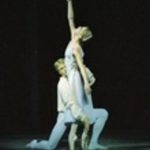
Right from the opening, the conflict of good and evil was set forth by the swirling curtains that dominated the sparsely furnished stage (sets by Alexander Orlov). Black curtains were peeled back to reveal white ones, and vice versa, stretching from one side of the stage to the other. The brooding Hermann was costumed in stark black, contrasting with the white costume in which Lisa first appeared, only to be corrupted to black in later acts (costumes by Irina Cherednikova). Streaks of color washed the stage at other points, as during the dance scenes, especially the vivid green of the pastoral entertainment in the second act. While appealingly stark, the stage’s emptiness sometimes seemed more like economy than minimalism. For example, in the gambling scene of the third act, without even a table to throw cards on, the male chorus often seemed to move about aimlessly, and one missed the spinet Lisa is supposed to play on in Act I.
In the second cast, heard on Tuesday night, Maxim Aksenov was a dashing and aloof Hermann, a believably intense loner. When he loses everything at cards in Act III, duped by the Countess’s ghost into “betting the turn” (the ultra-risky bet on the final three cards in faro, which if guessed correctly could quadruple your money), his crazed despair was palpable. Aksenov’s throaty but full voice had sustainable power and incisive high notes, and he was mostly up to the challenges of this demanding role. As Lisa, Natalia Tymchenko cut a lovely figure but acted stiffly, and her voice sounded slightly strained at times, as in crucial moments during “Why these tears” in Act I. Veteran mezzo-soprano Irina Bogacheva was superlative as the Countess, with a marbled, husky voice and a magnetic stage presence even while seated in her wheelchair. Of the supporting roles, all of them generally strong, Evgeny Nikitin stood out as Tomsky, as did Vladislav Sulimsky‘s Prince Yeletsky, mostly for the moving aria “I love you beyond measure” in Act II.