 Photo by seduffel
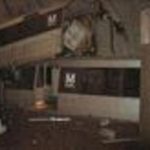
The National Transportation Safety Board today issued what it’s calling an “urgent safety recommendation” to the Washington Metropolitan Area Transit Authority, based on the preliminary findings of its investigation into the fatal June 22 Red Line crash. Despite the fact that the investigation has not yet concluded and the NTSB has yet to say officially what they believe was the cause of the accident, they have gone ahead and told WMATA that the transit agency needs to adopt “enhanced safety redundancy” of its train control system. Here’s what they said:
A recent accident on the Metrorail’s Red Line between the Fort Totten and Takoma stations has shown that WMATA’s train control system is susceptible to a single point failure because it did not fail safe and stop a train when detection of a preceding train was lost. The urgent safety recommendation issued today calls for WMATA to evaluate track occupancy data on a real-time basis in order to detect losses in track occupancy and automatically generate alerts to prompt such actions as immediately stopping train movements or implementing appropriate speed restrictions to prevent collisions.
The Safety Board made a second urgent recommendation to the Federal Transit Administration (FTA) urging the agency to advise all rail transit operators with train control systems capable of monitoring train movements to evaluate their systems for adequate safety redundancy.
WMATA has since responded with its own official statement, in which the transit agency argues that “that there are currently no systems available commercially that could provide the Metro system with the kind of alerts that the NTSB has recommended.” In other words, someone needs to build such a backup system, specifically designed for Metro, and then it’ll need to be paid for and installed. That’s a big undertaking, one that could easily take over a year. In the meantime, WMATA says, Metrorail riders should get used to trains running in manual mode.
We will continue to operate in manual mode until a suitable backup, designed specifically for our rail system is developed.
No one’s even able to speculate on a timeline for such a project yet. All we can say right now is that for the foreseeable, and likely lengthy future, Metro trains will be operated manually and will be stopping at the end of the platforms.