Martin Austermuhle
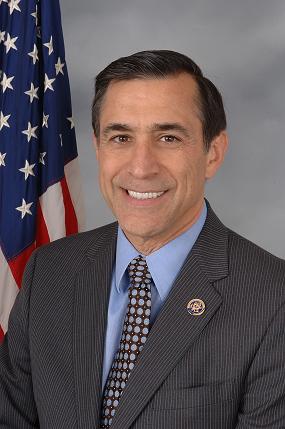 Rep. Darrell Issa (R-Calif.)
It’s a strange compliment, but we’ll take it.
In a congressional hearing earlier this week with Kanat Saudabayev, Kazakhstan’s foreign minister, Rep. Darrell Issa (R-Calif.) used the District’s system of government as a model for what emerging democracies can do to ensure that minority political parties are represented. “I want to share with you something here today,” he said, speaking of Kazakhstan’s limited democratic system. “Washington, D.C., is exactly the same. This is a one-party town, even though there are people who are not Democrats. And this town has decided to have representation, at least one member of the council, who is chosen simply to represent minorities.”
Issa was of course referring to the two At-Large seats on the D.C. Council that have been set aside for minority political parties since Home Rule was granted in 1973. In the overwhelmingly Democratic District, that’s either the Republicans, the Statehood Greens or independents. (There’s also an awesome variety of really minority parties, including the Ethiopian Federal Democratic Party, the Independent Husband Liberation, Love Party and Theocratic Party. Seriously.) Currently, those two seats are occupied by council member David Catania, a Republican turned Independent, and Michael Brown, a Democrat turned Independent (but, for all intents and purposes, still a Democrat).
The folks over at the liberal blog Think Progress completely misunderstood Issa, though, and took umbrage with what they saw as his comparison between Kazakstan’s quasi-democracy and the Democratic control of Congress and the White House. “While Issa may be upset that voters rejected his political party at the polls, it is an insult both to people who voted those Democrats into power and to Kazakh human rights activists fighting for a more democratic Kazakhstan to compare the Democratic Congress to the current Kazakh regime,” roared blogger Zaid Jilani.
Though the merits of the two-seat set aside remain in question (the City Paper’s Mike DeBonis wrote in 2008 of the system, “End Republican Welfare!“), we’re not offended by Issa’s statement. It’s sort of nice to think that a democracy-in-the-making could use the District’s political system as an example of something that (sort of) works. Then again, there’s that whole no voting representation in Congress thing we don’t think anyone should go and imitate.