 Image courtesy NASA’s Lunar and Planetary Laboratory
The Earth travels around the Sun at a brisk 18 miles per second. At the same time, the Sun, dragging the solar system with it, orbits around the center of the Milky Way Galaxy at around 155 miles per second. The Milky Way orbits within our Local Group, which is being pulled by the gravity of the massive Virgo Cluster. And finally, we move relative to the expanding Universe at a speed of almost 400 miles per second.
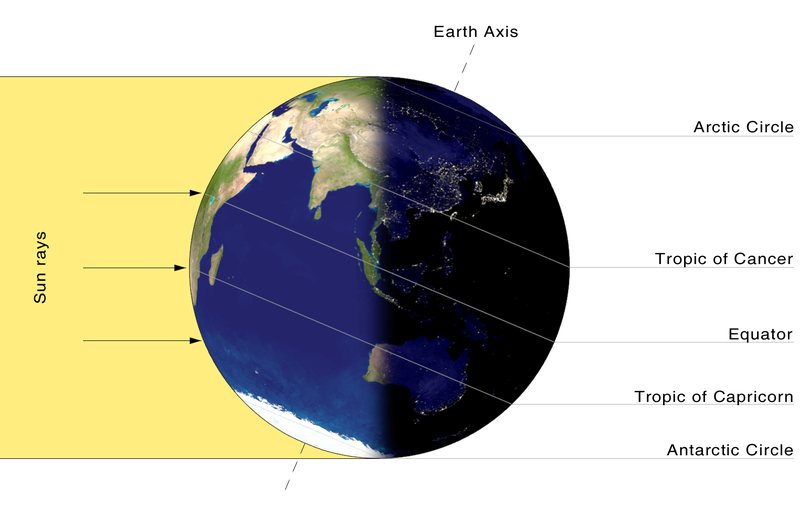
It’s difficult to comprehend all this movement as we stand on Earth, not like if you were on a train watching the landscape rush past your window. But there is one view that helps give us a feel for our movement in the Universe: our observation of the Sun and fellow planets. The onset of (this cruel) winter reminds us that the Earth has traveled around the Sun so that the Northern Hemisphere is tilted further away from its warm rays. And as we watch, the planets continue to move in the sky.
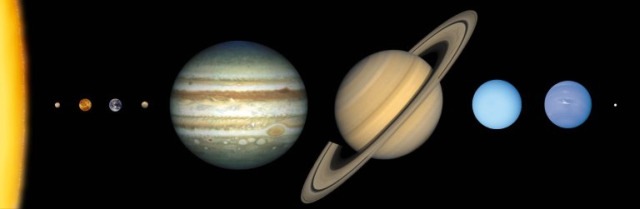
This week the solar system turns to create an interesting show. Venus, which is closer to the Sun than us, disappears from our view when it travels behind the Sun and is too difficult to see without special equipment as it passes in front, so we get our best views as Venus swings out furthermost away from both the Sun and the Earth. For this reason, we see it at dusk and dawn, giving it the nicknames Morning Star and Evening Star. Venus just completed a pass behind the Sun in early January, so it’s beginning to travel far enough out that we can see it at dusk again. Quick ‘Look Up’ Pop Quiz: what other planet have we been seeing easily at dusk for the past few months? Our giant Jovian friend, Jupiter.
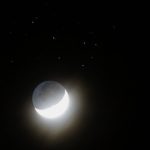
Peaking on February 16, Venus and Jupiter will travel closer and closer together in the sky, letting you view a conceptual rarity. Venus, while much, much smaller than Jupiter, is much, much closer, so they nearly match in relative brightness in the sky. Tonight, in fact, the two planets will form a close triangle with the crescent Moon just after sunset in the Western sky. Happy Valentine’s Day from your Solar System.