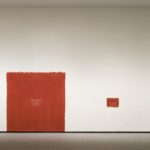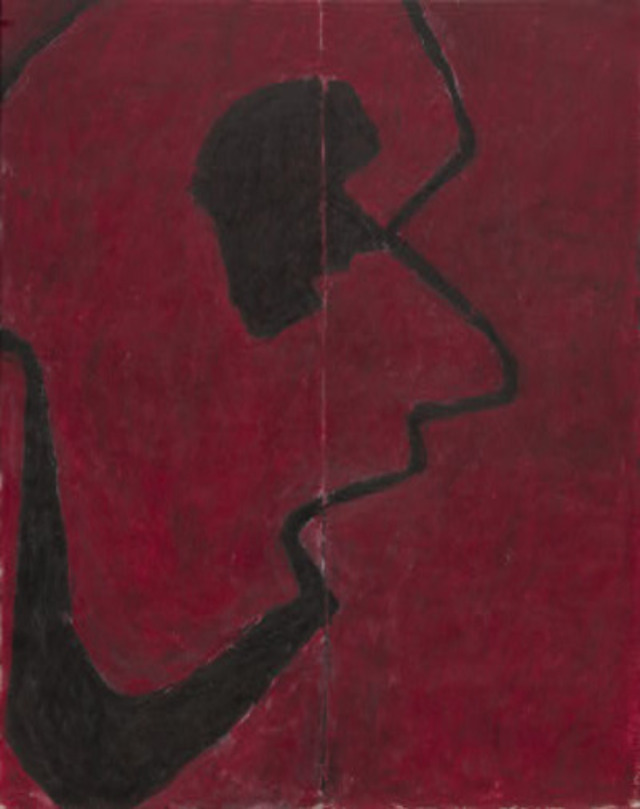
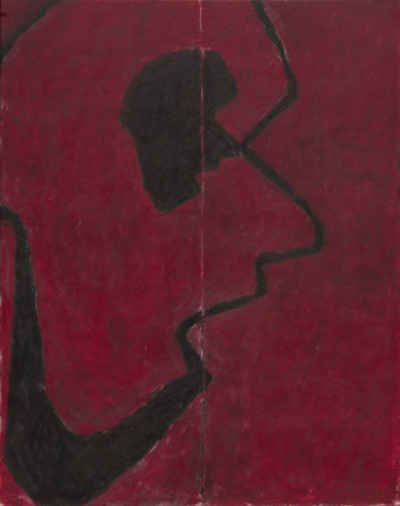
 Image of Susan Rothenberg’s “Head within Head,” courtesy the National Gallery of Art
Written by Aleid Ford, who is profiling 365 masterworks at the National Gallery of Art this year for her project Art 2010, which appears on her website Head for Art.
There are two important works by the painter Susan Rothenberg in the NGA’s permanent collection: Butterfly (1976), which is currently on loan to the White House, and Head within Head (1978), on view in the East Building. Recently at the NGA, Rothenberg appeared in conversation with Harry Cooper (head of Modern and Contemporary Art). One thing that was so refreshing about seeing her in person was hearing how her real life impacts her art. She started using acrylics when she had a baby girl, as oil was too tough to wash off her hands. And when she moved to rural New Mexico with her husband (the artist Bruce Nauman) in 1990, her work altered to reflect her new environment.
Rothenberg seems always to have honored her commitment to paint. Born in Buffalo in 1945, she received a BFA from the Fine Arts School at Cornell University in 1967. Her first solo exhibition in 1975 met with great acclaim for its three large paintings of horses in stark silhouette. This at a time when “anything but painting” was in vogue: minimal and conceptual art dominated the New York scene and performance and dance were popular.
Head within Head is painted with acrylic and Flashe on canvas. Flashe paint covers well, giving a perfect matte finish and pure opacity; Rothenberg described how she likes using Flashe as an alternative (or accompaniment) to oil. This picture is choc-full of pigment, loaded and ladled to the brim. Scouring across the surface is the artist’s distinctive brushstroke, which is at once lively and disciplined. The Flashe paint allows a more profiled appearance than acrylics alone would do, creating an energetic and textural effect. The multi-directional evidence of Rothenberg’s hand is all about retaining the visibility of the painter’s process, which includes impurities and accidents as well as fortuitous discoveries. See the seam running down the center of the canvas and the uneven effect that dapples all over.