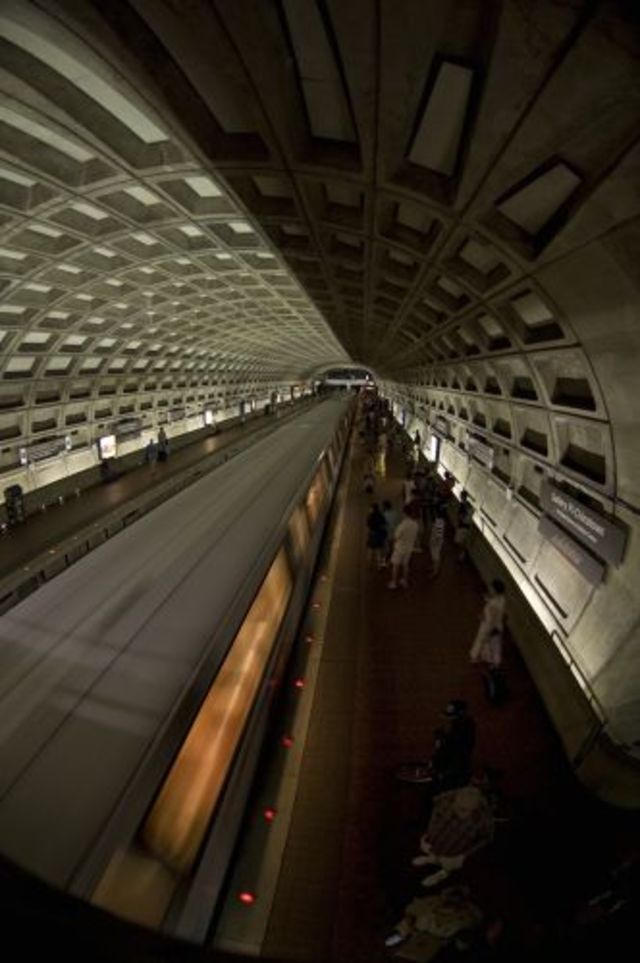
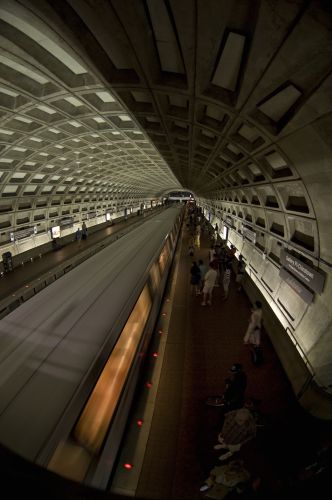
 Photo by mamemimo.
“This accident is a classic example of an organizational accident.”
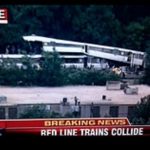
The National Transportation Safety Board is hitting WMATA with everything they’ve got this morning, stating that the transit agency has “an anemic safety culture,” and excusing no one — the manufacturers of the trains, front-line employees, the WMATA Board of Directors and the federal government — from responsibility for the failures that resulted in the fatal June 2009 Red Line crash.
“When safety is more important than schedules, their lessons will have been learned,” said NTSB Chairman Deborah Hersman. “Nothing more important to a transit system than the trust of their ridership.”
“It was quite obvious that [at the highest level of management] there was not an emphasis on safety,” said NTSB vice chair Robert Sumwalt.
As part of technical conclusions based on six weeks of investigation at the site of the Red Line crash near the Fort Totten station, the NTSB officially concluded that the accident was due to a track circuitry failure which caused the first train to stop too soon and the second train to speed up. Breaking action was normal for the second train, but there was only time to slow the train a few miles per hour before collision.
NTSB investigator Ruben Payan presented findings on “parasitic oscillations” in track circuitry — the main reason for the breakdown in technology which led to the June 2009 crash — and noted that such oscillations still exist in the system along 290 currently in-use track circuits. Investigators concluded that technicians did not properly test track circuits — further investigation revealed one track circuit that had been losing train detection since 1988.