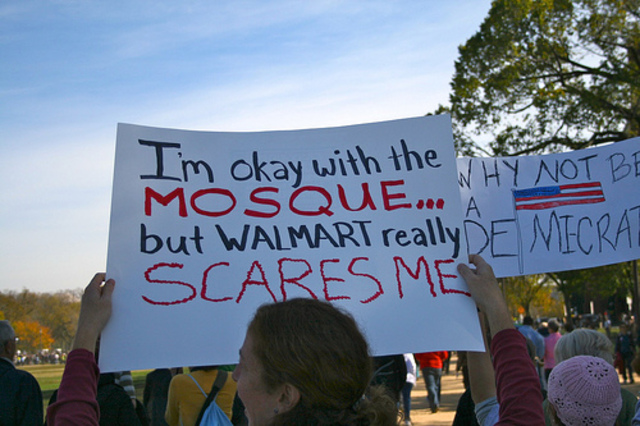
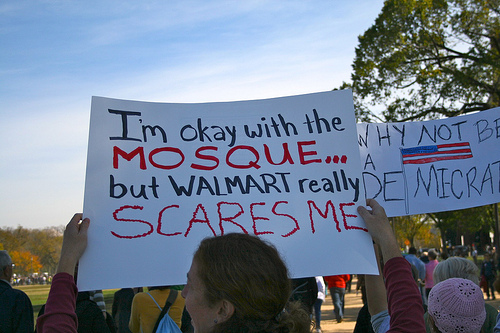
 Photo by andrewmtu.
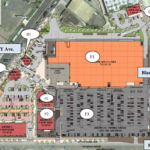
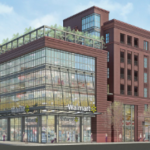
UPDATE (6:35 p.m.): As reported minutes ago in the Washington Post, Walmart has announced that they plan to open four locations in the District. The four sites will be located at the former Curtis Chevrolet along Georgia Avenue NW, the intersection of New York Avenue and Bladensburg Road NE; inside a new mixed-use development on New Jersey Avenue NW and at the intersection of East Capitol Street and 58th Street SE. The company says that they hope to open the stores, which would employ 1,200 people, by 2012.
There are plenty of legitimate reasons for Washingtonians to oppose Walmart’s arrival in the District of Columbia. Whether you oppose big box retail as but a precursor to vacant concrete slabs and unused space, or find the company’s labor policies appalling, or think that Walmart’s arrival will signal an end to D.C.’s small business renaissance — let’s just say that there is no shortage of arguments you can make against the company. Of course, there are plenty of people who will argue for it: of note, people who really like cheap stuff and those who believe that Walmart could bring jobs and revenue into the District. Alex Baca, in fact, has already verbalized this cognitive dissonance nicely: “Wal-Mart…[is] going to plunk its ass down somewhere with plenty of yardage and make people come to it. Wal-Mart makes you feel good about saving money, but it’s not your neighbor,” Baca wrote on her blog. “But, the behemoth will bring jobs.”
But there is another pro-Walmart argument that’s floating around, though its legitimacy is questionable: would several “urban-style” Walmarts, focused on selling groceries, help the District solve its sizable food desert problem?
It’s a fact that D.C. has chasms where affordable food is difficult to come by. We call them food deserts — and by most measures, it is a real issue here. According to the U.S. Department of Agriculture, 13 percent of Washington’s households face “food insecurity” — that is, who have a “limited or uncertain” ability to acquire nutritionally adequate and safe food. There is also a serious discrepancy between D.C.’s wards when it comes to shopping options — according to “When Healthy Food is Out of Reach,” a report by D.C. Hunger Solutions (PDF), only 16 percent of the city’s full-service grocery stores are located east of the Anacostia River. Ward 4 only contains two full-service groceries, one of which was under renovation at the time of the report’s publication; Ward 3 alone has 11.